14 Study Room Design Ideas From Homes We Absolutely Love
- Built-In Wall-to-Wall Bookshelves
- A Window Seat Desk Combo
- Moody Dark Walls With Brass Accents
- Open Shelving With Curated Styling
- A Statement Rug Anchoring the Space
- Wallpapered Ceiling for Unexpected Personality
- A Gallery Wall of Diplomas and Art
- Built-In Desk Nook Under the Stairs
- Soft Neutral Palette With Warm Wood Tones
- A Corner Desk to Maximize Small Rooms
- Chalkboard or Whiteboard Accent Wall
- Layered Lighting for Different Tasks
- Hidden Storage Behind Closed Cabinetry
- A Vintage Desk as the Centerpiece
14 Study Room Design Ideas From Homes We Absolutely Love
A good study room isn’t just a desk shoved in a corner. It’s a space that actually makes you want to sit down and get things done, whether that’s homework, remote work, or paying bills without losing your mind. We’ve pulled together fourteen study room design ideas from real homes that nail the balance between function and style. Some are simple weekend projects, others are bigger investments, but all of them prove a study room can be one of the most personal rooms in the house.
Built-In Wall-to-Wall Bookshelves
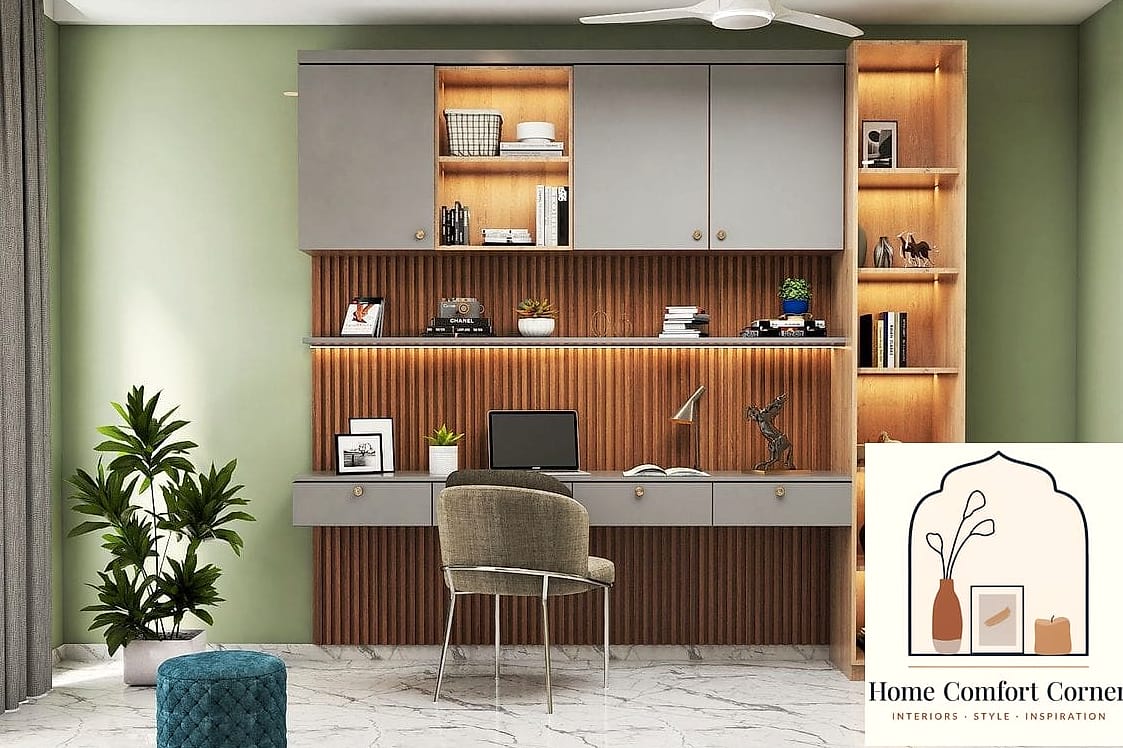
There’s something about floor-to-ceiling bookshelves that makes a study room feel instantly more serious and inviting at the same time. Homeowners love this look because it maximizes vertical storage without eating into floor space, which matters a lot in smaller rooms. Built-ins work especially well flanking a window or wrapping around a desk nook. Painted a deep navy or forest green, they become a dramatic backdrop; left in natural wood tones, they lean warmer and more traditional. The tradeoff is cost and installation time, since custom millwork isn’t cheap or fast. A budget-friendly alternative is stacking modular shelving units side by side to mimic the built-in effect.
A Window Seat Desk Combo
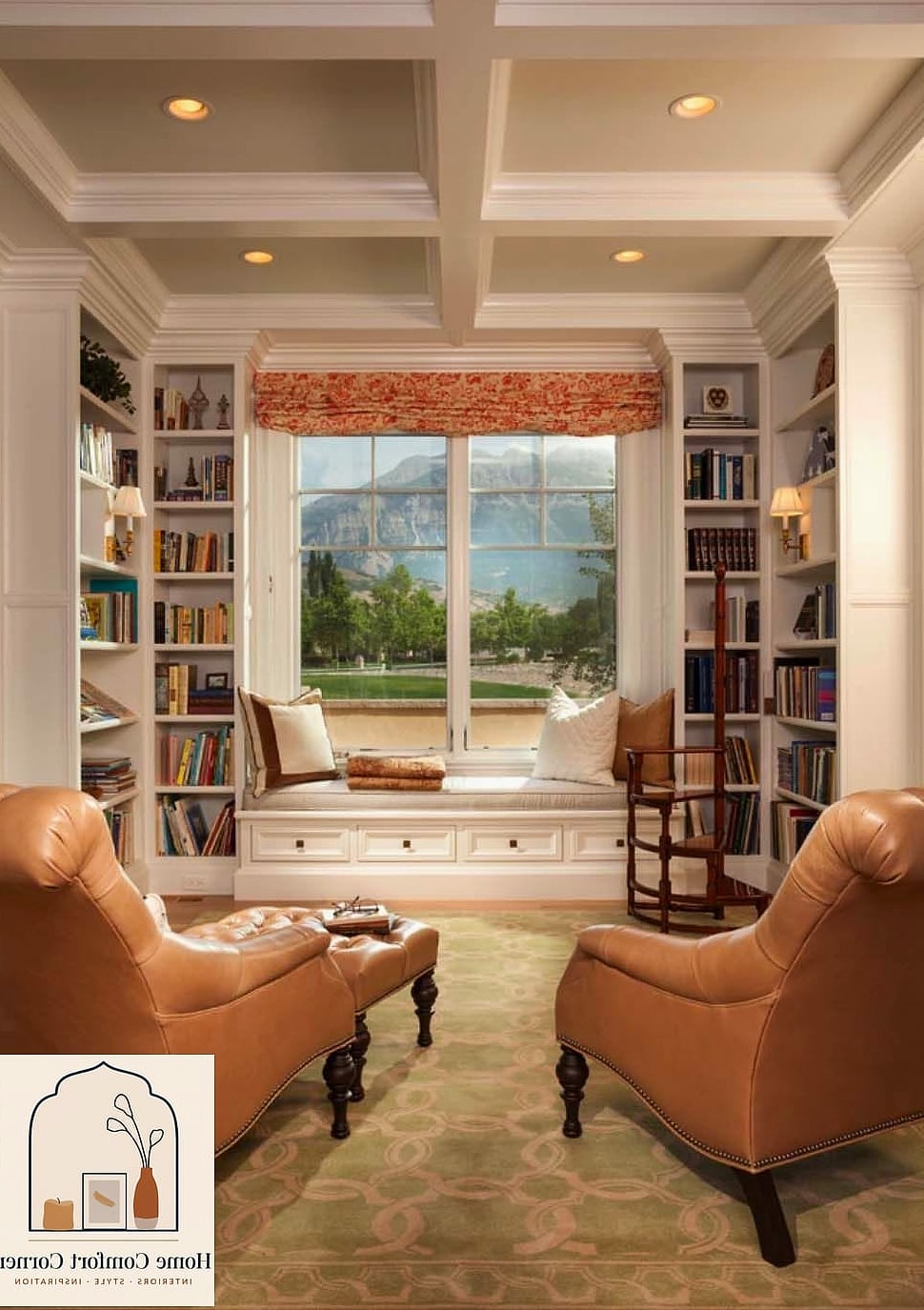
Positioning a desk directly under a window sounds obvious, but a window seat desk combo takes it further by adding built-in seating on either side. It’s a favorite in older homes with deep window wells, where that extra depth becomes a cozy reading nook when the desk chair isn’t in use. Natural light pours in all day, which cuts down on how much you need artificial lighting during work hours. Add a cushion in a durable, family-friendly fabric and a couple of throw pillows for comfort. This layout works best in rooms that don’t need a huge desk surface, since window seats naturally limit width.
Moody Dark Walls With Brass Accents
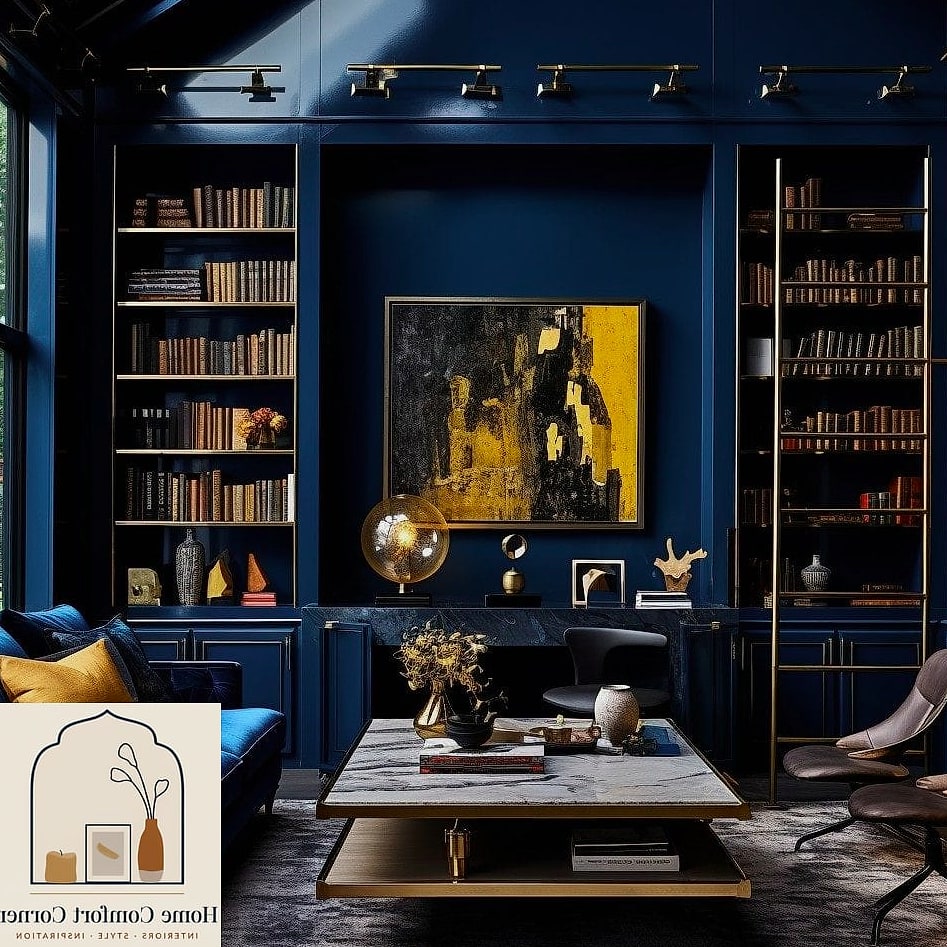
Dark walls in a study room sound counterintuitive, but they actually create a focused, almost cocoon-like atmosphere that a lot of people find easier to concentrate in. Charcoal, deep plum, and near-black green are popular choices right now. Pair the walls with brushed brass hardware, sconces, or a statement light fixture, and the contrast reads as elevated rather than heavy. This works particularly well in smaller rooms with limited natural light, since you’re not fighting the darkness that comes in anyway. If committing to a full room feels risky, try it on just one accent wall first.
Open Shelving With Curated Styling
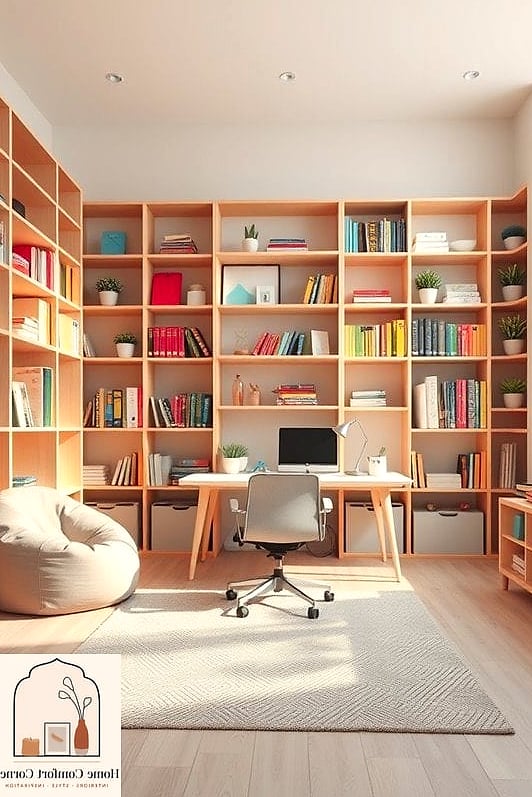
Open shelving gets a lot of love in kitchens, but it’s just as effective in a study room for displaying books, framed photos, and a few plants without the closed-off feel of cabinets. The key is restraint. Overcrowded shelves read as clutter, while thoughtfully spaced items look intentional. Mix in some baskets or bins on lower shelves to hide the less photogenic stuff like chargers and old notebooks. Floating shelves in a warm wood tone add texture against a painted wall. This is also one of the more renter-friendly options here, since many floating shelf brackets can be installed with minimal wall damage.
A Statement Rug Anchoring the Space
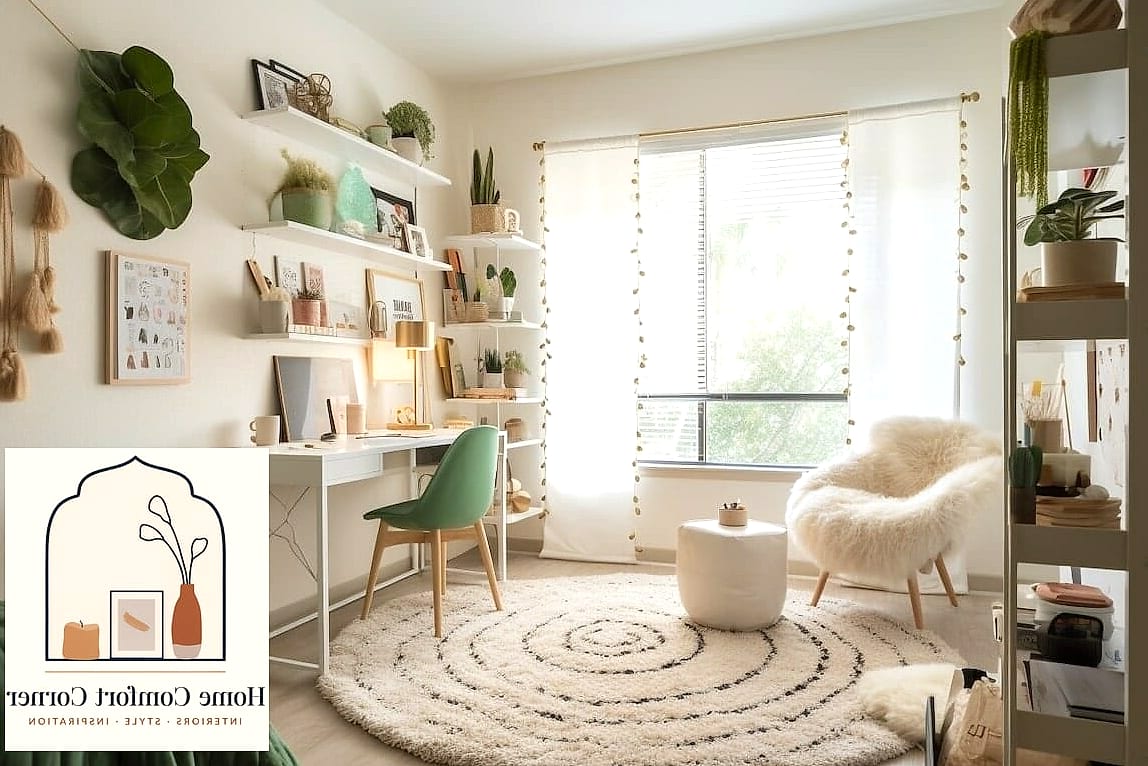
It’s easy to overlook flooring in a study room, but a bold rug can define the whole space, especially if the room doubles as a hallway pass-through or open-concept nook. Vintage-style Persian rugs bring in pattern and color without competing with wall art. For a more modern feel, a geometric wool rug in a neutral palette keeps things grounded. Rugs also help with acoustics, softening the echo that hard-surfaced home offices tend to have. If you’ve got pets or kids tracking things through, a low-pile or synthetic-fiber option will hold up better than a delicate wool weave.
Wallpapered Ceiling for Unexpected Personality
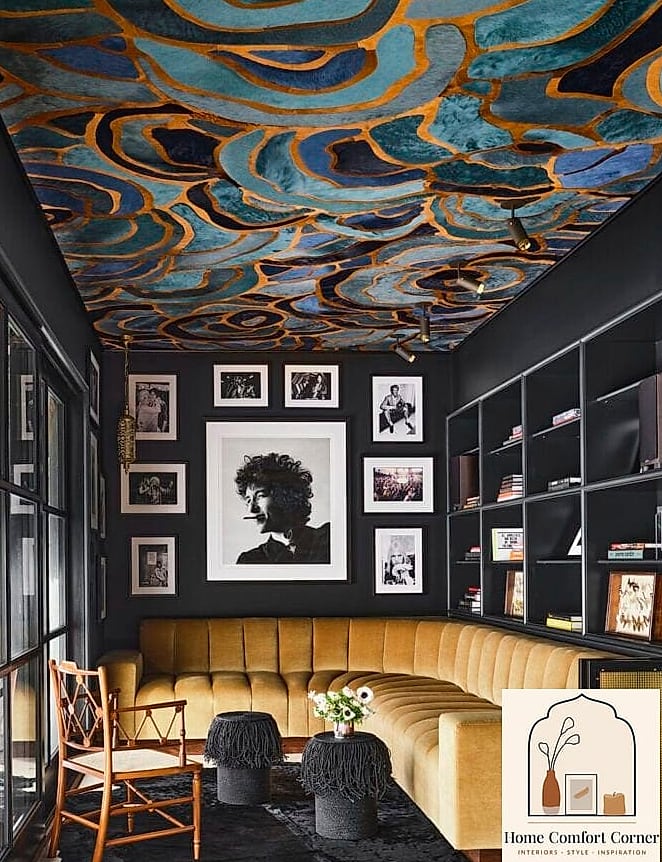
A wallpapered ceiling, sometimes called a “fifth wall,” is one of those details that makes people stop and look up the second they walk in. Small botanical prints, subtle stripes, or even a soft metallic pattern all work well overhead. It’s a smart move in a study room specifically because you’re often looking up while thinking, so why not give your eyes something interesting to land on. This is a project best left to two people, since ceiling wallpaper is trickier to hang than wall wallpaper. Peel-and-stick versions have gotten much better in recent years if you want the look without full commitment.
A Gallery Wall of Diplomas and Art
Study rooms are a natural home for diplomas, certificates, and personal artwork that might feel out of place elsewhere in the house. Grouping them into a gallery wall behind the desk turns what could be a random assortment of frames into a cohesive display. Mixing frame finishes, like black metal with natural wood, keeps it from looking too matchy. Leave some breathing room between frames rather than packing them edge to edge. This idea costs almost nothing if you’re using frames and art you already own, making it one of the more budget-friendly upgrades on this list.
Built-In Desk Nook Under the Stairs
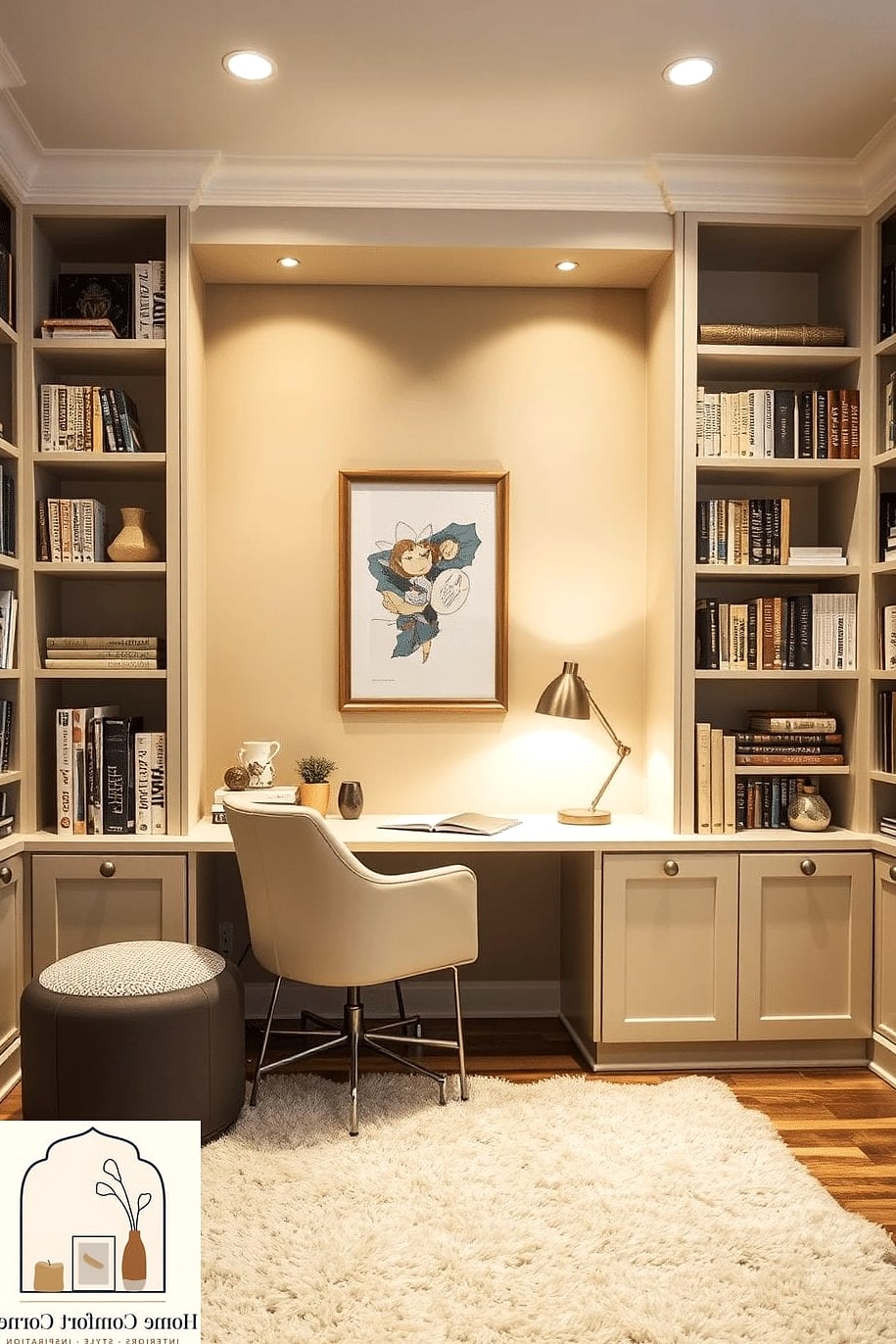
Under-the-stairs space gets wasted in so many homes, and turning it into a built-in desk nook is a genuinely clever fix. The angled ceiling adds architectural interest that a standard rectangular room just doesn’t have. Custom carpentry can maximize every inch, tucking in drawers and cubbies that follow the slope of the stairs above. Lighting matters a lot here since these nooks tend to be darker, so a combination of a desk lamp and a small recessed light overhead makes a real difference. It’s not the easiest DIY project, but it’s one of the best uses of dead space we’ve seen.
Soft Neutral Palette With Warm Wood Tones
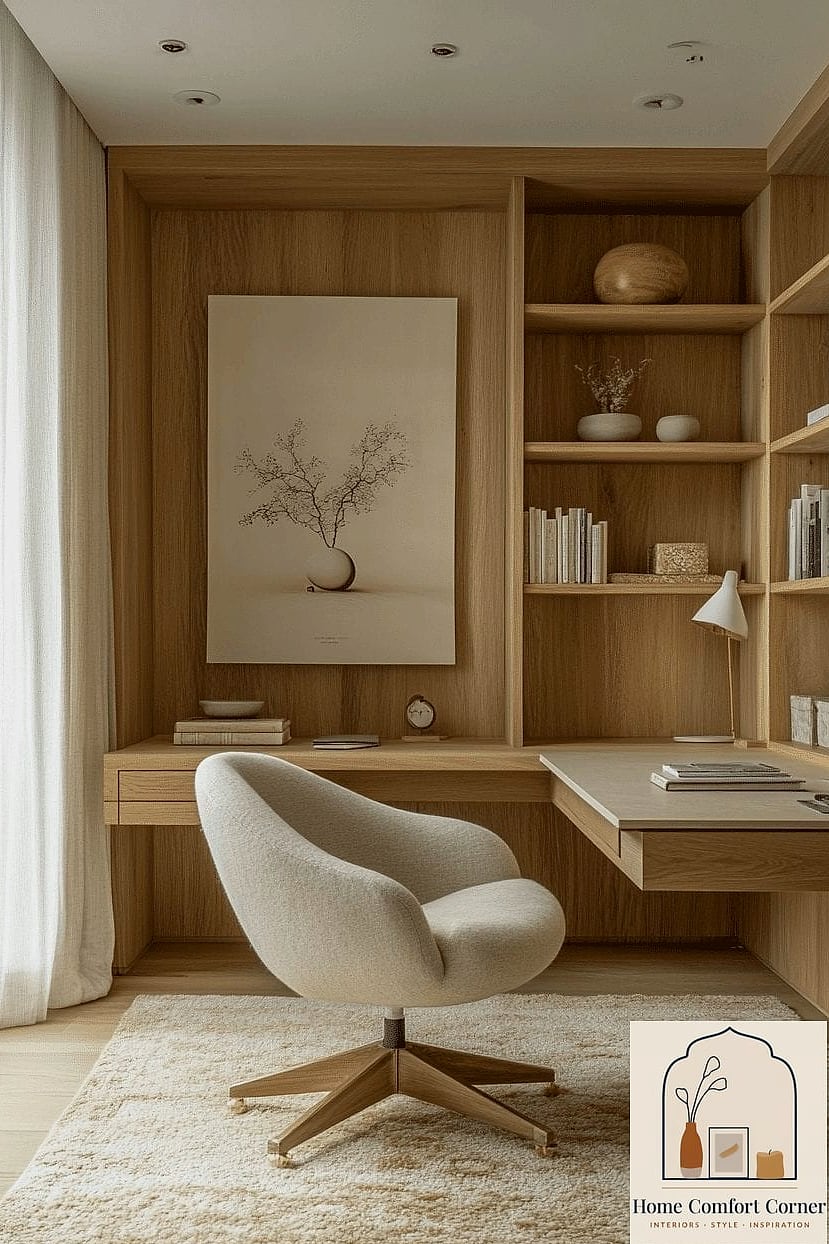
Not every study room needs bold color to feel special. A soft neutral palette, think cream walls, warm wood desk, and linen curtains, creates a calm, distraction-free environment that a lot of people prefer for long work sessions. The trick to keeping it from feeling flat is layering textures: a woven basket, a nubby throw, a stack of linen-bound books. Natural stone or butcher block accents add a little visual weight without introducing more color. This palette also ages well and won’t feel dated in five years, which is a real consideration if you’re not planning to redecorate often.
A Corner Desk to Maximize Small Rooms
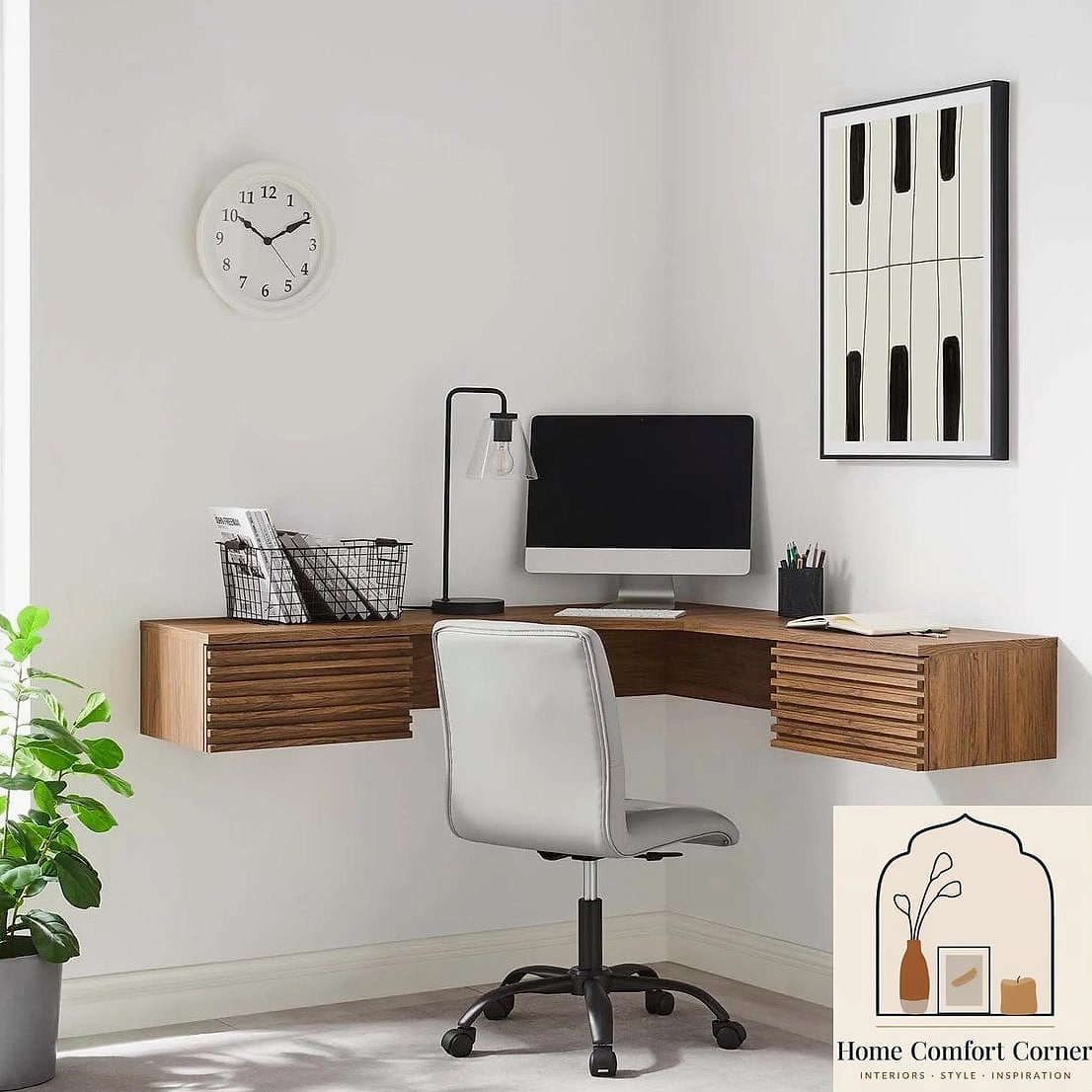
Corner desks are underrated for study rooms that double as guest rooms or shared spaces. Angling the desk into a corner frees up the rest of the room for a daybed, extra seating, or simply more open floor space. L-shaped corner desks give you more surface area for spreading out papers or a second monitor, while a smaller corner desk keeps things minimal. This layout is especially good for awkward rooms with limited usable wall space. Add a floor lamp beside it rather than relying only on an overhead fixture, since corners often get less natural light.
Chalkboard or Whiteboard Accent Wall
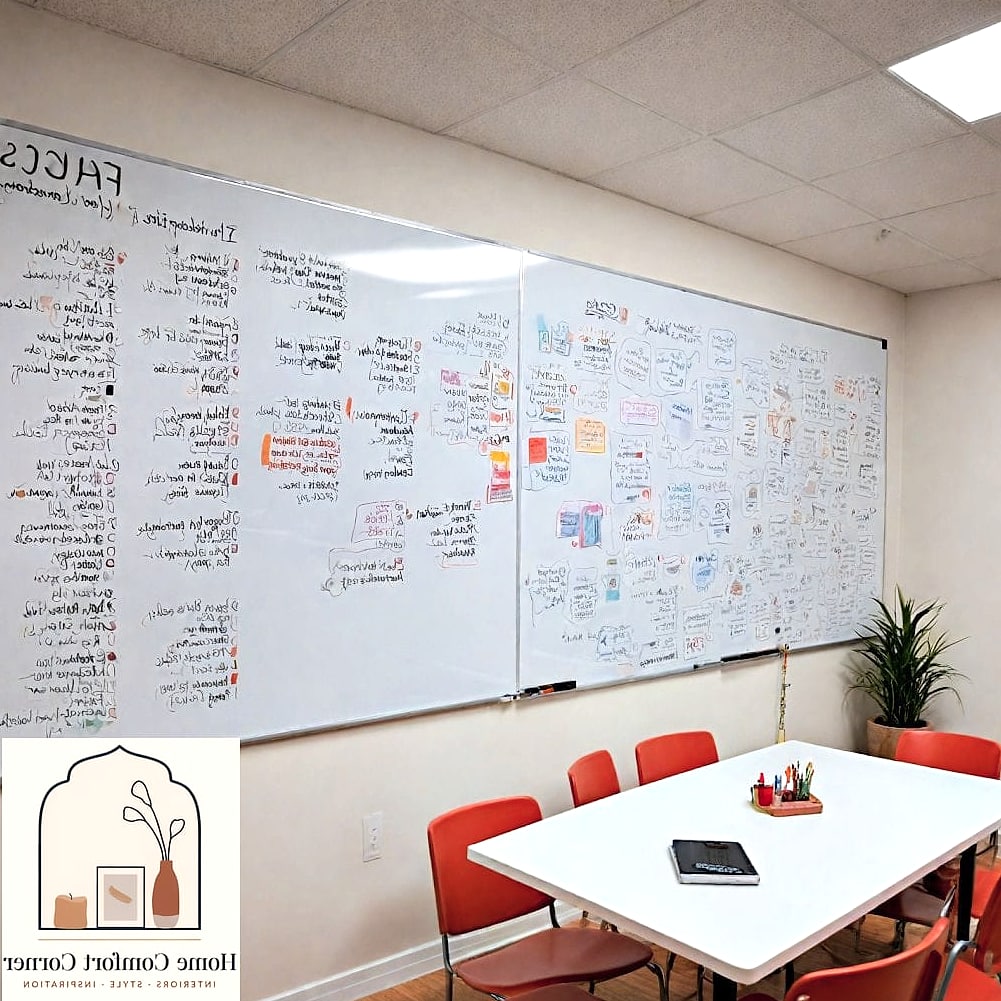
For a study room that gets actual studying done, a chalkboard or whiteboard accent wall adds a genuinely useful layer of function. It’s popular in homes with kids doing homework, but plenty of adults use theirs for to-do lists and project planning too. Chalkboard paint is inexpensive and easy to apply over an existing wall, making this one of the more DIY-friendly ideas here. Whiteboard paint or peel-and-stick whiteboard panels work if you want a cleaner, less dusty option. Either way, it turns one wall into a working surface instead of just something to look at.
Layered Lighting for Different Tasks
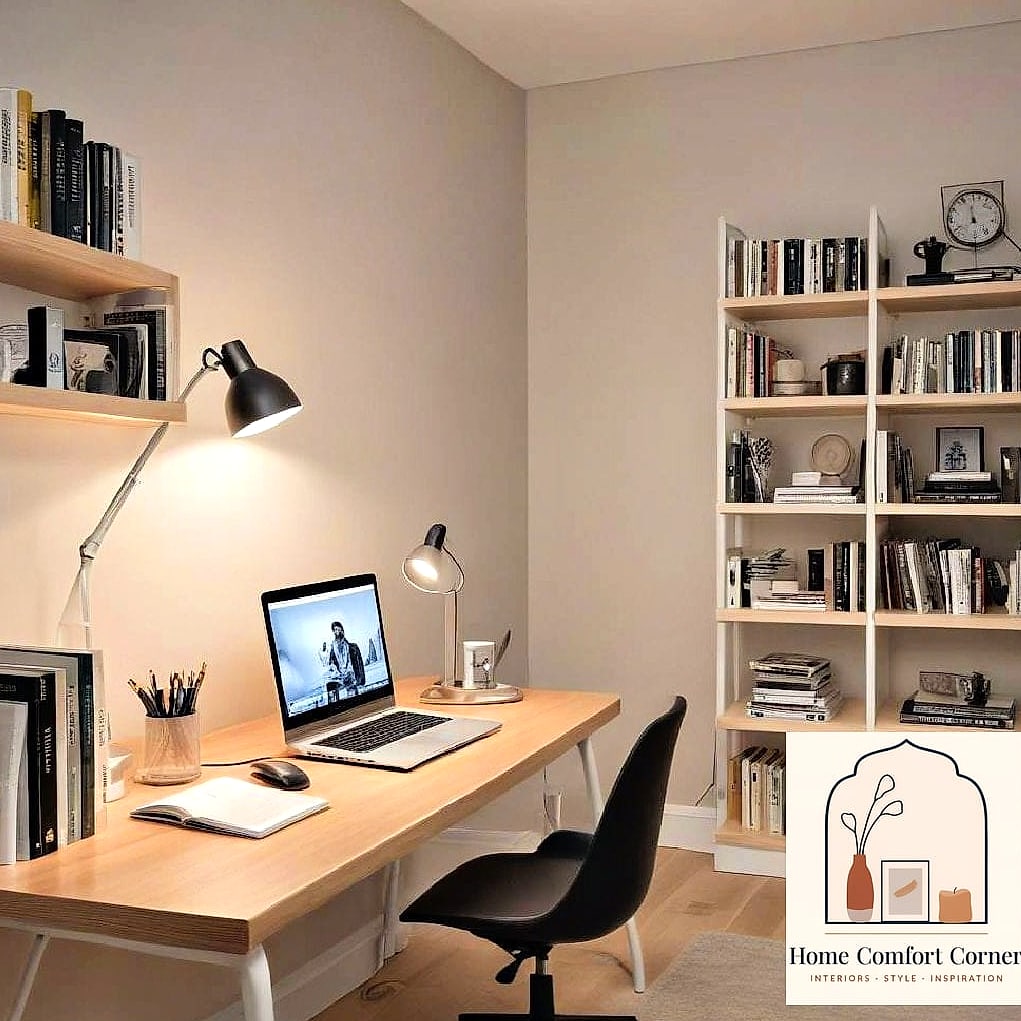
A single overhead light almost never cuts it in a study room, and homeowners who get lighting right usually layer at least three sources. A task lamp on the desk handles close work, a floor or table lamp adds ambient warmth in the evening, and overhead lighting or wall sconces fill in the rest. Warm bulbs generally feel more comfortable for long stretches than cool, clinical ones. Dimmer switches are a small upgrade that make a bigger difference than people expect, letting the room shift from bright and focused during the day to softer at night.
Hidden Storage Behind Closed Cabinetry
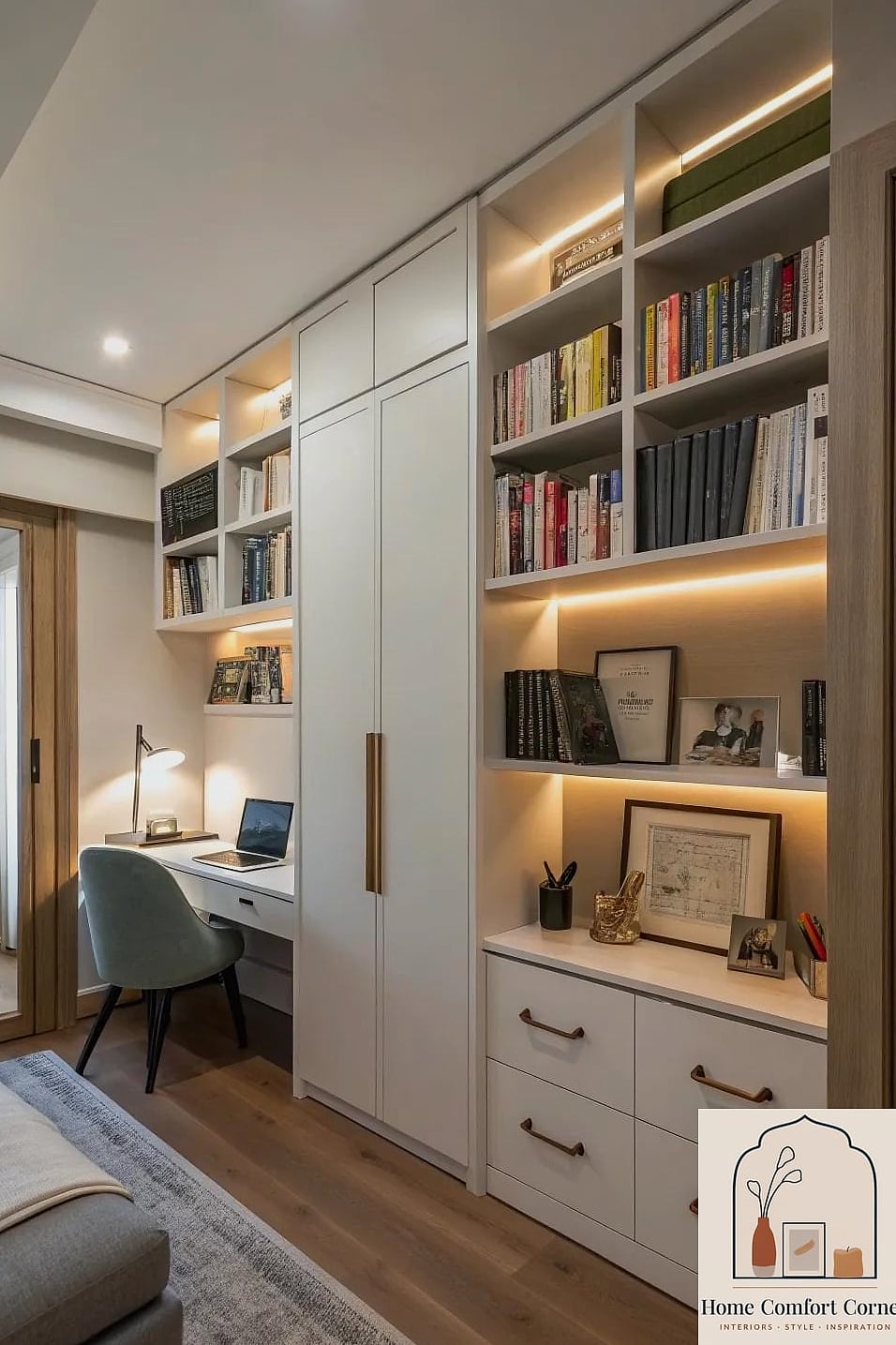
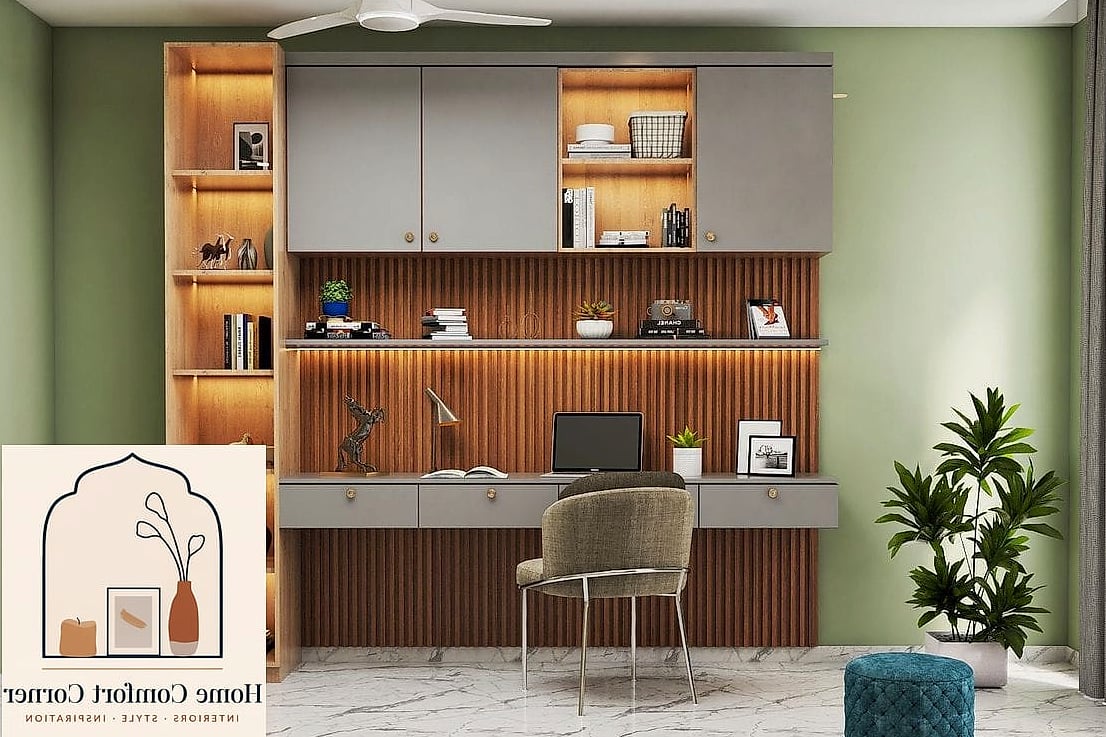
Not everyone wants their study room to look like a library on display, and that’s where hidden storage behind closed cabinetry comes in. Floor-to-ceiling cabinets with a mix of solid doors and glass-front sections let you show off a few favorite items while hiding the rest. This is a particularly good option for family-friendly spaces where kids’ school supplies, art materials, or old paperwork need somewhere to disappear to. Matte cabinet finishes in soft white or sage green feel current without being trendy in a way that will date quickly. Drawer organizers inside make the daily grab-and-go stuff easier to find.
A Vintage Desk as the Centerpiece
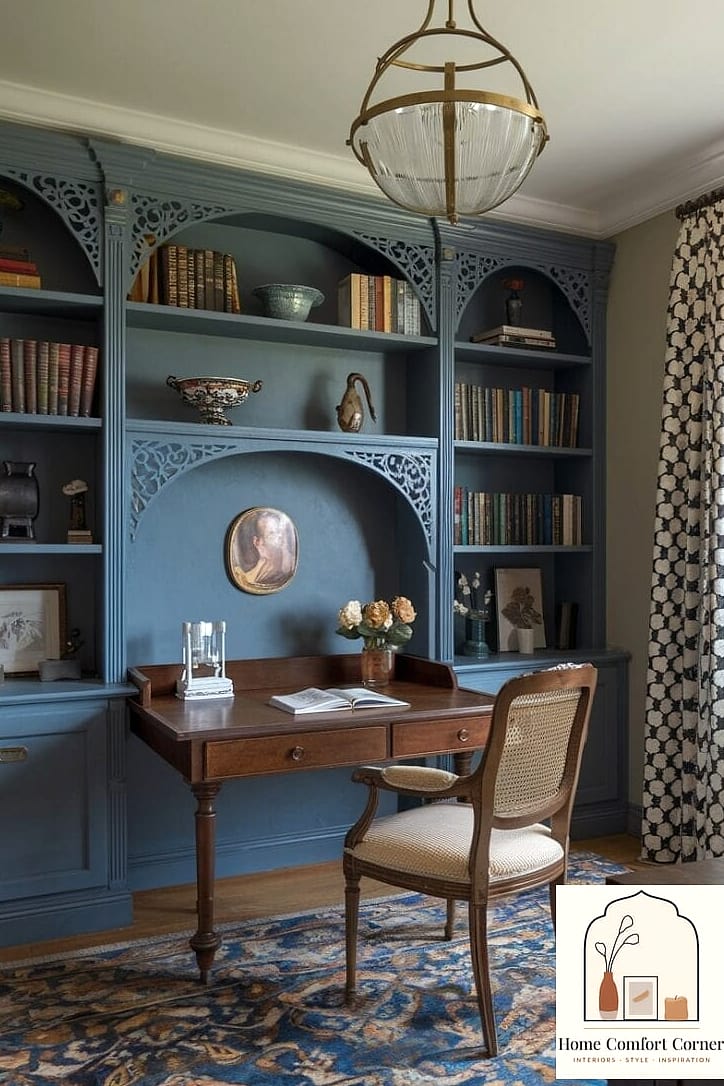
Sometimes the best design move is finding one incredible vintage piece and building the room around it. An antique writing desk with brass hardware and a leather top brings instant character that new furniture often struggles to replicate. These pieces show up at estate sales, flea markets, and secondhand shops for a fraction of what a comparable new desk would cost. Pair it with a modern ergonomic chair for comfort, since vintage desk chairs aren’t always built for long work sessions. The mix of old and new keeps the room from feeling like a period piece while still giving it a story worth telling.
Putting together a study room really comes down to figuring out how you actually work best, then building the details around that. Some of these ideas, like a chalkboard wall or open shelving, are weekend projects you can knock out on a budget. Others, like built-in cabinetry or a stair nook, are bigger investments worth saving up for. Either way, borrowing a few favorites from this list is a solid starting point for a study room you’ll actually want to spend time in.