22 Pooja Room Design Ideas That Are Trending on Pinterest
- Minimalist White Marble Backdrop
- Jharokha-Style Wooden Frame
- Backlit Corian Panels
- Floating Shelf Altar
- Mandir with Sliding Doors
- Terracotta and Clay Accents
- Vertical Wall-Mounted Mandir
- Mother of Pearl Inlay Doors
- Open Niche Design
- Brass and Copper Statement Pieces
- Skylight or Natural Light Focus
- Temple-Style Dome Ceiling
- Multi-Faith or Minimal Idol Display
- Hidden Pooja Cabinet in Living Room
- Bamboo and Cane Textures
- Mirror Work Backdrop
- Pastel and Soft Color Palette
- Floor Seating with Low Platform
- Peel-and-Stick Wallpaper Backdrop
- Compact Corner Mandir Unit
- Fresh Flower and Greenery Styling
- Layered Lighting with Diyas and LEDs
22 Pooja Room Design Ideas That Are Trending on Pinterest
If you’ve spent any time scrolling Pinterest lately, you’ve probably noticed pooja rooms getting a serious glow-up. Gone are the days when a small shelf in the corner of a hallway was the only option. Homeowners are now treating this space with the same care they’d give a kitchen or a primary bathroom, and honestly, it shows.
Whether you’re working with a full spare room or just a nook near your entryway, there’s a design out there that fits your space, your budget, and your style. Here are 22 pooja room design ideas that are trending on Pinterest right now, and why people can’t stop saving them.
Minimalist White Marble Backdrop
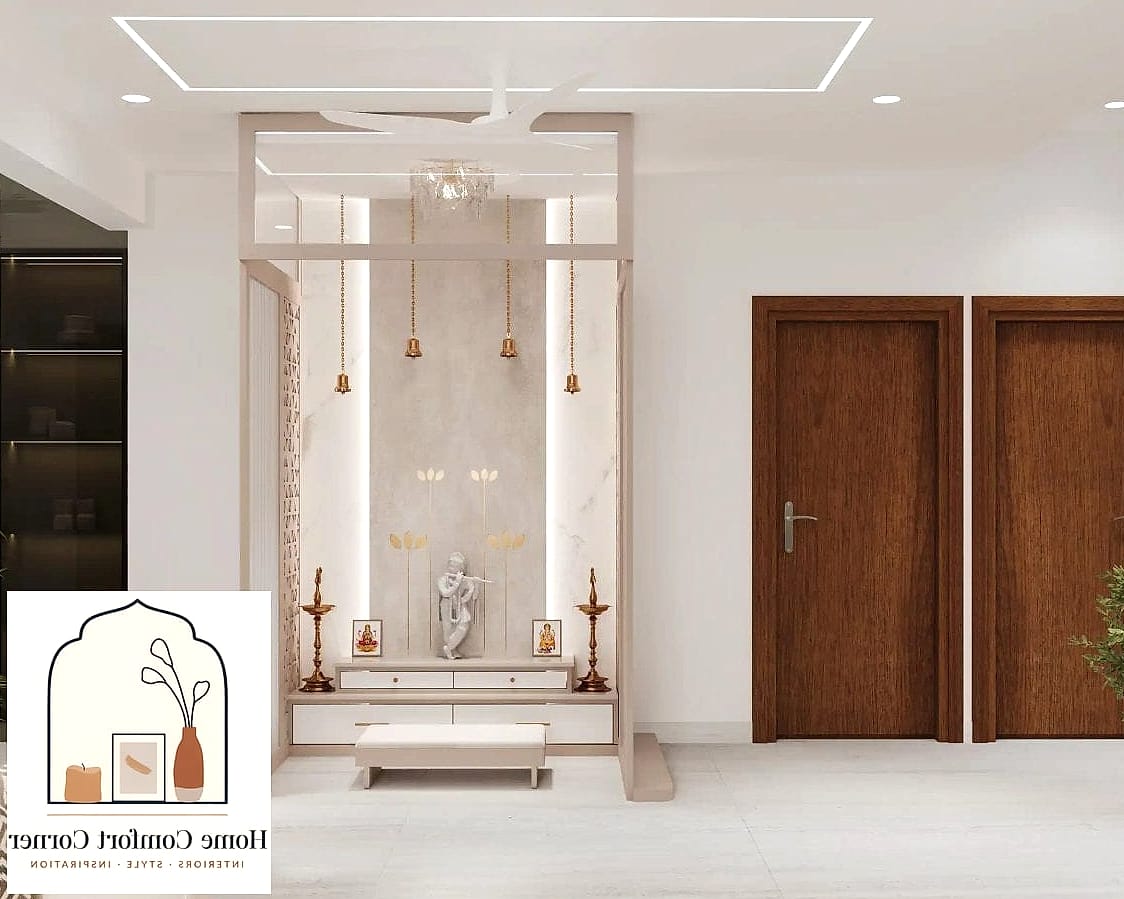
There’s something calming about a clean white marble wall behind your idols. It reflects light beautifully and keeps the whole space feeling airy instead of cluttered.
This works especially well in smaller apartments where you want the pooja area to feel open rather than boxed in. Pair it with brass accents and the contrast does a lot of visual work without trying too hard.
Maintenance is pretty simple too, just wipe down with a soft cloth since marble can stain if you let spills sit.
Jharokha-Style Wooden Frame
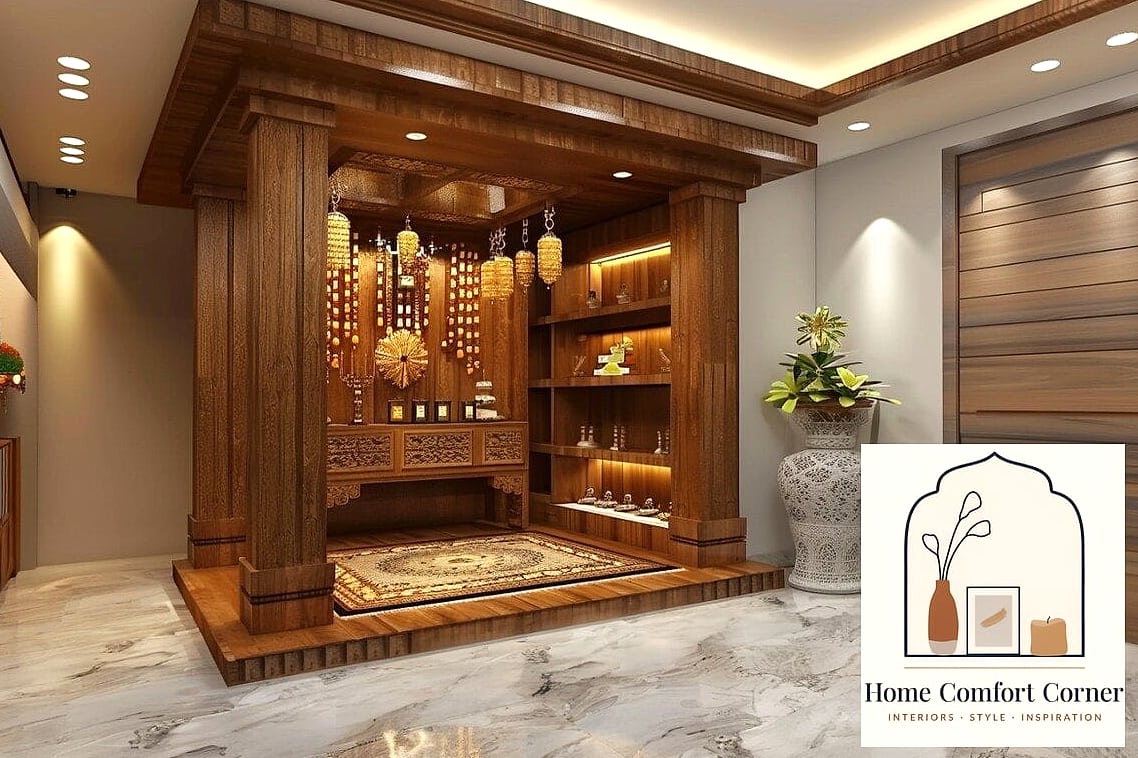
This one’s been everywhere lately. A carved wooden jharokha frame around your main altar instantly adds that traditional Rajasthani charm.
It’s a great pick if you want your pooja room design to feel rooted in heritage without going overboard on ornamentation. Teak or sheesham wood ages beautifully and only gets more character over time.
Budget-wise, you can find smaller ready-made frames online if a custom carved piece feels like too much of a splurge.
Backlit Corian Panels
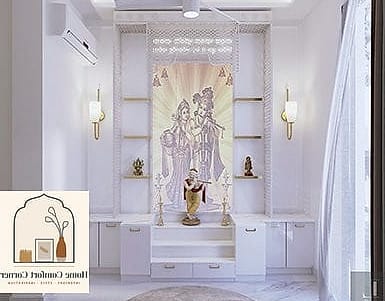
Corian panels with LED backlighting have become a favorite for a reason. The soft glow around carved patterns creates this quiet, almost meditative feeling the moment you walk in.
It’s particularly popular in modern homes where the rest of the interior leans contemporary but the owners still want a warm, spiritual focal point. The carving can be custom cut into floral motifs, mandalas, or temple silhouettes.
One thing to keep in mind, the lighting does add to your electrical setup, so it’s worth planning wiring early if you’re renovating.
Floating Shelf Altar
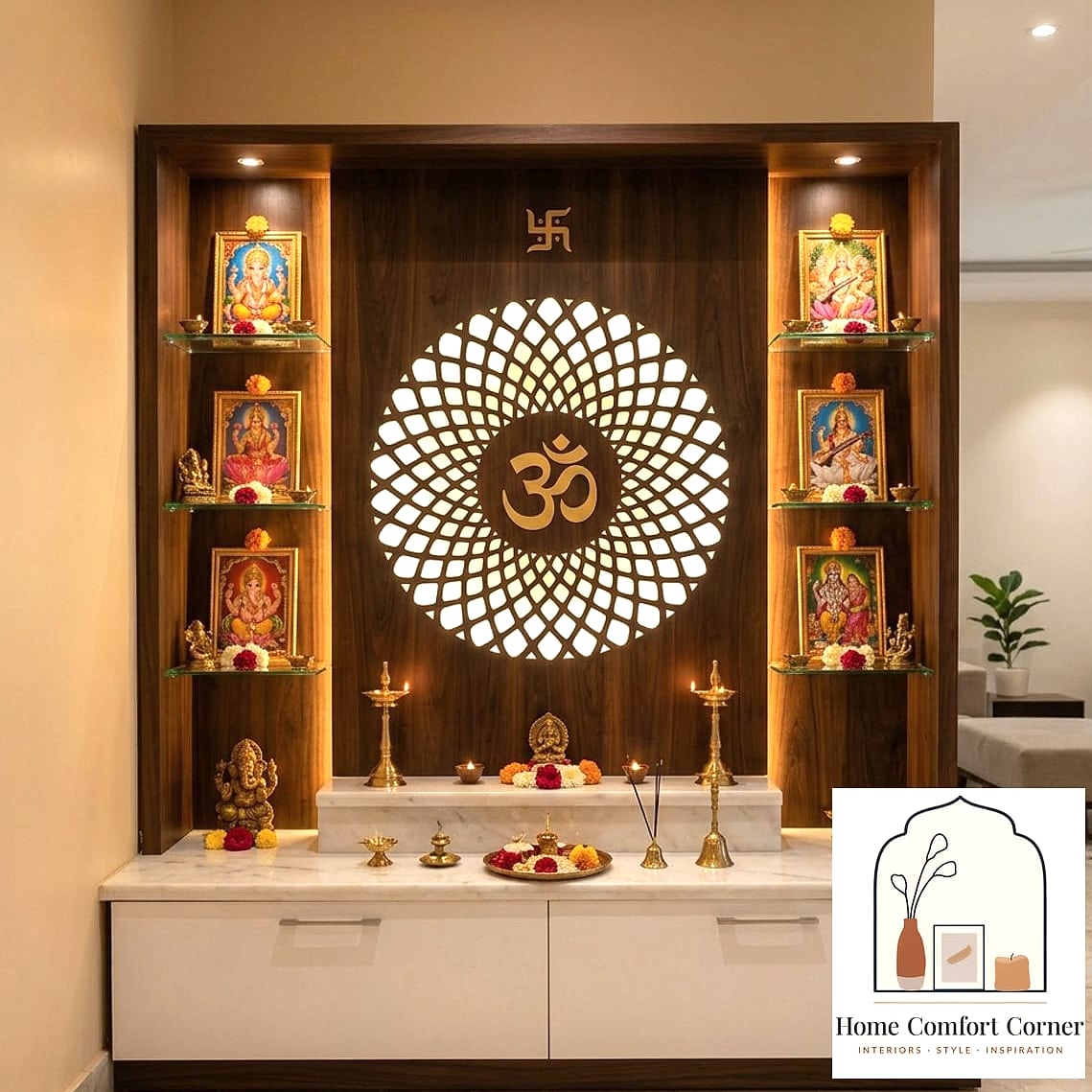
For renters or anyone short on floor space, a floating shelf altar is honestly one of the smartest solutions out there. You mount a sturdy shelf at a comfortable height and skip the need for a full cabinet.
It works especially well in studio apartments or in a corner of the living room where a dedicated room just isn’t realistic. Add a small LED strip underneath for a nice glow without drilling extra holes.
Since there’s no enclosed cabinet, dusting is quick, just a wipe every few days keeps it looking fresh.
Mandir with Sliding Doors
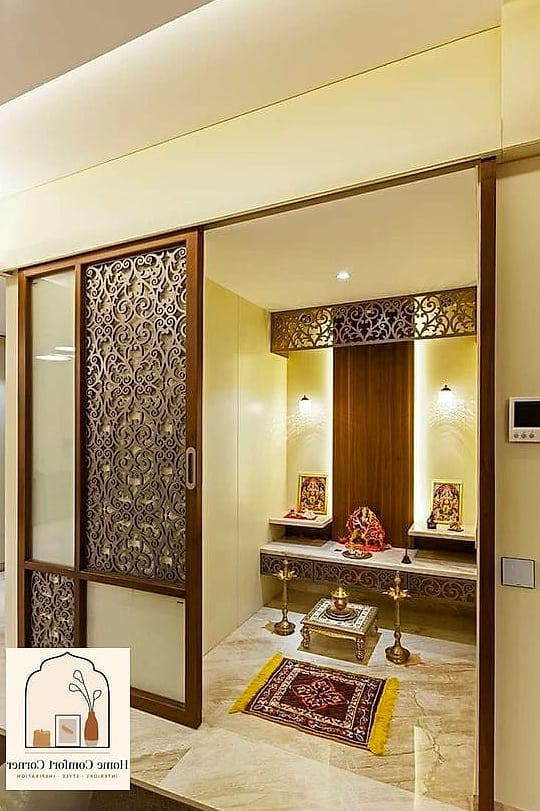
A wooden mandir unit with sliding doors instead of hinged ones saves a surprising amount of space, especially in narrow hallways or apartment corners.
I like this option for families with pets or young kids since the doors close smoothly and keep curious hands or paws away from diyas and other items. Frosted glass panels on the doors add a soft, private feel when closed.
You’ll find these in both classic wood tones and more budget-friendly engineered wood versions if you’re watching costs.
Terracotta and Clay Accents
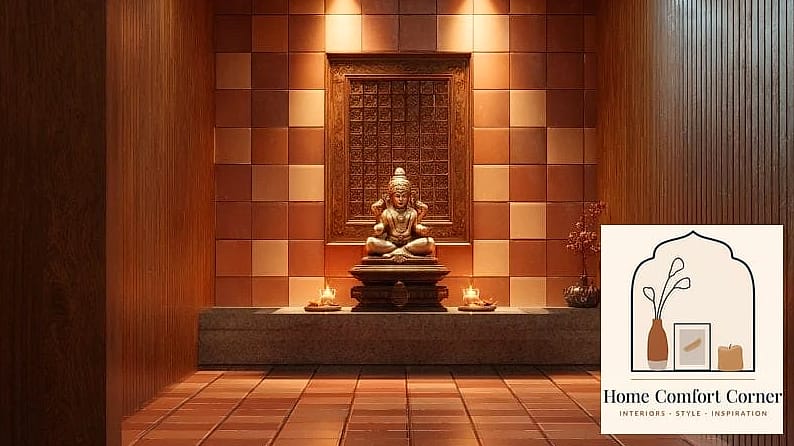
Terracotta idols, clay diyas, and earthy pots have made a real comeback, and it’s easy to see why. They bring a rustic, grounded warmth that polished materials just can’t replicate.
This style pairs beautifully with exposed brick walls or homes that already lean toward a natural, earthy palette. It’s also a genuinely affordable way to decorate since terracotta pieces are widely available and inexpensive.
Just keep clay items away from direct water exposure since they’re more porous than ceramic or stone.
Vertical Wall-Mounted Mandir
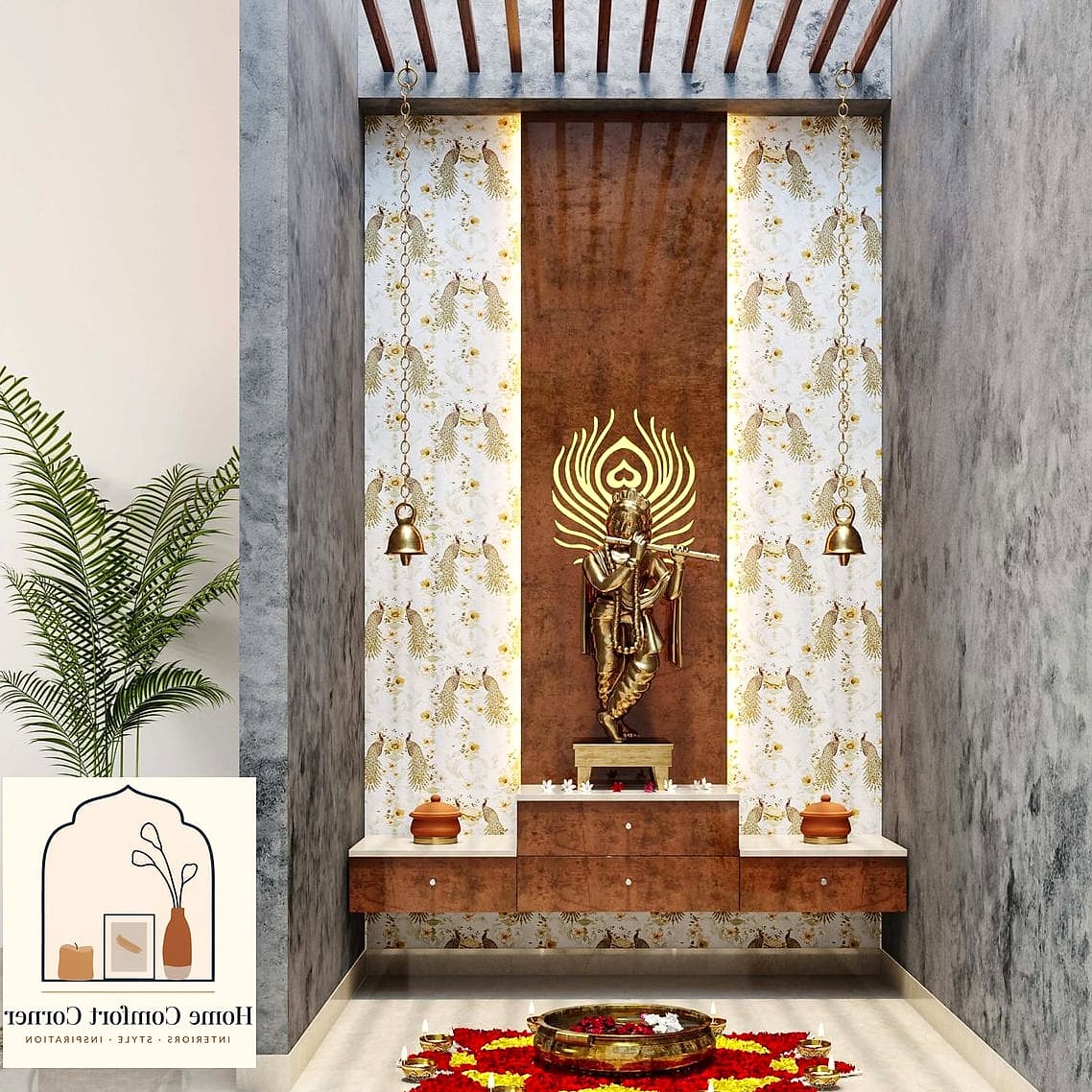
When floor space is tight, going vertical is the move. A tall, narrow wall-mounted mandir keeps the footprint small while still giving you enough shelving for idols, photos, and daily essentials.
This is a favorite in city apartments where every square foot counts. Choose a design with small drawers at the base for incense sticks, matchboxes, and other odds and ends so nothing sits out in the open.
Mother of Pearl Inlay Doors
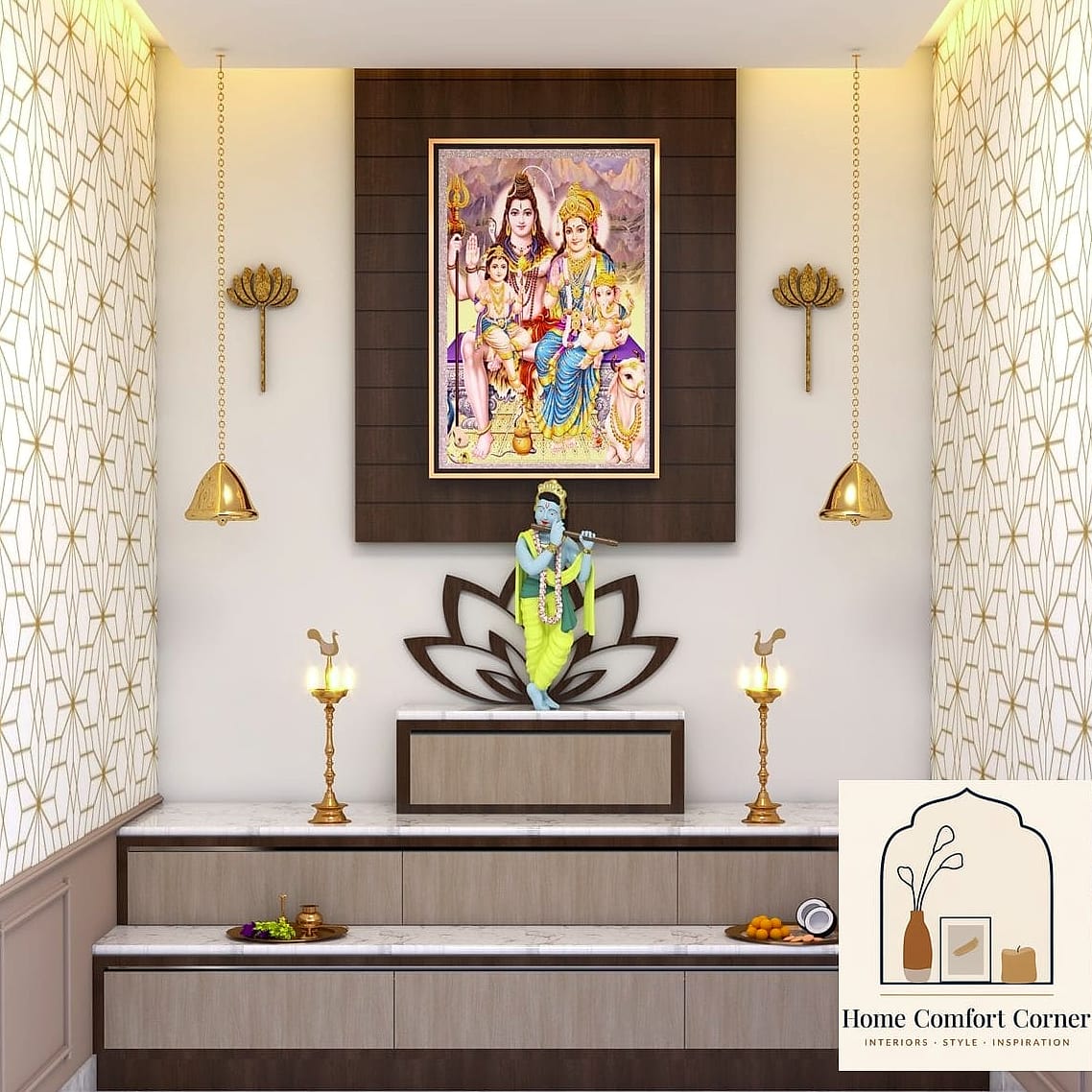
Mother of pearl inlay work on mandir doors is one of those details that photographs incredibly well, which probably explains why it’s all over Pinterest boards right now.
The subtle shimmer catches light differently throughout the day, adding a quiet luxury to the space without being flashy. It works best in pooja rooms that already have a fairly neutral backdrop, letting the inlay be the star.
These pieces tend to run on the pricier side since the work is detailed and often handmade, so it’s more of a splurge item.
Open Niche Design
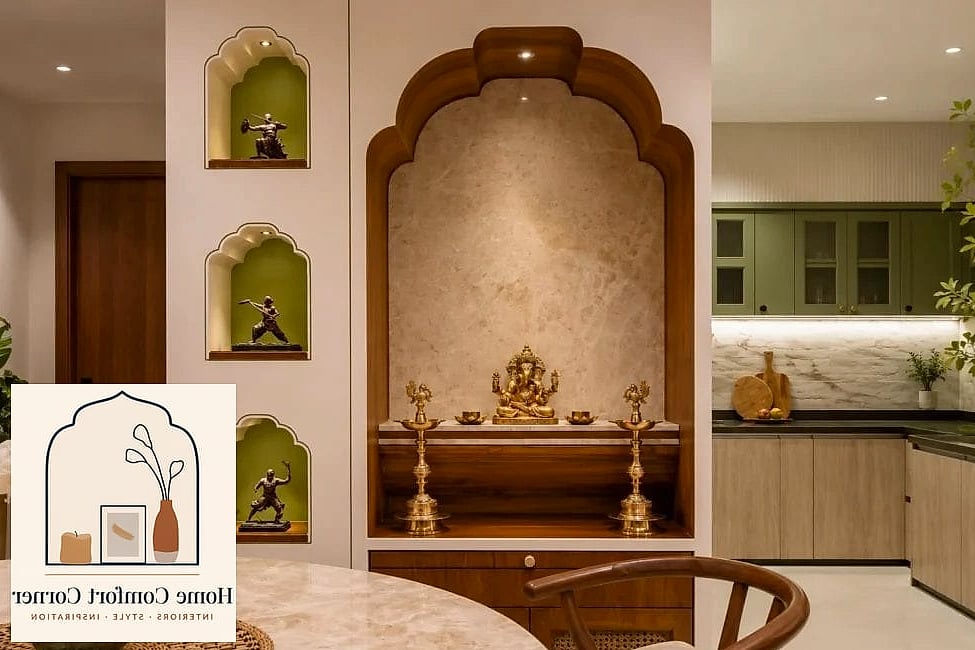
Instead of a boxed cabinet, some homeowners are carving out an open wall niche for their pooja space. It’s built directly into the architecture, giving a clean, seamless look.
This idea works particularly well during new construction or major renovations since it needs to be planned into the wall structure. The upside is a built-in feel that doesn’t compete visually with the rest of the room.
Add a small ledge or shelf inside for practical storage of daily items.
Brass and Copper Statement Pieces
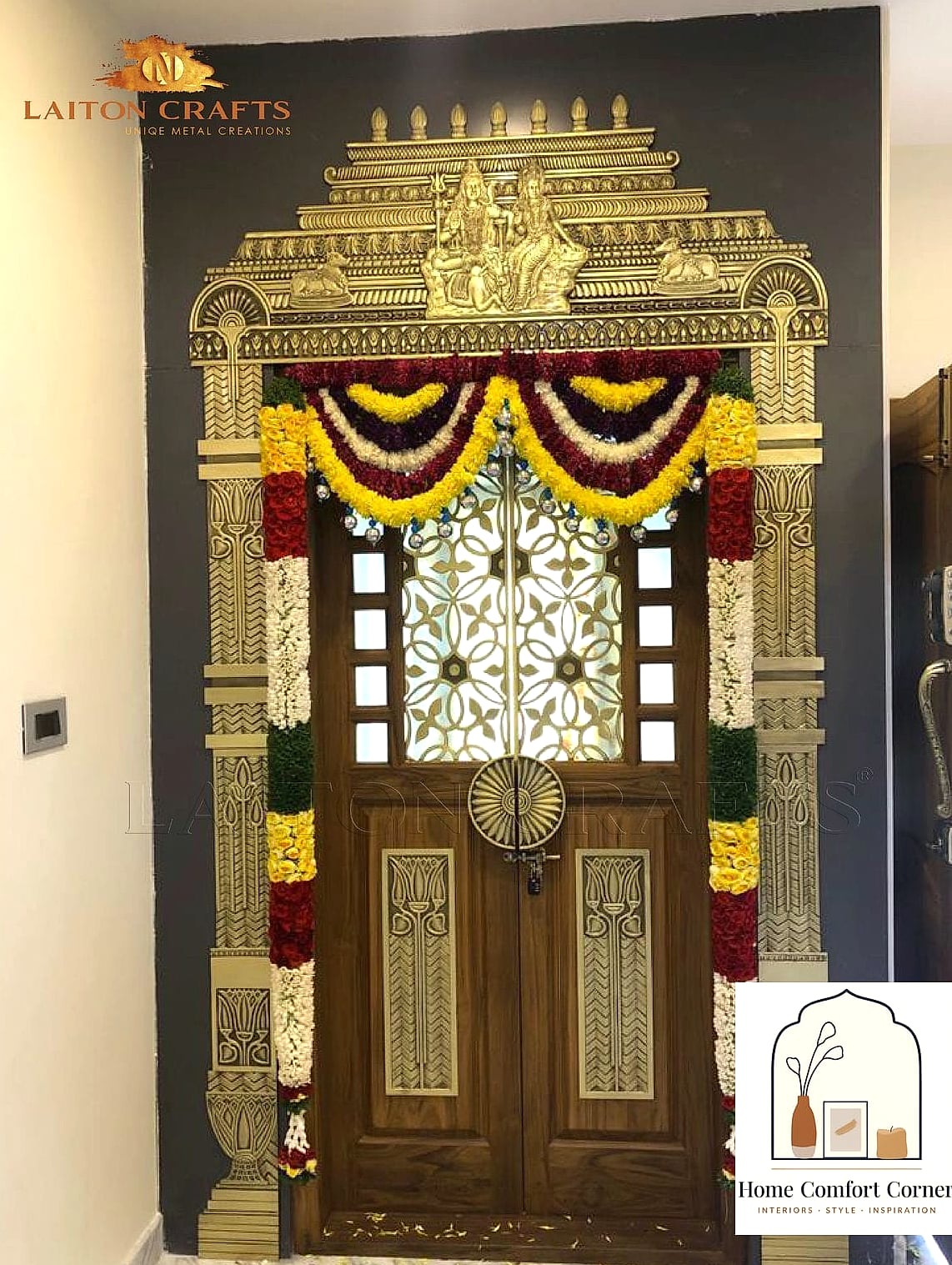
Brass diyas, copper kalash, and metal bells hanging near the entrance of the pooja space add texture and a bit of shine that catches the eye immediately.
This is an easy way to elevate a simple setup without redoing the whole room. Mix a few pieces in different finishes, brushed and polished, for a layered look rather than everything matching perfectly.
Brass does tarnish over time, so a light polish every couple of months keeps it looking its best.
Skylight or Natural Light Focus
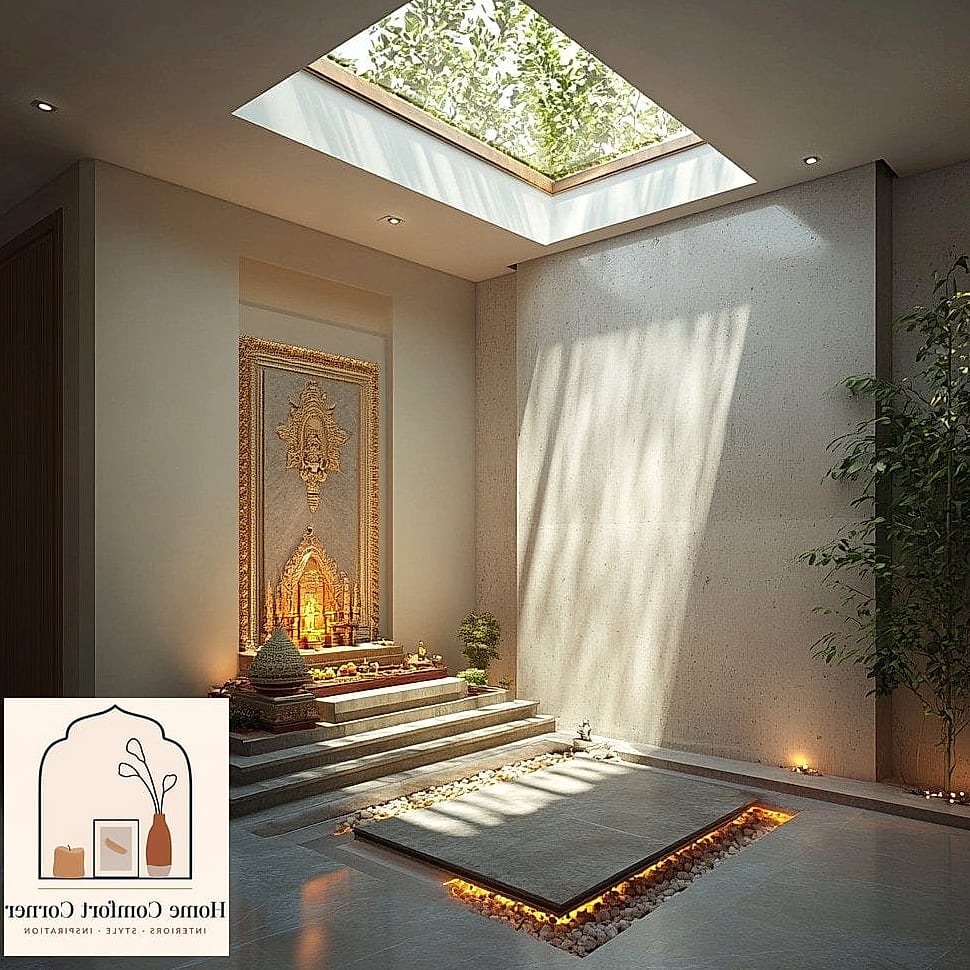
If you’re lucky enough to be designing from scratch, positioning the pooja room under a skylight or near a window changes the whole feel of the space. Natural light streaming in during morning prayers is genuinely lovely.
This works best in independent homes or top-floor apartments where a skylight is structurally possible. Sheer curtains can soften harsh afternoon light if needed.
It’s a bigger investment upfront but pays off in how the space feels day to day.
Temple-Style Dome Ceiling
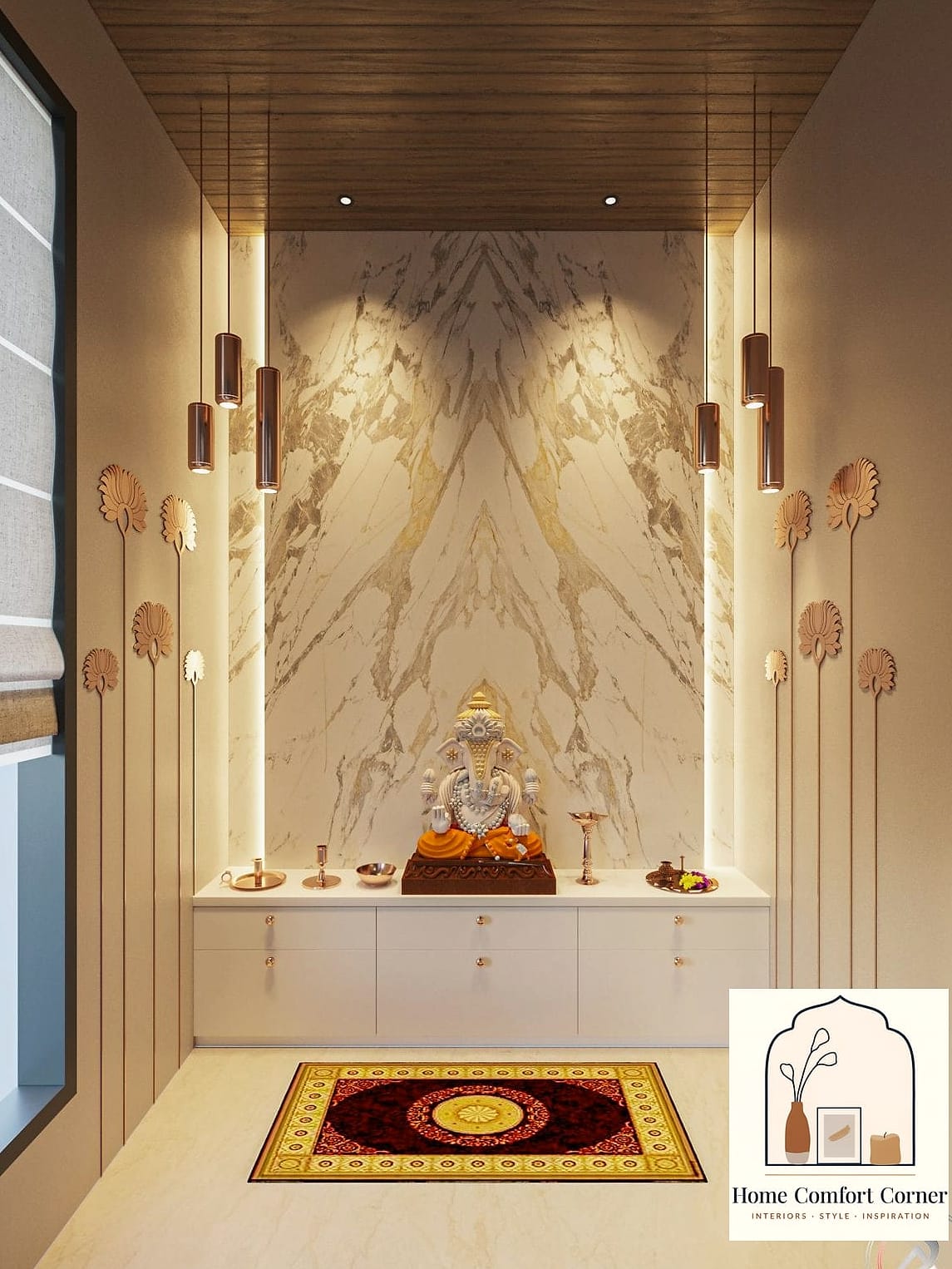
A small domed or stepped ceiling above the mandir mimics traditional temple architecture and instantly makes the space feel more sacred and intentional.
This detail is popular in larger homes with a dedicated pooja room since it requires some ceiling height and structural planning. False ceiling contractors can usually replicate this with gypsum board fairly affordably.
Add a small chandelier or hanging bell at the center point for extra impact.
Multi-Faith or Minimal Idol Display
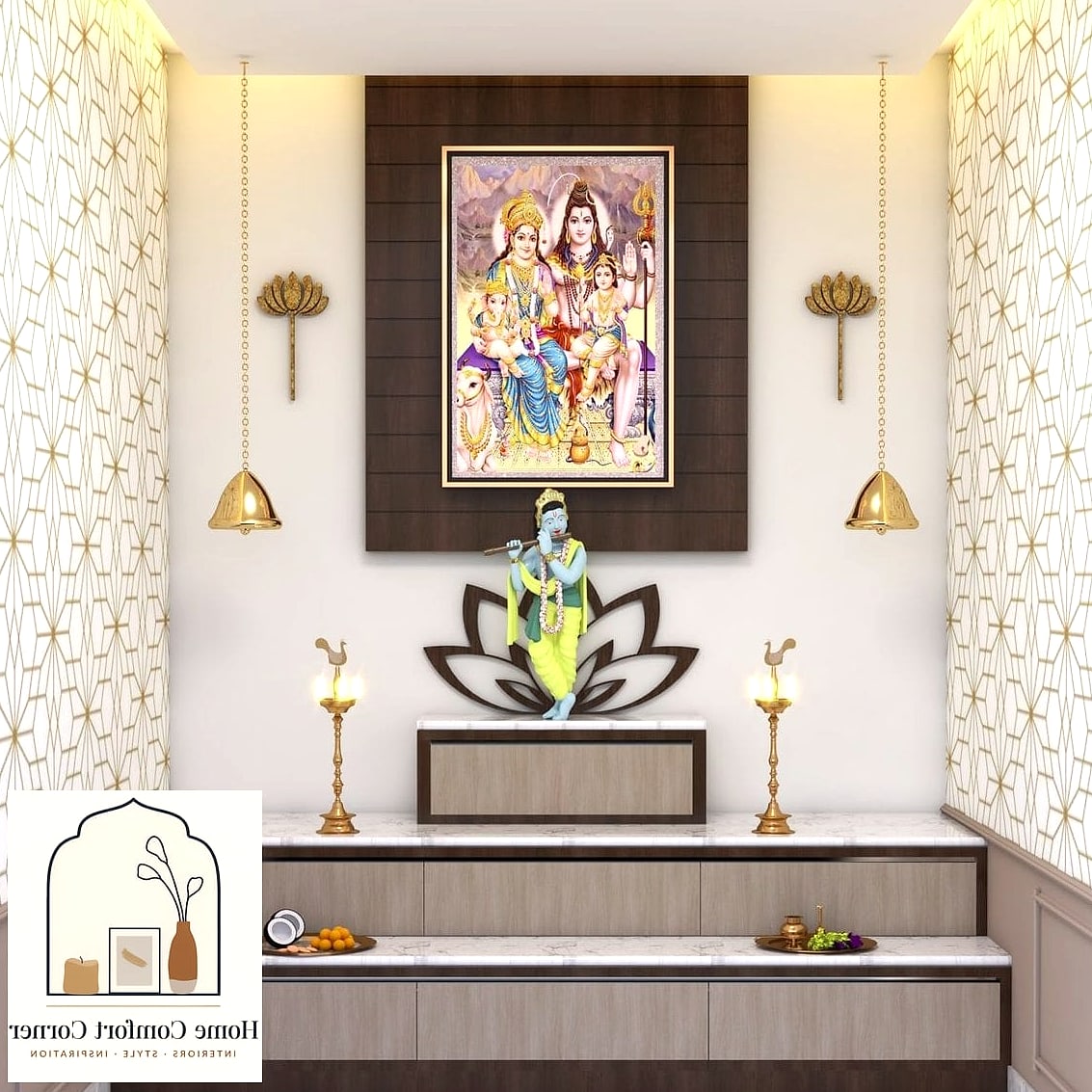
Some families are moving toward a simpler display with just one or two idols rather than a crowded shelf. It’s a quieter, more intentional approach that still gets tons of saves online.
This works well for smaller spaces or for anyone who prefers a decluttered aesthetic throughout their home. A single well-lit idol on a clean pedestal can feel just as meaningful as an elaborate setup.
Hidden Pooja Cabinet in Living Room
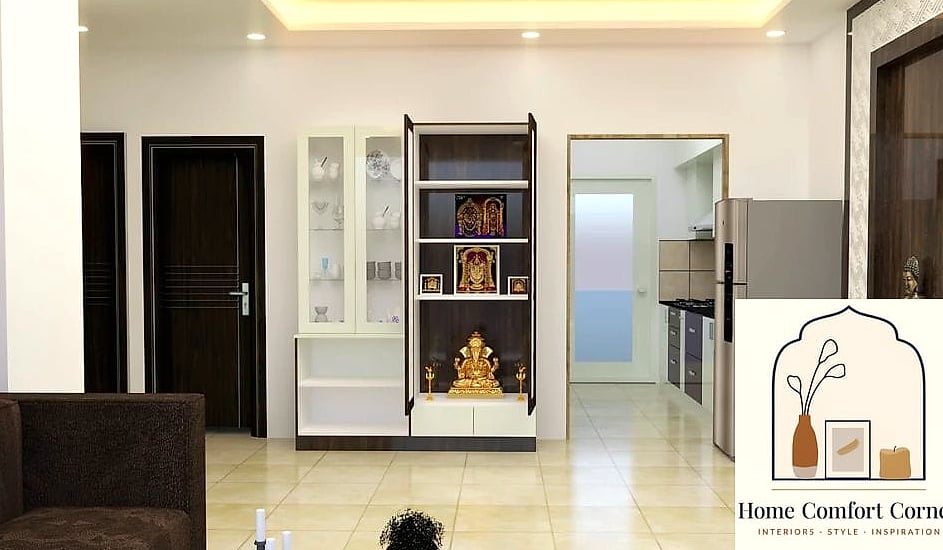
For open-concept homes, a cabinet that looks like regular built-in storage but opens to reveal a pooja space has become a clever workaround. It closes up completely when not in use.
This is ideal for anyone who wants their pooja room design to blend into a modern living room rather than stand apart from it. Choose cabinet fronts that match your existing millwork for a seamless look.
Bamboo and Cane Textures
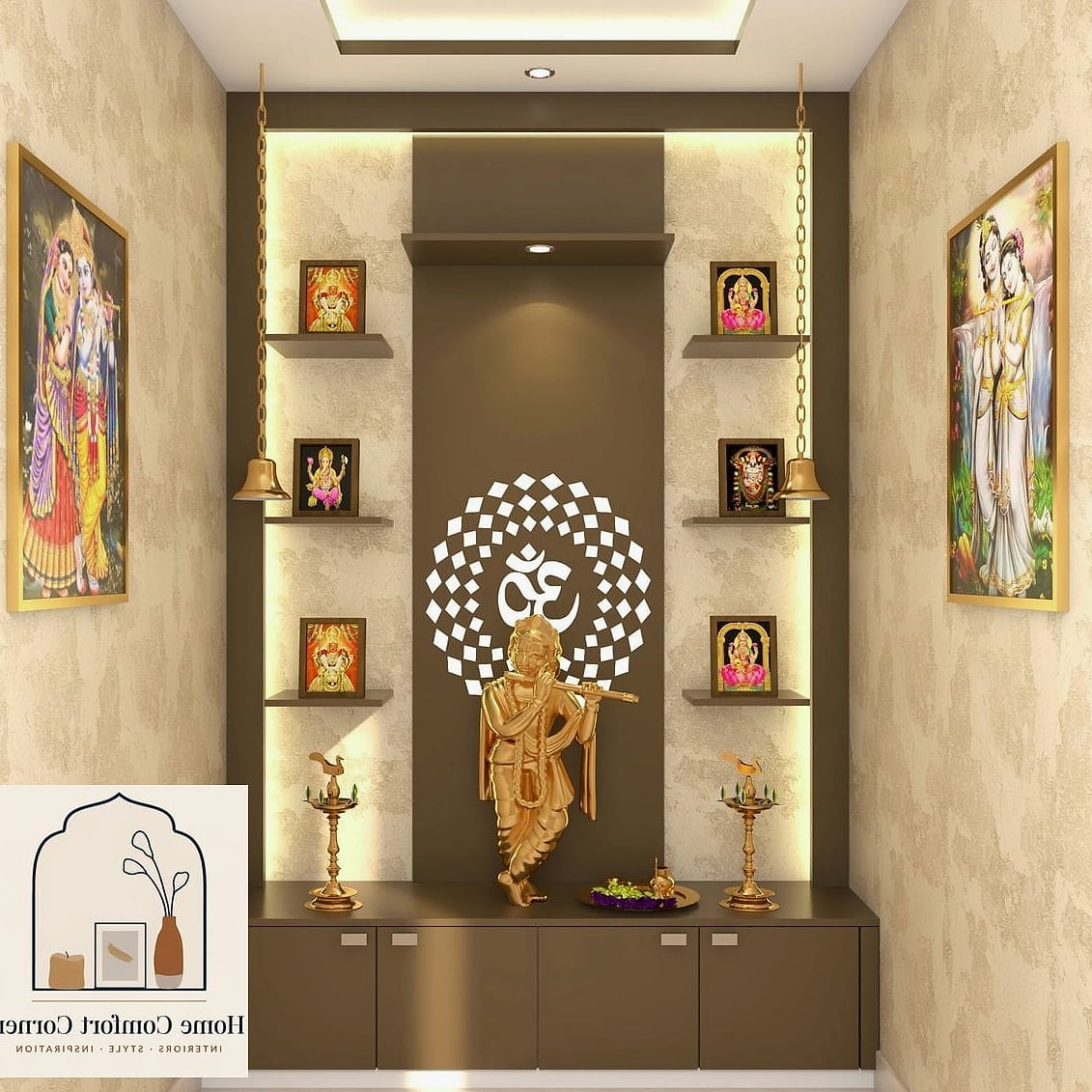
Natural textures like bamboo and cane are showing up in pooja room decor, often as room dividers or backdrop screens behind the altar.
It brings a relaxed, almost coastal feel that works surprisingly well even in traditional setups. These materials are lightweight, affordable, and easy to source, making them a good DIY-friendly option.
Keep them away from direct moisture since natural fibers can warp or mildew over time.
Mirror Work Backdrop
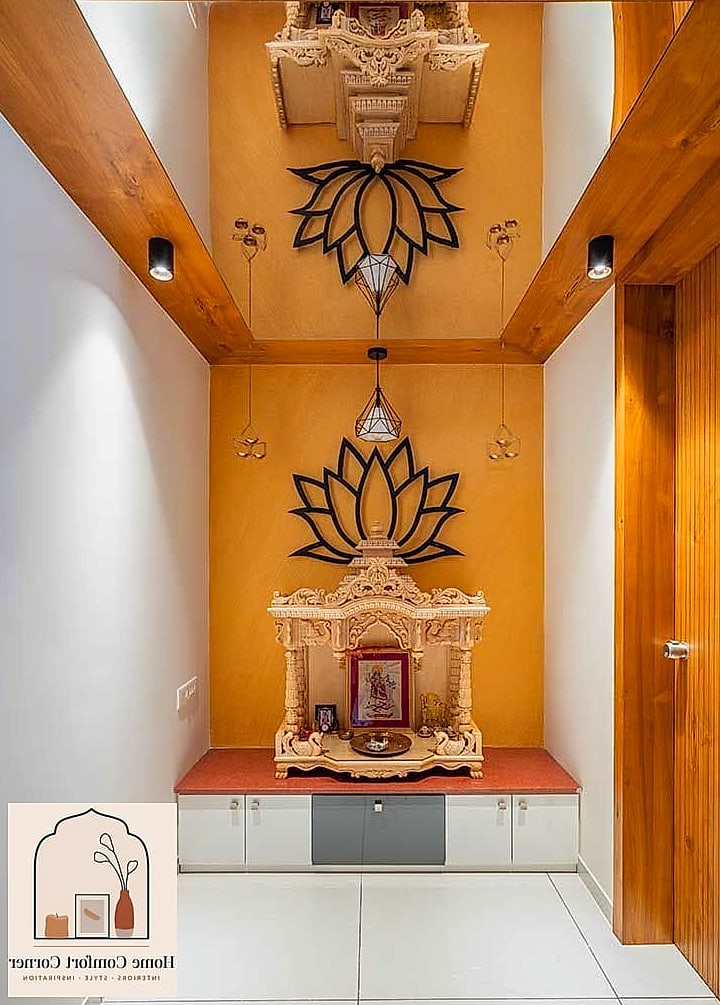
Small mirror-inlay panels behind the mandir add sparkle and dimension, especially when hit by candlelight or diya flames during evening prayers.
This Rajasthani-inspired technique works beautifully in eclectic or maximalist homes that already embrace bold pattern and color. It’s a striking focal point that doesn’t need much else around it.
Pastel and Soft Color Palette
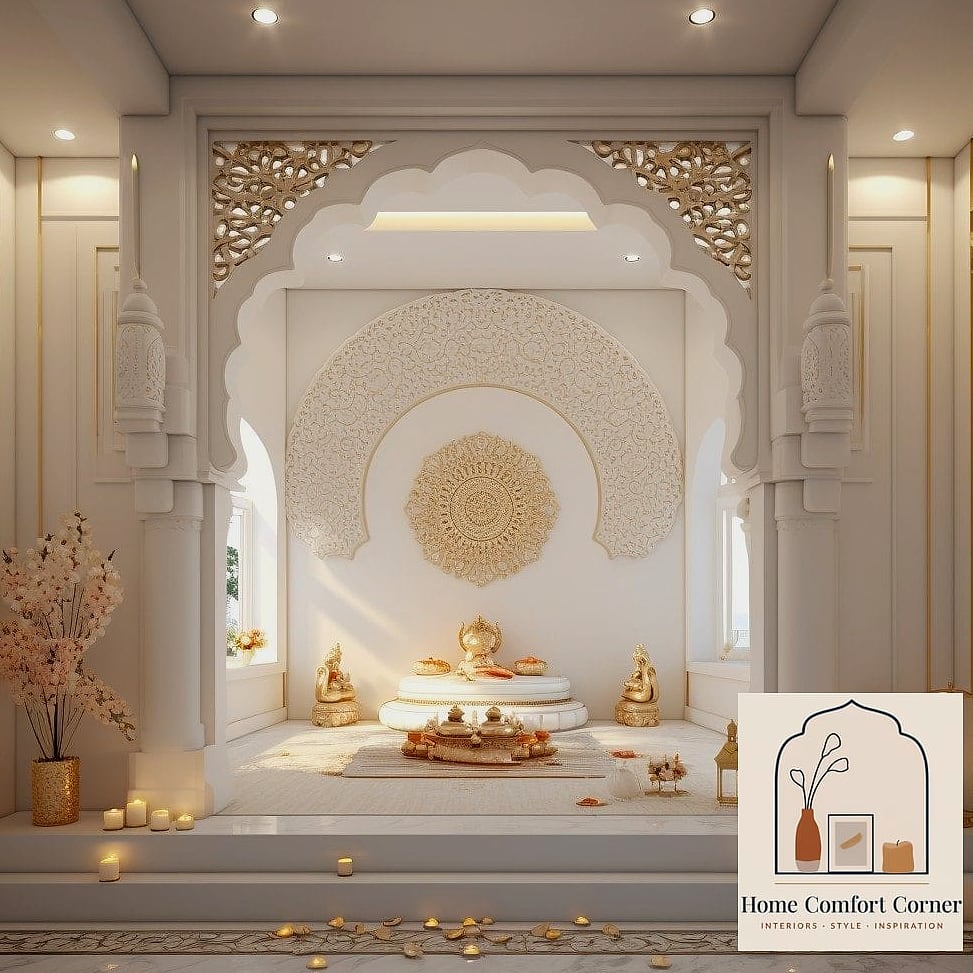
Moving away from heavy golds and reds, a lot of newer pooja room designs are leaning into soft pastels like blush pink, sage green, or powder blue.
This trend fits homes with a more modern, muted color story throughout. It keeps the space feeling serene rather than visually loud, which some people genuinely prefer for a space meant for quiet reflection.
Floor Seating with Low Platform
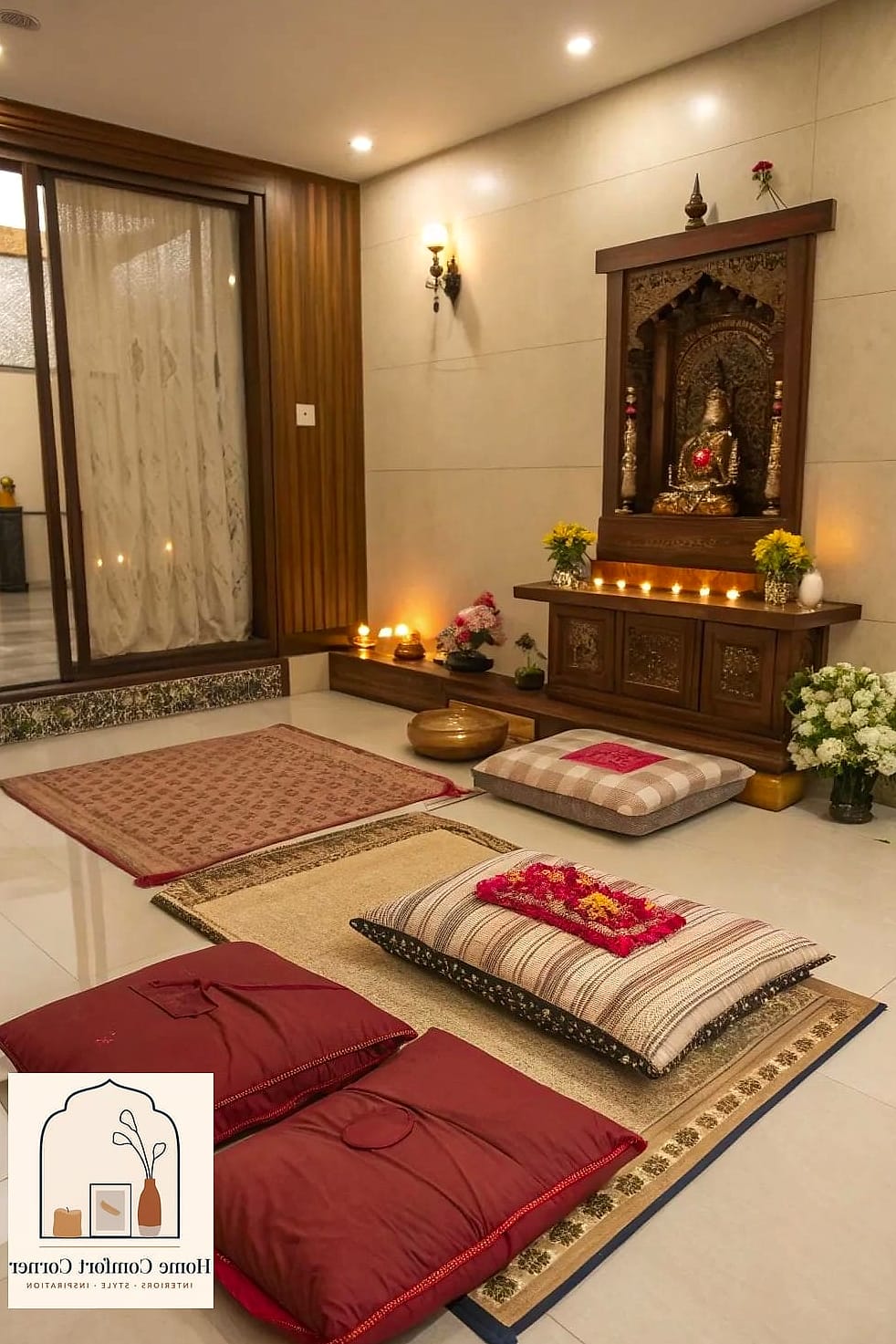
A low wooden or marble platform paired with floor cushions creates a more traditional, grounded prayer experience rather than a standing altar setup.
This idea works well in homes that have the floor space to spare and where family members regularly sit together for prayers or aarti. Add a small low table nearby for prasad or reading materials.
Peel-and-Stick Wallpaper Backdrop
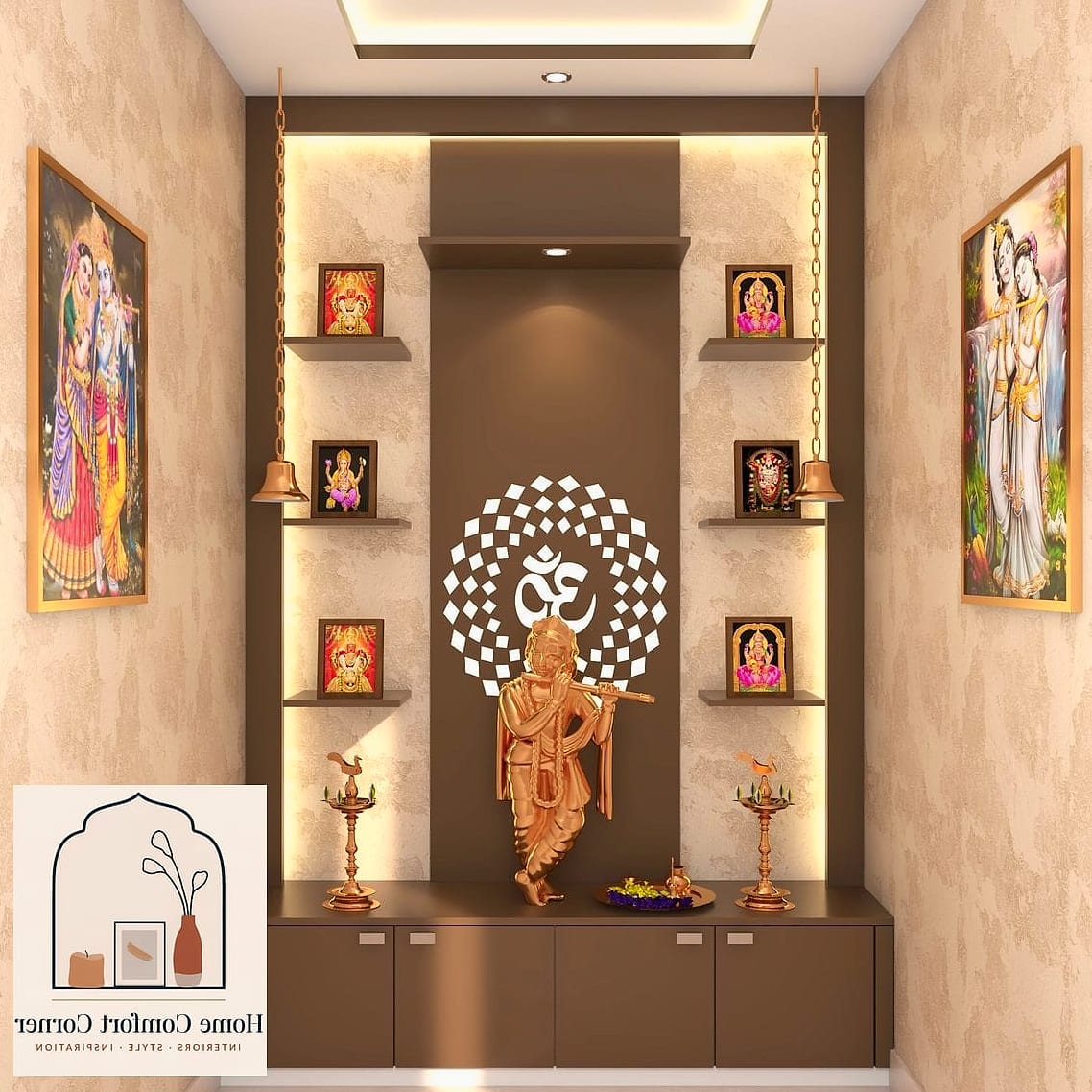
Not everyone wants to commit to permanent wall treatments, and that’s where peel-and-stick wallpaper comes in. Temple-motif or mandala-print options give you a decorative backdrop without any real commitment.
This is a genuinely renter-friendly solution and one of the more budget-conscious ideas on this list. It’s also easy to swap out if you redecorate or move.
Compact Corner Mandir Unit
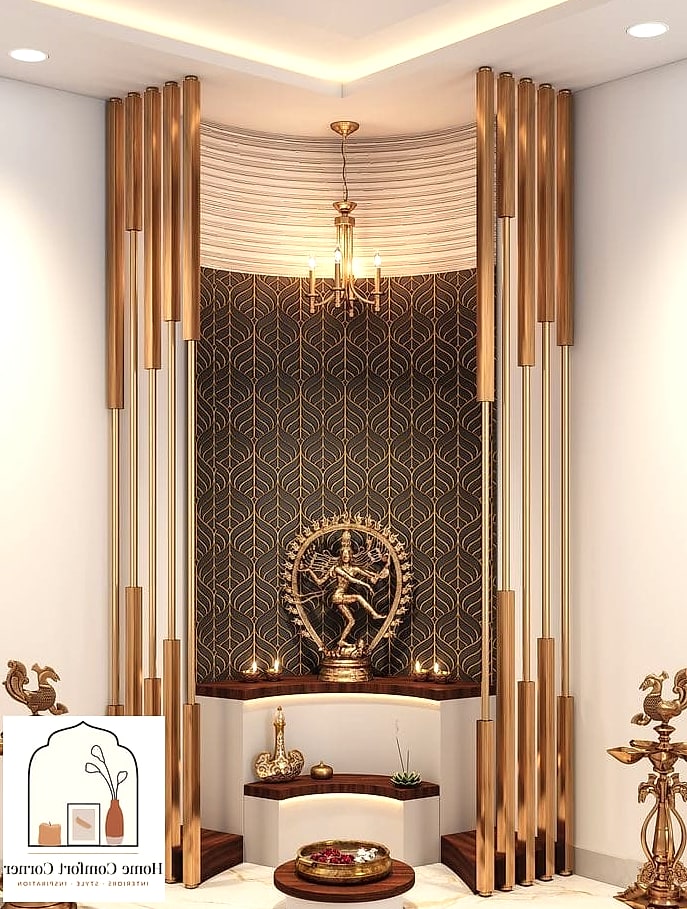
Corner units are having a moment because they make use of otherwise wasted space. A triangular or angled mandir tucked into a room corner frees up wall space elsewhere.
This is a smart pick for smaller bedrooms or living rooms where a flat-wall mandir just wouldn’t fit comfortably. Many corner units come with built-in shelving for storage of everyday pooja items.
Fresh Flower and Greenery Styling
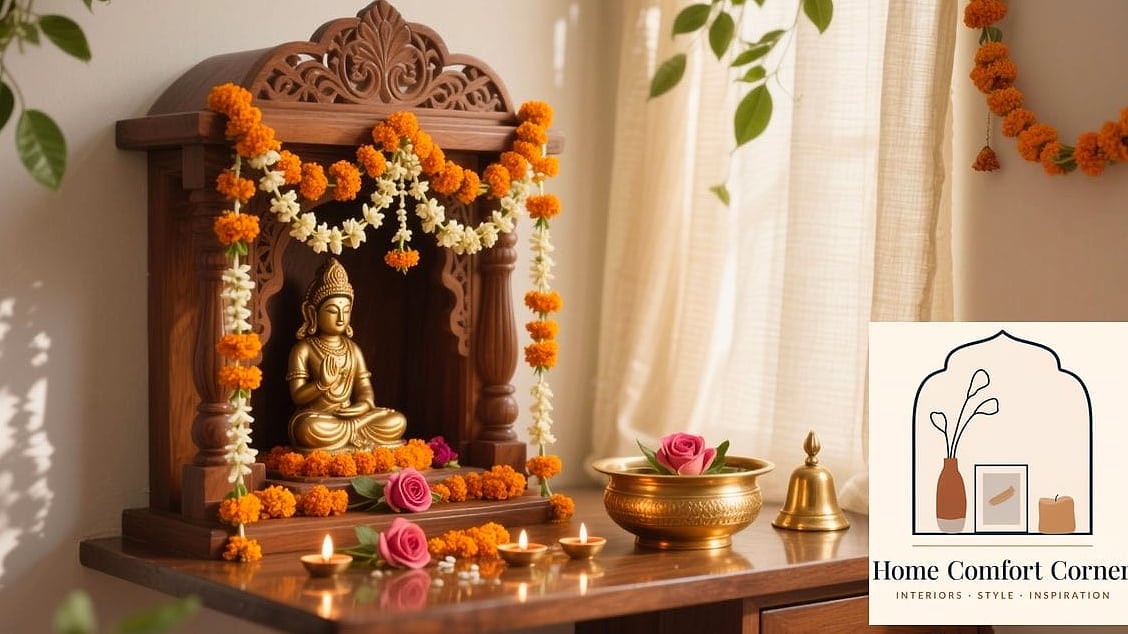
Fresh marigolds, rose petals, or a small potted tulsi plant near the altar bring life and fragrance into the space in a way that decor alone can’t.
This is one of the easiest and least expensive ways to refresh a pooja room regularly. Swapping flowers weekly also becomes a nice little ritual in itself, not just decoration.
Layered Lighting with Diyas and LEDs
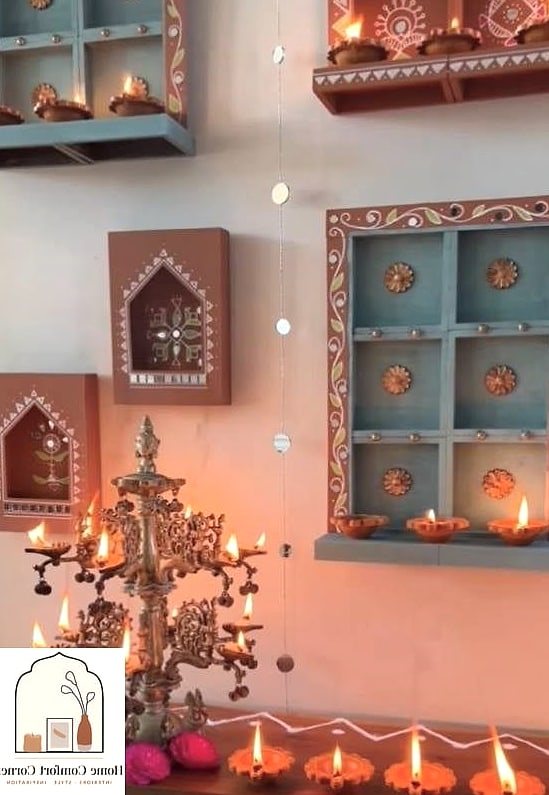
Combining traditional diyas with subtle LED strip lighting gives you the best of both worlds, ambiance from real flame and consistent everyday lighting from LEDs.
This layered approach is popular because it’s practical for daily use while still feeling festive during special occasions. Warm white LEDs tend to complement diya light better than cooler tones, which can feel a bit clinical by comparison.
Pulling together a pooja room that feels personal takes a little patience, but you don’t need a huge budget or a dedicated room to make it work. Start with what matters most to you, whether that’s the lighting, the materials, or just having a calm little corner to return to each day, and build from there.