13 Room Ideas For Small Rooms Ideas From Homes We Absolutely Love
- Built-In Window Seats With Hidden Storage
- Vertical Stripes To Trick The Eye
- Floating Shelves Instead Of Bulky Bookcases
- A Daybed That Works As A Sofa
- Mirrors Placed Across From Windows
- A Micro Mudroom By The Back Door
- Curtains Instead Of A Bedroom Door
- Corner Desks That Disappear Into The Room
- Grouping Small Furniture Instead Of One Big Piece
- Open Shelving In A Small Kitchen
- A Reading Nook In An Unused Closet
- Multi-Purpose Ottomans With Storage
- Layered Lighting Instead Of One Overhead Fixture
13 Room Ideas For Small Rooms Ideas From Homes We Absolutely Love
Small rooms get a bad reputation they honestly don’t deserve. Sure, you can’t fit a sectional the size of a small country, but that limitation forces some genuinely smart design choices. We’ve been pulling inspiration from real homes lately, and the small spaces are consistently more interesting than the big ones. Here are thirteen ideas worth stealing.
Built-In Window Seats With Hidden Storage
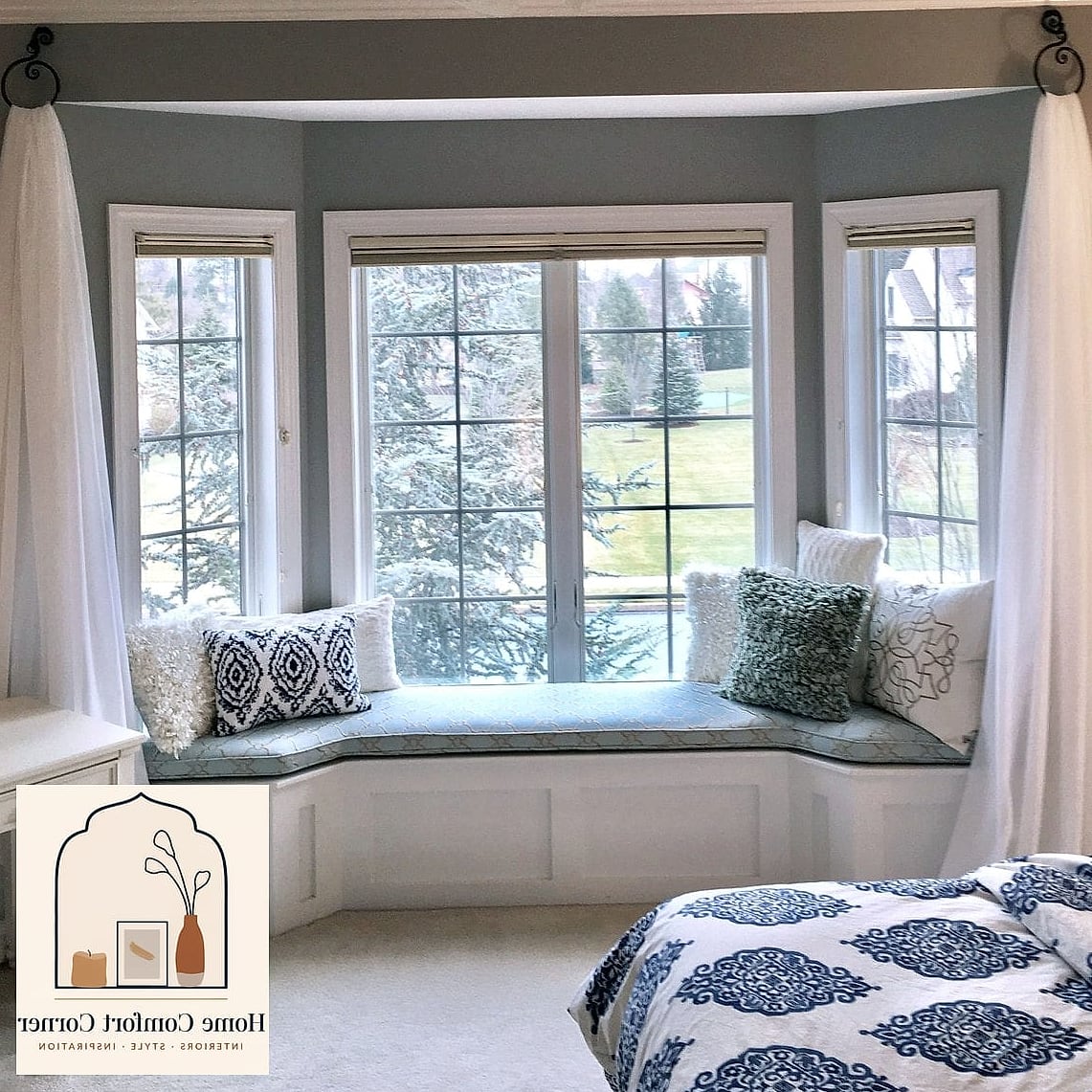
A window seat does double duty in a way few other features can. You get a cozy reading nook and a place to stash blankets, books, or off-season clothes underneath the hinged top or in pull-out drawers.
This works especially well in a small bedroom or a nook off the living room where a full chair would eat up too much floor space. Homeowners love it because it turns an awkward corner into the most-used spot in the house.
Go with a simple painted wood build for a classic look, or add paneling and trim for something more custom. Top it with a cushion in a durable, washable fabric if kids or pets are involved.
Vertical Stripes To Trick The Eye
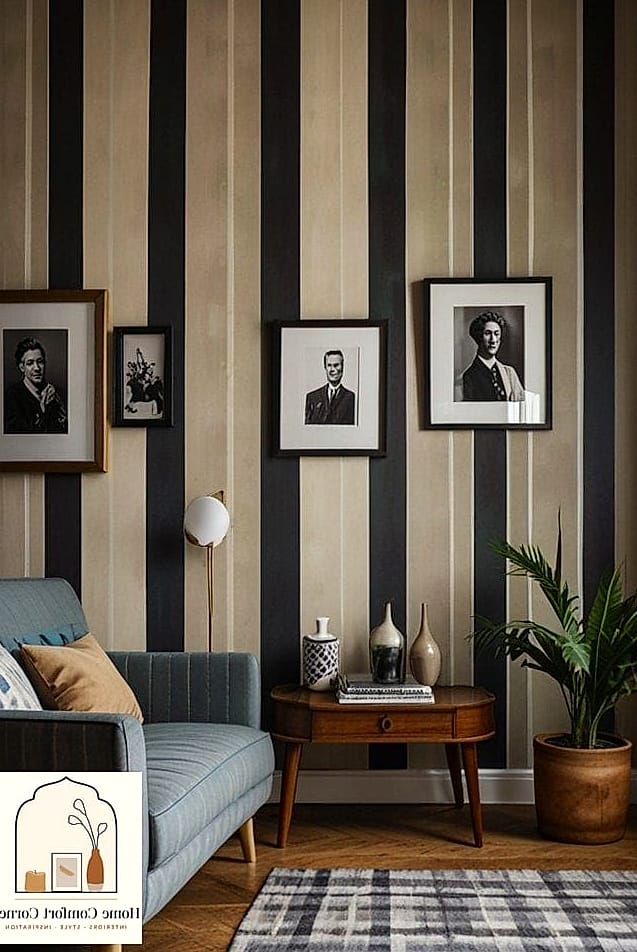
Painting or wallpapering vertical stripes on the walls of a small room draws the eye upward, which makes ceilings feel taller and the whole space feel less boxed in. It sounds like a simple trick, but it genuinely changes how a room reads.
This is a favorite in small bathrooms and narrow hallways where there’s not much floor space to distract from the walls. Soft, low-contrast stripes tend to look more sophisticated than bold, high-contrast ones.
Peel-and-stick wallpaper is a great renter-friendly option if you don’t want to commit to paint. For something more permanent, a matte finish paint in two close tones keeps it from feeling too busy.
Floating Shelves Instead Of Bulky Bookcases
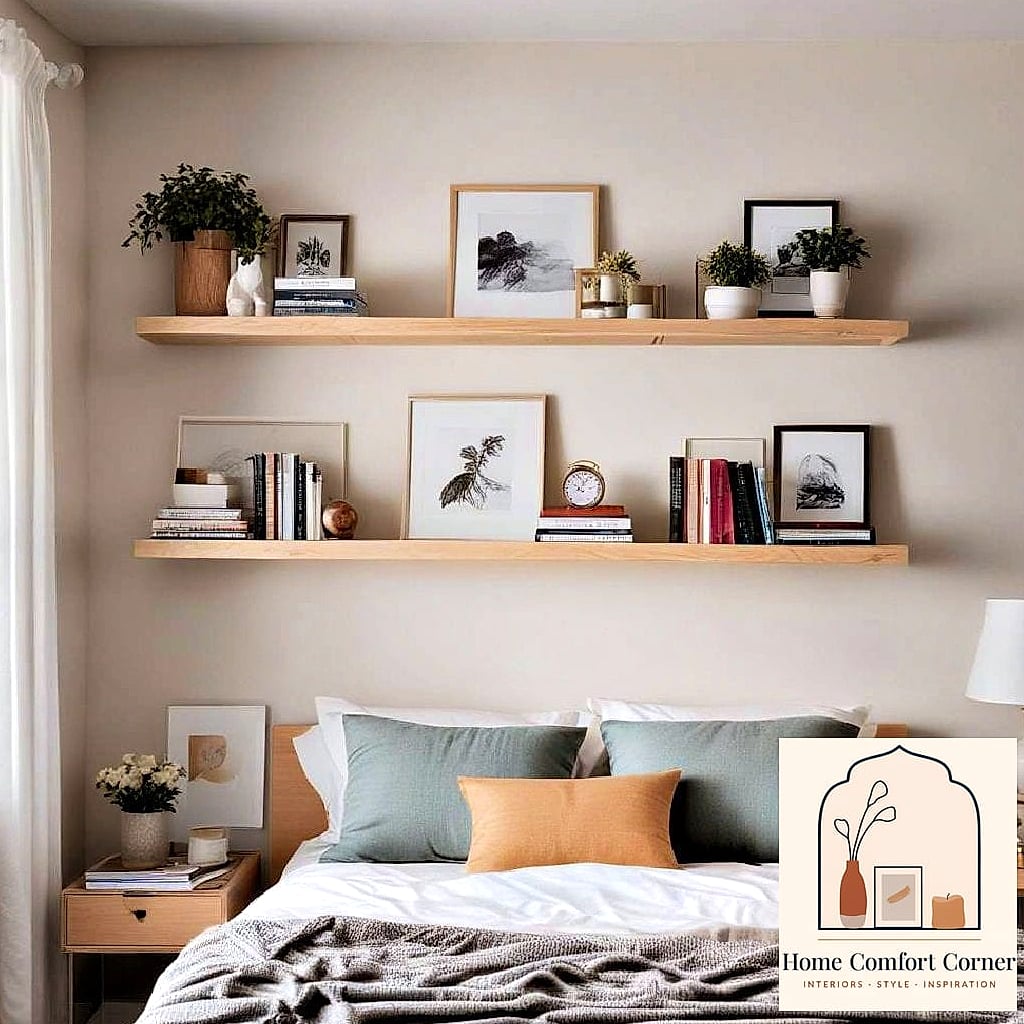
Floating shelves hold books, plants, and decor without the visual weight of a traditional bookcase sitting on the floor. Because they mount right to the wall, the space underneath still reads as open.
Small living rooms and home offices benefit the most here, especially when floor space is already tight from a desk or seating. It’s a detail that instantly makes a room feel more curated without requiring a full furniture overhaul.
Wood shelves in warm tones add texture, while black metal brackets bring a slightly more industrial edge. Keep styling loose with a mix of books, a small plant, and a few personal objects rather than packing every shelf edge to edge.
A Daybed That Works As A Sofa
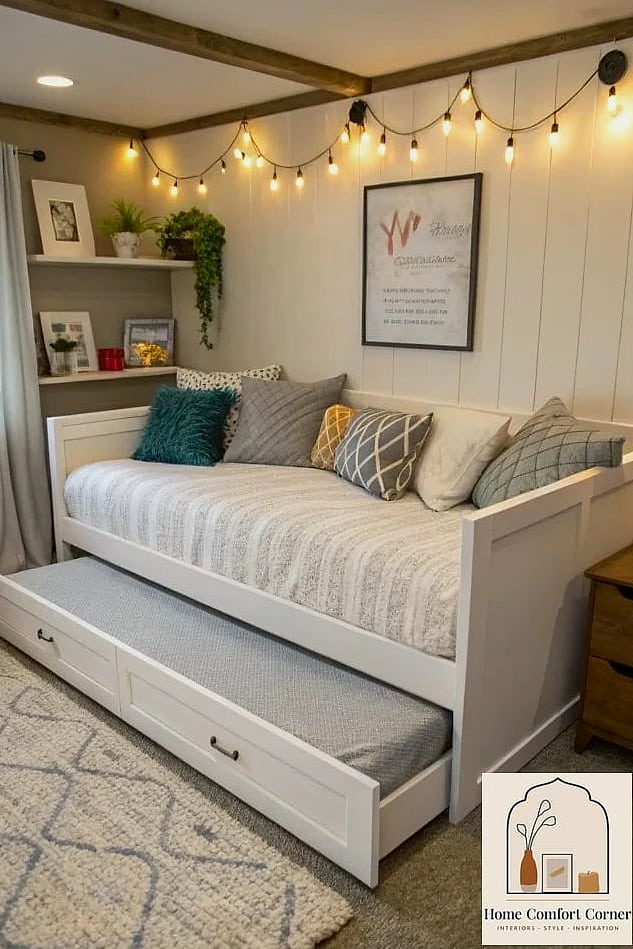
Swapping a traditional sofa for a daybed is one of those small-space moves that changes everything. It reads as a couch during the day and doubles as a guest bed at night, which matters a lot when square footage is limited.
This is ideal for a small guest room, home office, or studio apartment where one room has to pull double duty. Guests get a real bed instead of an air mattress on the floor, and you get your office back during the day.
Look for one with a trundle if you host overnight guests often, or keep it simple with bolster pillows arranged like a sofa back. Neutral upholstery makes the switch between “sofa” and “bed” feel more seamless.
Mirrors Placed Across From Windows
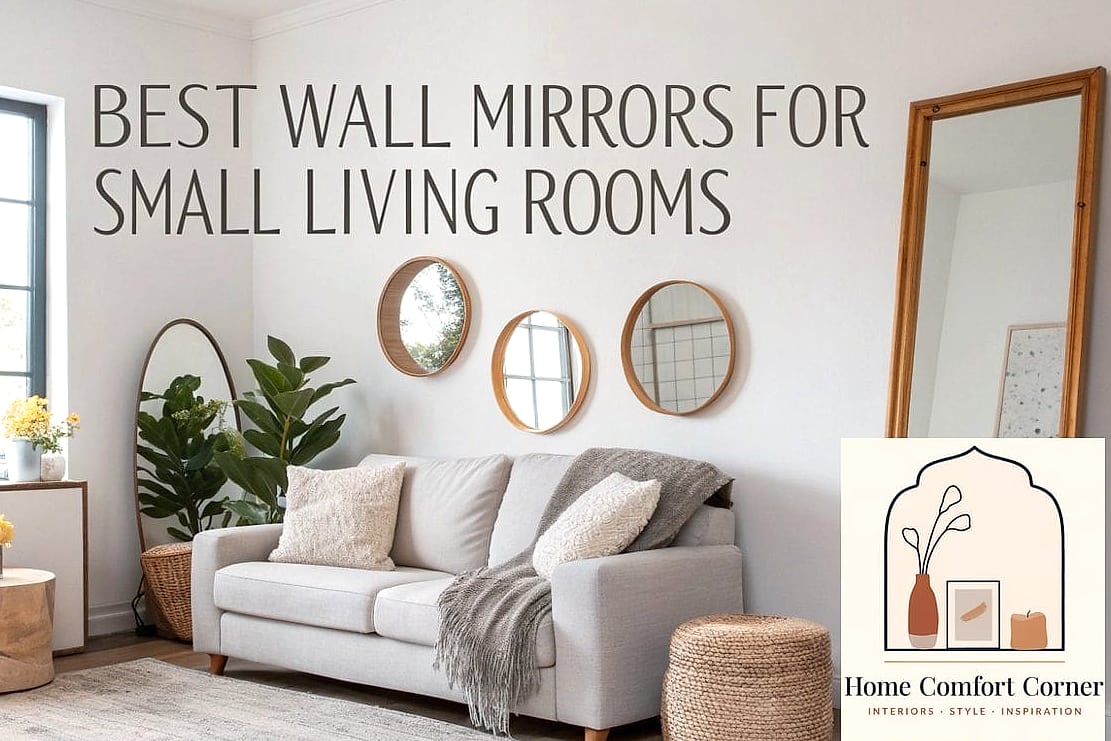
Hanging a large mirror directly across from a window bounces natural light back into the room and doubles the sense of openness. It’s an old trick, but it still works better than almost anything else you can do with fifty dollars.
Small entryways and dim bedrooms benefit most from this placement, especially in older homes with smaller window openings. The room doesn’t get bigger, obviously, but it certainly feels like it.
A simple frame in brushed brass or matte black keeps the focus on the reflection rather than the mirror itself. Leaning a large mirror against the wall instead of hanging it also adds a slightly more relaxed, collected look.
A Micro Mudroom By The Back Door
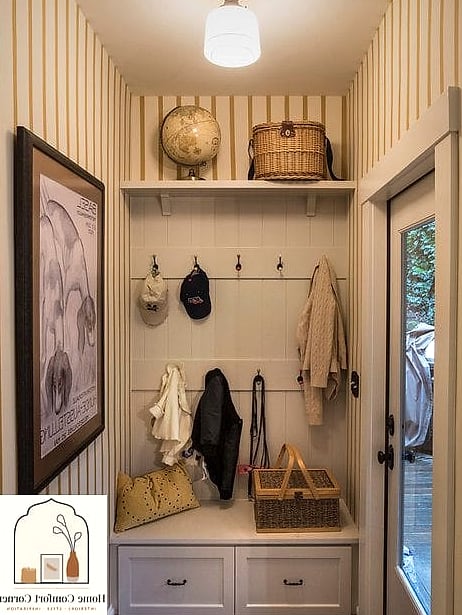
Even a two-foot-wide strip of wall by a back door can become a functional mudroom with the right setup. Hooks, a narrow bench, and a couple of baskets are usually all it takes.
This is a lifesaver in older homes that were never built with a dedicated entry space. Families with kids or dogs especially love having one designated spot for shoes, bags, and leashes instead of a pile by the door.
Wall-mounted hooks in brushed brass or matte black look intentional rather than makeshift, and a slim bench with baskets underneath keeps shoes off the floor. Renters can lean on adhesive hooks and a freestanding shoe rack instead of anything permanent.
Curtains Instead Of A Bedroom Door
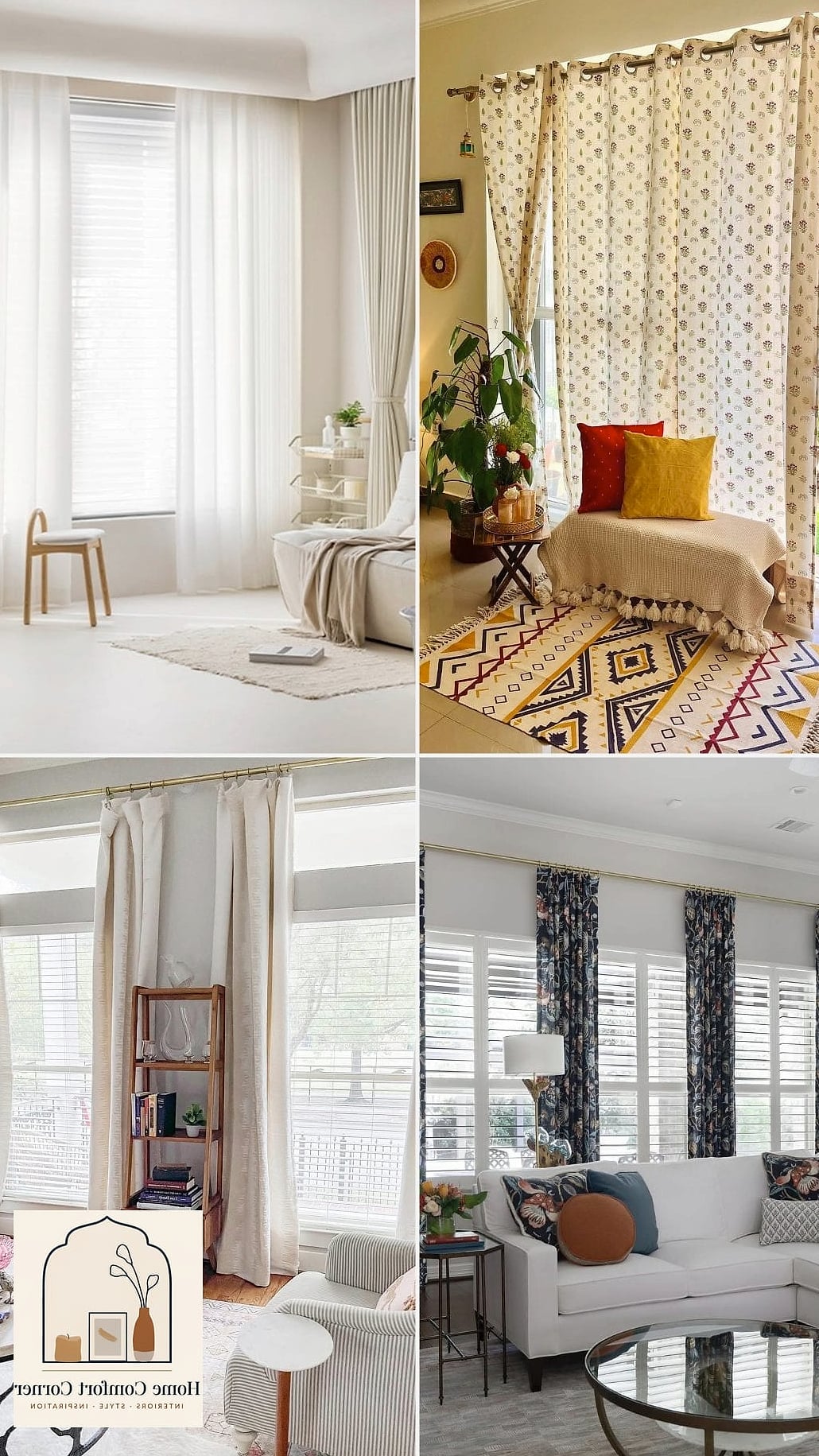
In tight floor plans, a bedroom door swinging open can eat up more usable space than the room can spare. Swapping it for a curtain on a tension rod solves that instantly and adds a bit of softness to the room besides.
This idea shows up a lot in studio apartments and lofts where a bedroom nook is separated from the main living area rather than fully enclosed. It’s not for every situation, obviously, but where privacy needs are low, it works beautifully.
A heavier fabric like linen or velvet blocks more light and sound than a sheer panel would. It’s also about as renter-friendly as design choices get, since there’s nothing to patch or repaint when you move out.
Corner Desks That Disappear Into The Room
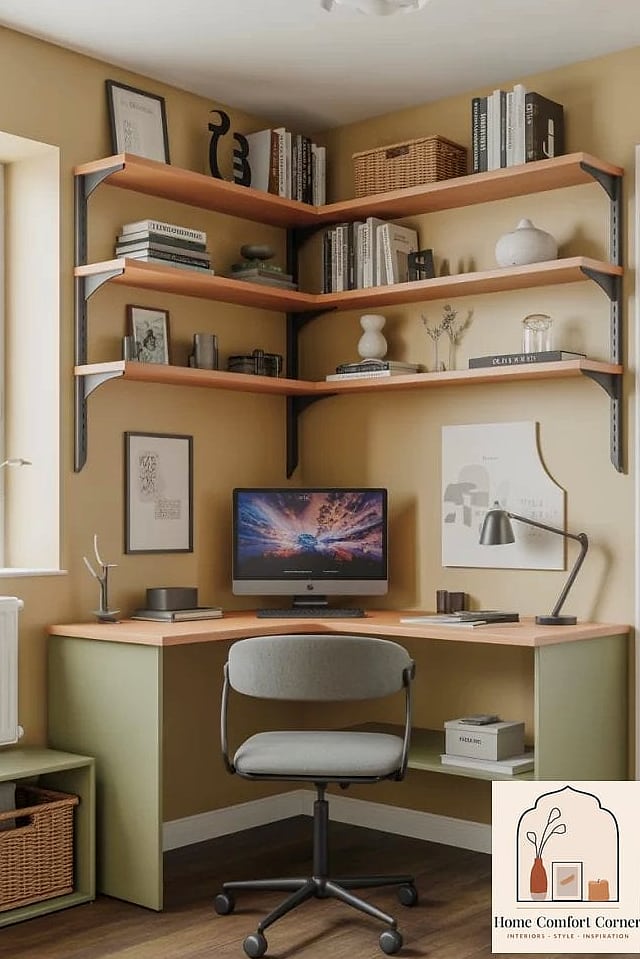
A desk tucked into a corner, especially one that matches the wall color or blends with surrounding furniture, takes up minimal visual space while still giving you a real workspace. It’s a small detail that makes a home office feel less like an afterthought crammed into a bedroom.
This works well in bedrooms, hallway nooks, and even closets that have been converted into micro offices. The corner placement means the desk isn’t competing with the bed or seating for attention.
A narrow floating desk with a single drawer keeps things simple, while a small L-shaped corner desk offers more surface area without extending far into the room. Cord organizers and a slim desk lamp keep the setup looking tidy rather than cluttered.
Grouping Small Furniture Instead Of One Big Piece
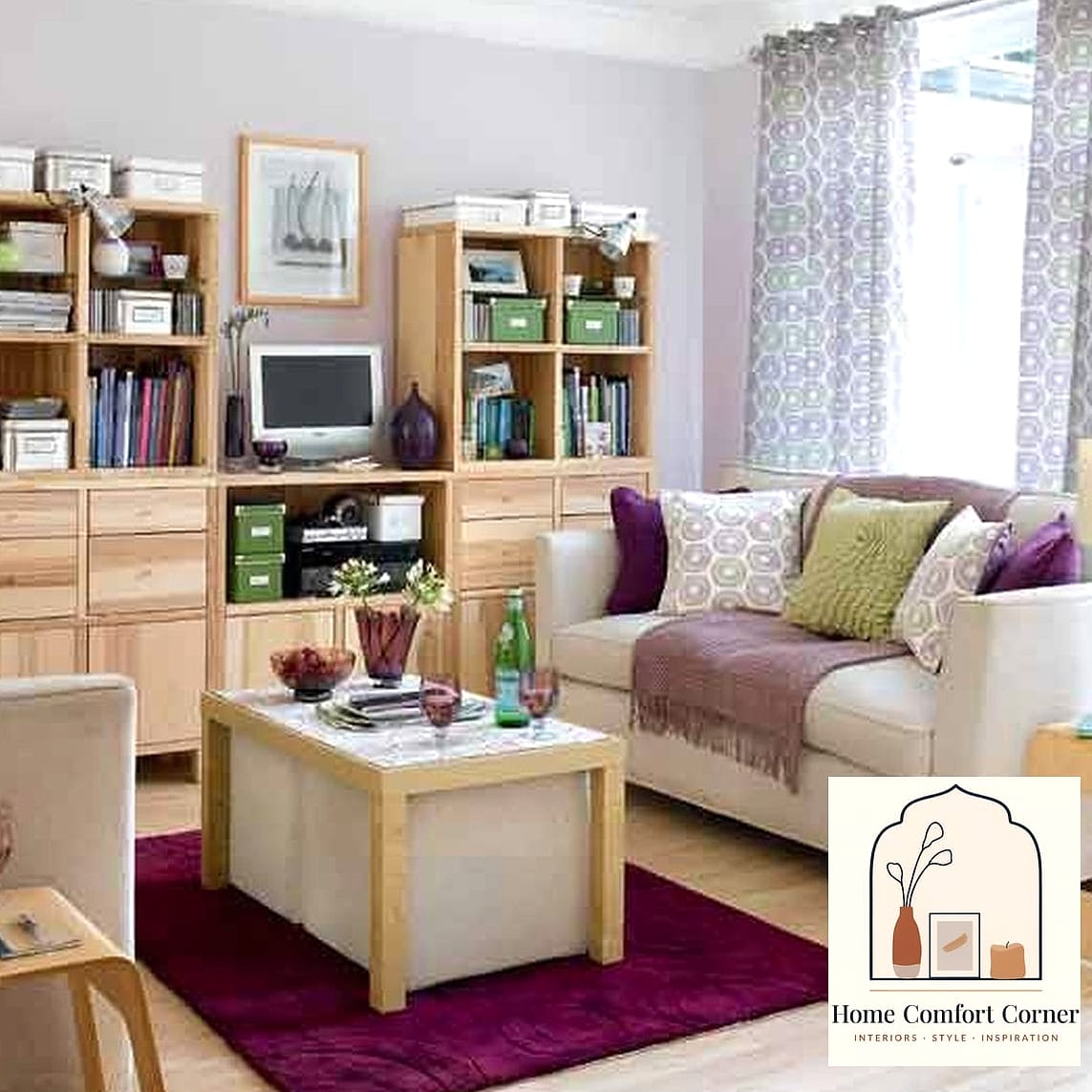
It seems counterintuitive, but a small room often looks better with two smaller chairs than one oversized sofa. Multiple smaller pieces let you configure the layout in different ways and avoid the “one giant blob of furniture” look.
This works particularly well in small living rooms or apartments where a full sectional would block walkways. Homeowners love the flexibility since smaller pieces can be rearranged for movie nights, guests, or just a change of scenery.
Two accent chairs in a similar fabric with a small side table between them read as intentional rather than sparse. Mixing in a pouf or ottoman adds extra seating without adding bulk.
Open Shelving In A Small Kitchen
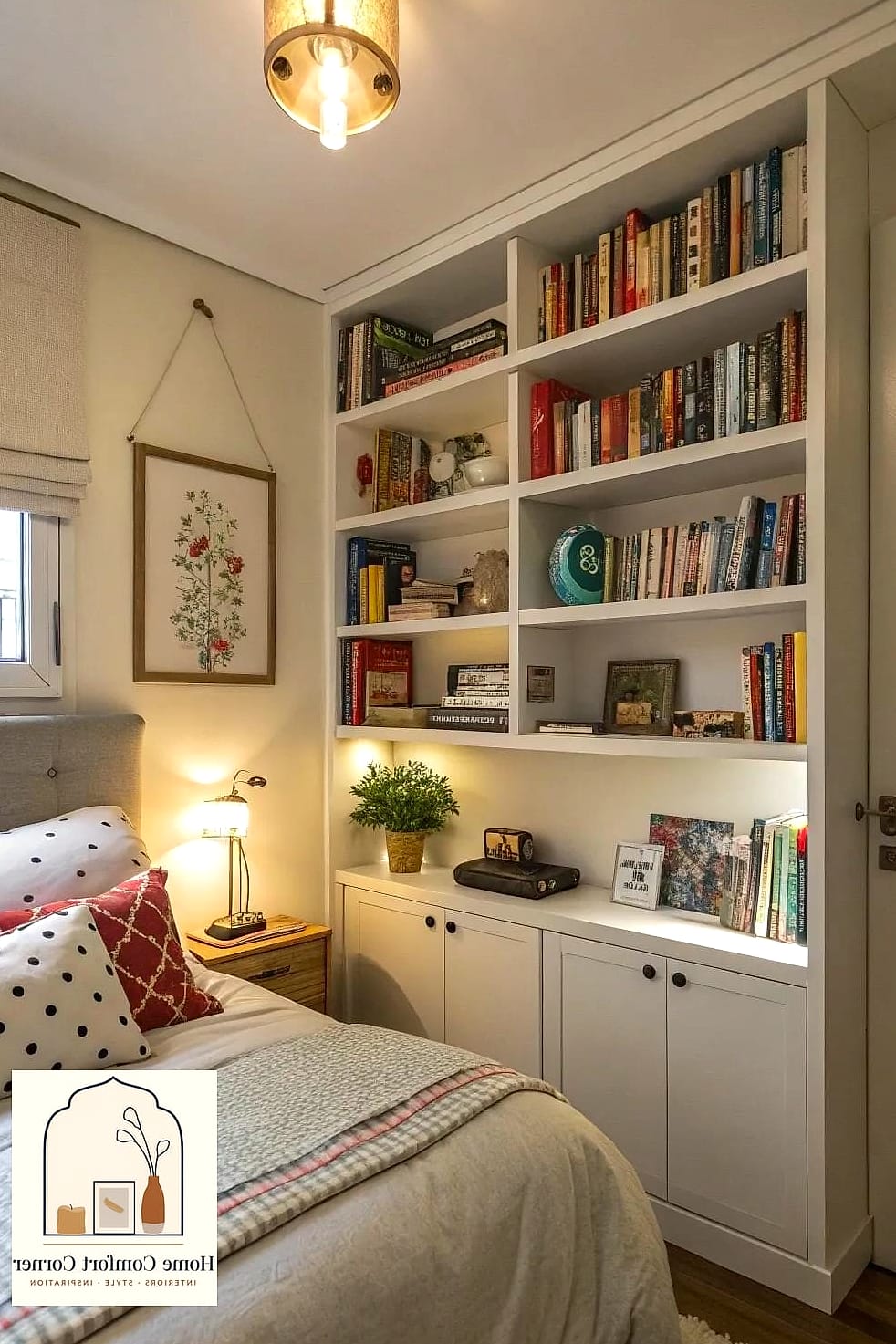
Pulling a few upper cabinets and replacing them with open shelving makes a small kitchen feel noticeably less closed in. Dishes and glassware become part of the decor instead of hidden behind cabinet doors.
This is a favorite in galley kitchens and small kitchens with low ceilings, where solid upper cabinets can make the whole room feel heavier. It also just makes everyday dishes easier to grab.
Wood shelves against a neutral or painted backsplash keep things warm, while a herringbone tile backdrop adds a bit more texture behind the dishes. Keep only what you use regularly on display, and tuck the rest into closed lower cabinets to avoid visual clutter.
A Reading Nook In An Unused Closet
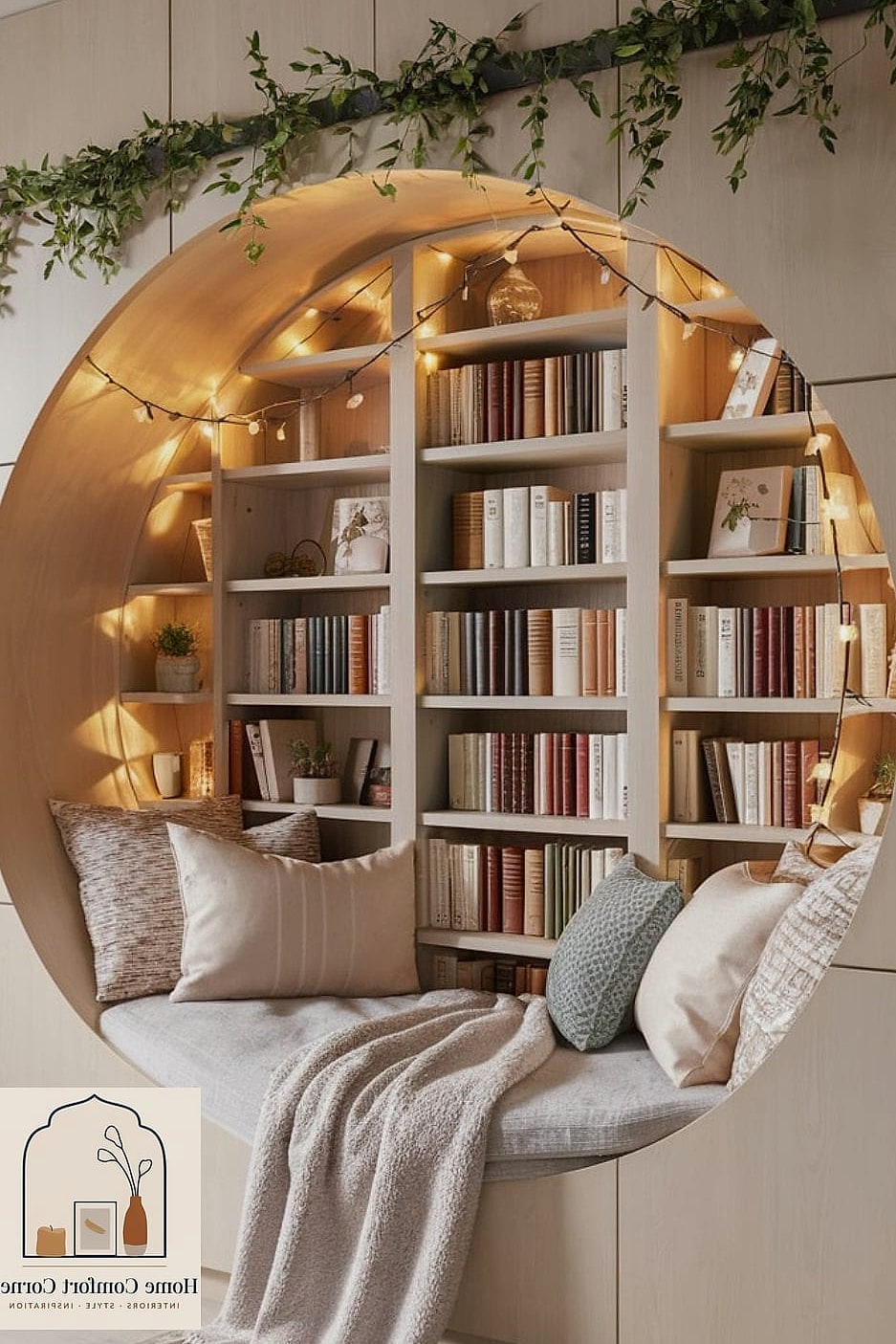
Pulling the door off a shallow closet and turning it into a mini reading nook is one of the more charming small-space ideas we’ve seen lately. A cushion, a small light, and a shelf are really all it takes.
This works best with kids’ bedrooms or a spare closet in a home office that isn’t earning its keep. It gives kids a cozy spot that feels like their own without needing an extra room.
A built-in cushion on plywood base keeps costs low, and a small clip-on light means you don’t need to run new electrical. Add a few floating shelves inside for books and a favorite stuffed animal or two.
Multi-Purpose Ottomans With Storage
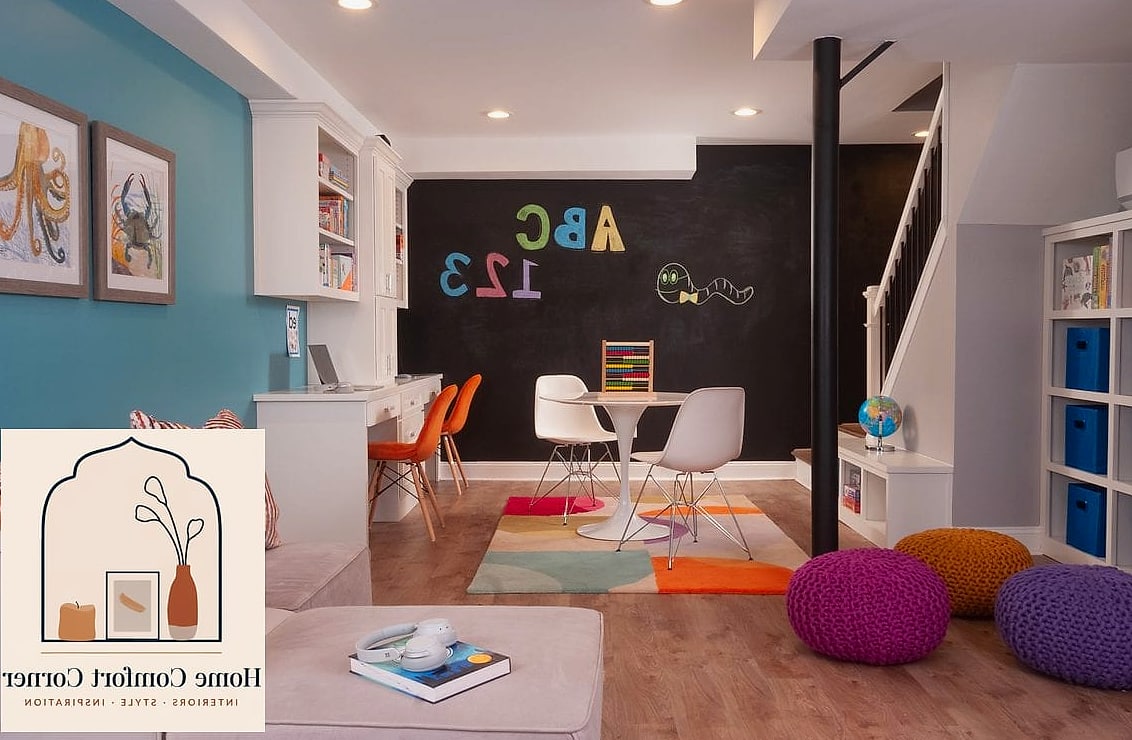
An ottoman that opens up for storage does more work than almost any other piece of furniture in a small living room. It’s a footrest, extra seating, a coffee table with a tray on top, and hidden storage all at once.
This is especially useful in studio apartments and small living rooms where every piece of furniture needs to justify its footprint. Blankets, remotes, and board games all have a home without cluttering up open shelving elsewhere.
Leather or performance fabric options hold up well with kids and pets, while a woven or linen option leans more relaxed. A tray on top keeps it functional as a coffee table for drinks or a laptop.
Layered Lighting Instead Of One Overhead Fixture
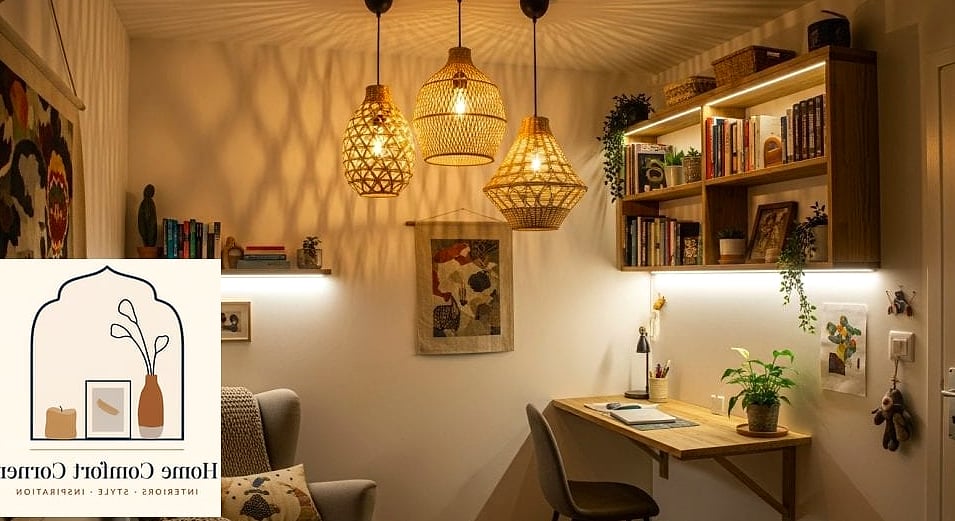
Relying on a single overhead light in a small room tends to flatten the whole space and make it feel more like an office than a home. Layering in a floor lamp, table lamp, and maybe a plug-in sconce changes the mood entirely.
This makes a real difference in small bedrooms and living rooms where a single flush-mount fixture is often the builder-grade default. Warmer, layered light makes a small room feel cozy rather than cramped.
Warm bulbs in the 2700K range read as soft and inviting rather than clinical. A dimmer switch on the main fixture, paired with a lamp or two on a timer, gives you flexibility depending on the time of day.
Small rooms reward a little creativity in a way bigger spaces sometimes don’t. When square footage is limited, every choice matters more, and that’s honestly part of what makes these spaces so fun to design. Pick two or three ideas from this list that fit your space and your budget, and go from there. You don’t need to overhaul the whole room to feel the difference.