12 Coastal Room Decor Designs You Need to See Right Now
- Weathered Wood Accent Walls
- Rattan and Woven Furniture Pairings
- Soft Blue and White Layered Palettes
- Natural Fiber Rugs with Texture
- Sea Glass and Ocean-Inspired Accent Colors
- Linen Slipcovered Sofas
- Whitewashed Ceiling Beams
- Layered Textured Throw Pillows
- Open Shelving with Curated Coastal Objects
- Grasscloth Wallpaper Accents
- Brass and Black Fixture Mixing
- Indoor Greenery with Coastal Planters
12 Coastal Room Decor Designs You Need to See Right Now
There’s a reason coastal style never really goes out of fashion. It’s relaxed, it’s bright, and it makes even a small room feel like you cracked a window and let the ocean breeze in. But coastal decor in 2026 isn’t just anchors and rope mirrors anymore (thank goodness). It’s evolved into something more layered, more textured, and honestly a lot more livable.
If you’ve been picturing coastal style as a bit dated or overly themed, these twelve designs might change your mind. Some are subtle, some are bold, but all of them prove that coastal decor can feel current, personal, and completely doable no matter your budget.
Weathered Wood Accent Walls
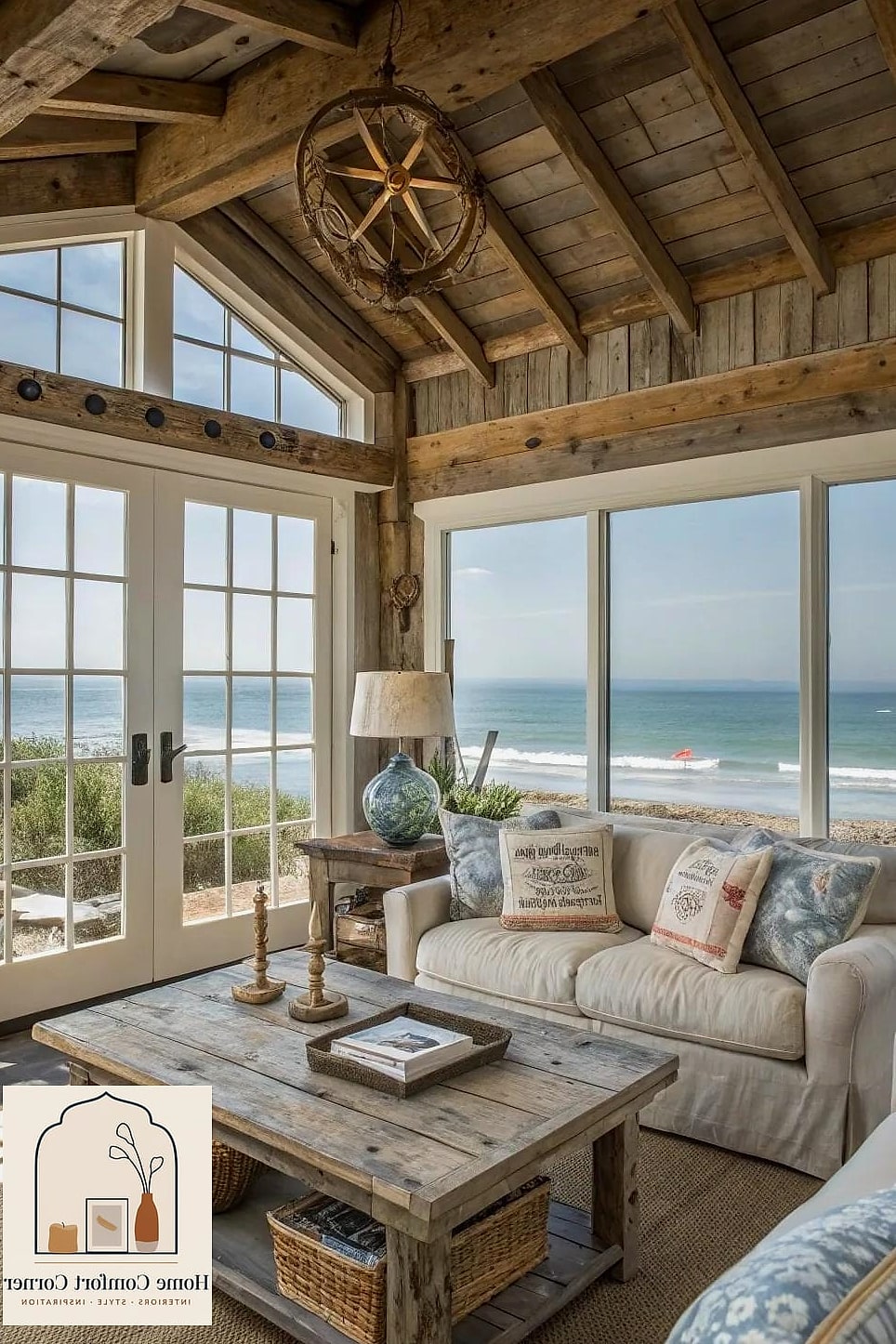
A wall of weathered, whitewashed wood planks instantly gives a room that sun-bleached, driftwood feel without being literal about it. This works especially well as a headboard wall in a bedroom or behind a media console in a living room.
The trick is choosing planks with visible grain and slight color variation so it doesn’t look too uniform or new. Homeowners love this because it adds texture and warmth without introducing a lot of color, which keeps the space feeling calm.
Budget-friendly versions use peel-and-stick wood panels, while a higher-end approach might involve reclaimed shiplap installed by a contractor. Either way, it pairs beautifully with white linens and brushed brass hardware.
Rattan and Woven Furniture Pairings
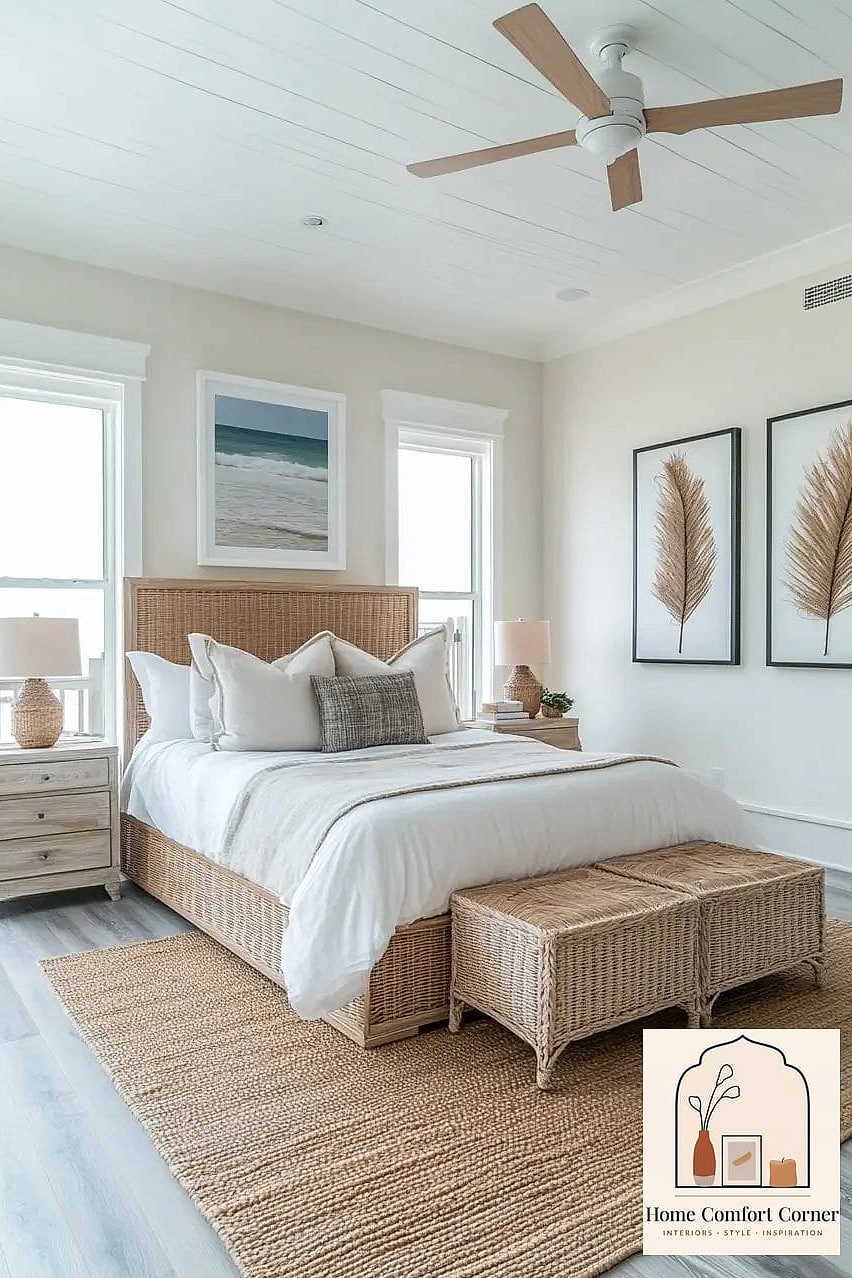
Woven furniture has quietly become one of the most requested coastal elements, and it makes sense. A rattan accent chair or a woven pendant light adds that natural, breezy texture that photographs feel obsessed with lately.
This works best in living rooms, sunrooms, or bedroom reading nooks where you want a piece that feels sculptural but not heavy. Pair it with linen cushions in soft neutrals so the woven texture stays the star of the show.
Maintenance is pretty simple, just a light dusting or vacuum brush attachment now and then. If you’re renting, a woven accent chair is an easy way to bring this trend in without touching the walls at all.
Soft Blue and White Layered Palettes
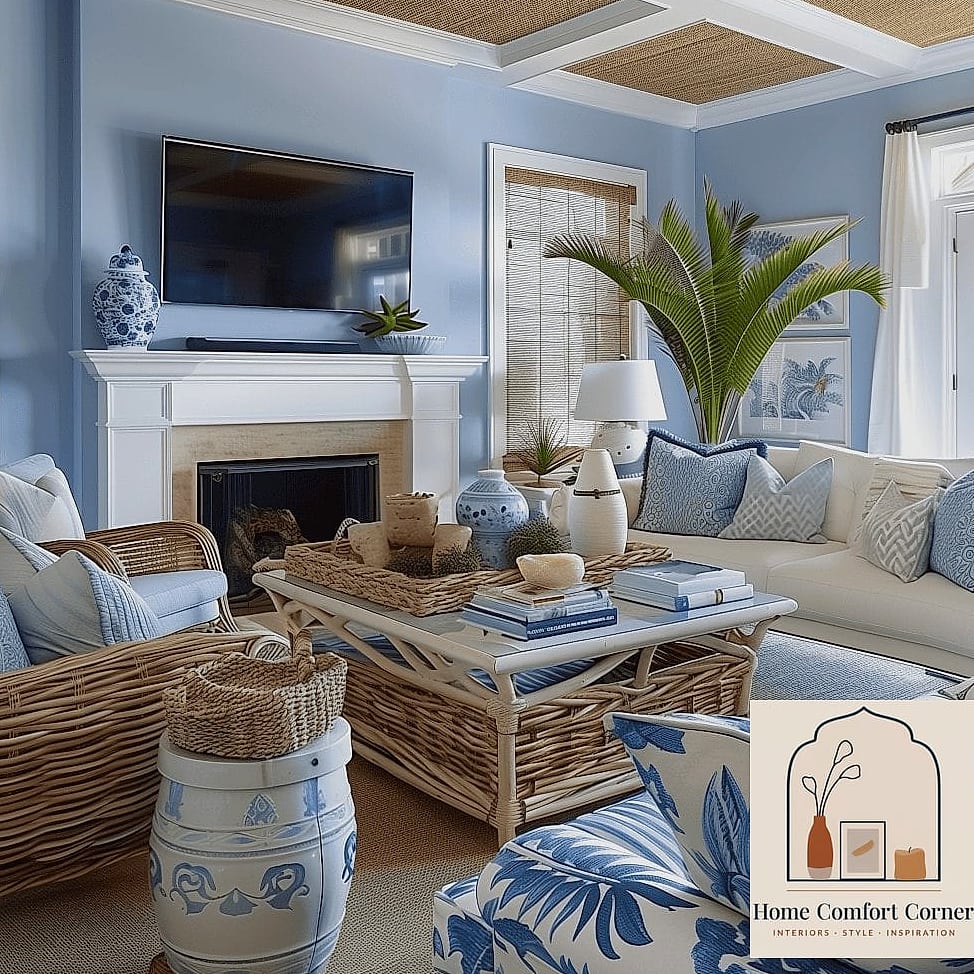
Instead of the classic navy-and-white nautical combo, a lot of coastal rooms right now are leaning into softer, more muted blue tones layered against warm whites. Think powder blue, seafoam, and dusty denim rather than anything too crisp or saturated.
This palette works in nearly every room but feels especially fresh in bedrooms and bathrooms where you want a calming, spa-like mood. Layering two or three shades of blue with varying textures keeps it from feeling flat.
It’s a forgiving palette for beginners since blue and white are nearly impossible to mismatch. Add a few warm wood tones to keep the room from feeling too cool or sterile.
Natural Fiber Rugs with Texture
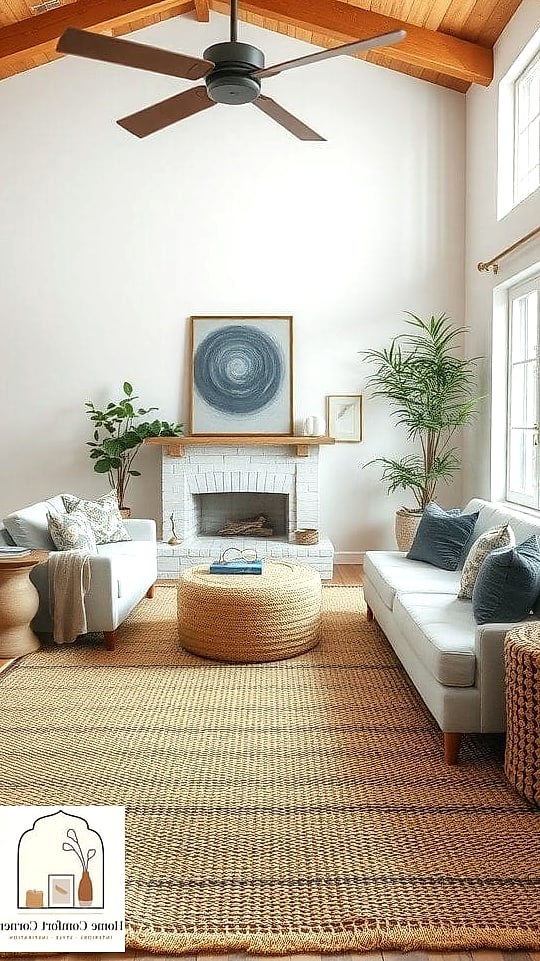
A jute or sisal rug grounds a coastal room in a way that a patterned area rug just can’t. The natural fiber texture reads organic and beachy without needing a single seashell in sight.
These rugs work particularly well in living rooms and dining spaces, especially over hardwood or light tile flooring. They’re also fairly family-friendly, though I’ll be honest, they’re not the most forgiving with red wine spills.
For pet owners, look for a tighter weave since loose loops can snag on claws. Budget-wise, natural fiber rugs are often more affordable than you’d expect, especially in smaller sizes for entryways.
Sea Glass and Ocean-Inspired Accent Colors
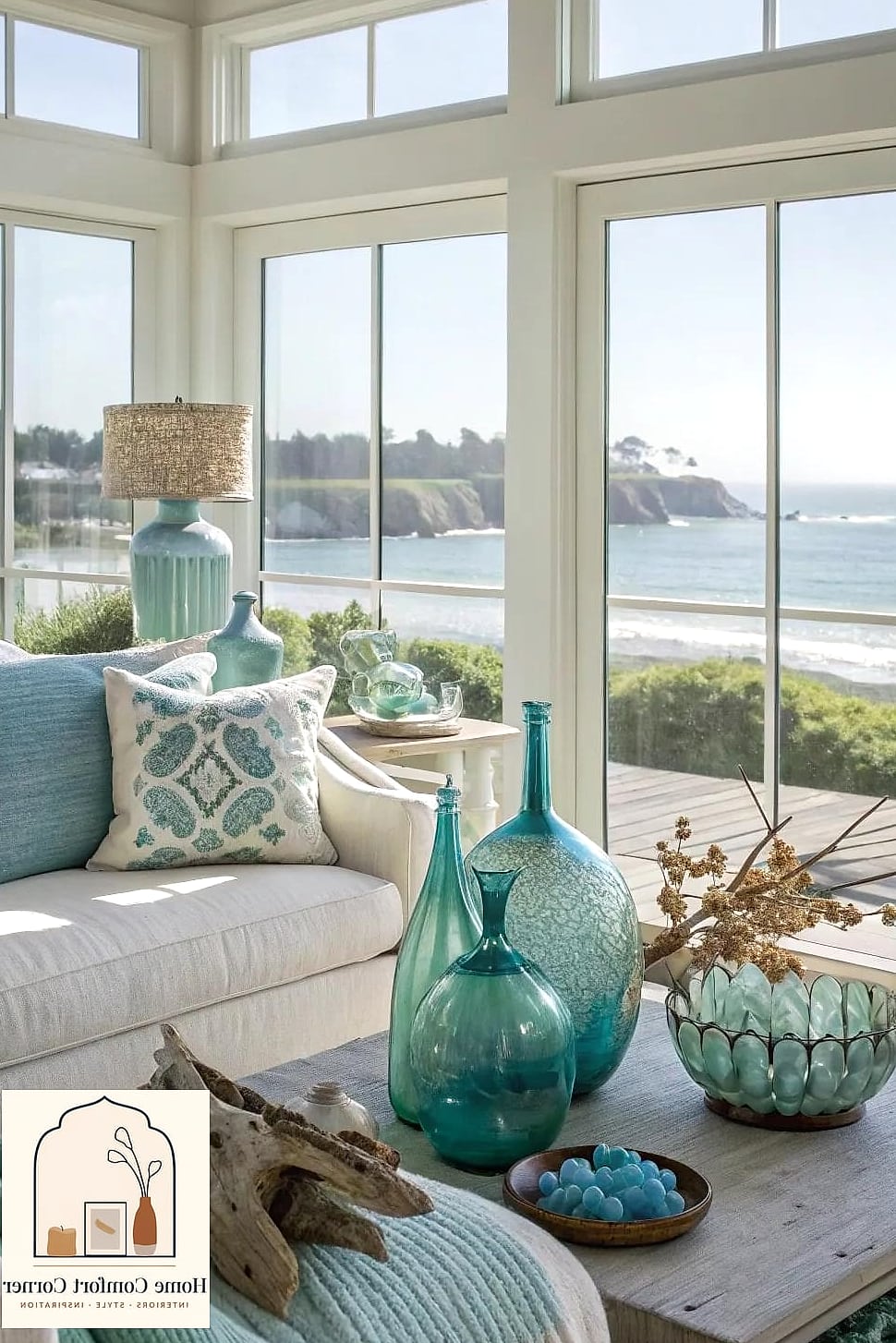
Rather than full rooms painted in ocean hues, a lot of coastal decor now uses sea glass greens and blues as accent pops against neutral backgrounds. Think a single accent wall, a set of throw pillows, or ceramic vases in that soft, frosted green-blue tone.
This approach works well in living rooms and kitchens where you don’t want to commit to an all-over color scheme. It gives you that coastal feeling without overwhelming the space.
It’s an easy, renter-friendly way to test the trend since you can swap pillows or decor pieces without any painting involved. If you do want to commit, a matte finish paint in a sea glass shade on just one wall keeps things balanced.
Linen Slipcovered Sofas
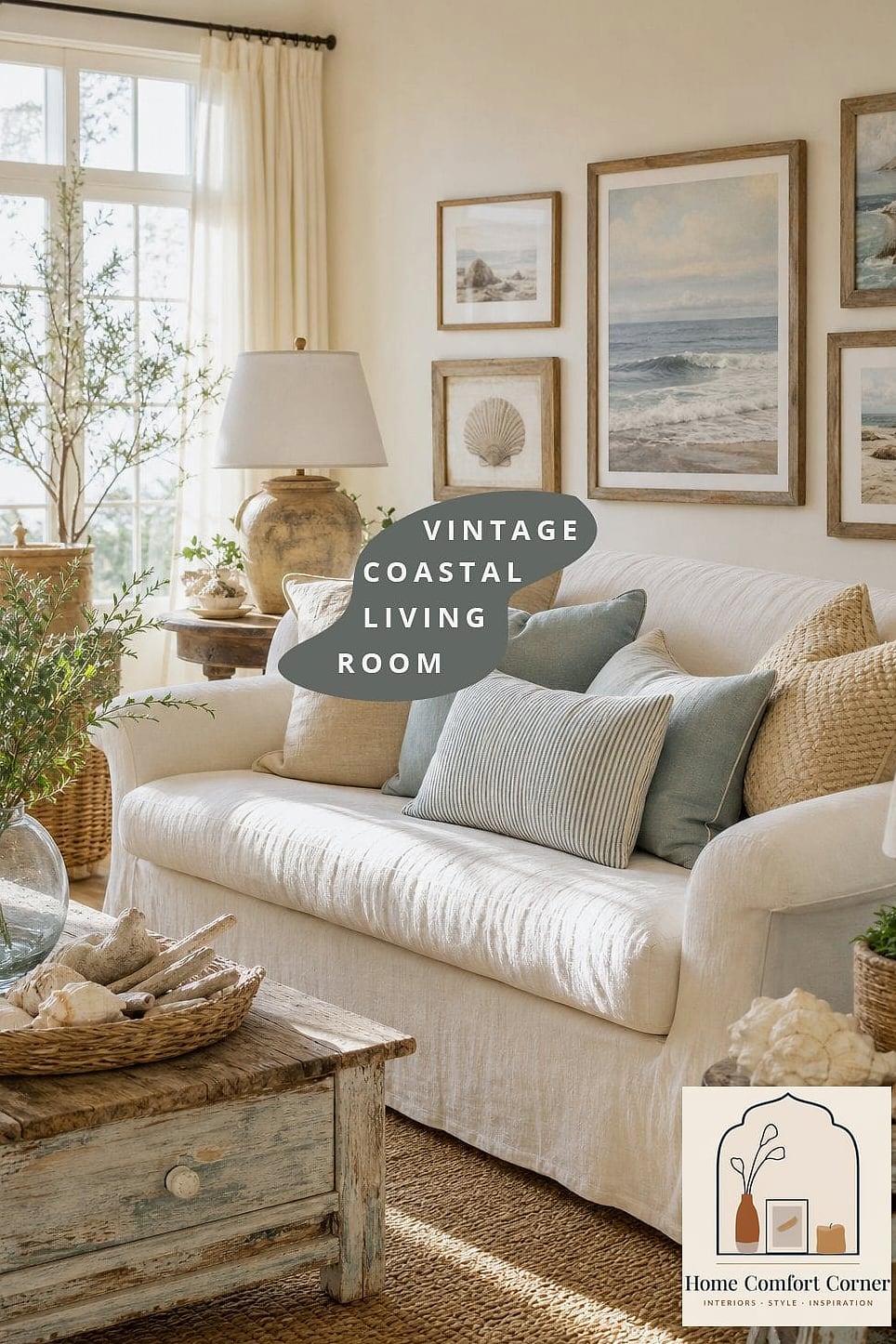
There’s something about a slouchy, linen slipcovered sofa that just says coastal living room immediately. The relaxed, slightly wrinkled texture feels intentional rather than sloppy, and it’s a huge departure from stiff, formal upholstery.
This works best as the anchor piece in a living room where you want comfort to feel like the priority. Neutral or soft blue linen tends to work better here than anything too saturated.
Practicality-wise, removable and washable slipcovers are a genuine win for households with kids or pets. It’s a bit of an investment upfront, but the ability to actually wash your sofa cover is worth it long term.
Whitewashed Ceiling Beams
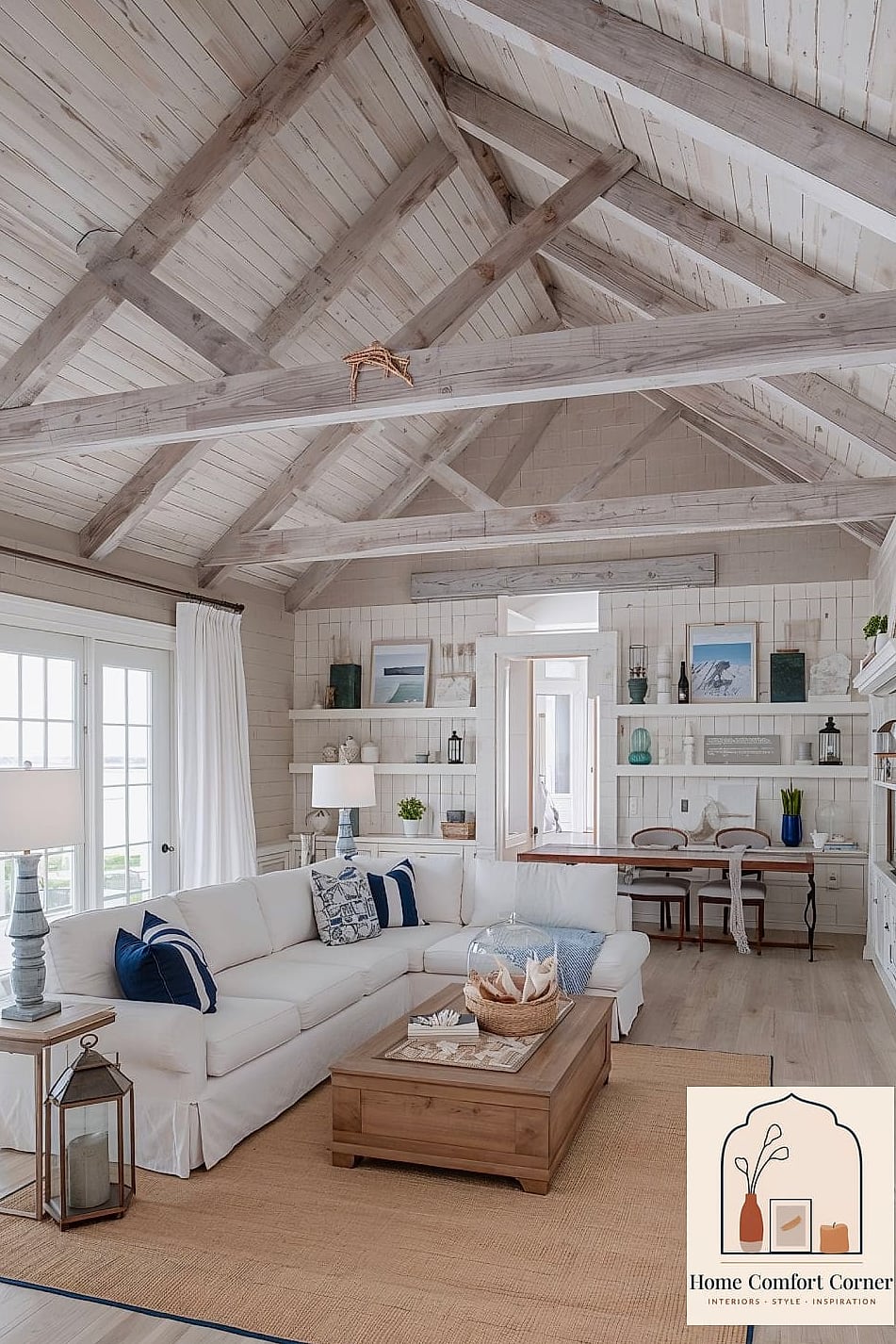
Exposed beams that have been whitewashed or bleached add architectural interest to a room while keeping things light and airy. This is a design choice that works especially well in living rooms or primary bedrooms with higher ceilings.
Homeowners are drawn to this because it adds dimension without adding visual weight, unlike dark stained beams which can make a ceiling feel lower. It’s a subtle way to bring in that relaxed, beach house architecture feel.
This one does require some installation work, so it’s less DIY-friendly unless you’re comfortable with woodworking. Faux beam kits have gotten a lot better in recent years if you want the look without structural changes.
Layered Textured Throw Pillows
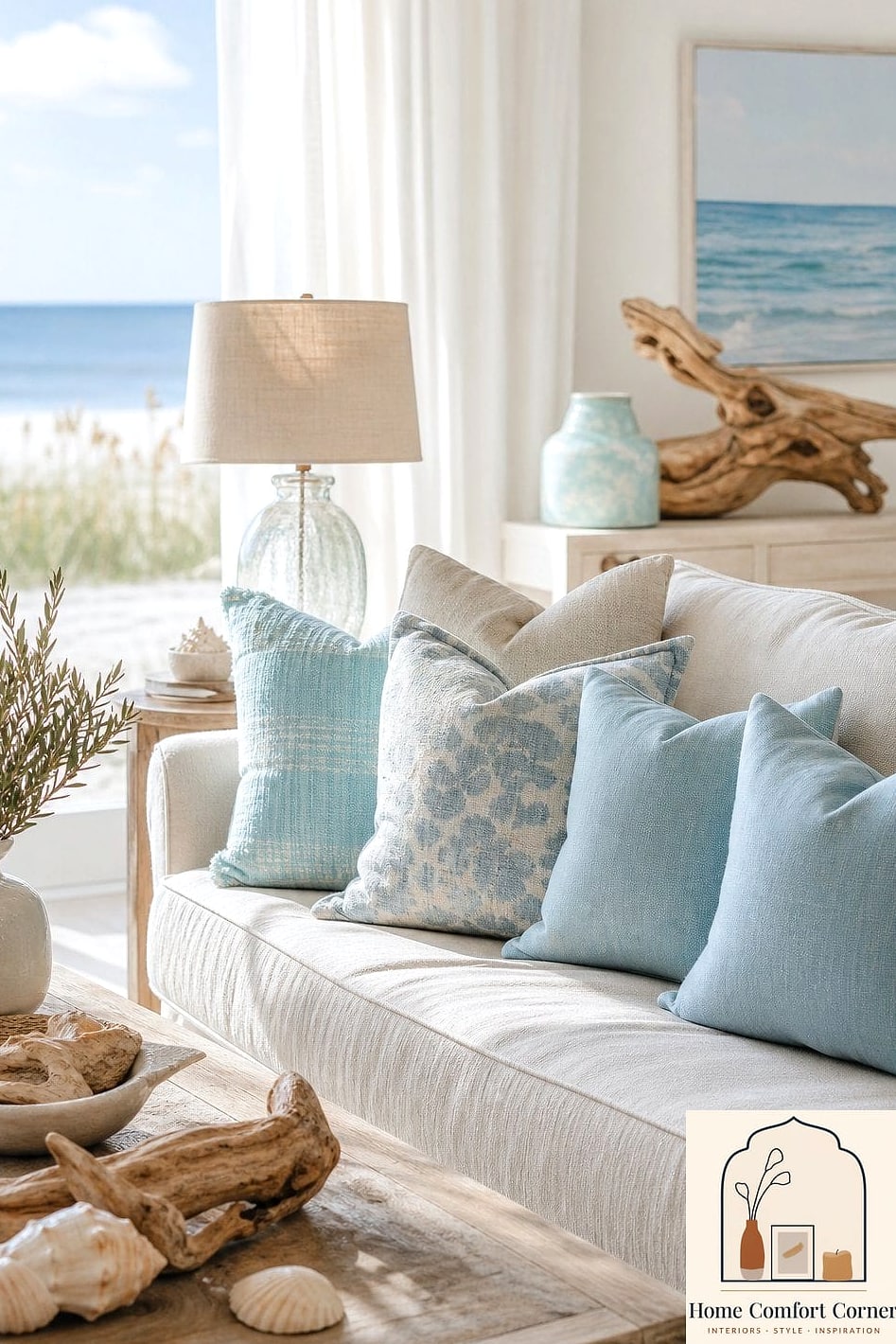
This is such a simple update, but layering pillows in varied textures like linen, boucle, and lightly ribbed cotton adds so much depth to a coastal room. Solid neutrals in slightly different textures often look more sophisticated than busy patterns.
It works anywhere really, but it makes the biggest difference on sofas, window seats, and beds. Mixing two or three textures in a similar color family keeps things cohesive rather than cluttered.
This is one of the most budget-friendly ways to refresh a room’s coastal feel without buying new furniture. Rotate pillow covers seasonally if you want an easy, low-commitment way to keep the space feeling current.
Open Shelving with Curated Coastal Objects
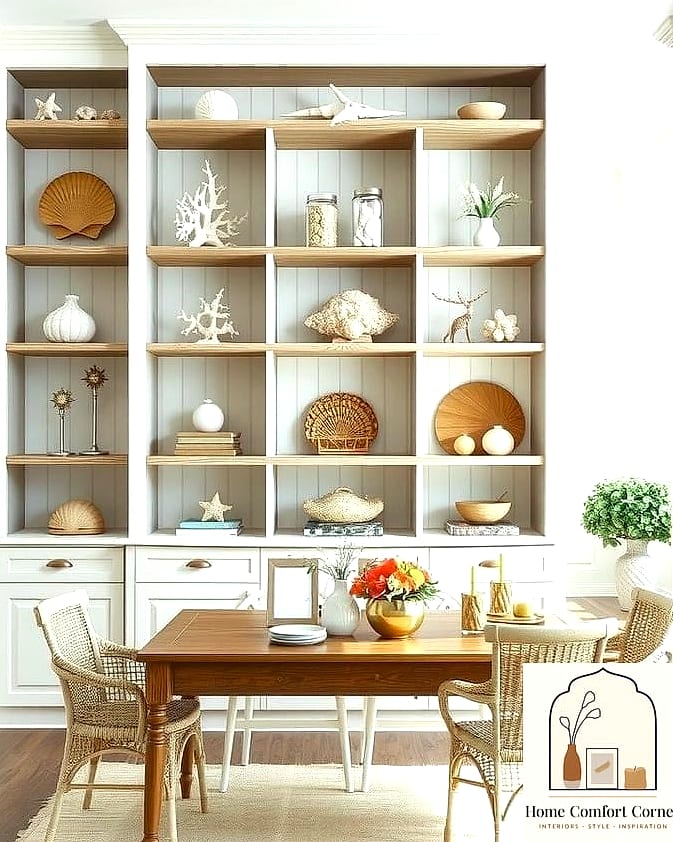
Open shelving in a kitchen or living room gives you a spot to display a few carefully chosen coastal pieces like stoneware vases, driftwood, or textured ceramics, without it looking like a themed gift shop. The key word here is curated, not cluttered.
This works particularly well in kitchens with a coastal cottage feel or in living room built-ins. Leave some breathing room between objects so each piece actually gets noticed.
Maintenance is fairly minimal, just regular dusting, though open shelves do show dust faster than closed cabinets. If you’re not confident styling shelves, grouping items in odd numbers with varied heights is a reliable trick.
Grasscloth Wallpaper Accents
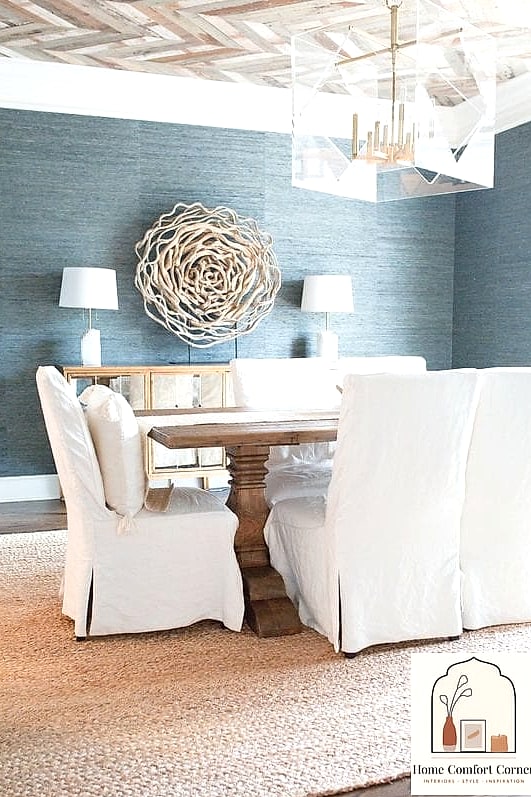
Grasscloth wallpaper brings that same woven, organic texture as rattan furniture but on your walls instead. It’s become a favorite for adding warmth to coastal rooms that might otherwise feel too cool or sparse.
This works beautifully in dining rooms, powder rooms, or as an accent wall in a bedroom. The subtle texture catches light differently throughout the day, which adds a lot of visual interest for a wallcovering.
It’s not the easiest DIY project since grasscloth can be tricky to hang without bubbling, so hiring a professional installer is often worth it. Peel-and-stick grasscloth-look options exist now too if you want a renter-friendly alternative.
Brass and Black Fixture Mixing
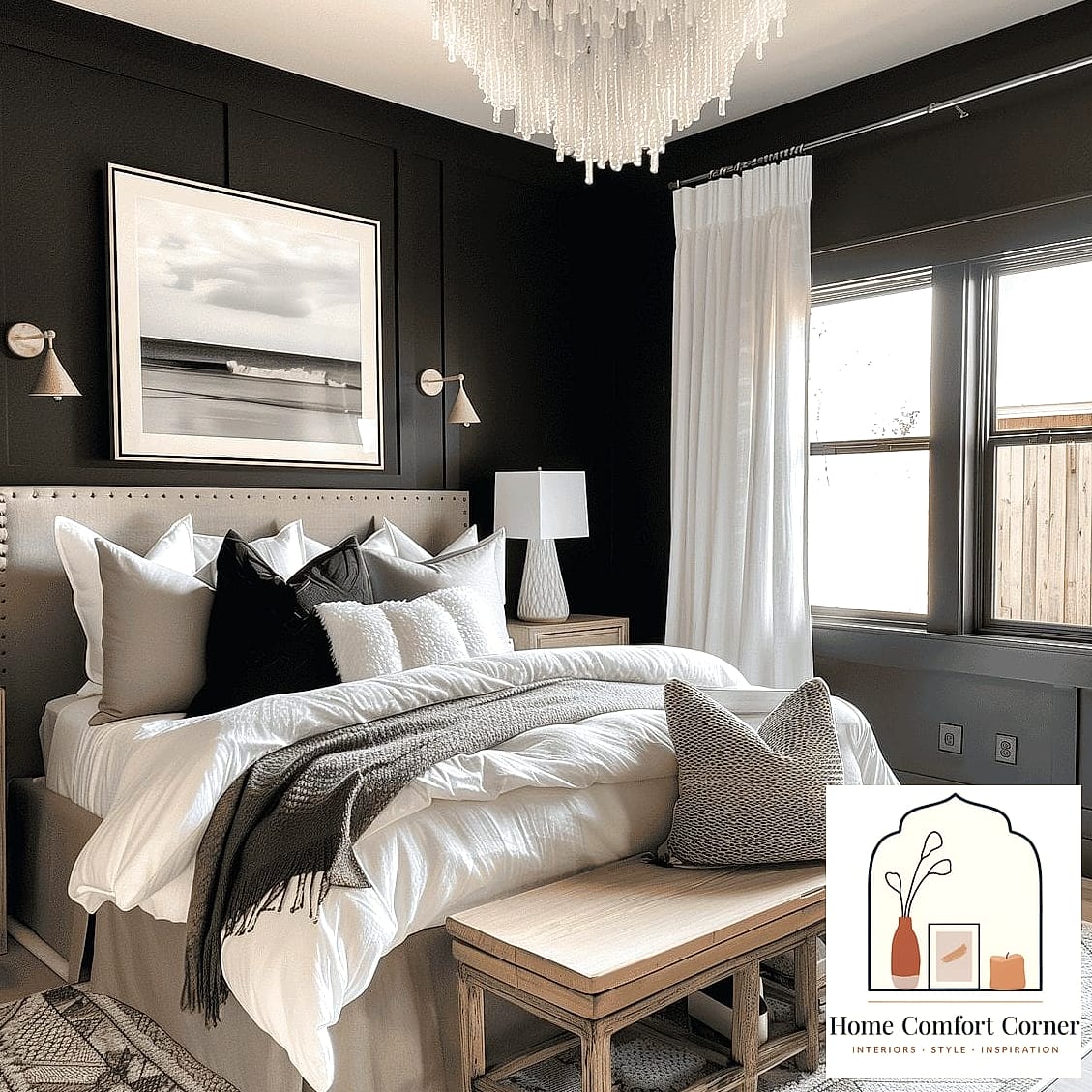
Mixing warm brushed brass with matte black fixtures has become a popular way to keep coastal spaces from feeling too soft or predictable. Think brass cabinet pulls paired with black window frames or light fixtures.
This combination works especially well in kitchens and bathrooms where fixtures are more visible and functional. It adds a slightly more modern, collected-over-time feel rather than everything matching perfectly.
From a practicality standpoint, both finishes tend to hide fingerprints and water spots reasonably well, which matters in high-touch areas. This is a great option if you want your coastal room to feel a little less traditional and a little more current.
Indoor Greenery with Coastal Planters
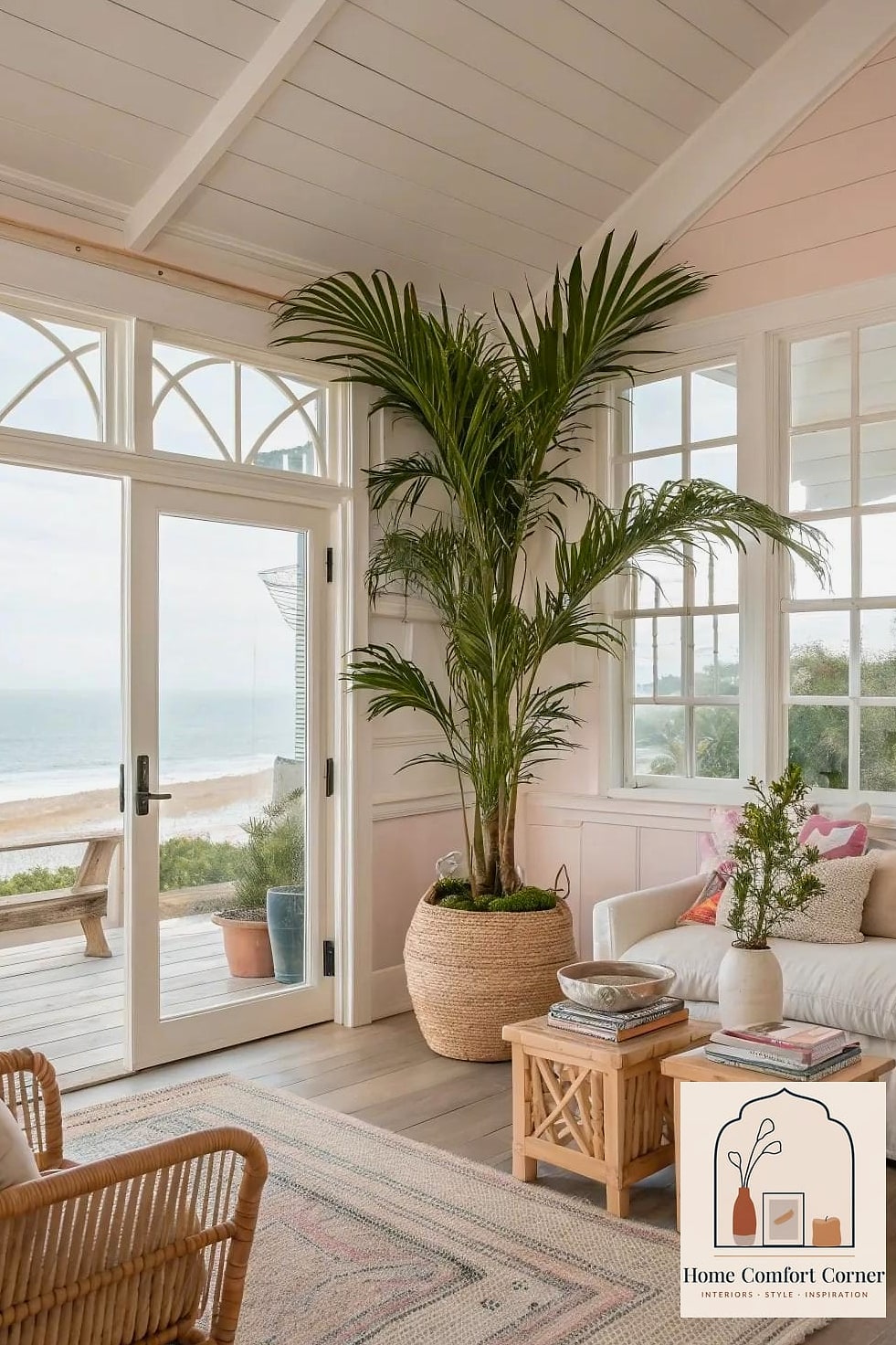
Bringing in real or high-quality faux plants in textured stoneware or woven planters ties the whole coastal look together. Palms, olive trees, and trailing pothos all read especially well in this style.
This idea works in basically every room, though larger statement plants make the biggest impact in living rooms and entryways. The planter matters just as much as the plant here, so look for textured ceramic or rattan basket covers.
Low-maintenance options like pothos or snake plants are great if you don’t have a natural green thumb. For pet owners, double check plant safety before bringing anything new into a home with curious cats or dogs.
Coastal room decor has come a long way from beach-themed decor kits, and honestly, that’s a good thing. The designs above lean into texture, natural materials, and a softer color story that feels grounded rather than costume-y.
You don’t need to use all twelve ideas to get the look. Pick two or three that fit your space and budget, and let the rest of the room breathe around them. That restraint is really what makes coastal decor feel effortless instead of overdone.