10 Lobby Interior Design Ideas That Will Transform Your Space
- Statement Lighting That Sets the Tone
- A Bold Reception Desk as the Focal Point
- Layered Seating for Comfort and Flow
- Greenery That Feels Alive, Not Staged
- A Neutral Palette With One Bold Accent Color
- Textured Wall Treatments Instead of Plain Drywall
- Art That Reflects the Building’s Personality
- Smart, Discreet Storage Solutions
- Flooring That Can Handle Heavy Foot Traffic
- A Scent and Sound Experience, Not Just a Visual One
10 Lobby Interior Design Ideas That Will Transform Your Space
A lobby is one of those spaces that gets judged in about three seconds flat. Whether it’s the entrance to an apartment building, an office, a boutique hotel, or a medical practice, people form an opinion the moment they walk through the door. That’s a lot of pressure for one room, but it also means small, smart changes can make a huge difference.
I’ve walked through more lobbies than I can count over the years, and the ones that stick with me almost always nail a handful of basics: good lighting, a clear sense of style, and a few unexpected details that make you want to linger instead of rushing straight to the elevator. Below are ten lobby interior design ideas that actually work, whether you’re renovating a corporate building or sprucing up a small apartment entryway.
Statement Lighting That Sets the Tone
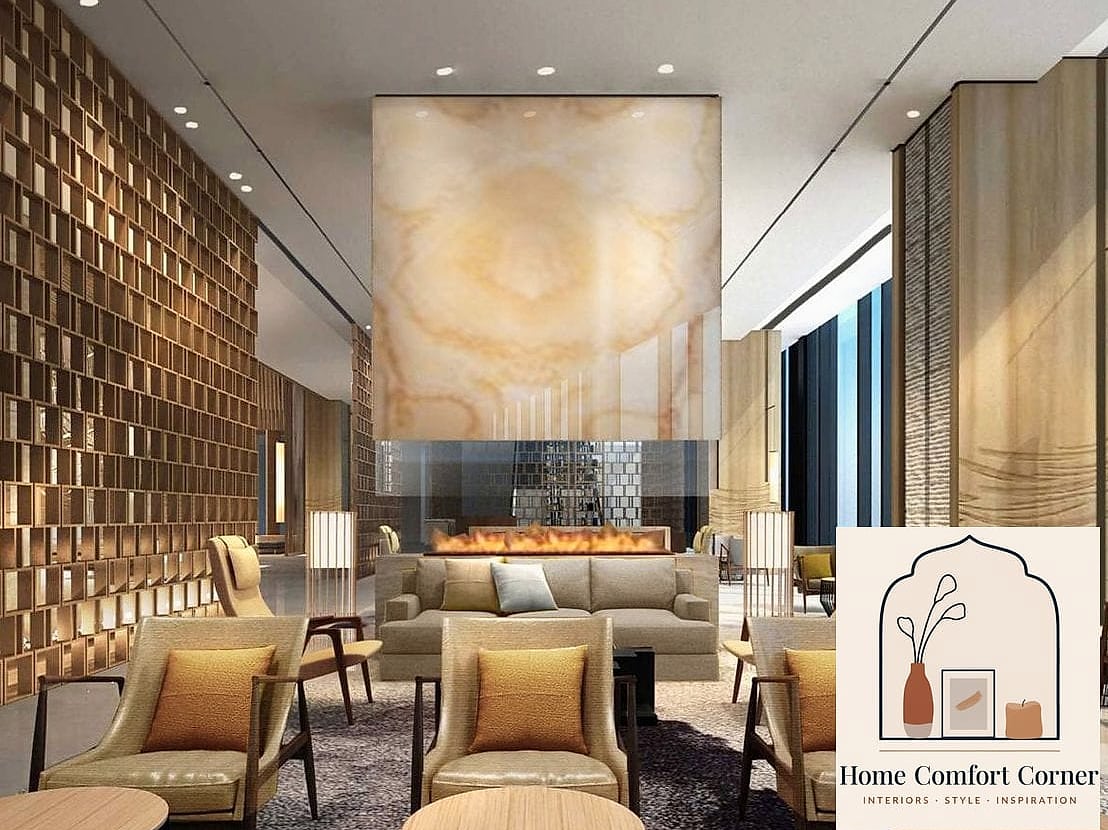
Lighting is the first thing your eyes adjust to when entering a building, so it’s worth treating like a design centerpiece rather than an afterthought. A dramatic pendant, an oversized chandelier, or a cluster of sculptural fixtures immediately signals that someone put thought into this space.
Layered lighting works best here. Combine a statement overhead piece with softer wall sconces or recessed lighting so the room doesn’t feel flat or overly bright. Warm-toned bulbs tend to make lobbies feel more welcoming, while cooler tones read as sleek and modern.
If budget is tight, a single well-placed fixture over the reception desk or seating area can do a lot of heavy lifting. Brushed brass and matte black fixtures are both having a moment right now, and either one pairs nicely with neutral walls.
A Bold Reception Desk as the Focal Point
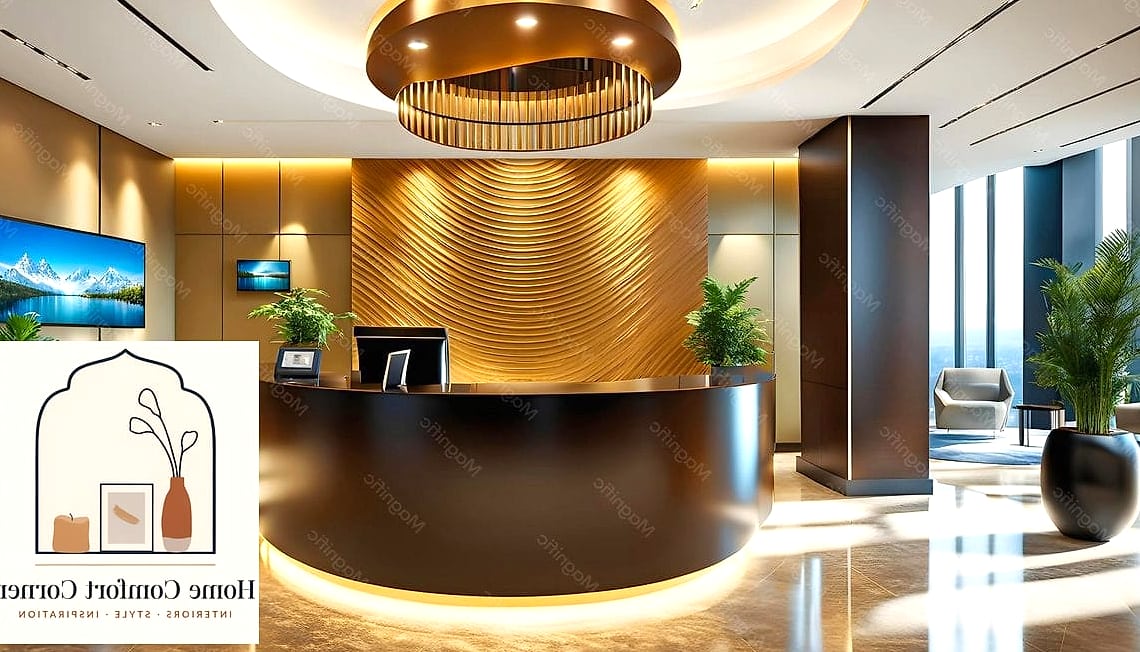
The reception desk (or front desk, if we’re talking hotels) is basically the stage of the lobby. Everyone’s eyes go there first, so it deserves more than a generic laminate counter.
Natural stone, marble-look quartz, or a rich wood veneer can turn a purely functional piece into something people notice. Curved desks are trending because they soften the entrance and feel less like a barrier between staff and visitors.
For a more budget-friendly approach, a simple desk can be dressed up with textured wall panels behind it, a nameplate sign, or a small arrangement of greenery. Even paint alone, in a deep navy or forest green, can make a plain desk feel intentional.
Layered Seating for Comfort and Flow
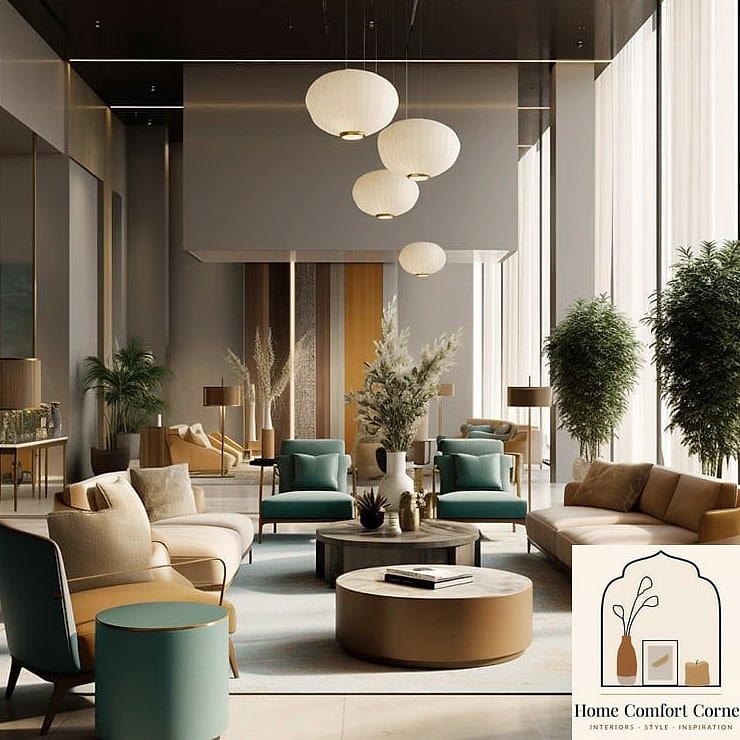
Nobody wants to stand awkwardly waiting for an elevator or an appointment. A mix of seating options, low lounge chairs, a small sofa, maybe a bench near the windows, gives people somewhere comfortable to land and helps the space feel less sterile.
Mixing textures here matters more than people realize. A leather chair next to a boucle sofa next to a wood bench creates visual interest without looking mismatched, as long as the color palette stays consistent.
For smaller lobbies, two chairs and a side table might be all you need. Larger commercial lobbies can get more ambitious with modular seating arrangements that can be rearranged for events or high-traffic days.
Greenery That Feels Alive, Not Staged
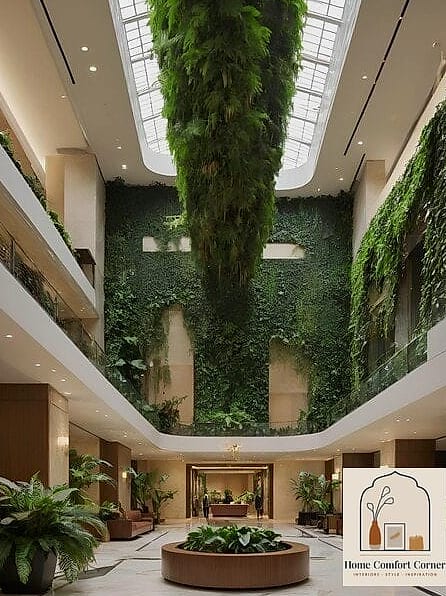
Plants are one of the easiest ways to soften a lobby that might otherwise feel cold or corporate. A large fiddle leaf fig, a row of snake plants, or a hanging arrangement near the entrance adds color and texture without much effort.
Real plants need someone committed to watering and light management, so if that’s not realistic, high-quality faux greenery has come a long way and can look surprisingly convincing from a few feet away. Just avoid anything that looks obviously plastic under direct light.
Larger buildings sometimes go all in with a living wall, which is a bit of an investment but creates a genuinely memorable first impression. For smaller spaces, a cluster of potted plants near seating areas or flanking the entrance doors works just as well.
A Neutral Palette With One Bold Accent Color
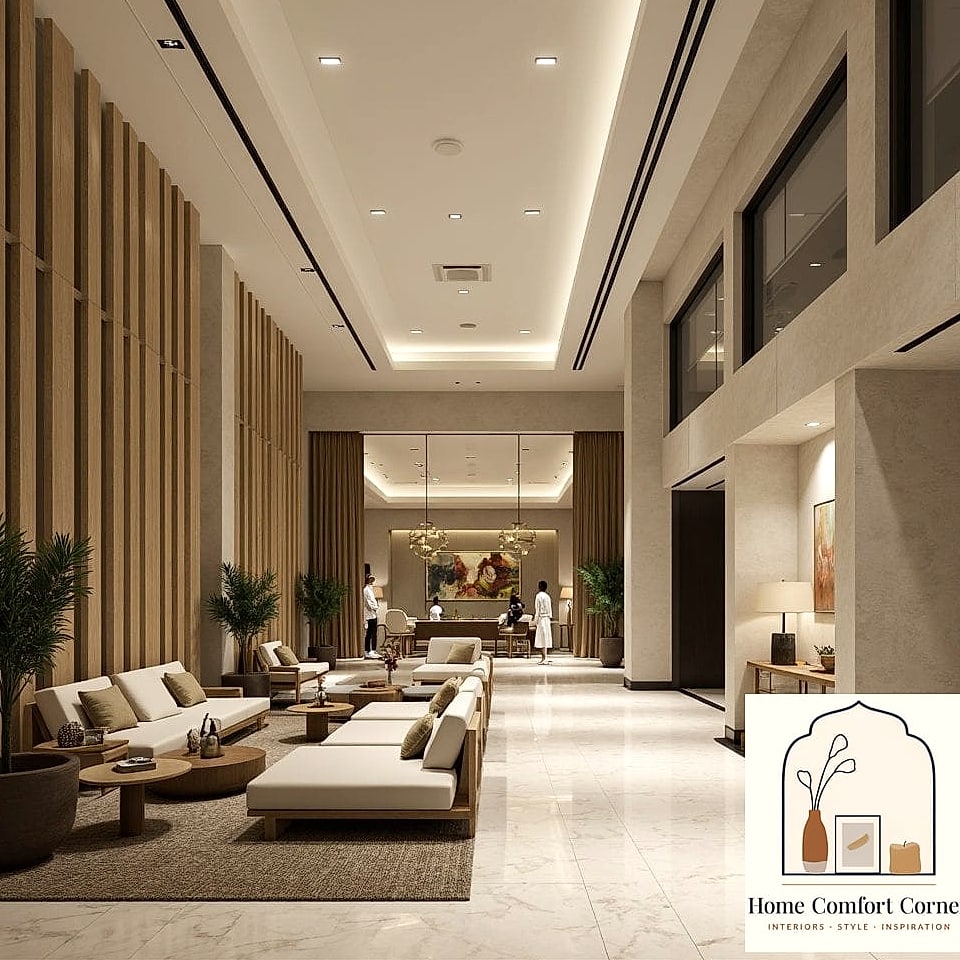
Most successful lobbies lean on a neutral base, think warm whites, soft grays, taupe, or greige, and then introduce one confident accent color through art, furniture, or an accent wall. This keeps the space feeling sophisticated rather than chaotic.
Deep emerald, terracotta, and burnt orange have been popular accent choices lately, especially paired with warm wood tones and brushed metal finishes. The accent doesn’t need to be everywhere; sometimes just the seating cushions or a single wall does the trick.
If you’re designing for a building with multiple tenants or a wide range of visitors, keeping most surfaces neutral and letting accessories carry the color is the safer, more flexible route. You can always swap a few pillows or artwork pieces down the road without repainting.
Textured Wall Treatments Instead of Plain Drywall
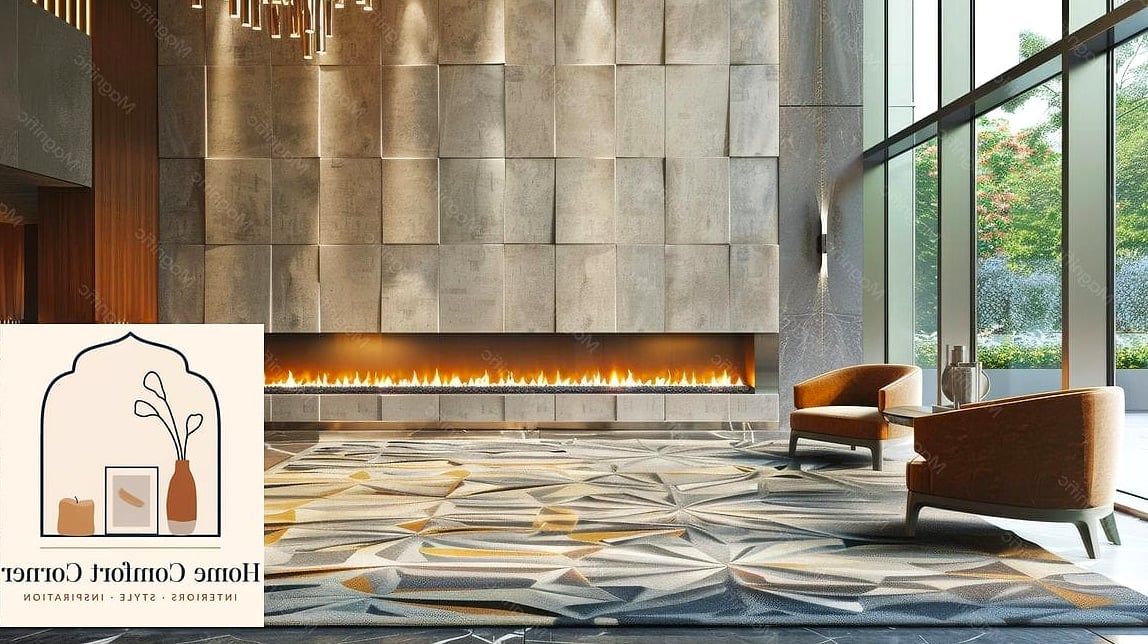
Flat painted walls can make a lobby feel a little forgettable. Adding texture, whether through wood slat paneling, stone veneer, textured plaster, or even a bold wallpaper, gives the space depth and makes it feel more custom.
Wood slat accent walls have become especially popular in both residential and commercial lobbies because they add warmth without overwhelming the space. They also happen to be fairly DIY-friendly if you’re working with a smaller budget and don’t mind a weekend project.
For a more dramatic option, a stacked stone or ledger stone wall behind the reception desk creates a natural focal point. It’s a bigger investment and usually needs a professional installer, but the payoff in visual impact is hard to match with paint alone.
Art That Reflects the Building’s Personality
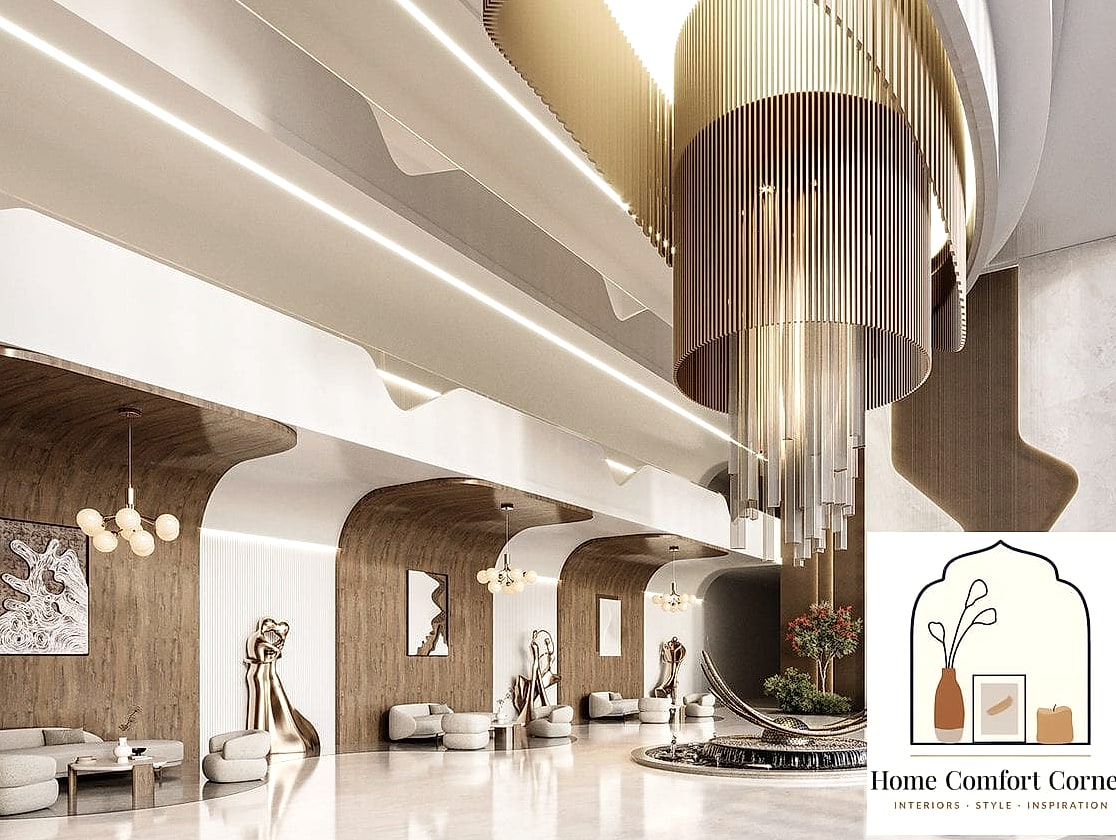
A blank wall in a lobby is a missed opportunity. Large-scale art, whether it’s a single oversized painting, a gallery wall, or a locally commissioned mural, gives visitors something to connect with while they wait.
For office buildings, art that reflects the local community or the company’s values tends to resonate more than generic abstract prints. Hotels and residential lobbies often lean into pieces that hint at the surrounding city or landscape.
If commissioning original art isn’t in the budget, large-format prints from local artists or photographers are a solid middle ground. Just make sure the scale is right, a tiny framed print on a huge wall tends to disappear rather than make an impact.
Smart, Discreet Storage Solutions
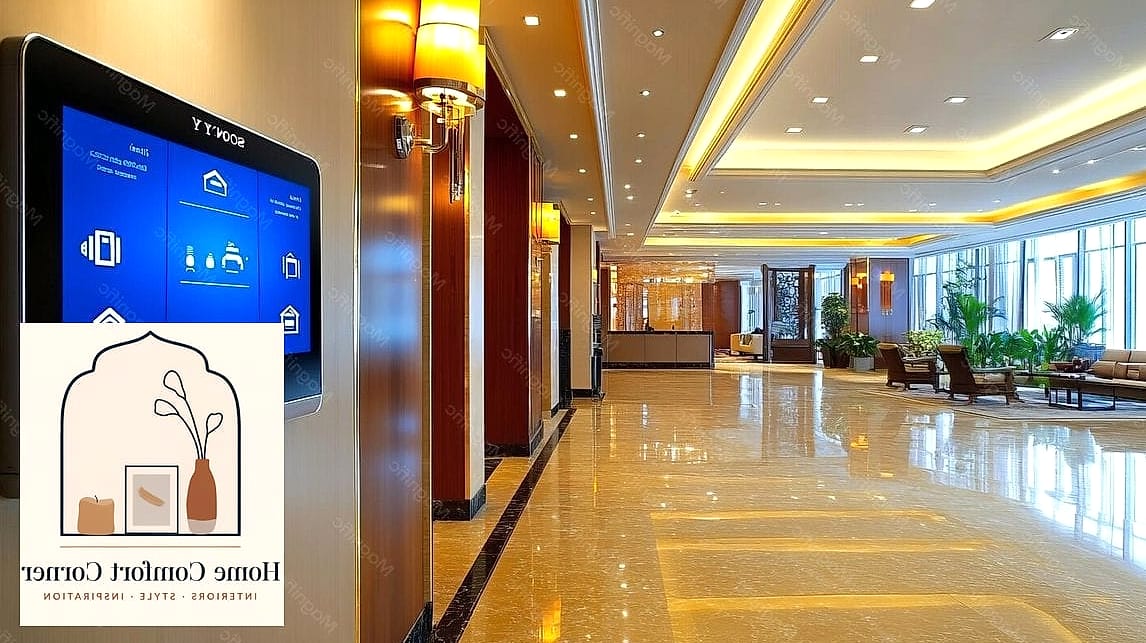
Lobbies often need to hide a surprising amount of stuff, mail, packages, umbrellas, coat storage, without looking cluttered. Built-in cabinetry near the reception area or a designed mail wall keeps things tidy while staying visually appealing.
For apartment buildings especially, a dedicated package area with labeled bins or lockers has become almost expected these days, given how much online shopping has increased delivery volume. Designing this into the layout from the start avoids the awkward pile of boxes by the door.
Umbrella stands, coat hooks, and small bench seating with hidden storage underneath are easy additions that solve real problems without cluttering the aesthetic. These details matter more in colder climates where wet coats and umbrellas are a daily reality.
Flooring That Can Handle Heavy Foot Traffic
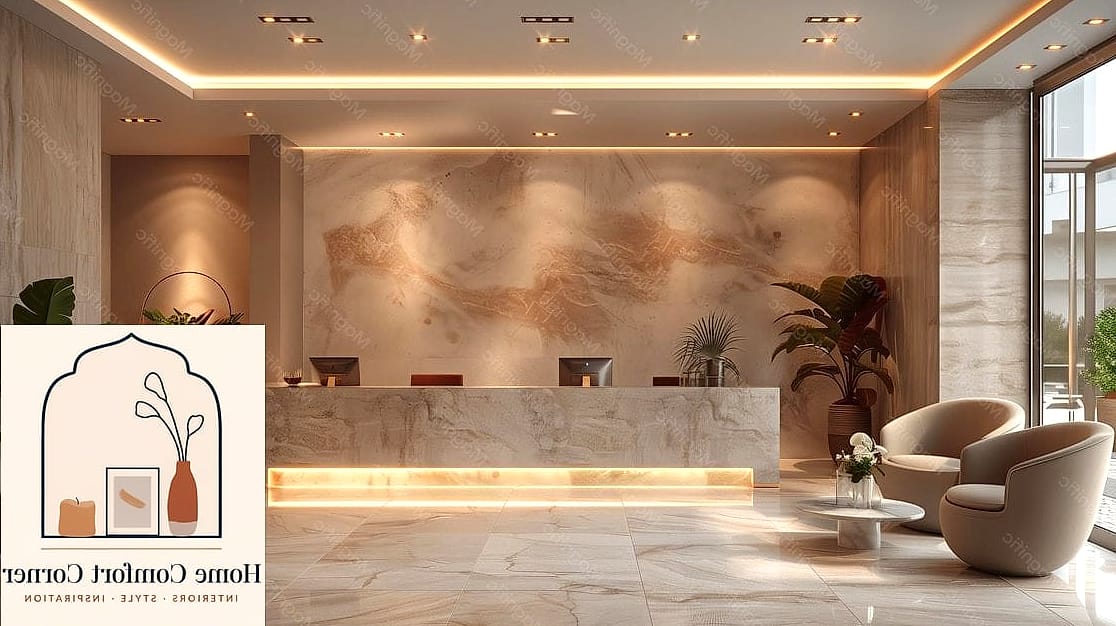
Lobby flooring takes a beating, so durability has to be part of the design conversation, not an afterthought. Porcelain tile, polished concrete, and natural stone are popular because they hold up well and are relatively easy to maintain.
Patterned flooring, like a herringbone layout or a bold geometric tile design, adds personality to what might otherwise be a purely functional surface. Just be mindful that busy patterns can clash with an already busy seating or art arrangement, so it usually works best when the rest of the room stays fairly calm.
Area rugs can help define seating zones and add warmth, especially over harder surfaces like tile or concrete. Commercial-grade rugs designed for high-traffic areas are worth the extra cost since they resist wear and stains far better than standard options.
A Scent and Sound Experience, Not Just a Visual One
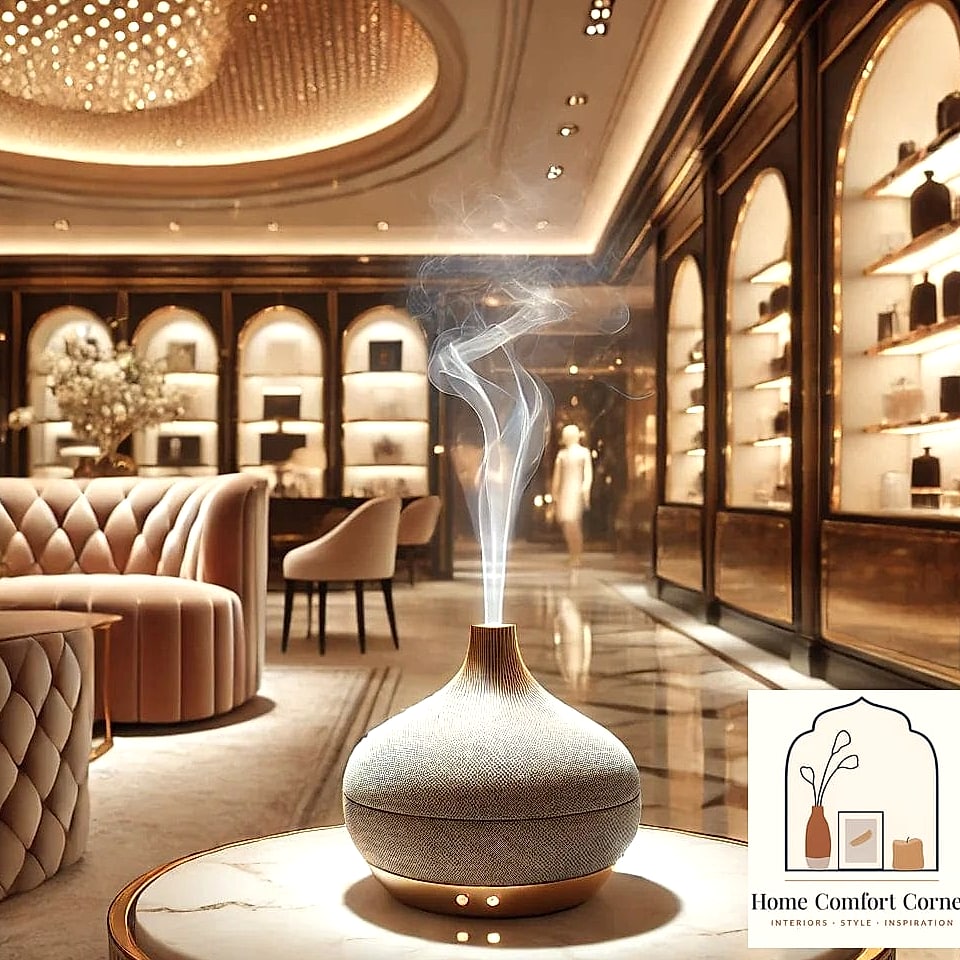
This one gets overlooked constantly, but a lobby that smells good and sounds good sticks in people’s memory just as much as one that looks good. A subtle signature scent, whether from a diffuser system or well-placed candles, adds a layer of polish that visitors notice even if they can’t quite explain why they like the space.
Background music or ambient sound, kept low and unobtrusive, softens the acoustics of what’s often a large, hard-surfaced room. Nothing kills a first impression faster than an echoey lobby where every footstep sounds like a gunshot.
For residential buildings, this might mean simple touches like fresh flowers or a diffuser at the front desk. Hotels and larger commercial spaces sometimes invest in custom scent branding, which sounds fancy but really just means picking a signature fragrance and staying consistent with it throughout the space.
Final Thoughts
A great lobby doesn’t need every single one of these ten lobby interior design ideas to feel special, honestly, picking three or four that fit your budget and building style will already put you ahead of most spaces out there. The goal is a room that feels intentional, comfortable, and memorable enough that people notice it without being able to say exactly why.
Start with the basics, good lighting and a solid color palette, then build outward from there with texture, greenery, and a few personal touches. Lobbies are small in square footage but big in impact, and it shows the moment someone walks through the door.