14 Hair Salon Interior Design Ideas to Steal From Interior Designers
- Statement Lighting Above Every Styling Station
- Terrazzo Flooring for Easy Cleanup
- A Bold Accent Wall Behind the Reception Desk
- Open Shelving to Display Retail Products
- Curved Furniture and Soft Edges
- A Neutral Color Palette with Warm Wood Tones
- Backlit Mirrors at Every Station
- A Dedicated Product Wall with Brass or Black Hardware
- Textured Wall Treatments in the Wash Area
- Greenery Throughout the Space
- Herringbone Tile as a Design Anchor
- Comfortable, Design-Forward Waiting Areas
- Mixed Metal Fixtures for Visual Interest
- Built-In Storage to Keep Tools Out of Sight
14 Hair Salon Interior Design Ideas to Steal From Interior Designers
Walking into a salon should feel like an experience, not just an appointment. The best hair salons out there have figured out how to blend function with atmosphere, and honestly, a lot of their tricks work just as well whether you’re designing a brand-new space or refreshing an existing one. Here are fourteen ideas worth borrowing.
Statement Lighting Above Every Styling Station
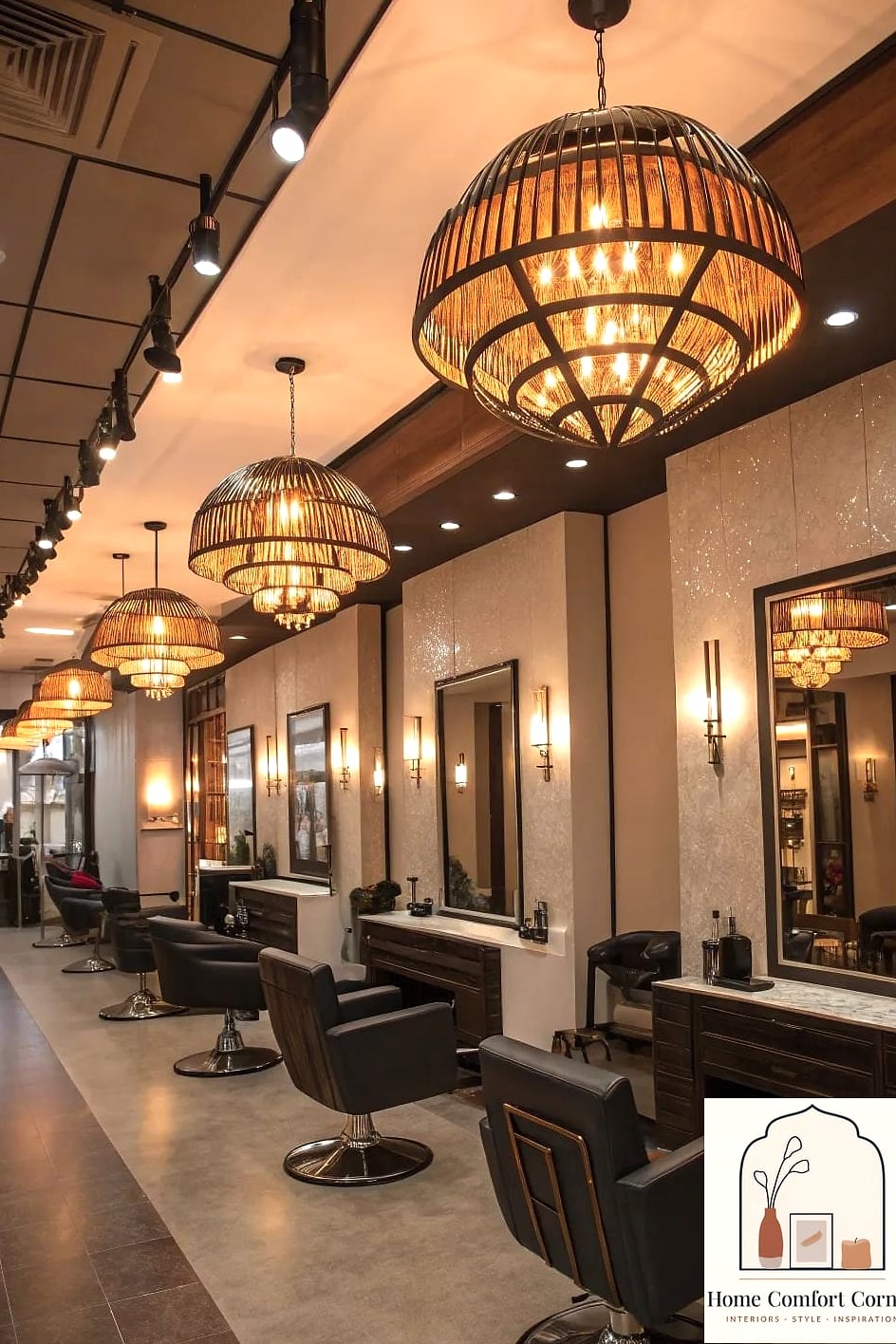
Nothing says “professional salon” quite like a row of pendant lights hanging above each mirror. Think brass or matte black fixtures spaced evenly down the wall, paired with warm-toned bulbs that flatter skin tones instead of washing clients out. This layered lighting approach also helps stylists see true color when doing color work. Budget-friendly versions can use simple globe pendants, while higher-end builds might go for sculptural fixtures that double as art. Either way, good lighting is one of those details clients notice even if they can’t say why.
Terrazzo Flooring for Easy Cleanup
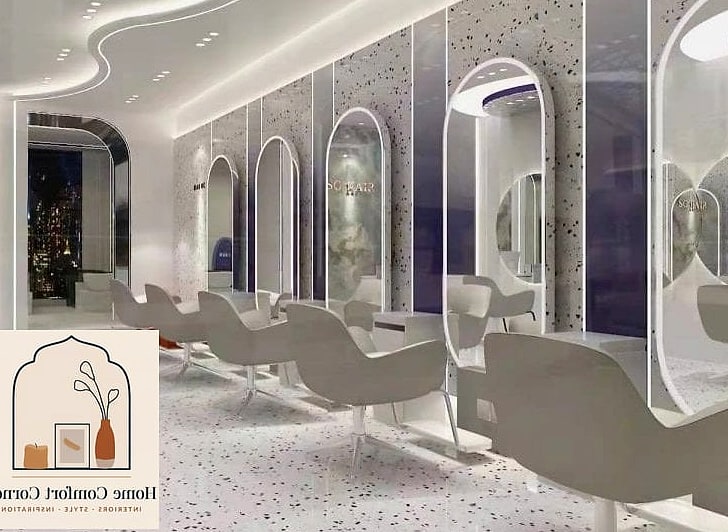
Terrazzo has made a serious comeback, and salons are leaning into it hard. The speckled pattern hides hair clippings, product spills, and foot traffic scuffs way better than plain tile ever could. It’s durable, easy to mop, and comes in colorways that range from playful pastel flecks to moody charcoal blends. Porcelain tile with a terrazzo-look finish is a more budget-conscious alternative that still gets the visual impact without the higher installation cost of true terrazzo.
A Bold Accent Wall Behind the Reception Desk
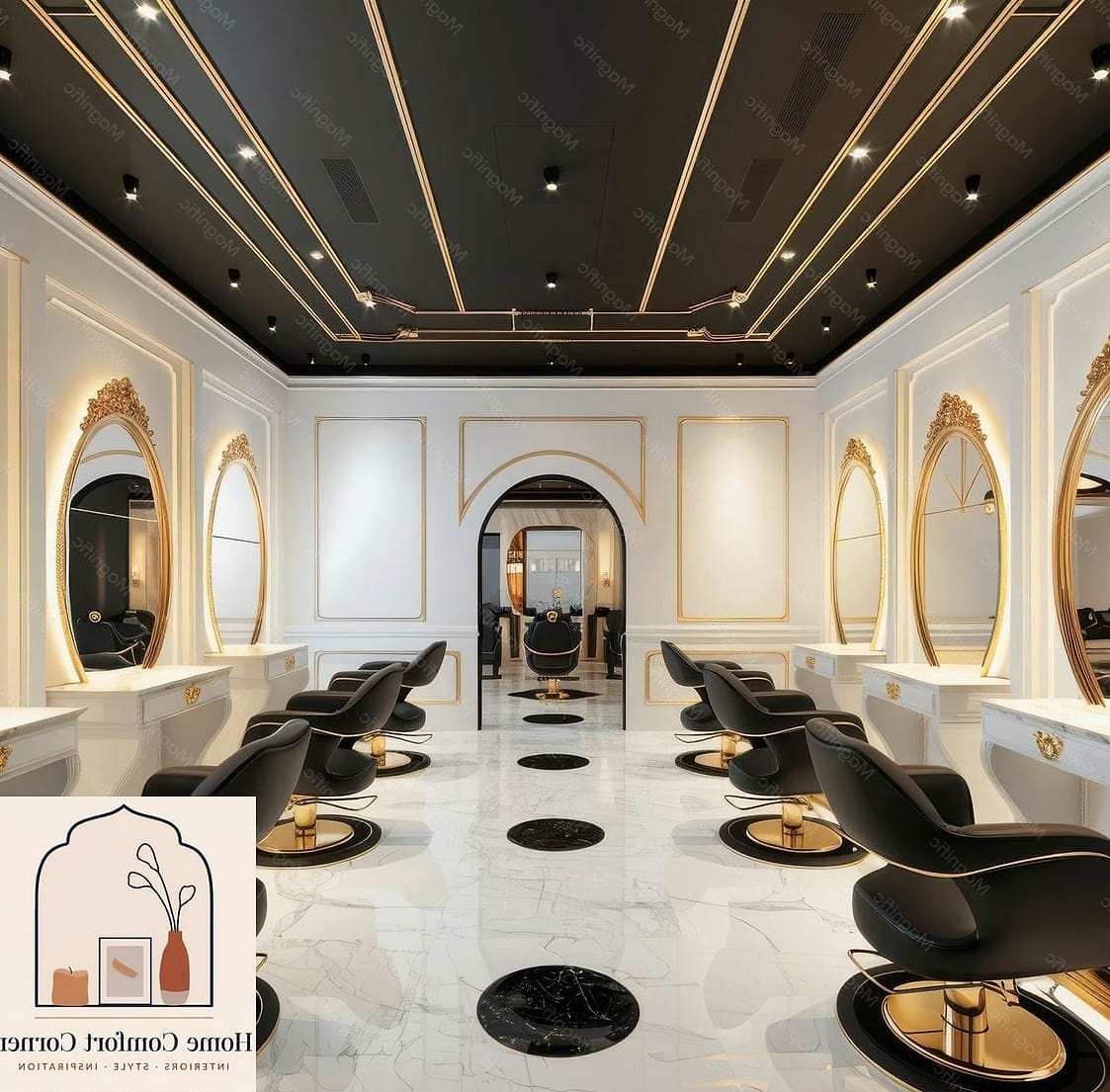
Your reception area sets the tone before a client even sits down. A textured accent wall in a rich color, or even a bold wallpaper pattern, gives the space personality right away. Some salons go with fluted wood paneling, others choose a deep emerald or clay-toned plaster finish. This is a great spot to splurge a little since it’s a smaller surface area but a huge visual payoff.
Open Shelving to Display Retail Products
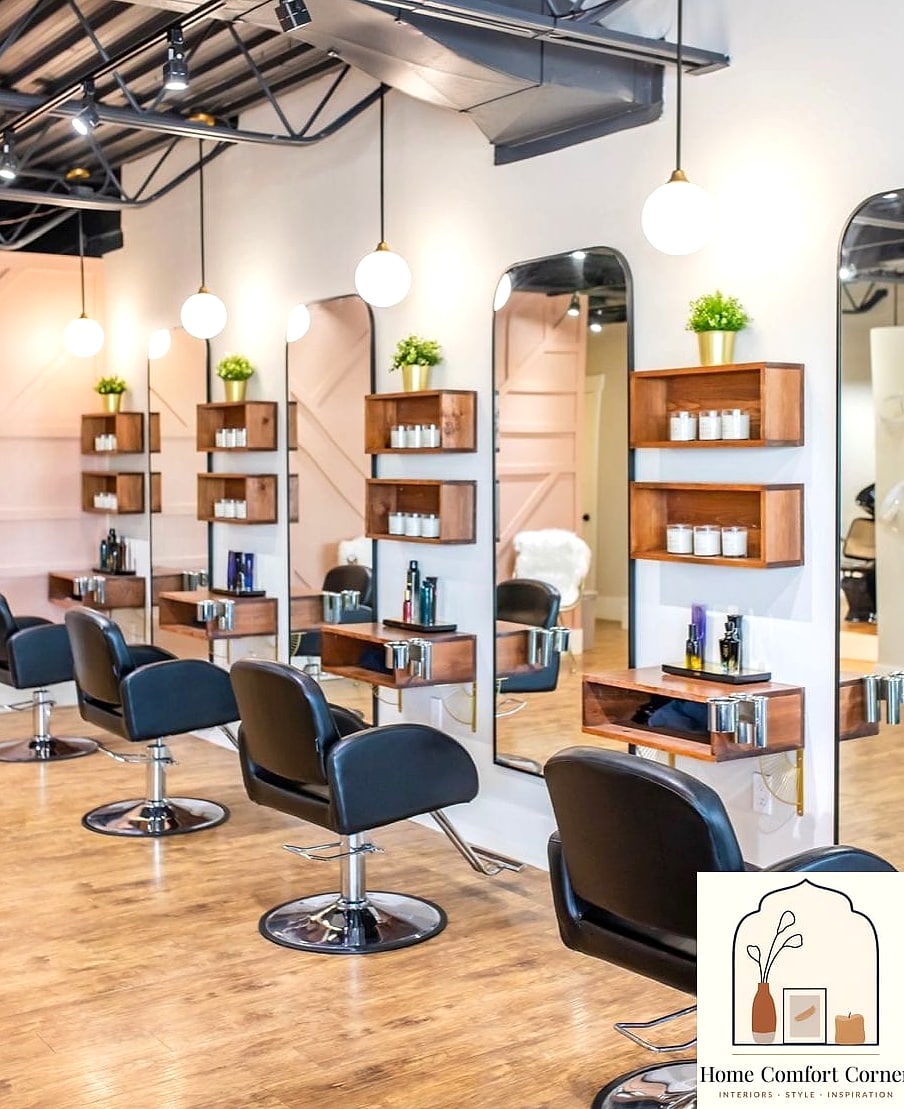
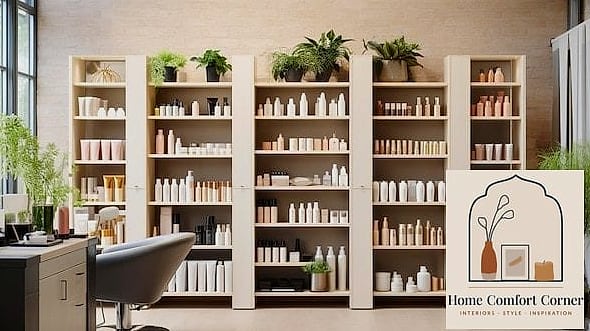
Skip the closed cabinets behind the front desk and go with floating shelves instead. Open shelving turns your retail products into part of the decor, which quietly encourages more sales without feeling pushy. Group products by brand or color for a curated look, and mix in small plants or decorative objects so it doesn’t feel like a store shelf. This works in salons of any size, though it’s especially useful in smaller spaces where every surface needs to multitask.
Curved Furniture and Soft Edges
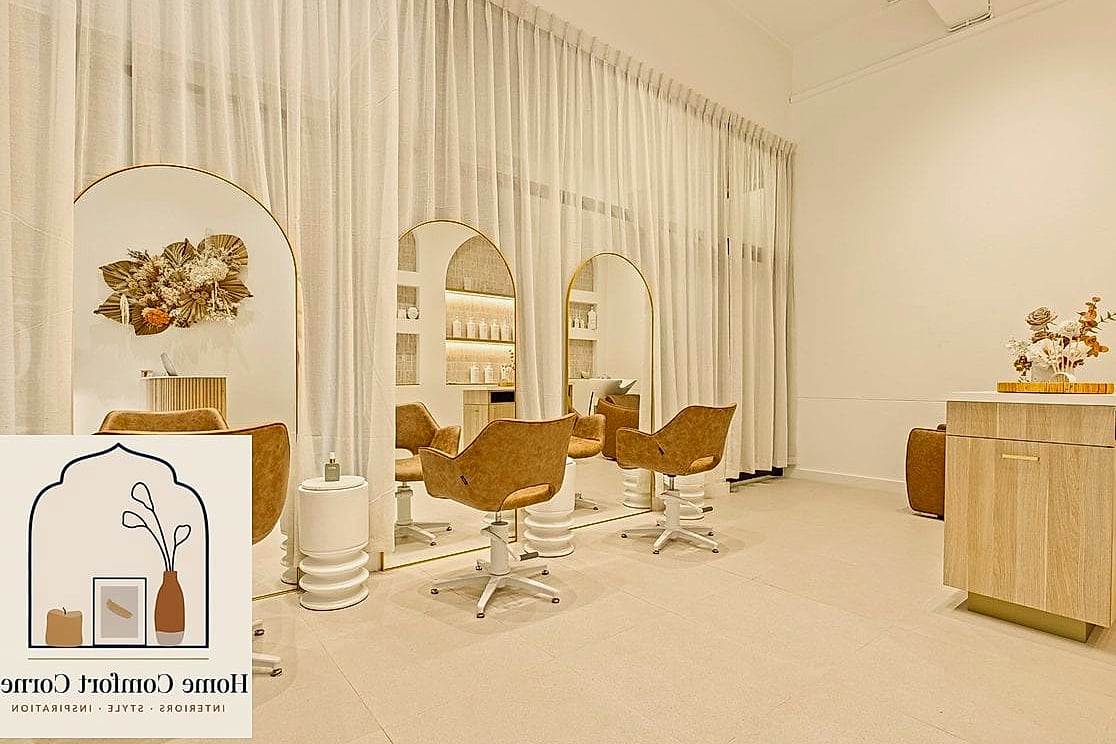
Sharp corners everywhere can make a salon feel clinical. Curved waiting benches, rounded reception desks, and arched mirror frames soften the whole space and feel more inviting. This is a trend borrowed straight from residential design, where curved sofas and arched doorways have been everywhere lately. It’s also just practical when you’ve got a busy space with people moving around constantly.
A Neutral Color Palette with Warm Wood Tones
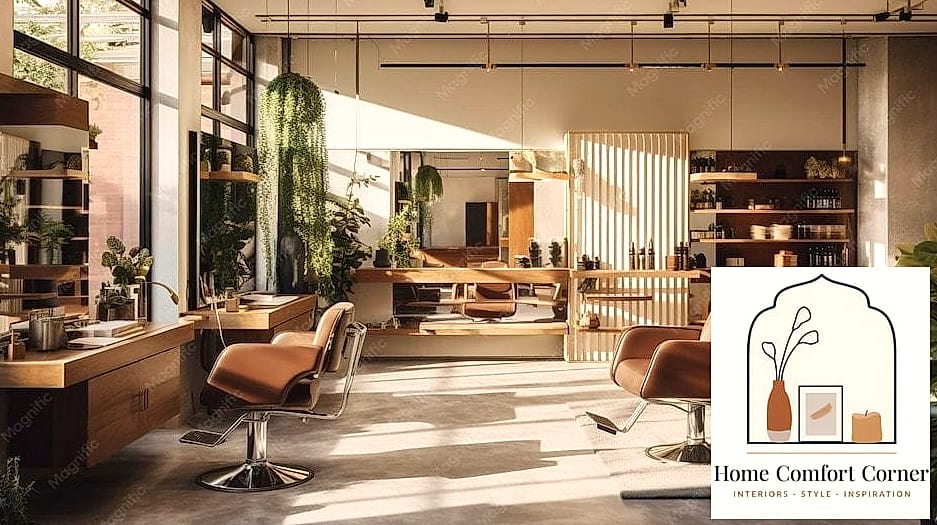
A lot of the salons people rave about online lean into a calm, neutral base of whites, greiges, and warm wood tones rather than loud colors everywhere. It reads as upscale without trying too hard, and it photographs beautifully for social media, which matters more than ever for salon marketing. Add pops of color through fresh flowers, art, or textiles so the space doesn’t feel flat.
Backlit Mirrors at Every Station
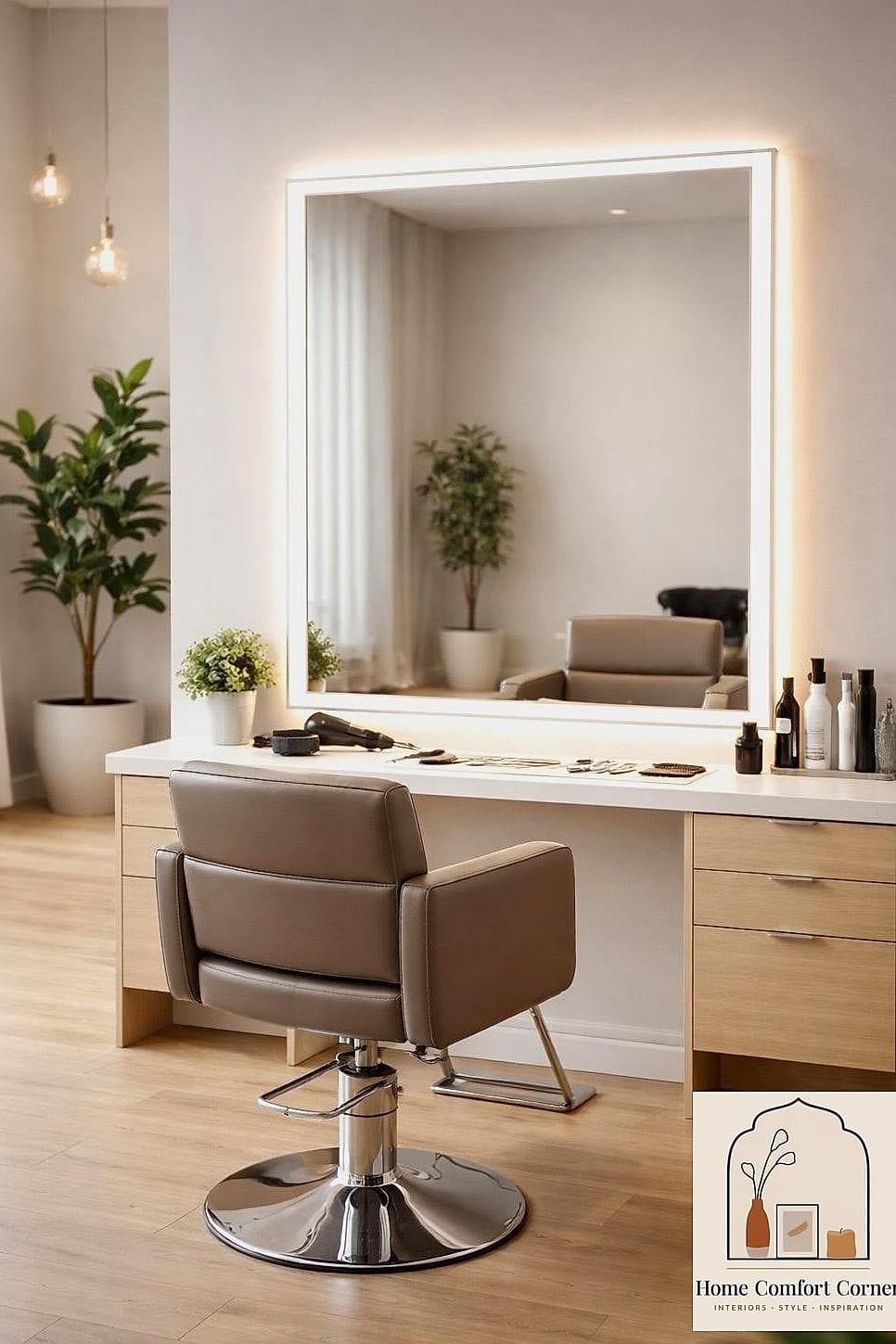
Backlit mirrors aren’t just a nice-to-have anymore, they’re becoming standard in salons that care about the client experience. The even, glare-free light makes it easier for stylists to work precisely and helps clients see their new look in flattering conditions. Some designers add dimmer switches so the lighting can shift throughout the day as natural light changes.
A Dedicated Product Wall with Brass or Black Hardware
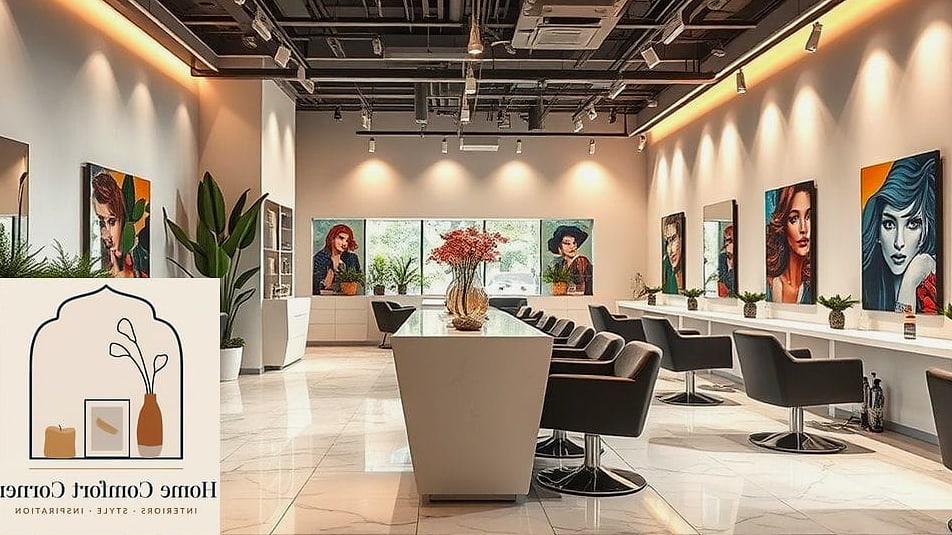
Instead of tucking retail products in a corner, give them their own moment with a full wall of shelving. Brushed brass or matte black hardware on the shelves ties the whole thing together and adds a boutique-store feel. This is a smart move for salons that rely on retail sales as part of their revenue, since a well-designed display genuinely does encourage browsing.
Textured Wall Treatments in the Wash Area
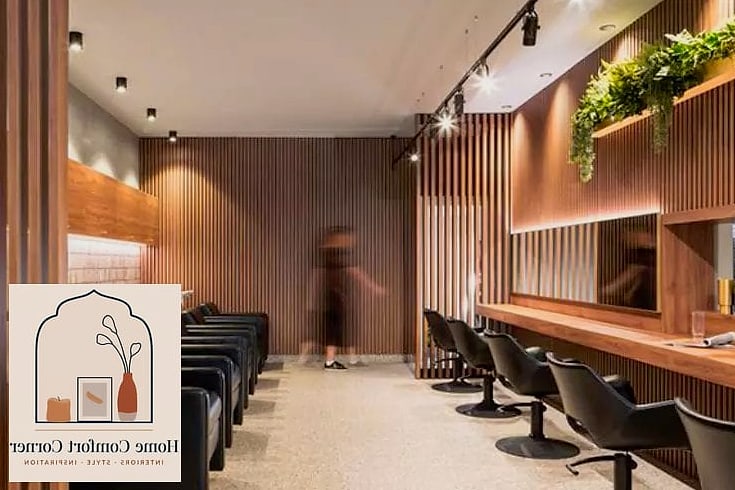
The shampoo and wash area often gets overlooked design-wise, but it doesn’t have to be purely functional. Textured tile, like fluted ceramic or a subtle mosaic pattern, adds visual interest to a space clients spend real time in with their eyes closed. Waterproof, easy-to-clean materials are a must here since it’s a high-moisture zone, so stick with porcelain or glazed ceramic rather than anything porous.
Greenery Throughout the Space
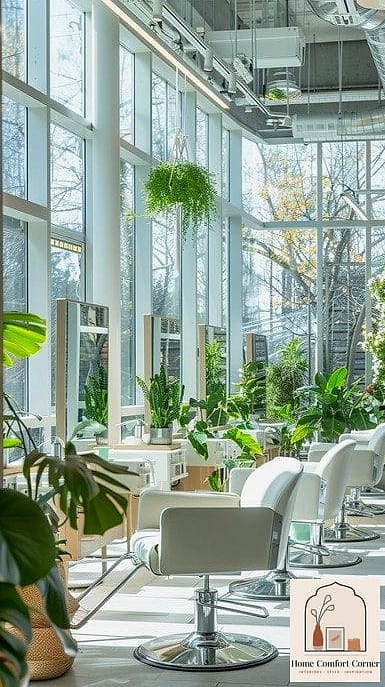
Plants do a lot of heavy lifting in salon design. A few large statement plants near the entrance, plus smaller greenery on shelves and reception counters, instantly make a space feel more alive. Low-maintenance options like snake plants, pothos, or ZZ plants are popular choices since salons don’t always have staff dedicated to plant care. Faux greenery has also come a long way if watering schedules are a concern.
Herringbone Tile as a Design Anchor
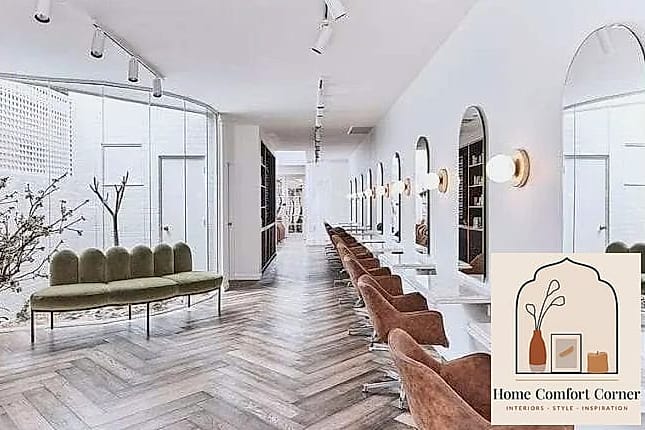
Herringbone patterns show up a lot in salon flooring and accent walls because the pattern itself adds movement and sophistication without needing bold colors. It works in classic subway tile, wood-look porcelain, or even marble for a higher-end feel. This is one of those details that photographs incredibly well, which is worth considering given how much salon marketing happens through Instagram and TikTok these days.
Comfortable, Design-Forward Waiting Areas
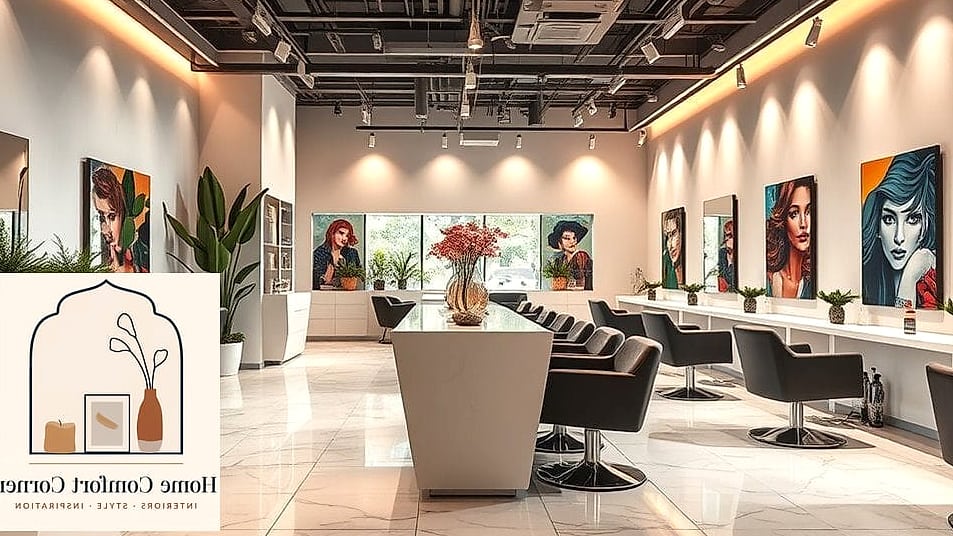
The waiting area is often an afterthought, but it shouldn’t be. Think plush chairs, a small coffee or tea station, and maybe a curated stack of magazines or a charging station for phones. Some salons even add a small vignette with candles or fresh flowers on a side table. This is where clients form their first impression, so it deserves the same attention as the styling stations.
Mixed Metal Fixtures for Visual Interest
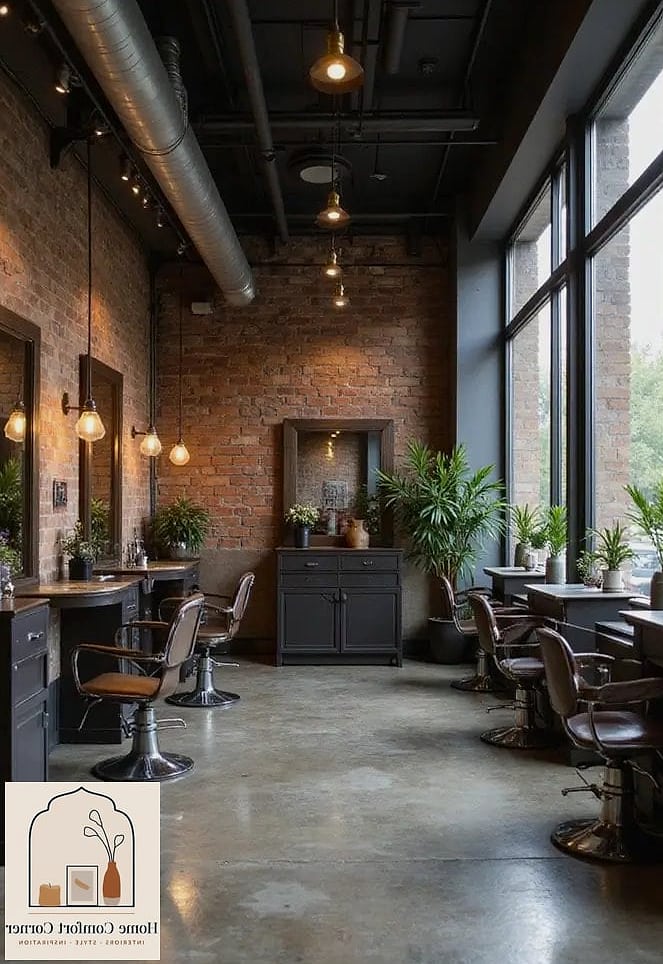
Sticking to one metal finish throughout an entire salon can feel a little flat. A lot of designers now mix brushed brass with matte black or brushed nickel, using one as the dominant finish and the other as an accent. This shows up in cabinet hardware, light fixtures, and even mirror frames. It’s a subtle detail, but it adds depth that makes a space feel more thoughtfully designed rather than picked from a single catalog page.
Built-In Storage to Keep Tools Out of Sight
Clutter is the enemy of a polished salon look, and built-in drawers or cabinets at each station solve that problem fast. Drawer organizers keep combs, clips, and color tools sorted, while hidden storage under sinks handles the bulkier supplies. This isn’t just about looks either, it genuinely speeds up a stylist’s workflow when everything has a designated spot. Renter-friendly salons leasing their space can often achieve a similar effect with freestanding cabinets or rolling carts that mimic built-ins without permanent installation.
Pulling together a salon that feels both functional and beautiful really comes down to layering these details rather than chasing one big trend. Good lighting, durable materials, and a cohesive color palette go a long way, and a lot of these ideas translate surprisingly well into home spaces too, especially if you’ve got a home vanity or bathroom you’re hoping to give a salon-level upgrade. Start with one or two changes that fit your budget, and build from there.