14 Pooja Room Ideas Indian Before and After Transformations to Inspire
- From Dark Hallway Corner to Marble Backlit Niche
- Cluttered Bedroom Corner Becomes a Curtained Mandir Alcove
- Old Wooden Temple Gets a Whitewash and Brass Refresh
- Unused Balcony Converted Into an Open-Air Pooja Space
- Plain White Wall Transformed With Hand-Painted Rangoli Motifs
- Compact Apartment Closet Reimagined as a Vertical Pooja Cabinet
- Dated Red and Gold Room Softened Into a Neutral Palette
- Ground-Level Platform Raised Into an Elevated Marble Mandap
- Small Nook Under the Staircase Becomes a Cozy Mandir
- Faded Laminate Flooring Replaced With Textured Stone Tile
- Mismatched Decor Unified With a Single Design Theme
- Dim Windowless Room Brightened With Layered Lighting
- Bare Shelf Display Organized With Baskets and Trays
- Spare Room Converted Into a Full Dedicated Pooja Room
14 Pooja Room Ideas Indian Before and After Transformations to Inspire
There’s something so satisfying about walking past a pooja room that used to be a cluttered corner and now feels like an actual sanctuary. I’ve talked to so many homeowners who put off this space for years, tucking it into a leftover nook or a dark hallway, until one day they finally give it the attention it deserves. The before and after difference is honestly one of the most dramatic transformations you can do in a home, and it doesn’t always require a huge budget either.
Whether you’re working with a full room, a small wall niche, or a converted closet, these fourteen ideas cover a real range of styles, sizes, and budgets. I’ve tried to include practical details on materials and layout so you can actually picture how each one would work in your own space.
From Dark Hallway Corner to Marble Backlit Niche
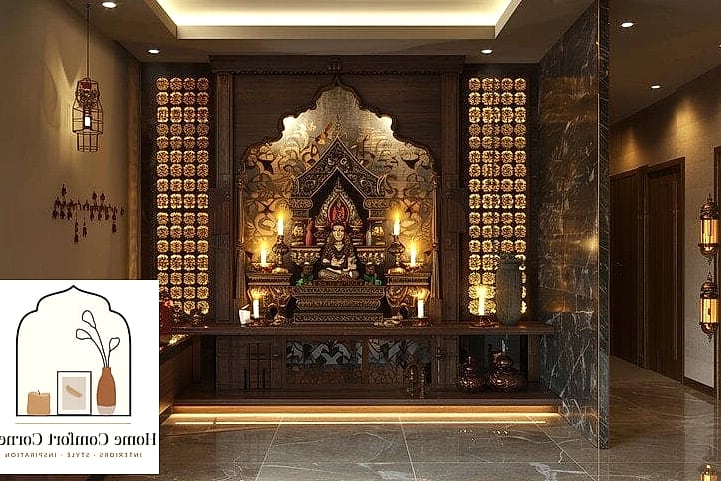
This is probably the most common transformation story I hear. A dim hallway corner that nobody wanted to look at gets reborn as a small marble niche with backlit LED strips tucked behind the frame. The marble bounces light beautifully, and even a narrow two-foot space suddenly feels intentional instead of forgotten.
The key here is the backlighting. Warm white LED strips installed behind a thin marble or MDF panel create a soft glow that makes the whole area feel calm rather than clinical. It’s a great renter-friendly option too, since you can often achieve a similar look with peel-and-stick marble contact paper and battery-operated LED strips if you’re not able to make permanent changes.
Cluttered Bedroom Corner Becomes a Curtained Mandir Alcove
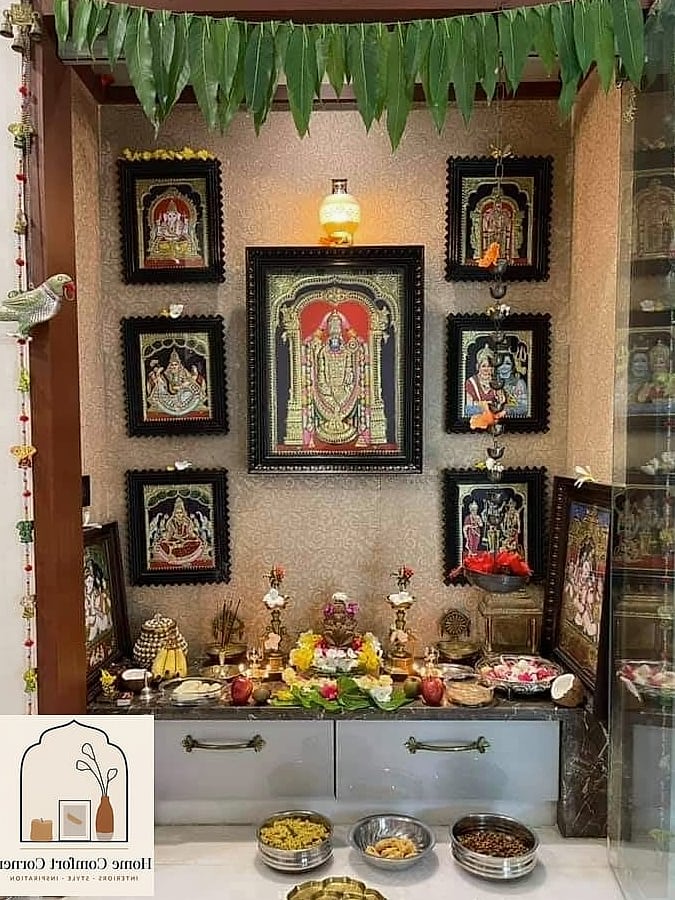
I love this one because it solves a real problem: not everyone has a spare room to dedicate to worship. This transformation takes a bedroom corner that was previously a catch-all for laundry baskets and stray boxes and turns it into a proper alcove with a wooden mandir unit and flowing curtains on either side.
The curtains do double duty. They add softness and a sense of privacy, and they can be pulled shut when the room needs to feel more like a bedroom and less like a shared space. Go with a lightweight linen or cotton fabric in ivory or soft gold for a warm, breathable look that doesn’t feel heavy in a small room.
Old Wooden Temple Gets a Whitewash and Brass Refresh
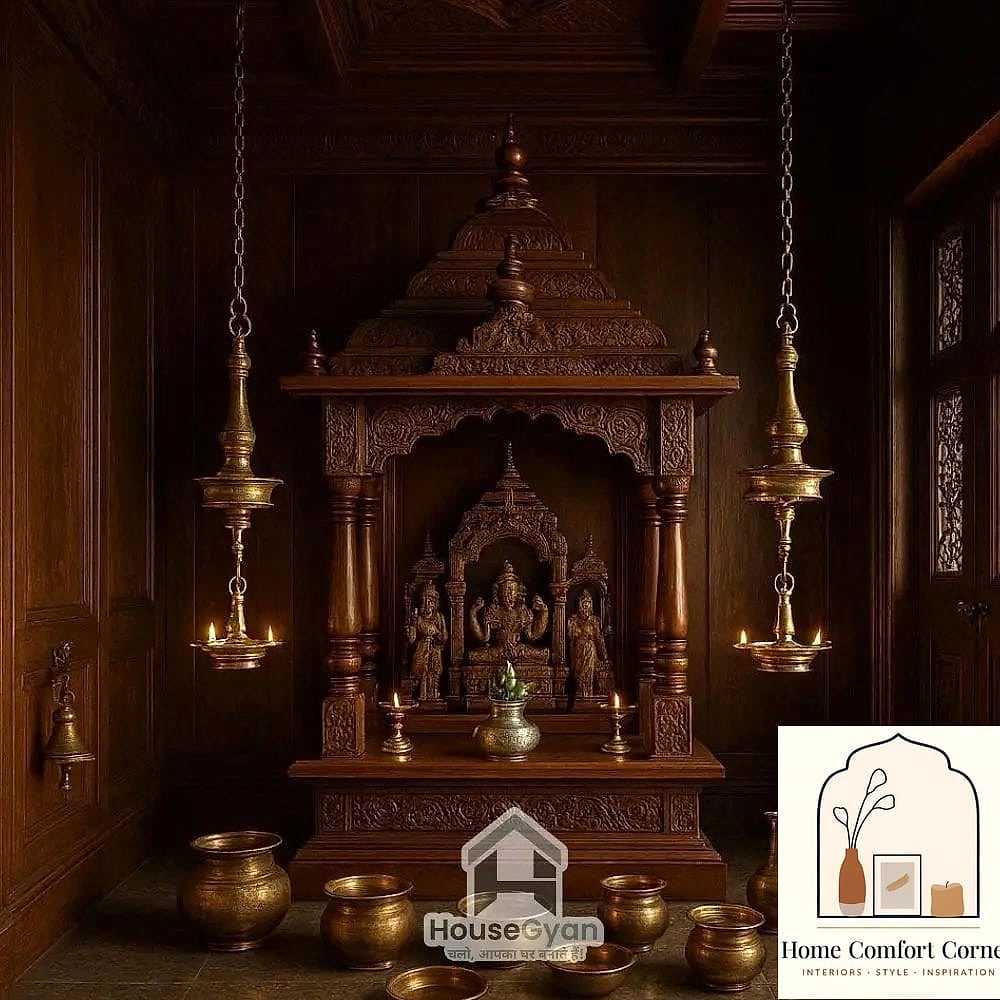
Sometimes the transformation isn’t about the room at all, it’s about the mandir itself. An old teak or sheesham temple that’s darkened over the years with soot from diyas and incense can look completely different with a light whitewash finish and updated brass hardware.
This is a weekend project more than a renovation. Sand down the existing finish, apply a whitewash or liming wax, and swap out any dull hardware for polished brass hooks and handles. The result feels lighter and more updated without losing the warmth of the original wood grain.
Unused Balcony Converted Into an Open-Air Pooja Space
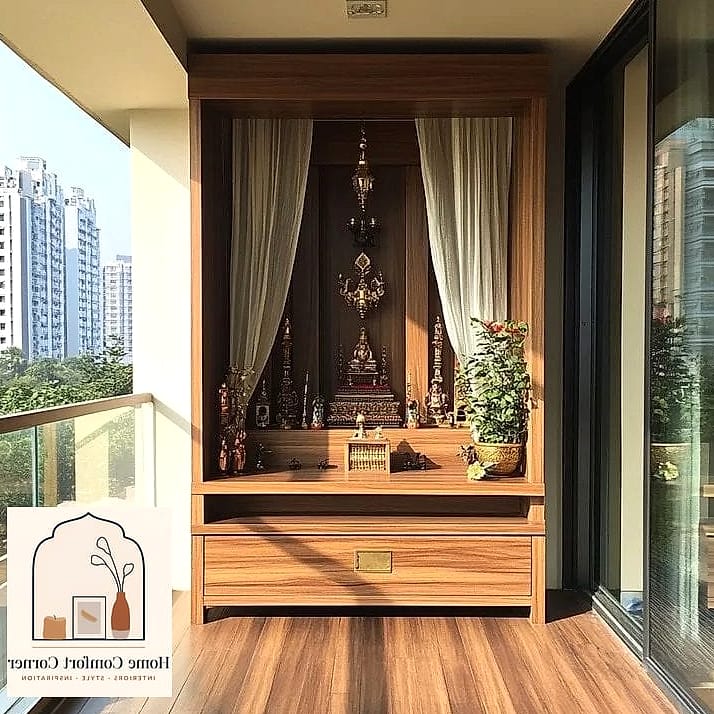
If you’ve got a balcony that’s basically become storage for old furniture and dead plants, this transformation might be the most rewarding one on this list. Clearing it out and adding a simple stone or wooden platform for the deities creates a peaceful open-air pooja spot that gets natural morning light.
This works especially well in warmer climates where you can leave the space semi-open year-round. Add a small overhang or awning for weather protection, and consider outdoor-rated tile on the floor since it’ll need to handle occasional rain and heat without cracking. A few potted tulsi plants nearby complete the look.
Plain White Wall Transformed With Hand-Painted Rangoli Motifs
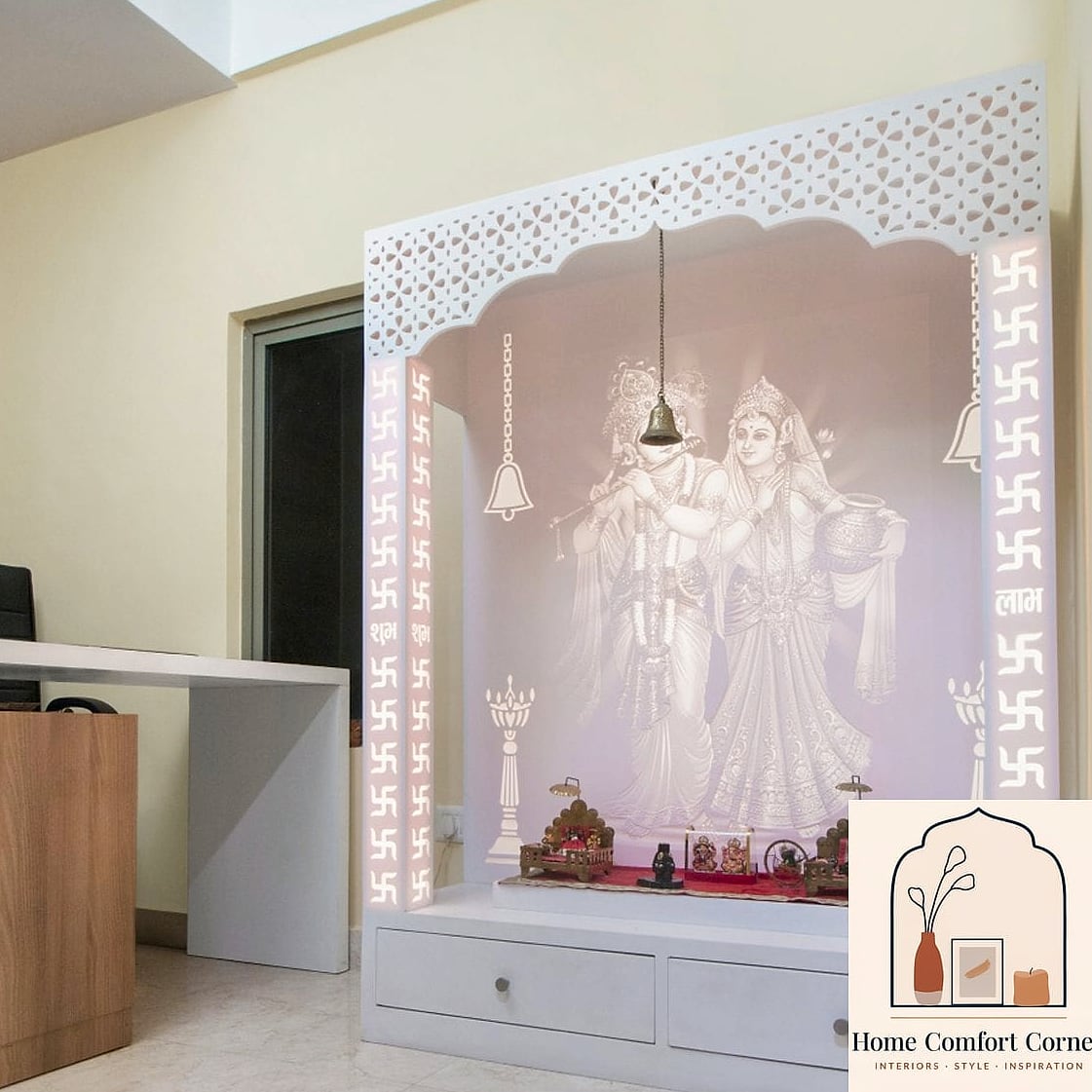
This one is all about the details. A plain white wall behind the mandir gets a hand-painted or stenciled rangoli-inspired border in gold, maroon, or turquoise, instantly giving the whole space more personality without any structural changes.
You don’t need to be an artist for this. Stencil kits are widely available now, and even a simple repeating lotus or paisley pattern along the top border makes a huge visual impact. This is one of those upgrades that instantly makes a pooja space feel more custom without requiring a full renovation.
Compact Apartment Closet Reimagined as a Vertical Pooja Cabinet
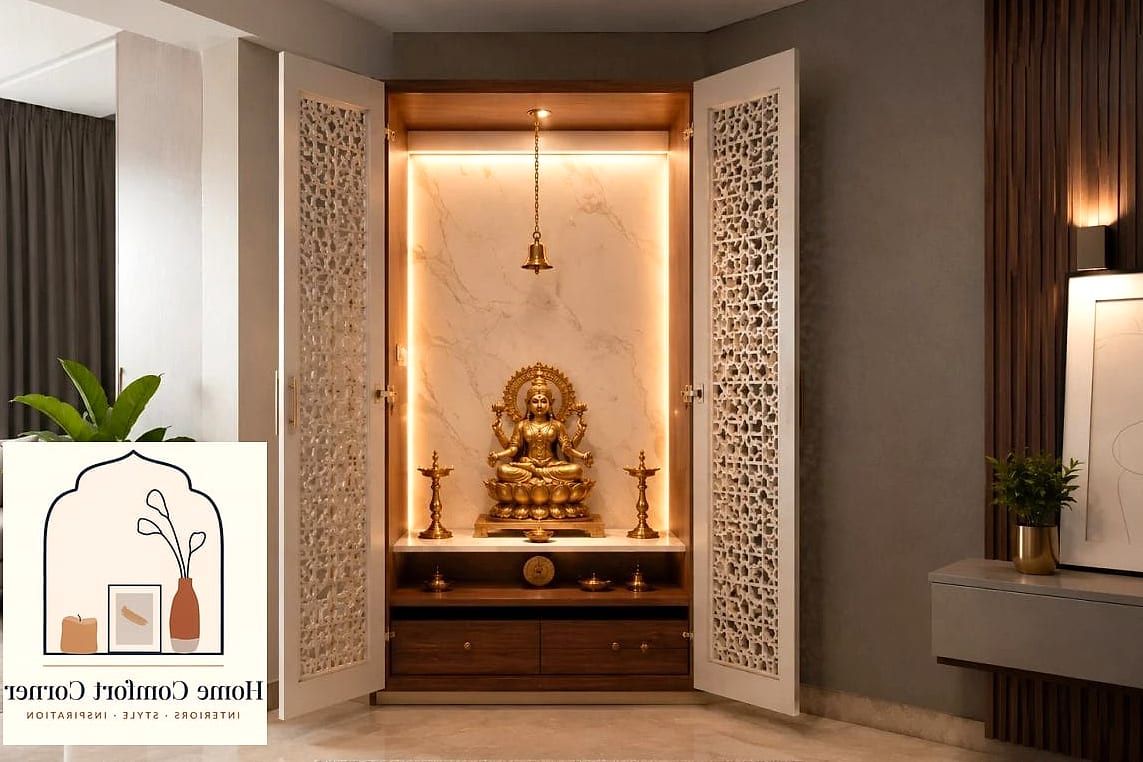
For apartment dwellers dealing with genuinely tight square footage, converting an unused closet into a vertical pooja cabinet is a smart move. The before photo usually shows a jumbled closet full of miscellaneous items, and the after shows a clean, tiered cabinet with doors that close completely when not in use.
Vertical built-in storage below the main shelf is key here, since it lets you tuck away extra diyas, incense, and prasad supplies without cluttering the visible altar area. Matte white or soft sage green cabinetry paired with brass knobs keeps the whole thing feeling fresh rather than boxy.
Dated Red and Gold Room Softened Into a Neutral Palette
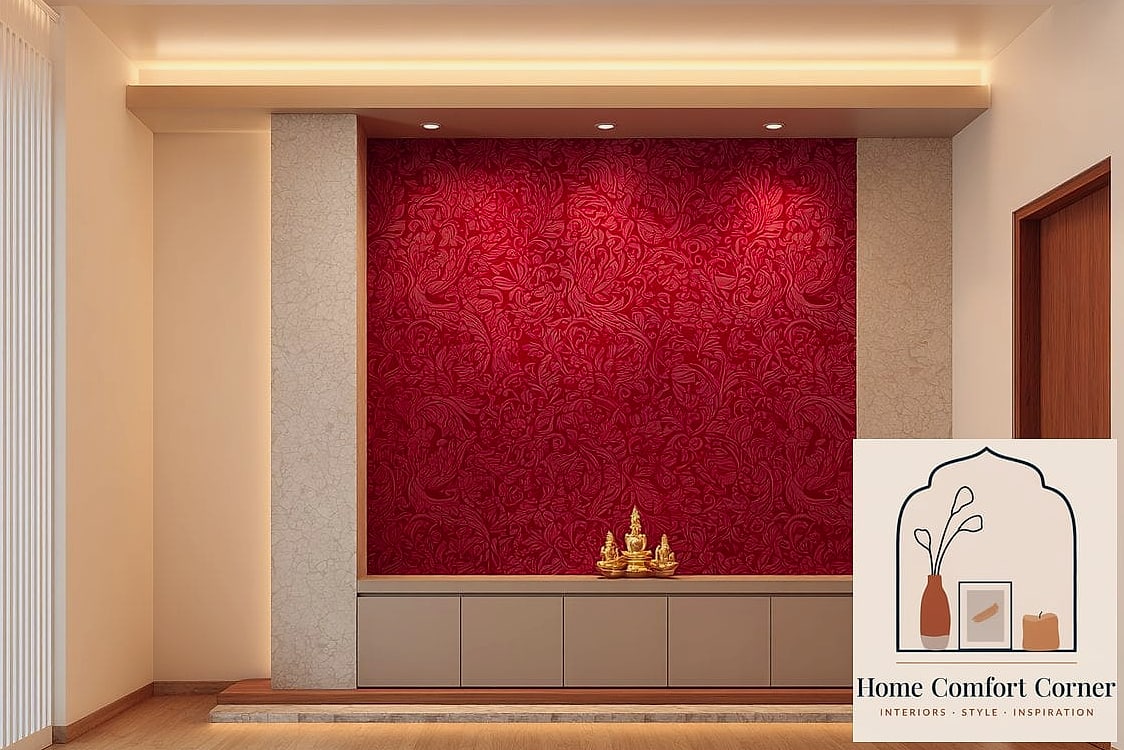
Not every transformation is about adding more decoration, sometimes it’s about toning things down. A pooja room that leaned heavily on bright red and gold from decades past can feel completely refreshed with a neutral palette of warm beige, soft ivory, and brushed brass accents.
This approach tends to appeal to younger homeowners who want the space to feel serene rather than visually loud. You still keep traditional elements like the temple structure and idols, but the surrounding walls, flooring, and textiles shift toward a calmer, more contemporary look that fits better with an open-concept home.
Ground-Level Platform Raised Into an Elevated Marble Mandap
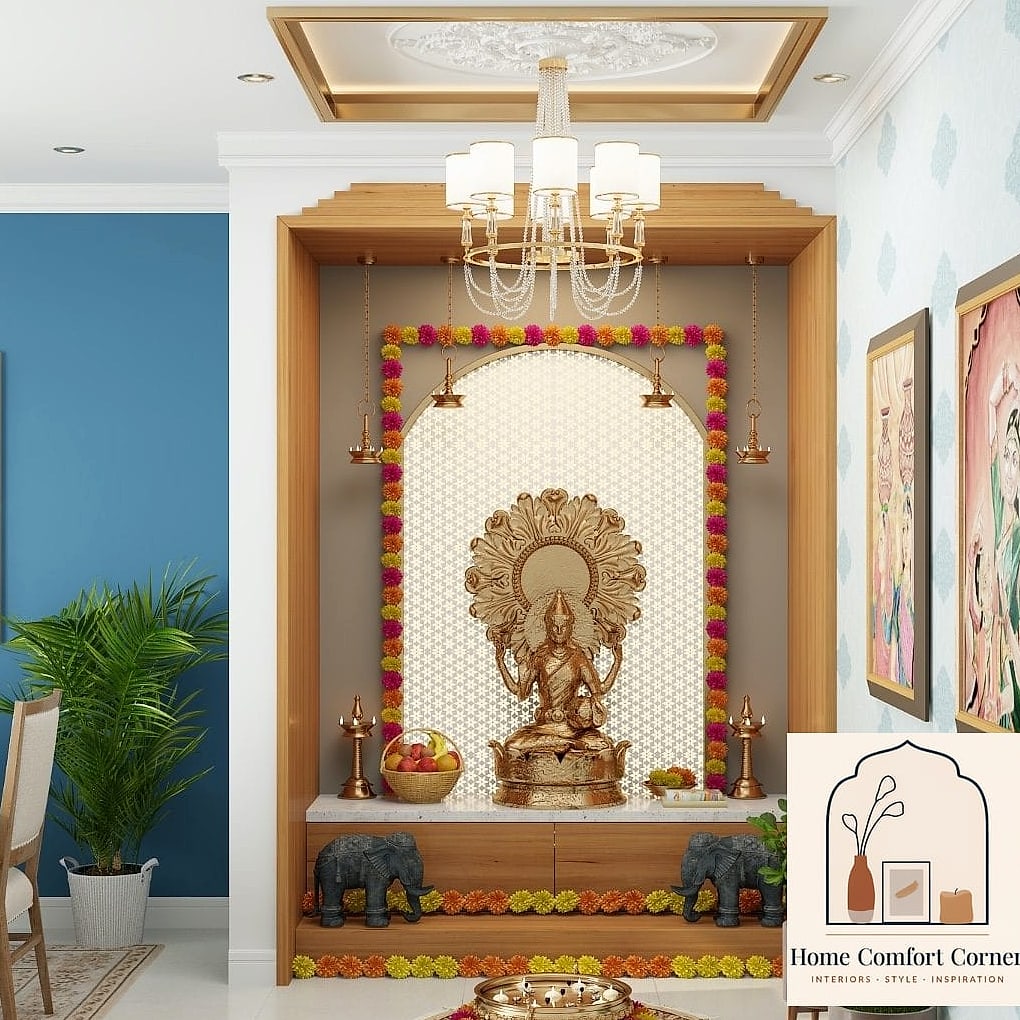
A low, ground-level pooja setup that requires kneeling or bending can be transformed into an elevated marble mandap at a comfortable standing or seated height. This is particularly popular among older homeowners who want the same devotional space without the physical strain.
Elevating the structure also opens up storage underneath for pooja items, extra linens, or seasonal decor. White or cream marble with subtle gray veining keeps the look elegant, and a small brass railing or border along the edge adds a finishing touch without overwhelming the space.
Small Nook Under the Staircase Becomes a Cozy Mandir
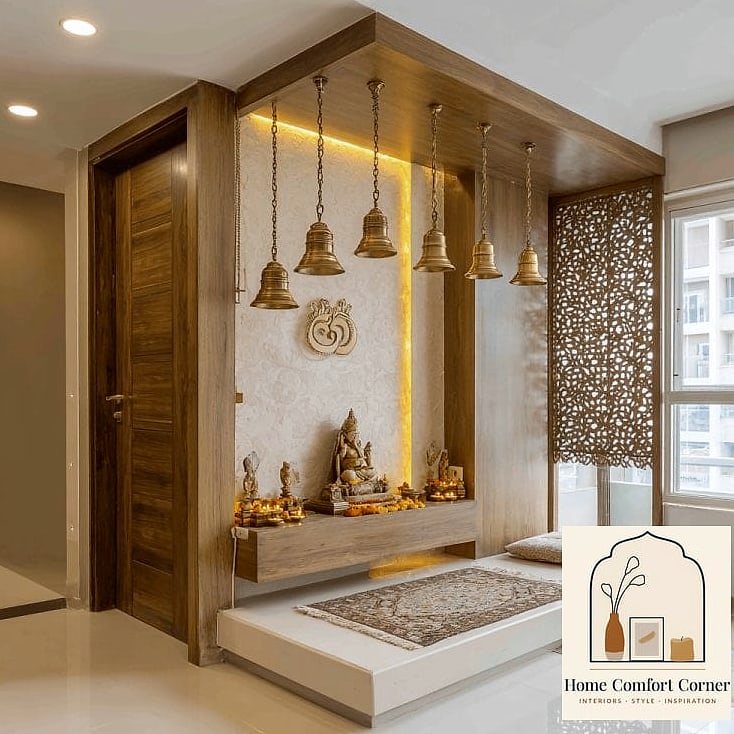
Under-stair space is one of the most underused areas in Indian homes, and turning it into a pooja nook is honestly one of my favorite transformations because it solves two problems at once. The awkward triangular space finally has a purpose, and the home gains a dedicated worship area without sacrificing square footage elsewhere.
Because the ceiling height tapers, this works best with a low-profile temple unit rather than a tall one. Adding a small strip of warm lighting along the sloped ceiling and a soft jute or cotton rug on the floor makes the whole nook feel intentional rather than like leftover space.
Faded Laminate Flooring Replaced With Textured Stone Tile
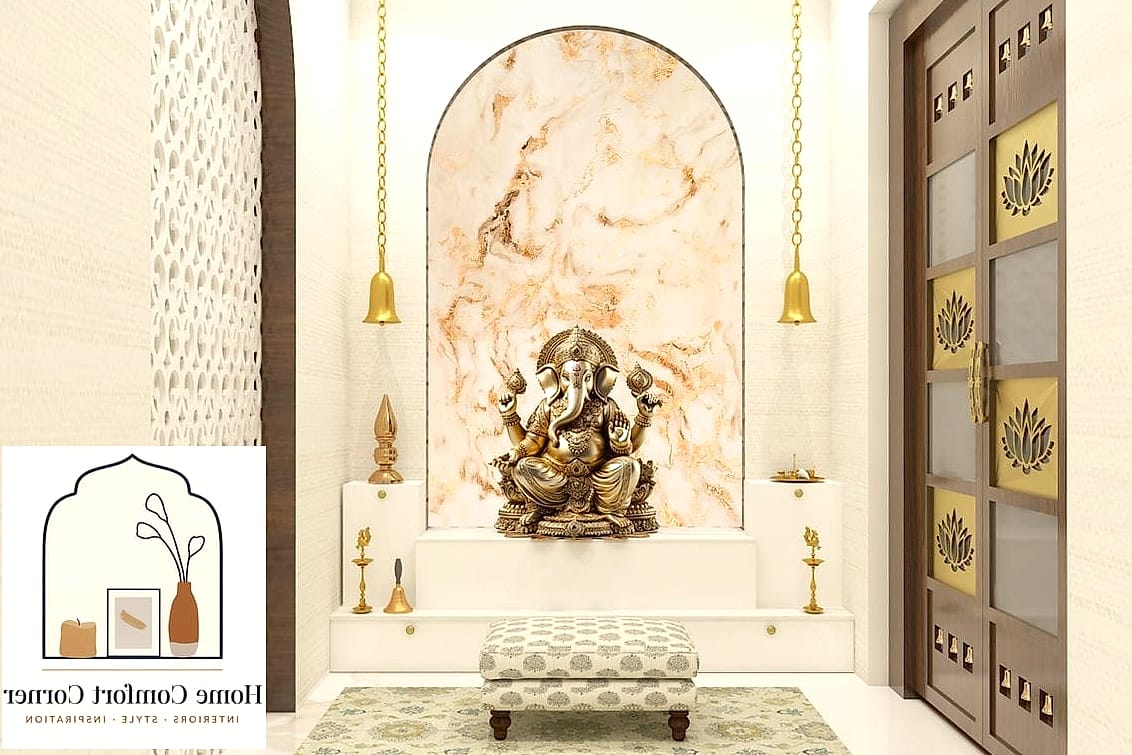
Flooring gets overlooked in a lot of pooja room makeovers, but it makes a bigger difference than people expect. Swapping out old, faded laminate for a textured stone or matte porcelain tile instantly upgrades the feel underfoot and photographs so much better too.
Go with a honed or matte finish rather than glossy, since glossy tile can look slippery and cold in a space meant for sitting and kneeling. A warm beige or terracotta tone works nicely if you want the floor to feel grounding rather than stark white.
Mismatched Decor Unified With a Single Design Theme
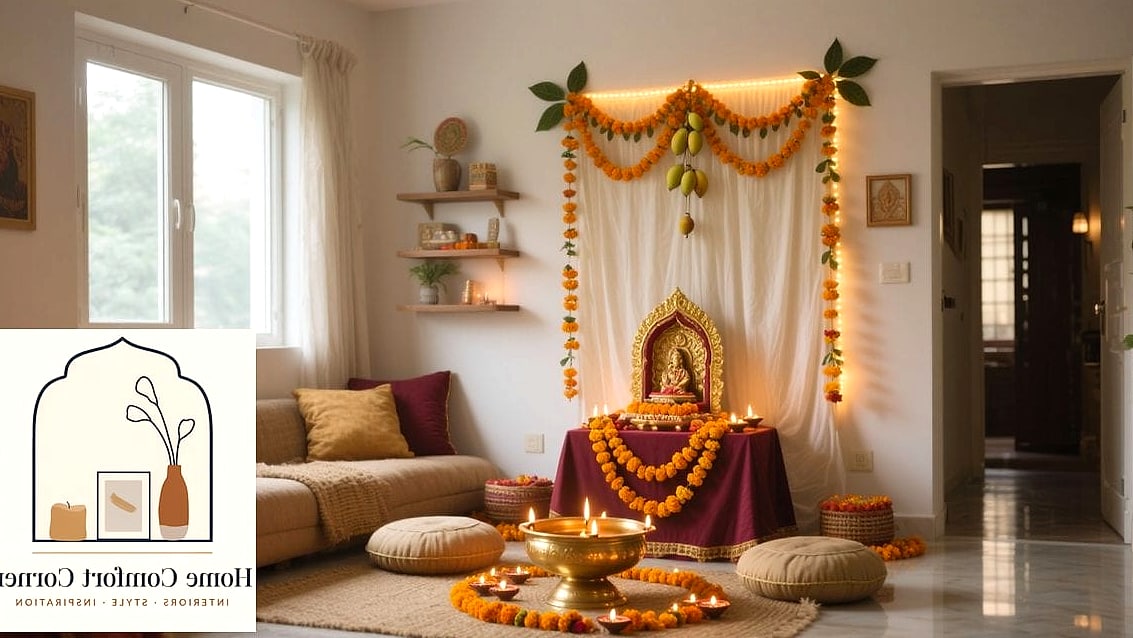
Sometimes a pooja room’s biggest issue isn’t the layout at all, it’s that everything was collected over the years without any cohesive plan. Different colored diyas, mismatched frames, and random storage containers can make even a well-lit space feel chaotic.
The fix is picking one material and color story and sticking with it. If you go with brass, commit to brass across the diyas, bells, and frames. If you prefer a more minimal look, choose matte black or white containers throughout. This single decision does more to elevate the room than almost any structural change.
Dim Windowless Room Brightened With Layered Lighting
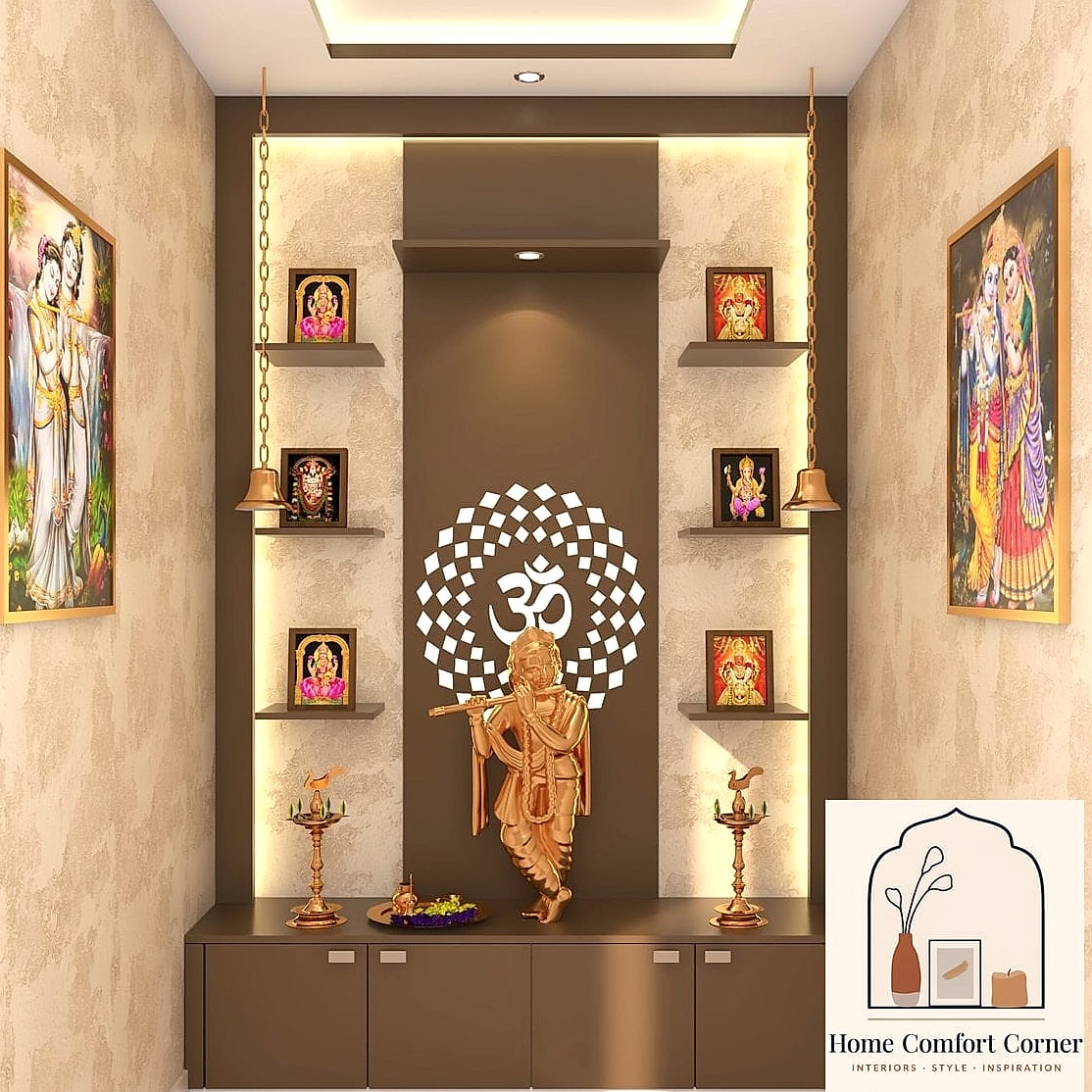
A pooja room with no natural light source can feel more like storage than sanctuary, but layered lighting completely changes that. This transformation combines a warm overhead fixture, backlit niche lighting behind the idols, and small brass diya-style sconces on either side.
The layering matters because a single overhead bulb tends to create harsh shadows, especially during aarti. Mixing light sources at different heights gives the room a softer, more flattering glow throughout the day, and it makes photos of the space look noticeably better too.
Bare Shelf Display Organized With Baskets and Trays
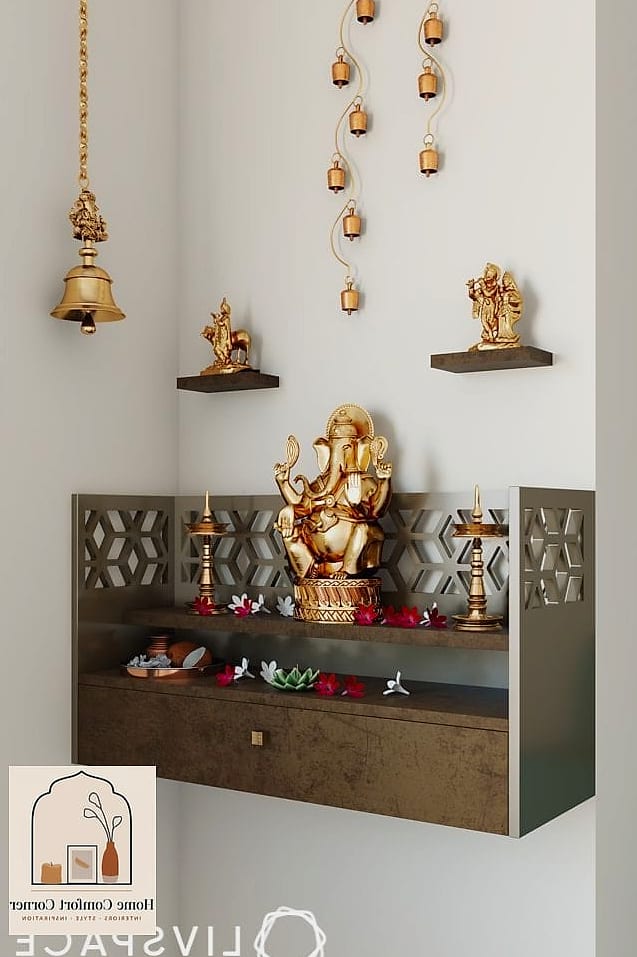
An open shelf that used to have loose incense packets, extra matchboxes, and random pooja items scattered across it can be transformed with simple woven baskets and brass trays. This is one of the most budget-friendly changes on this list and takes maybe an hour to execute.
Grouping like items together, incense in one basket, extra wicks and cotton in another, camphor and matches in a small brass box, makes the whole shelf look curated instead of chaotic. It also makes daily pooja prep faster since everything has an assigned spot.
Spare Room Converted Into a Full Dedicated Pooja Room
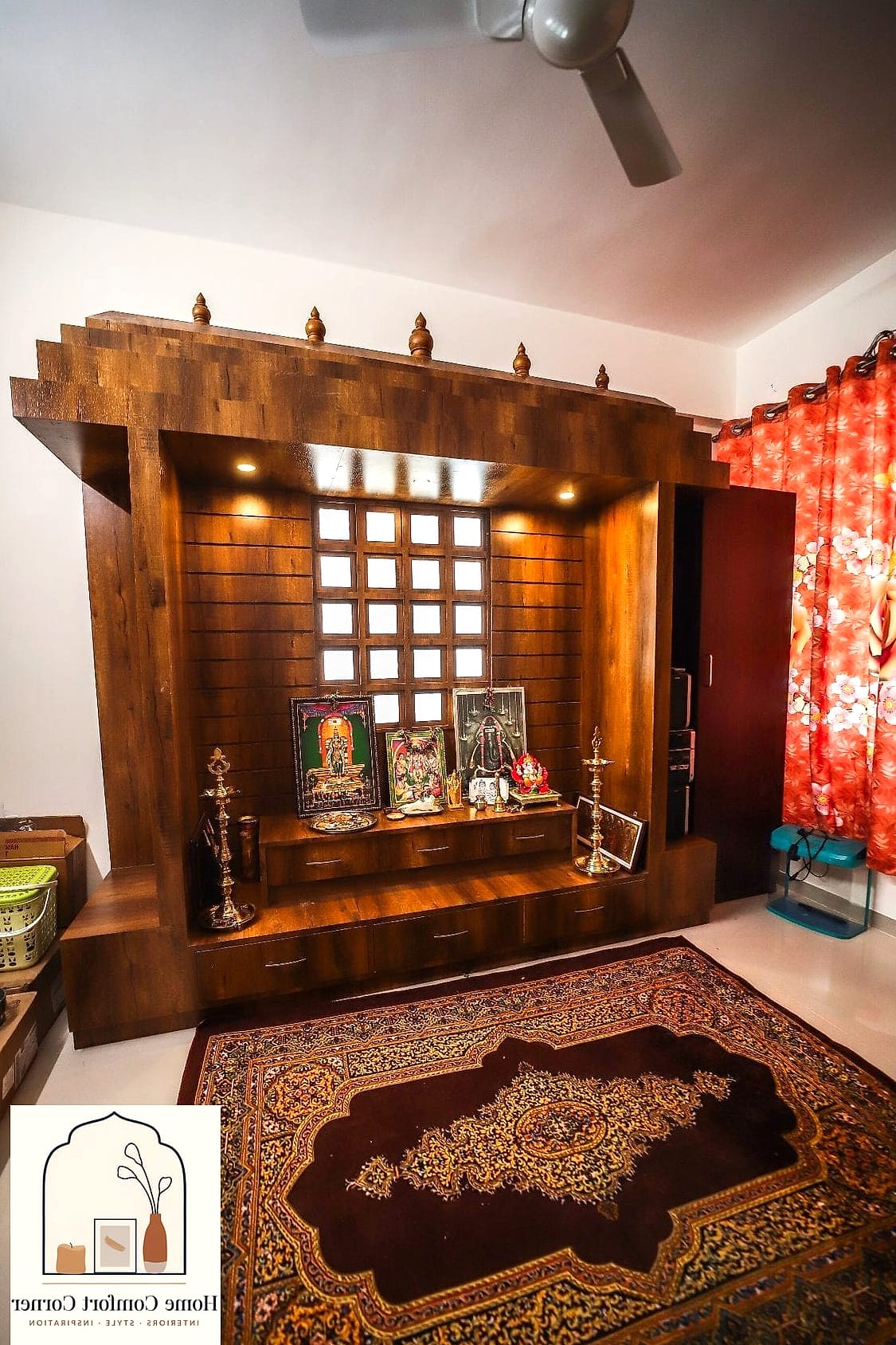
For homeowners lucky enough to have an extra room to work with, converting it into a fully dedicated pooja room is the ultimate before and after. The before photo usually shows a generic guest room or storage space, and the after reveals a room with proper flooring, a large temple structure, seating for family members, and dedicated storage.
This is the most involved transformation on the list, often involving flooring changes, sometimes a small water feature or fountain, and custom-built cabinetry along one wall. It’s a bigger investment, but for families who do daily aarti together or host larger poojas during festivals, having a room that can actually accommodate everyone comfortably makes a real difference.
Looking through transformations like these, the pattern that stands out is that the best pooja room ideas Indian homeowners tend to gravitate toward aren’t necessarily the most expensive ones. A lot of the most striking before and after stories come down to better lighting, a more cohesive color palette, or simply giving the space the attention it was missing. Whatever size or budget you’re working with, there’s likely a version of one of these transformations that fits your home.