22 Modern Farmhouse Dining Room Ideas Before and After Transformations to Inspire
- Swapping a Dated Chandelier for a Black Iron Fixture
- Replacing a Formal Table with a Reclaimed Wood Farmhouse Table
- Adding a Board and Batten Accent Wall
- Mixing Dining Chairs Instead of Matching Sets
- Painting Walls in Warm Neutral Tones
- Installing Shiplap on a Feature Wall
- Adding a Vintage-Style Rug Under the Table
- Layering In a Statement Buffet or Sideboard
- Bringing In Exposed Wood Beams
- Updating Window Treatments to Simple Linen Curtains
- Adding Open Shelving for Dishware Display
- Introducing a Neutral Color Palette Throughout
- Replacing Recessed Lighting with a Statement Pendant Duo
- Adding Wainscoting Below a Chair Rail
- Bringing In Woven and Natural Textures
- Converting a Formal Dining Room Into a Flexible Everyday Space
- Adding Black Window Frames or Trim
- Styling a Gallery Wall With Vintage-Inspired Art
- Upgrading Hardware on Built-In Cabinetry
- Adding a Live Edge Wood Accent
- Bringing In Greenery With Simple Vases and Stems
- Layering Lighting With Wall Sconces
22 Modern Farmhouse Dining Room Ideas Before and After Transformations to Inspire
If your dining room still feels stuck in a builder-grade time warp, you’re going to want to bookmark this one. Modern farmhouse style has stuck around for a reason — it’s warm, it’s livable, and it photographs beautifully without looking staged. I’ve pulled together 22 real before and after style transformations that show exactly how small, budget-friendly changes can completely shift the feel of a dining space. Let’s get into it.
Swapping a Dated Chandelier for a Black Iron Fixture
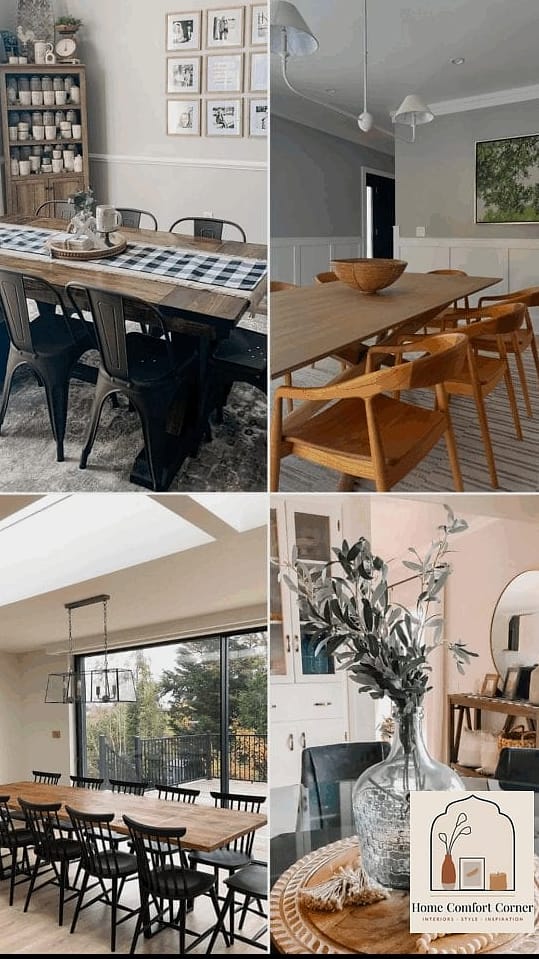
This is probably the single fastest way to modernize a farmhouse dining room. Out goes the brass-and-glass builder fixture, in comes a black iron chandelier with clean lines. It instantly grounds the room and gives it that collected-over-time look people love. Works great in rooms with 8-foot ceilings or higher, and it’s a project most homeowners can DIY in an afternoon with basic electrical know-how.
Replacing a Formal Table with a Reclaimed Wood Farmhouse Table
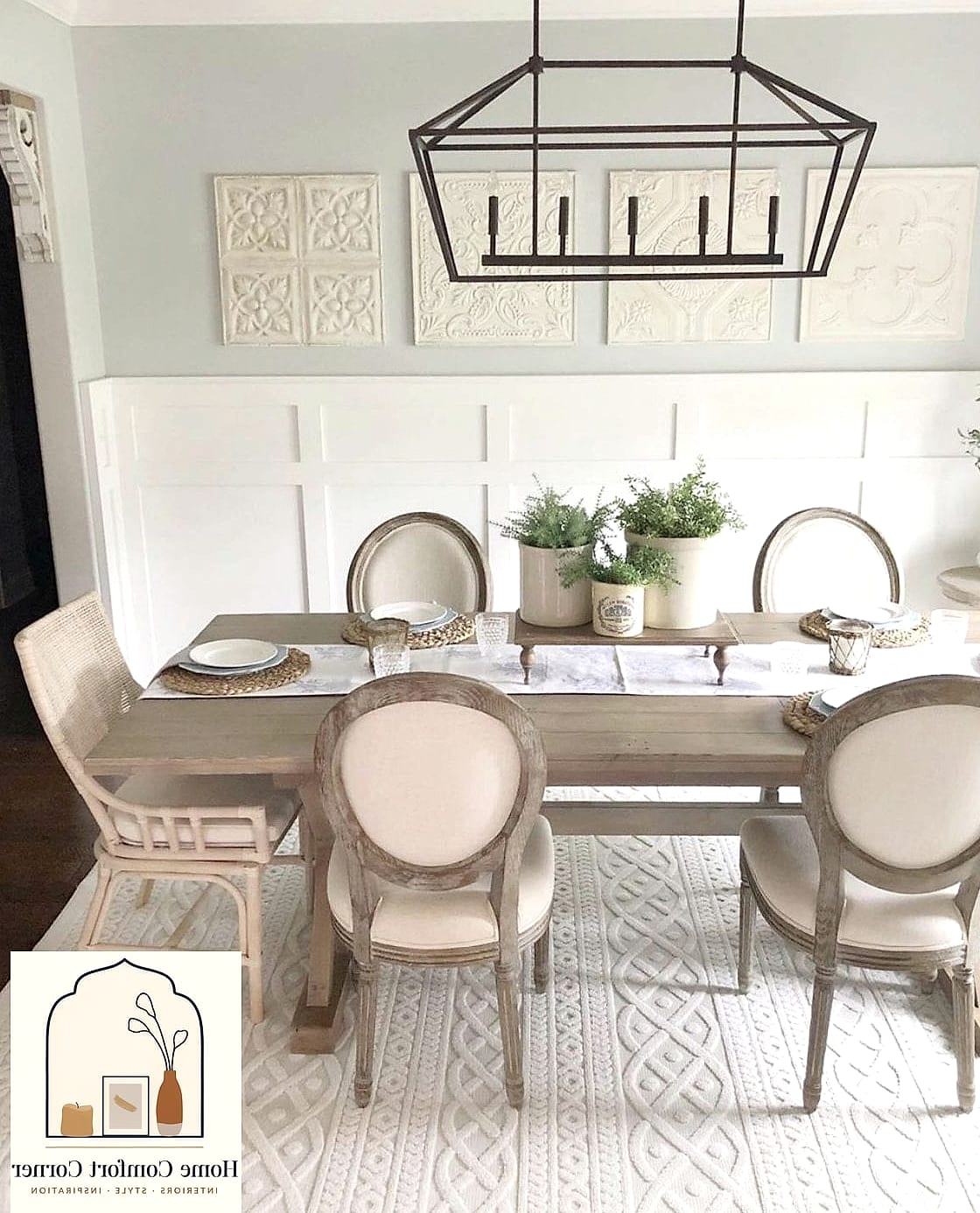
Trading a glossy cherry table for a chunky reclaimed wood one changes the whole personality of the room. The wood grain and slight imperfections add texture that a lacquered finish just can’t. It works best in rooms where you want the table to be the star, not the background. Budget tip: unfinished wood tables from local carpenters are often cheaper than big-box “farmhouse style” versions.
Adding a Board and Batten Accent Wall
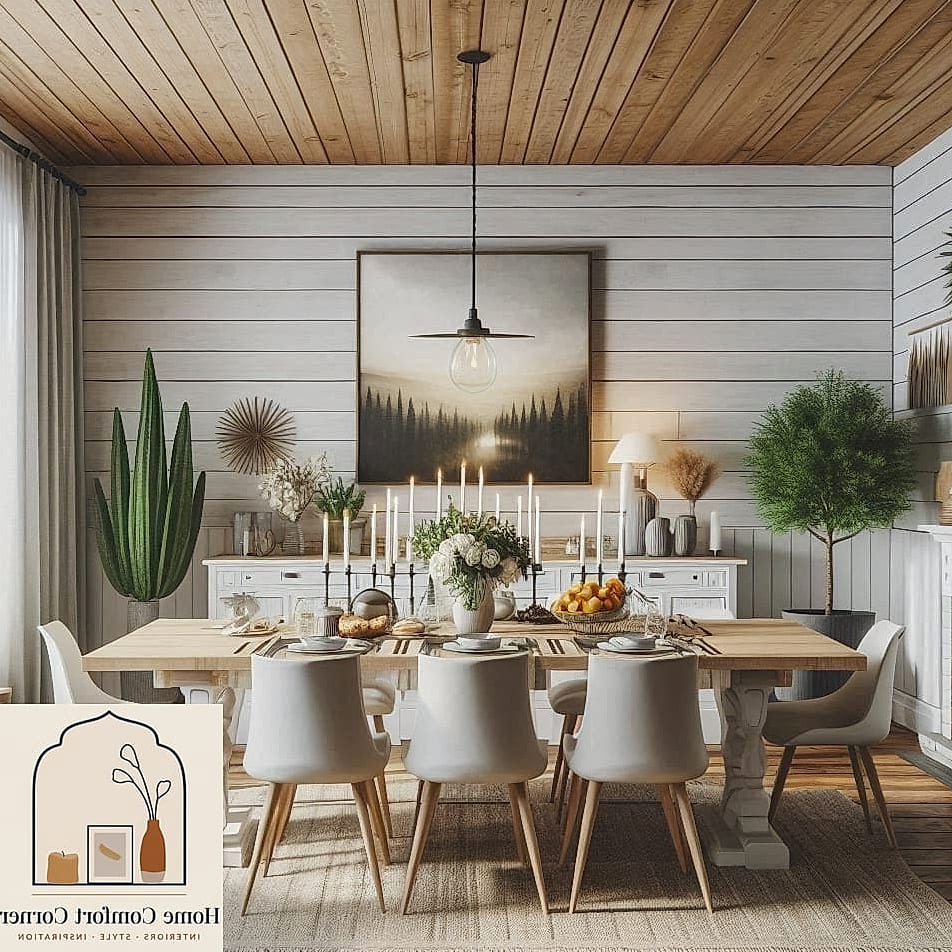
Board and batten paneling on one wall gives a plain dining room instant architectural interest. Painted in a soft white or warm cream, it pairs beautifully with wood tones and black accents. This is a weekend DIY project for most people, and it’s especially good for renters who own their home but want a low-commitment update — just don’t try this in an actual rental without owner approval.
Mixing Dining Chairs Instead of Matching Sets
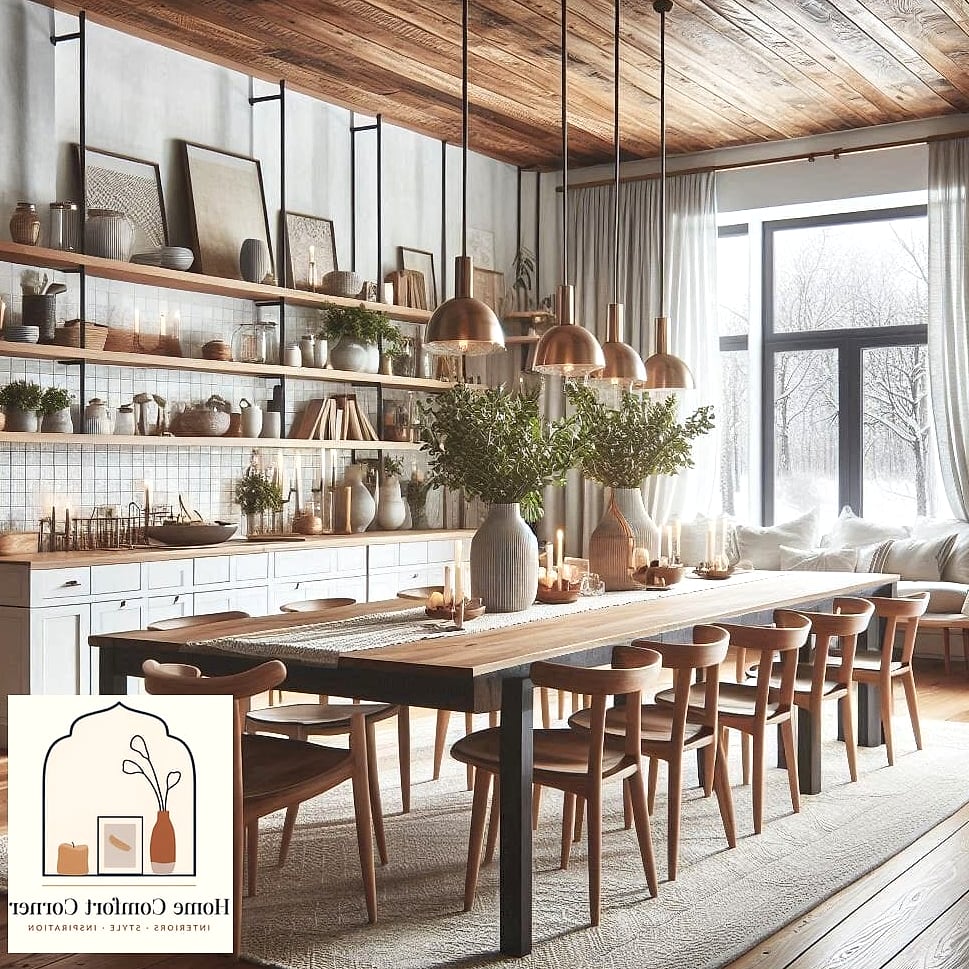
A matched dining set can feel stiff. Swapping in a mix of wood chairs, a bench on one side, and maybe two upholstered chairs at the ends creates that lived-in farmhouse feel. It’s also budget-friendly since you can pick up mismatched chairs secondhand and unify them with paint or fresh upholstery.
Painting Walls in Warm Neutral Tones
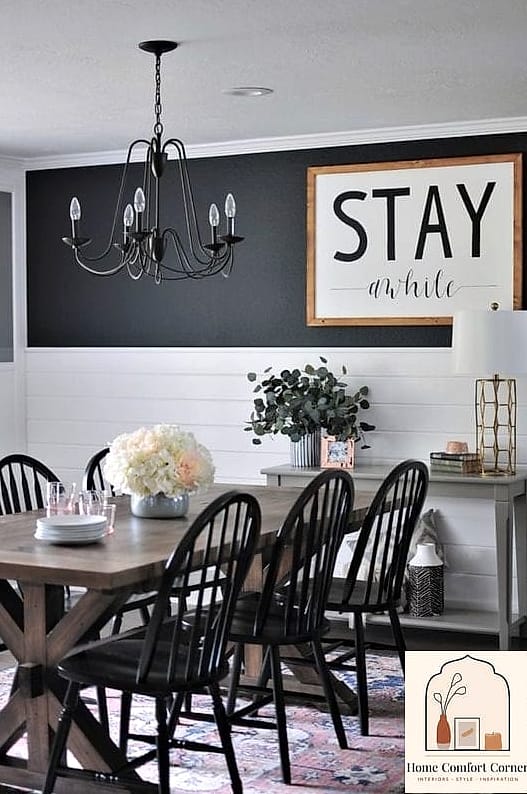
Cool gray walls were everywhere for a while, but modern farmhouse leans warmer now — think soft greige, warm white, or even a muted taupe. These tones make wood furniture and black fixtures pop instead of competing with them. This is one of the cheapest updates on this whole list and honestly one of the highest-impact.
Installing Shiplap on a Feature Wall
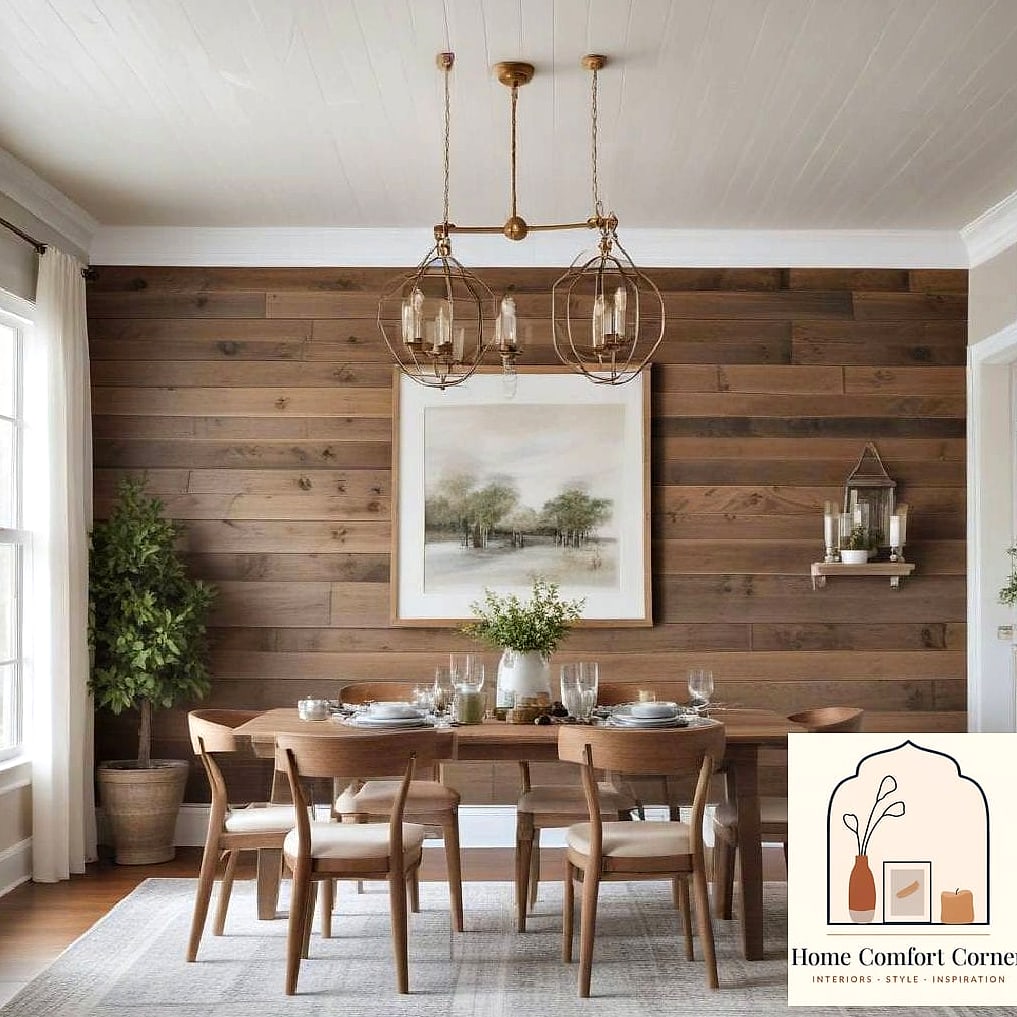
Shiplap gets a bad rap for being overdone, but used on just one wall behind a hutch or buffet, it still reads as intentional rather than trendy-for-trendy’s-sake. Pair it with warm wood tones so it doesn’t feel too stark. Prefab shiplap panels make this a manageable DIY even for beginners.
Adding a Vintage-Style Rug Under the Table
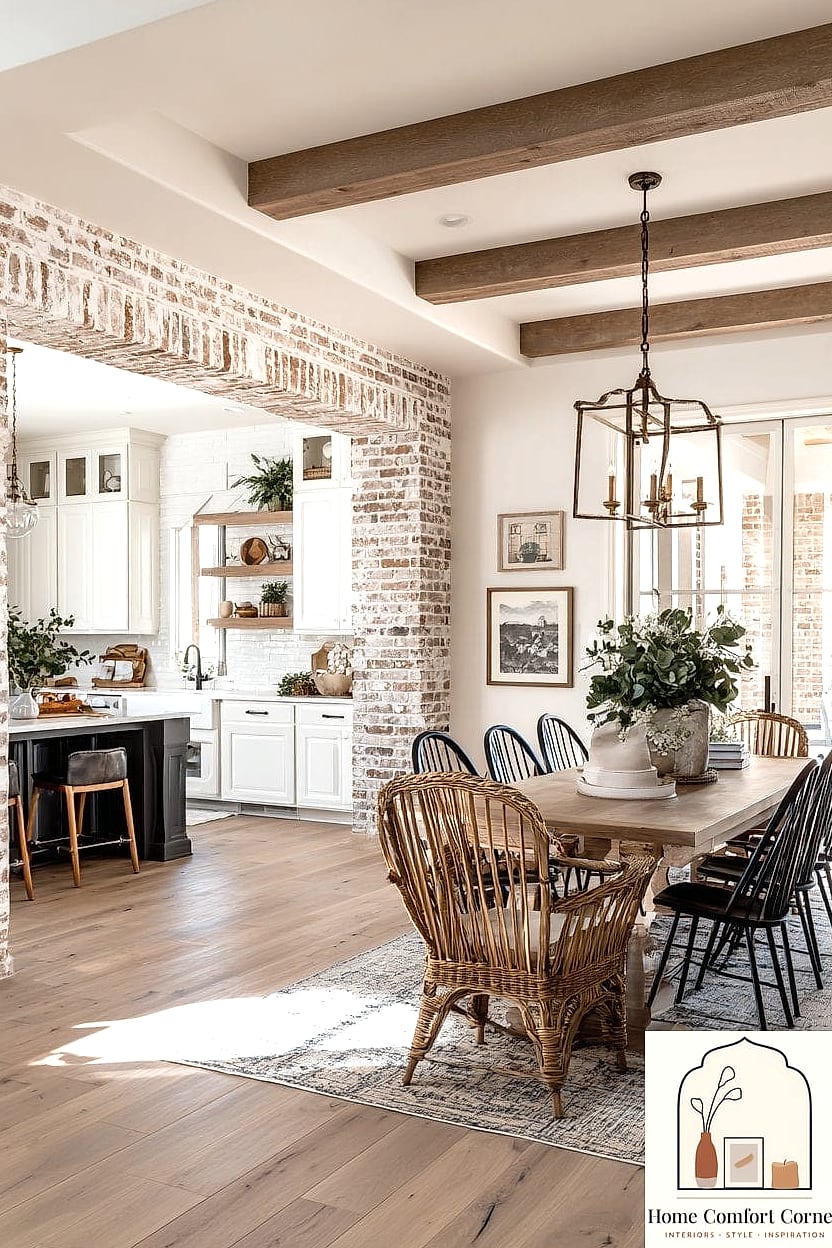
A jute or vintage-inspired area rug softens a dining room that’s otherwise all hard surfaces. It also helps define the dining area in open concept layouts. Look for a rug that extends at least 24 inches beyond the table on all sides so chairs don’t catch the edge when pulled out.
Layering In a Statement Buffet or Sideboard
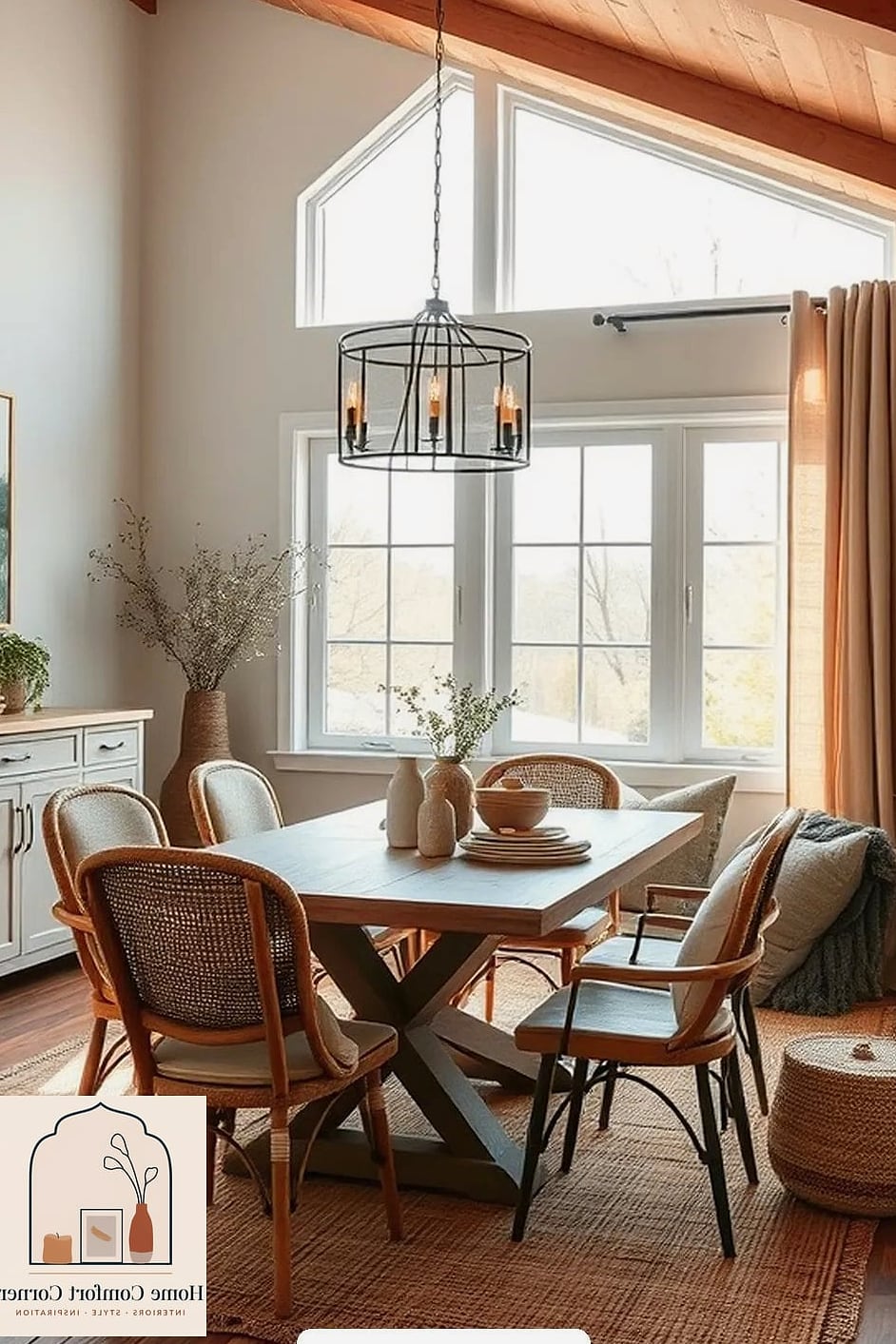
An oversized buffet with brushed brass or black hardware gives you extra storage and a focal point at the same time. This works especially well in dining rooms that double as a workspace or drop zone, since it hides clutter behind closed doors instead of leaving it on display.
Bringing In Exposed Wood Beams
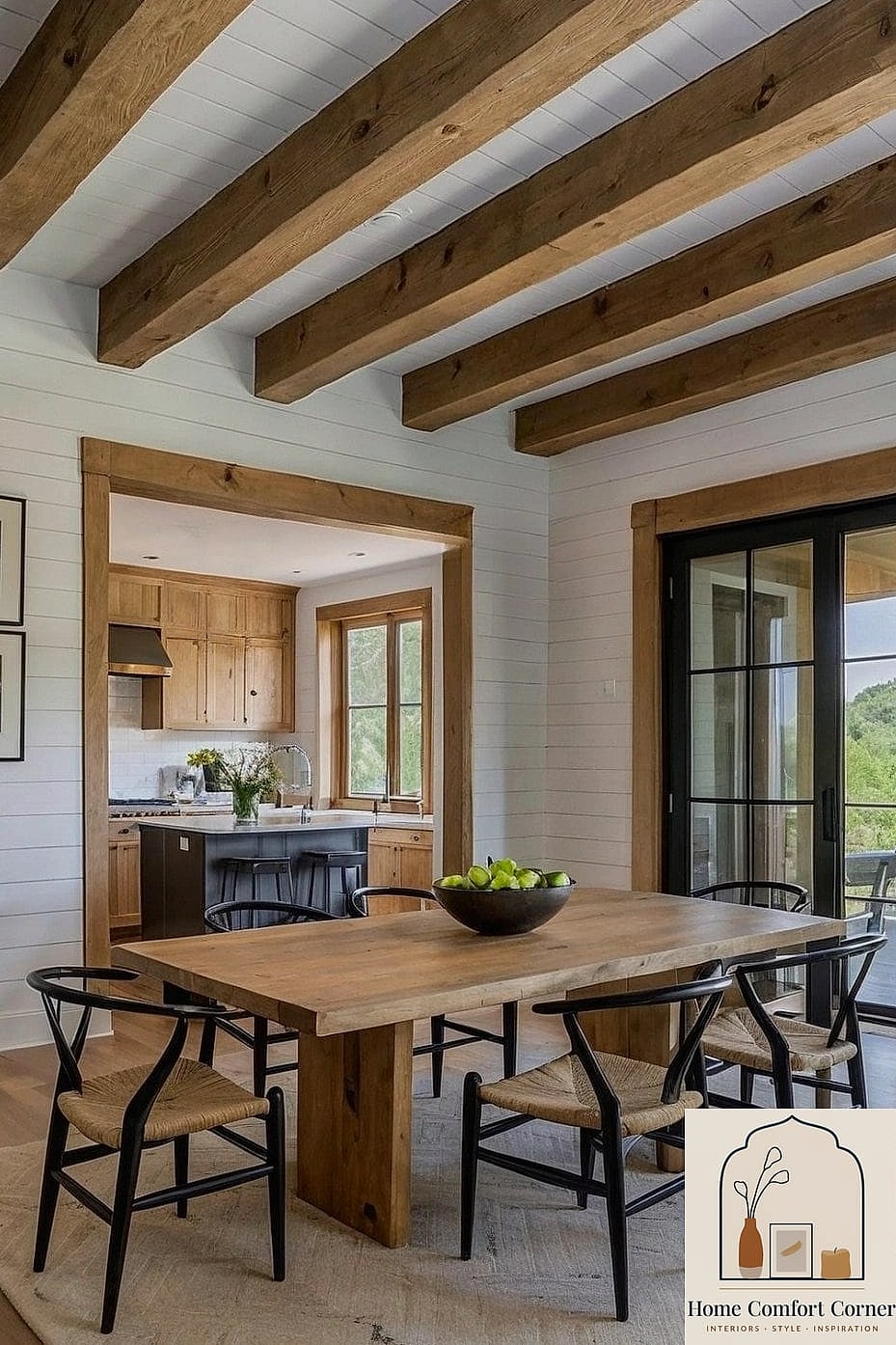
If your ceiling has the height for it, adding faux or real wood beams brings serious farmhouse character overhead. It draws the eye up and makes the whole room feel more custom-built. This one’s a bigger project and usually worth bringing in a contractor for, but the payoff is dramatic.
Updating Window Treatments to Simple Linen Curtains
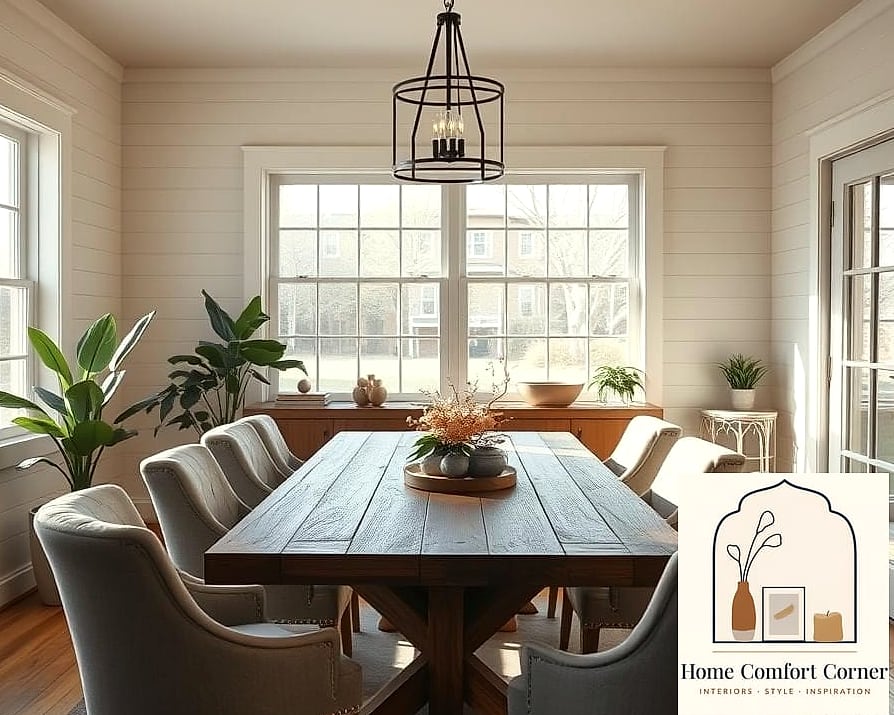
Heavy formal drapes get replaced with airy linen panels, and the room immediately feels lighter and more current. Linen has that slightly rumpled, natural texture that fits the farmhouse aesthetic without looking fussy. It’s also one of the more affordable swaps if you’re working with a tight budget.
Adding Open Shelving for Dishware Display
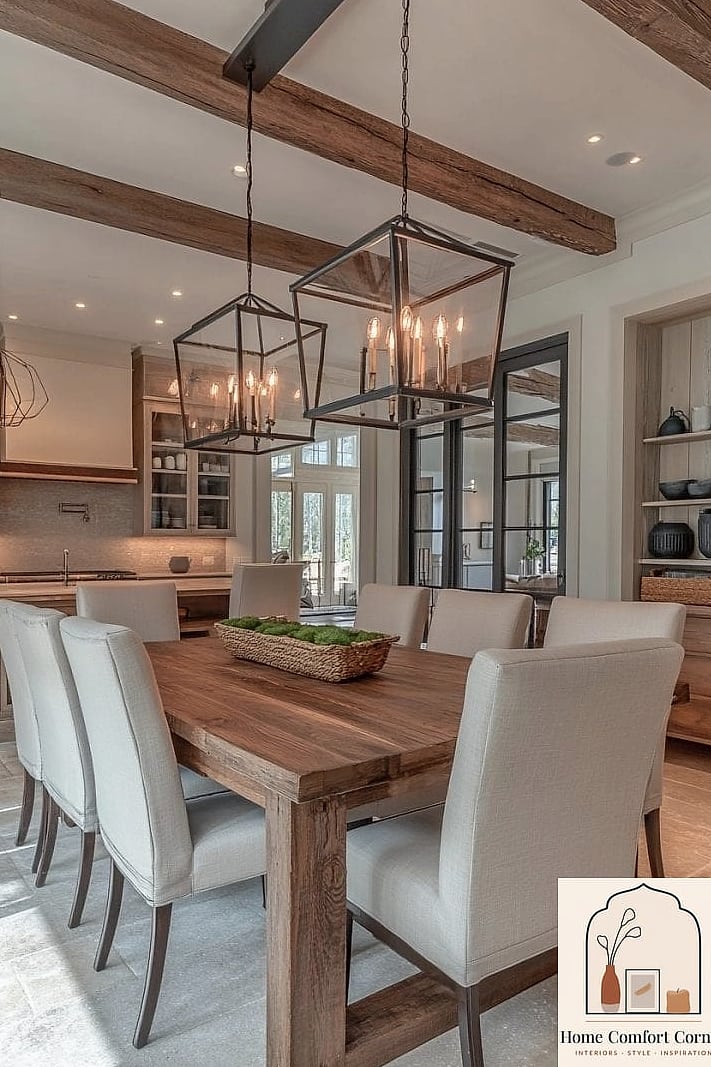
Open shelves flanking a window or filling an awkward nook give you a spot to display stoneware, pitchers, and glassware. It’s a practical storage solution and a styling opportunity in one. Just know it does require more regular dusting than closed cabinetry, so it’s not the most low-maintenance option if you’re not into upkeep.
Introducing a Neutral Color Palette Throughout
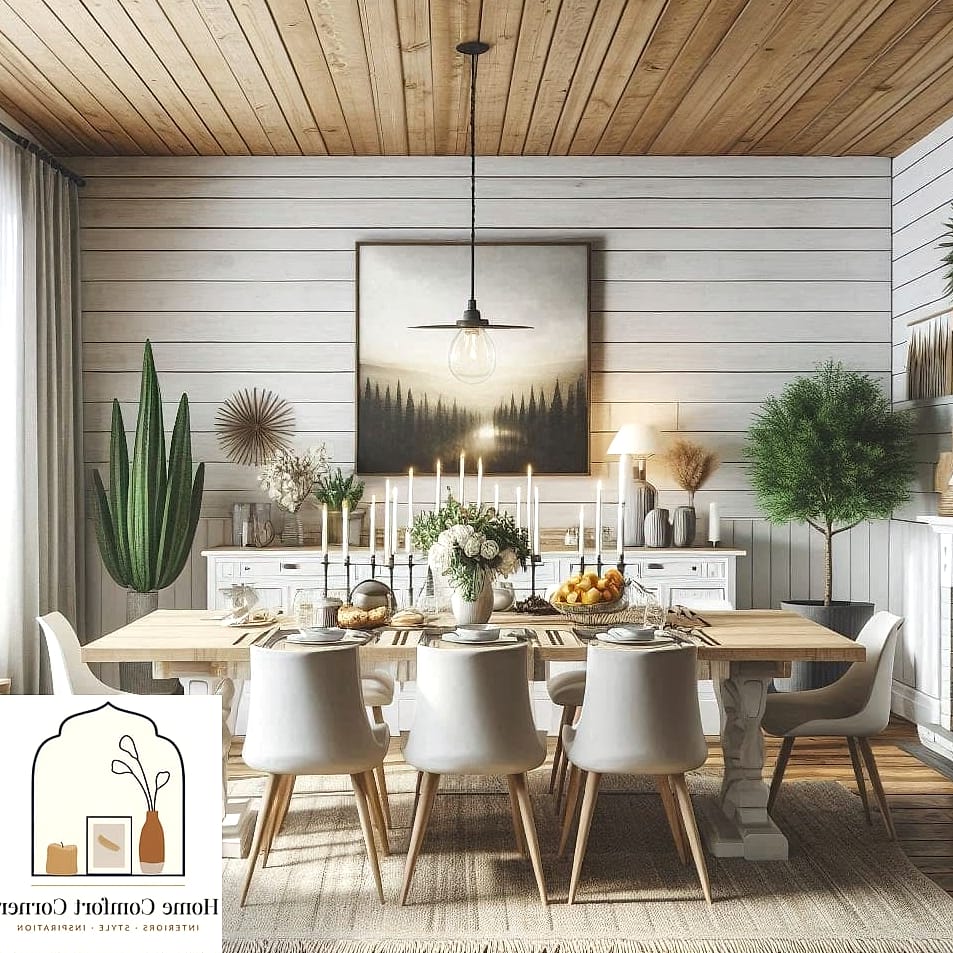
Sometimes the transformation isn’t one big change but pulling every element — walls, trim, furniture, textiles — into a cohesive neutral palette. Whites, warm woods, and black accents working together make a room feel finished in a way that a mix of competing colors never quite achieves.
Replacing Recessed Lighting with a Statement Pendant Duo
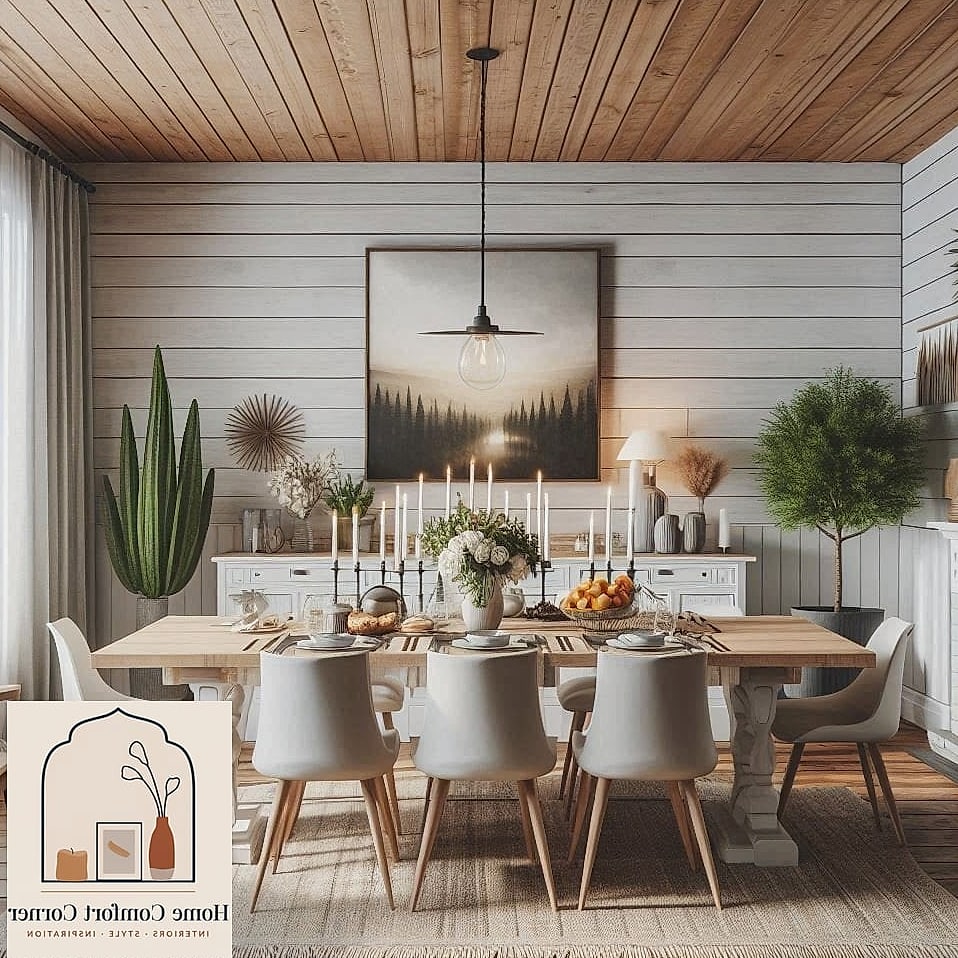
Instead of a single centered chandelier, two smaller pendants hung side by side over a long table create a more custom, boutique-restaurant kind of feel. This works particularly well over rectangular tables where a single fixture would leave the ends feeling dark.
Adding Wainscoting Below a Chair Rail
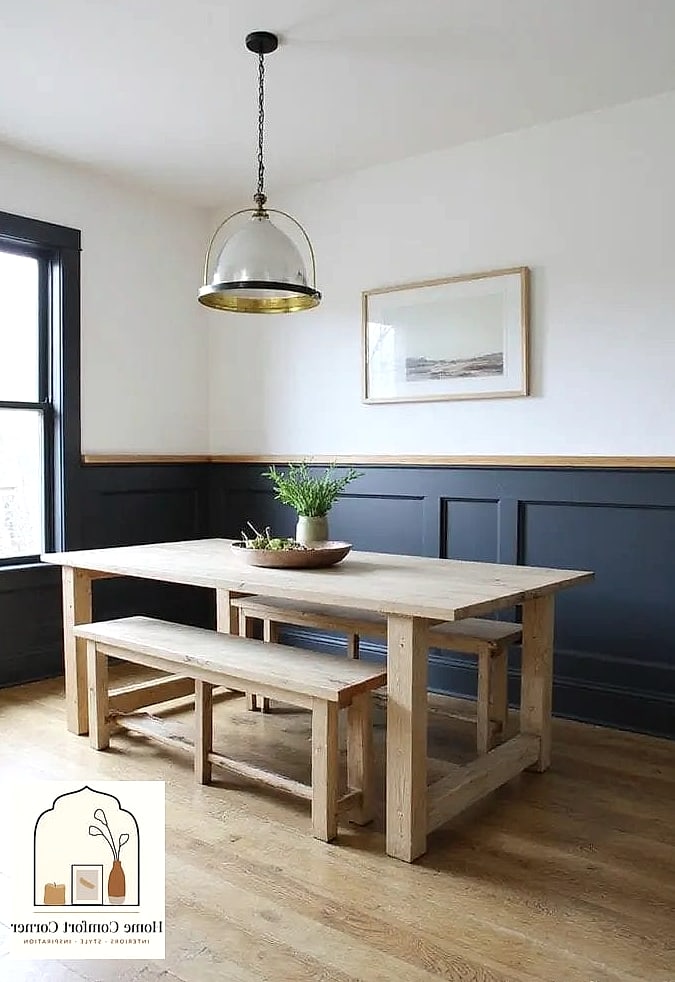
Classic wainscoting painted crisp white gives dining room walls texture and protects them from chair scuffs at the same time — genuinely practical for households with kids. Pair it with a slightly darker tone above the chair rail for contrast.
Bringing In Woven and Natural Textures
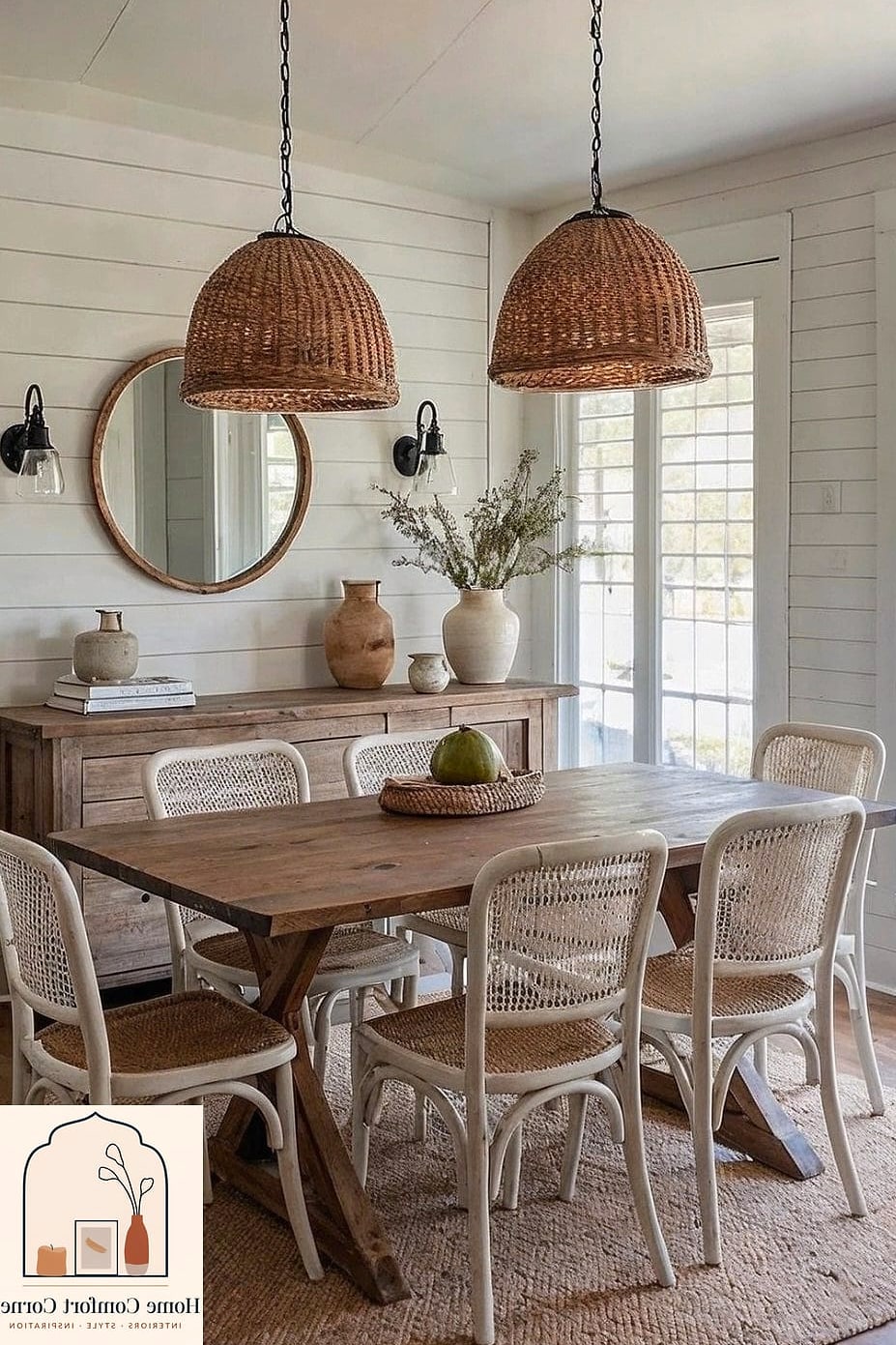
Rattan chairs, woven placemats, and seagrass baskets add texture without adding visual clutter. This is a favorite trick for softening a room that’s heavy on hard wood and metal. It also keeps things feeling fresh for spring and summer without a full redecorate.
Converting a Formal Dining Room Into a Flexible Everyday Space
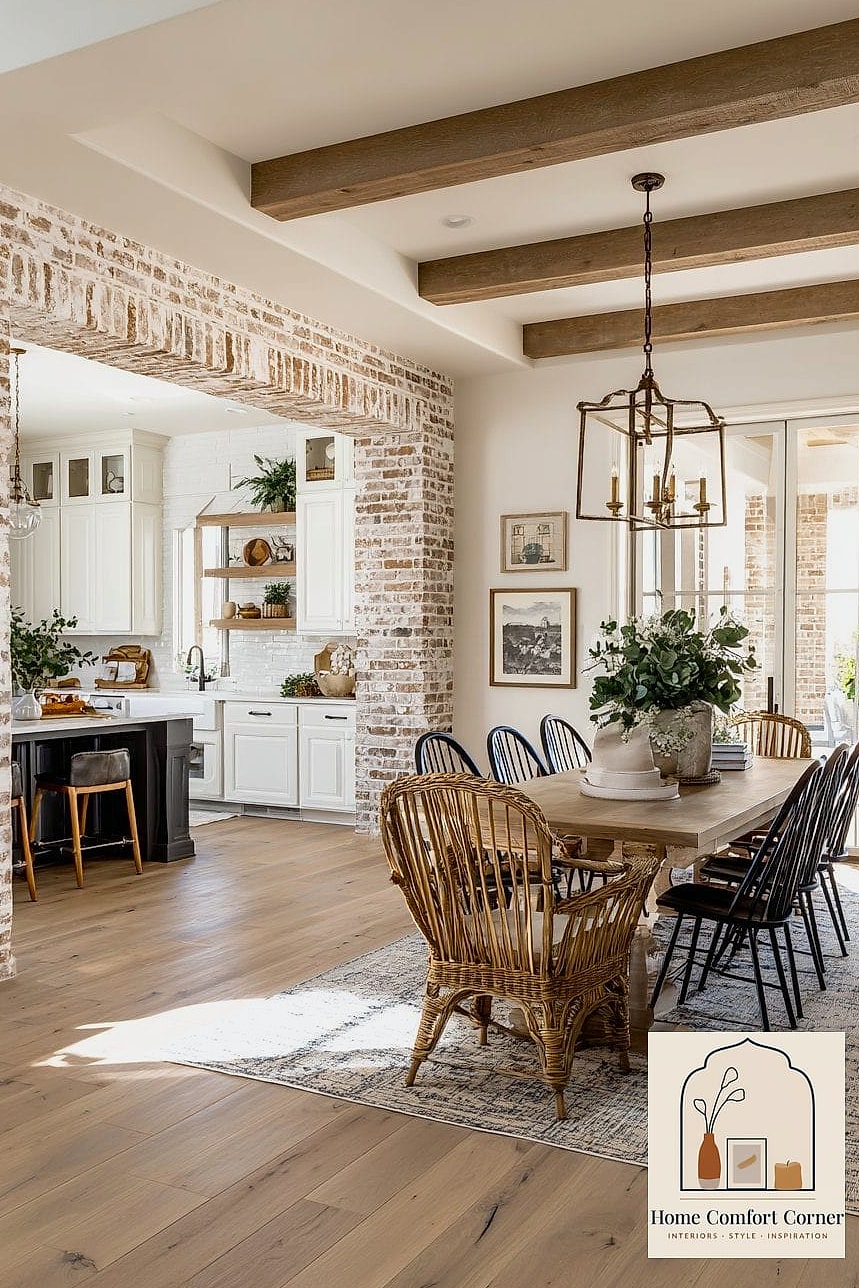
Some of the best transformations swap out a rarely-used formal dining room for one built around daily life — a durable table, comfortable seating, and layout that works for homework and game nights, not just holidays. Farmhouse style actually lends itself well to this since it was never about being precious in the first place.
Adding Black Window Frames or Trim
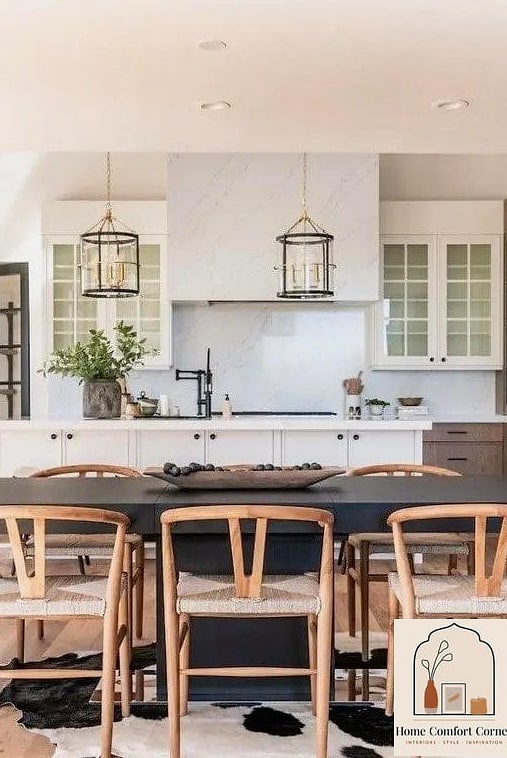
If your dining room has windows facing outdoor space, black-framed windows (or even faux frame overlays) add a modern edge to the farmhouse look. It’s a striking contrast against white walls and works really well with black light fixtures for a cohesive feel.
Styling a Gallery Wall With Vintage-Inspired Art
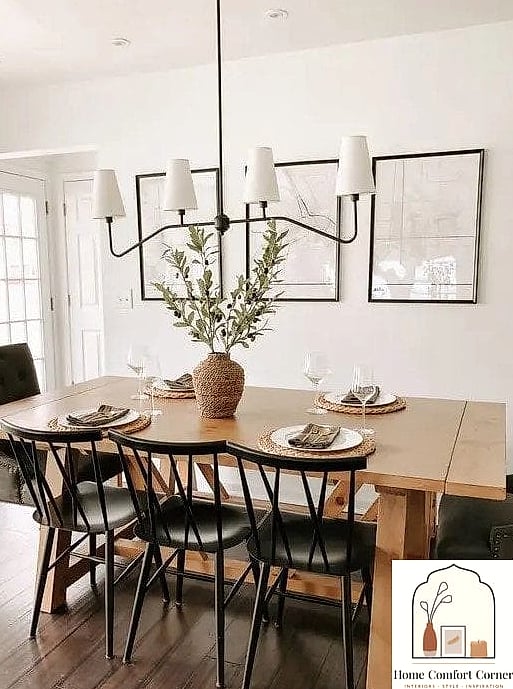
Swapping a single large piece of art for a gallery wall of mismatched frames, botanical prints, and the occasional mirror gives the room personality without a big spend. Thrifted frames repainted in matching tones make this an especially budget-friendly refresh.
Upgrading Hardware on Built-In Cabinetry
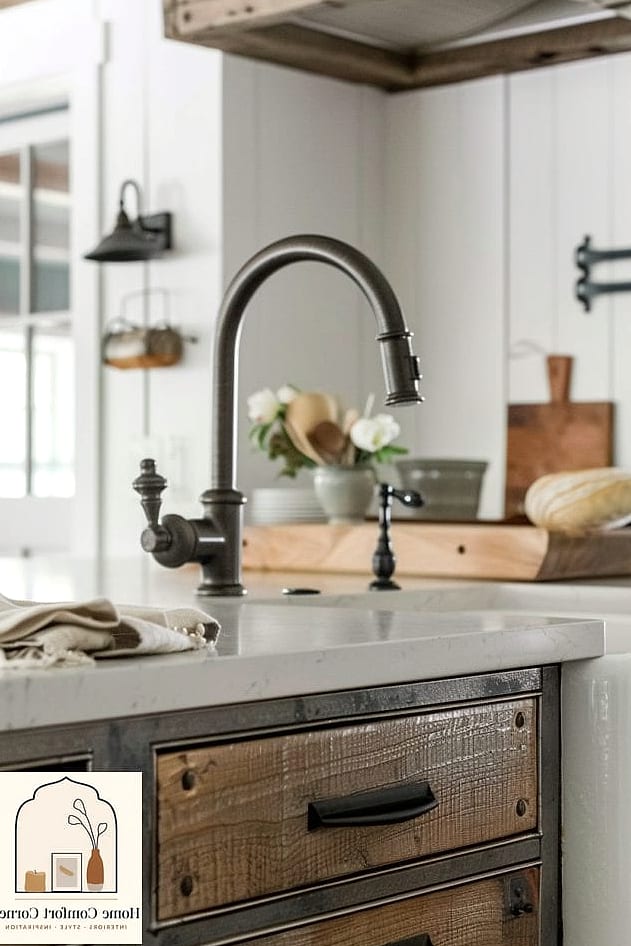
If your dining room has a built-in hutch or cabinet, swapping dated brass knobs for brushed brass or matte black pulls is a tiny detail that makes a bigger difference than you’d expect. It’s a fifteen-minute project with basically zero risk of messing it up.
Adding a Live Edge Wood Accent
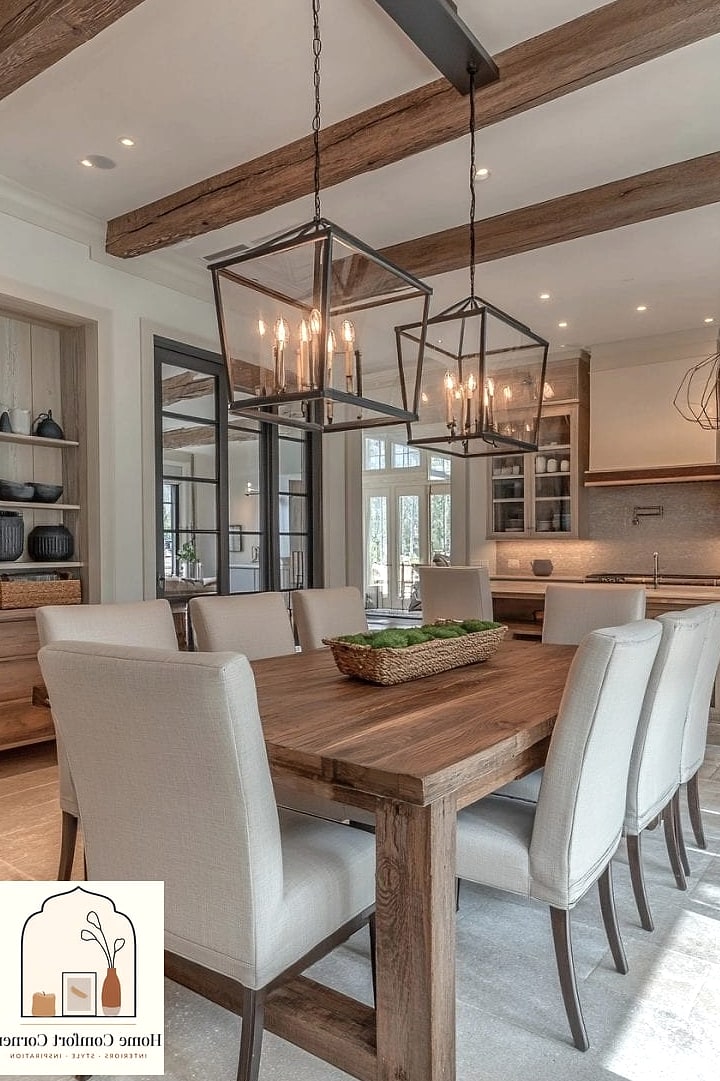
A live edge wood console, shelf, or even the dining table itself brings in that raw, natural element modern farmhouse design leans on. The irregular edge keeps things from feeling too polished or matchy, which is really the whole point of the style.
Bringing In Greenery With Simple Vases and Stems
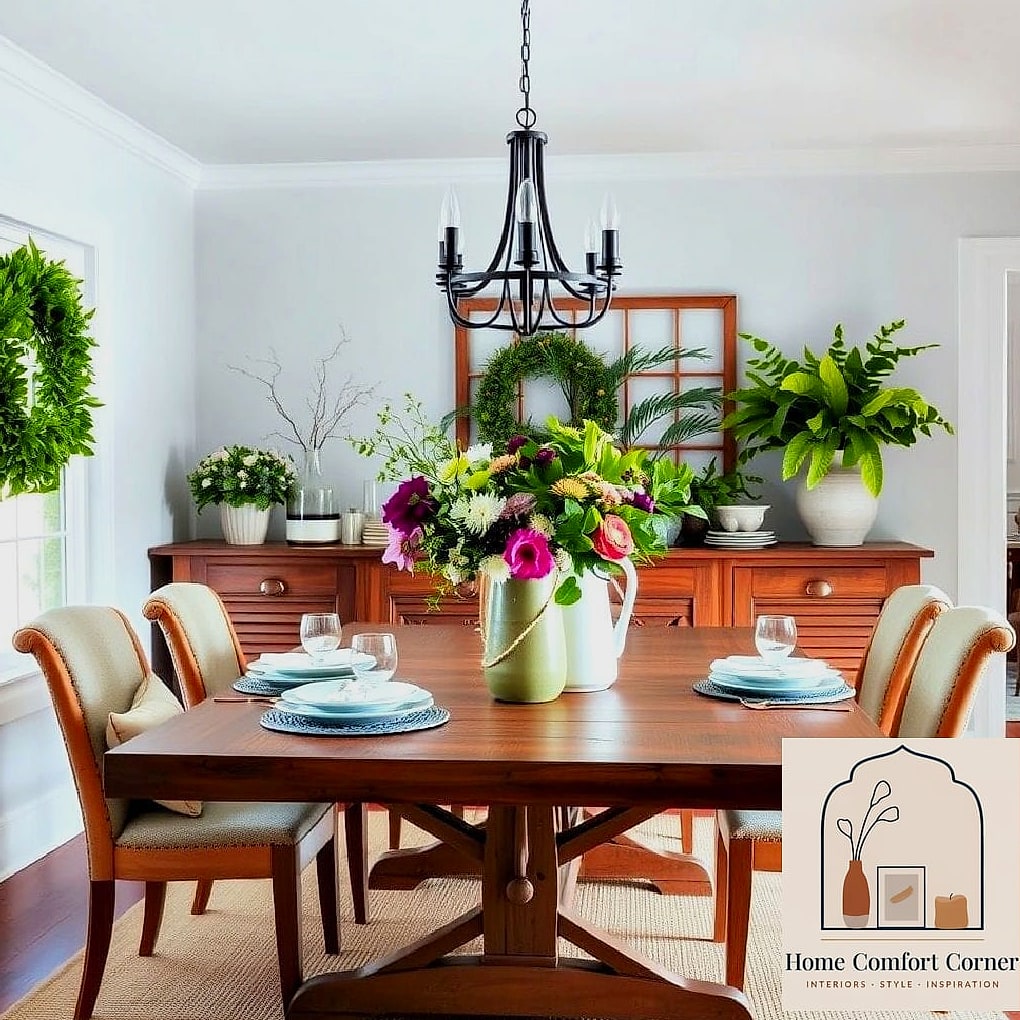
A few stems of eucalyptus or dried pampas grass in a stoneware vase down the center of the table costs next to nothing but makes the space feel considered. It’s also low-maintenance compared to fresh-cut flowers if you don’t want the upkeep of replacing them weekly.
Layering Lighting With Wall Sconces
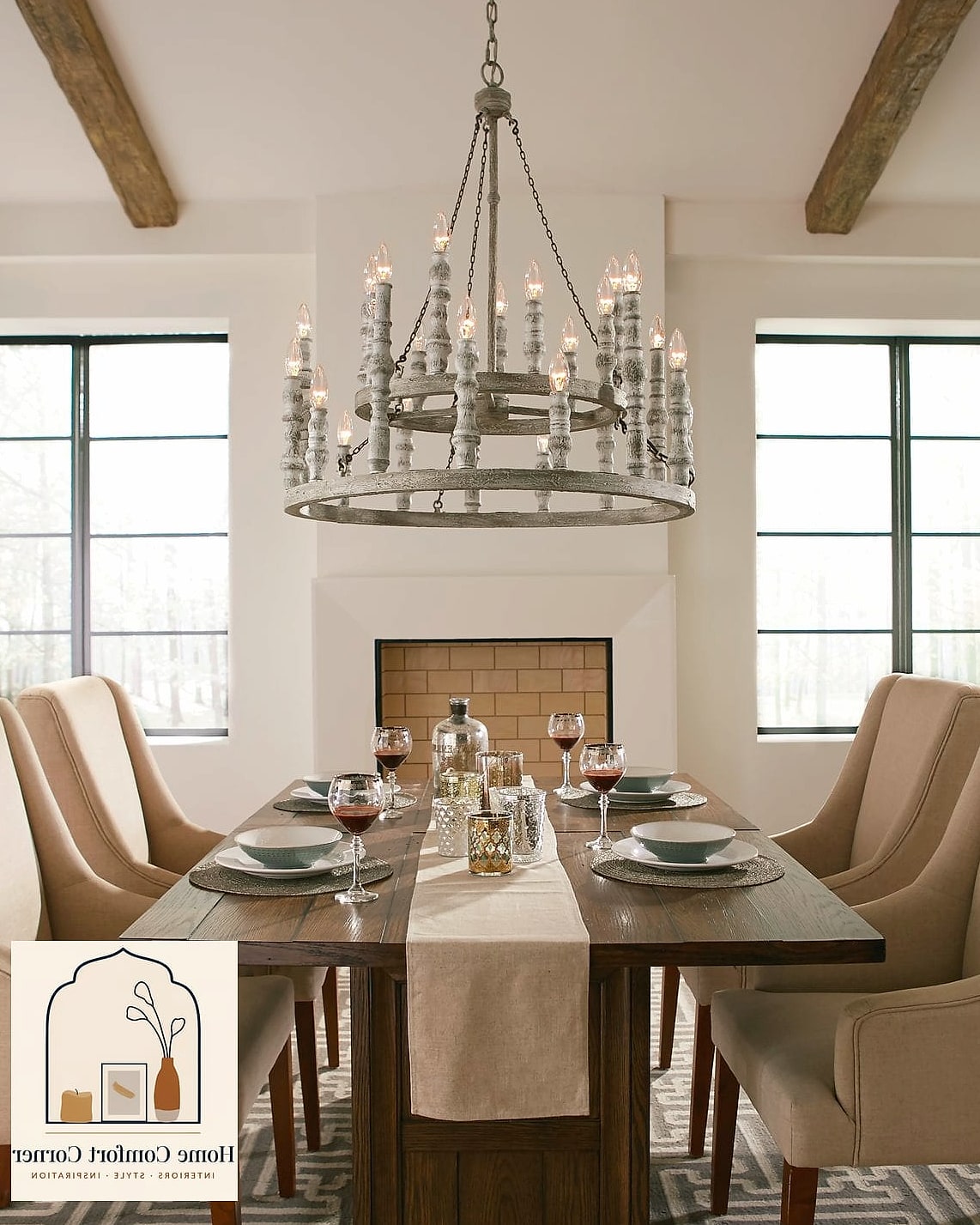
Adding sconces on either side of a buffet or mirror gives the room dimension beyond just the overhead fixture. This layered lighting approach is a subtle upgrade that a lot of homeowners skip, but it makes evening dinners feel noticeably cozier.
Putting even three or four of these ideas together can completely change how a dining room feels, and you really don’t need a full gut renovation to get there. Start with paint and lighting if you’re on a budget, then work your way up to furniture and architectural details as you go. Modern farmhouse dining rooms are meant to feel warm and a little imperfect, so don’t stress about getting every detail exactly right — that’s kind of the whole charm of it.