12 Creative Music Room Decor Ideas You Haven’t Seen Before
- Acoustic Panels as Wall Art
- A Vintage Rug Anchoring the Instrument Zone
- Open Shelving for Vinyl and Sheet Music
- A Gallery Wall of Concert Posters and Album Art
- Layered Lighting for Mood and Function
- A Statement Ceiling for Visual Depth
- Instrument Stands That Double as Sculpture
- A Reading Nook for Sheet Music and Lyrics
- Wallpaper with a Sheet Music or Sound Wave Print
- A Curated Color Palette Inspired by Your Instrument
- Greenery That Actually Improves Acoustics
- A Custom Built-In for Instruments and Equipment
12 Creative Music Room Decor Ideas You Haven’t Seen Before
If your music room still looks like a spare bedroom with an instrument shoved in the corner, it’s time for a rethink. A well-designed music space should feel inspiring the moment you walk in, not like an afterthought. Whether you’ve got a full home studio, a cozy piano nook, or a corner dedicated to your guitar collection, these ideas will help the space actually reflect your sound.
Acoustic Panels as Wall Art
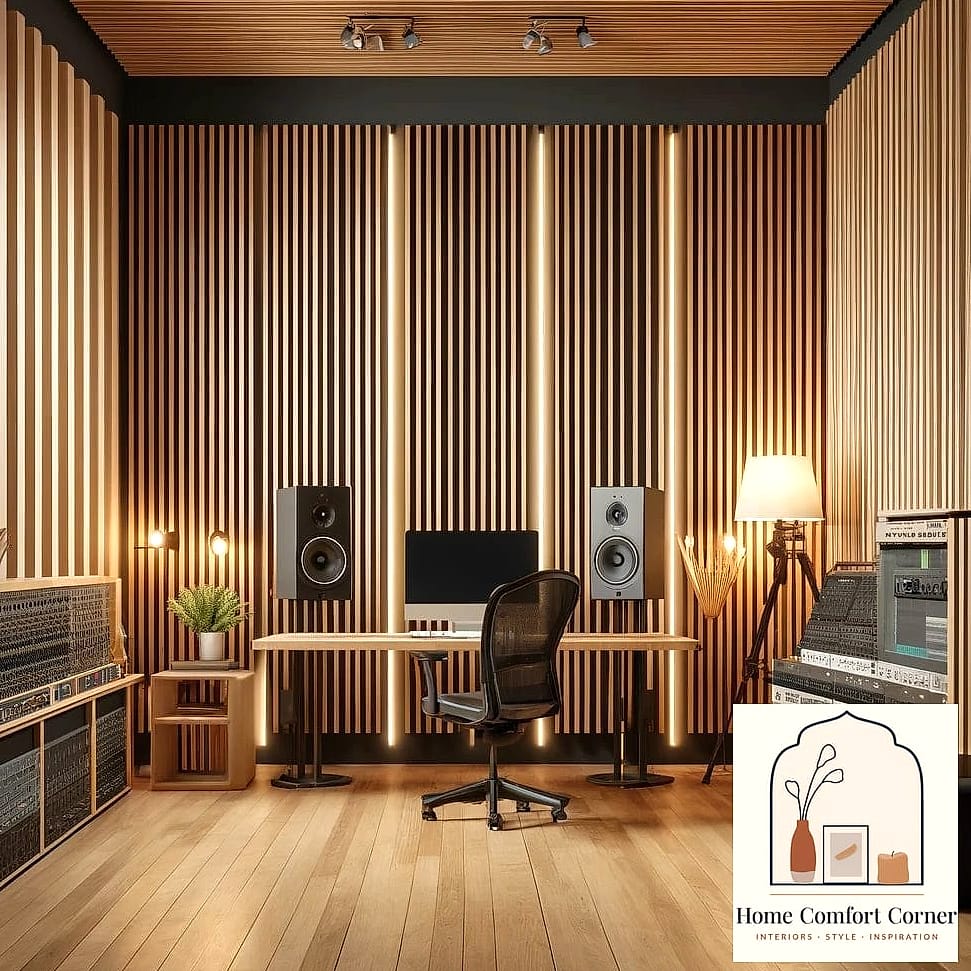
Acoustic foam doesn’t have to look like something out of a recording studio from the 90s. These days you can find panels in geometric shapes, ombre color gradients, and even custom prints that double as genuine wall art.
This works especially well in smaller rooms where echo tends to bounce around and ruin your practice sessions. Arrange them in a honeycomb pattern or scatter them asymmetrically across one accent wall for a modern gallery feel.
Budget-friendly foam squares run just a few dollars each, while framed fabric-wrapped panels look more upscale if you want to splurge. Either way, you get better sound quality and a wall that actually looks intentional.
A Vintage Rug Anchoring the Instrument Zone
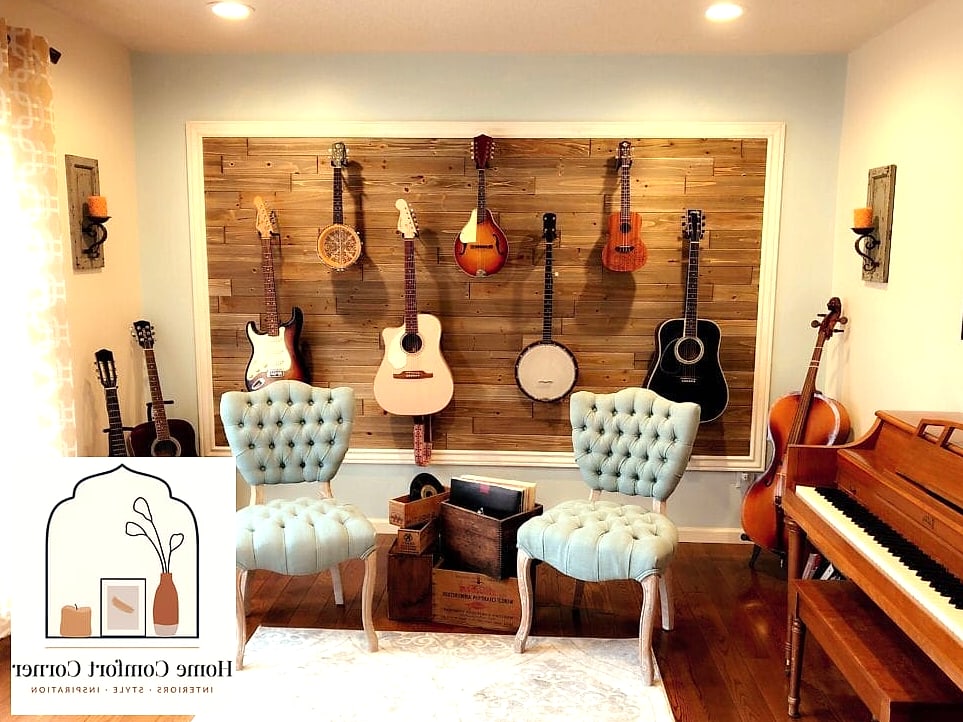
A worn-in Persian or Moroccan-style rug instantly makes a music room feel lived-in and layered, the kind of space where people actually want to linger and play. It also helps absorb sound, which matters more than people realize in rooms with hardwood or tile floors.
Place it under your piano bench or in the center where you’d naturally gather with a few instruments. Look for rugs with warm reds, deep blues, or faded neutrals since they hide wear from foot traffic and instrument stands better than solid pale colors.
If you’re renting, a vintage-style rug is one of the easiest music room upgrades since it requires zero commitment and rolls up when you move.
Open Shelving for Vinyl and Sheet Music
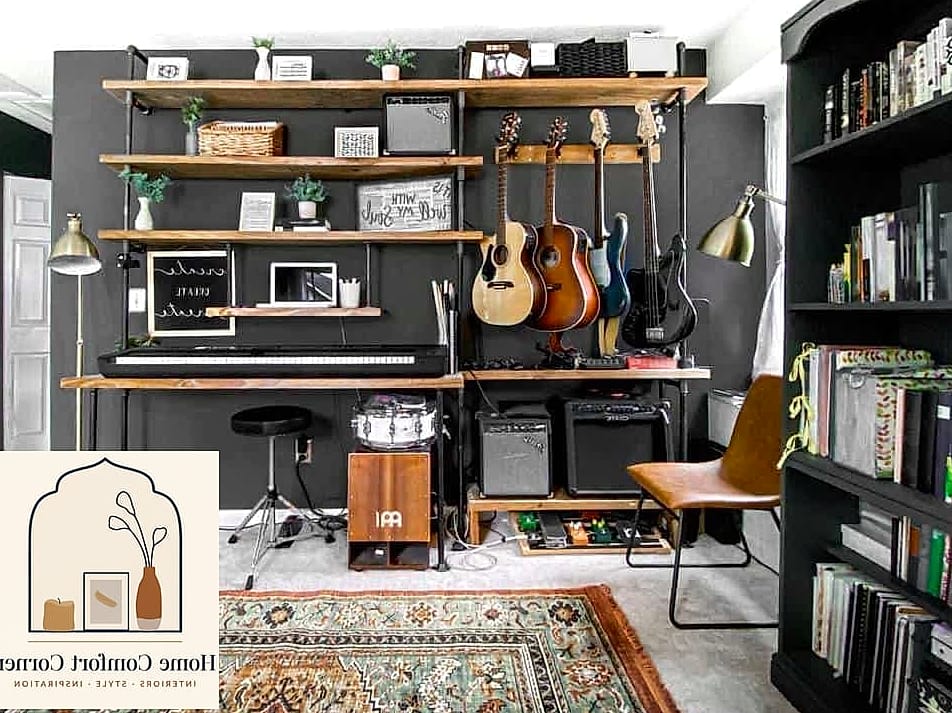
Floating shelves aren’t just for kitchens. In a music room, they’re perfect for displaying vinyl records, sheet music binders, and small instruments like ukuleles or tambourines you actually want people to see.
Stagger the shelves at different heights rather than lining them up evenly. It creates visual interest and gives you flexibility for larger items like a record player or a stack of songbooks.
Matte black metal brackets with warm wood shelves give an industrial-meets-cozy vibe that works in almost any style of home. This is also a genuinely practical storage solution since it keeps your instruments and materials off the floor.
A Gallery Wall of Concert Posters and Album Art
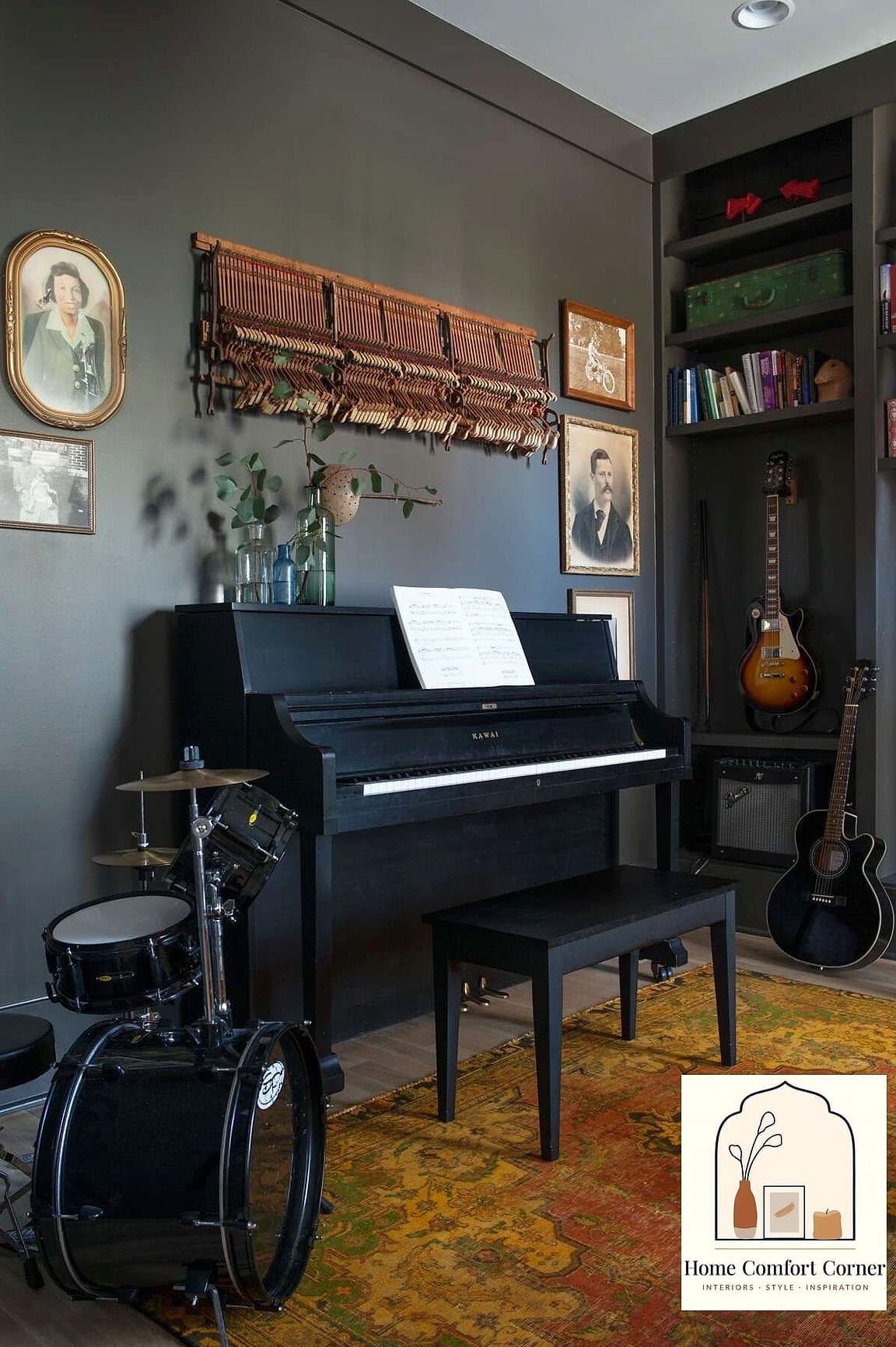
Skip the generic framed prints and build a wall that tells your actual music story. Mix concert posters, album covers, ticket stubs, and even handwritten setlists in a curated gallery arrangement.
This works best behind a piano, drum kit, or wherever you spend the most time creating. Use a mix of frame sizes and finishes, black, brass, and reclaimed wood, so it doesn’t feel too matchy.
It’s an easy weekend project and honestly one of the more personal ways to decorate since every piece has a story behind it.
Layered Lighting for Mood and Function
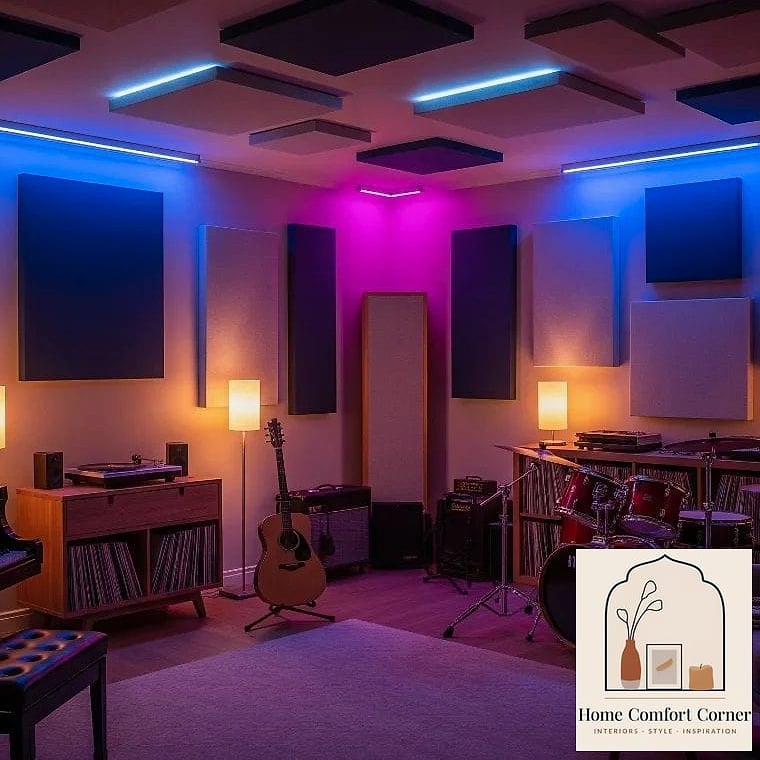
Overhead lighting alone makes a music room feel flat and uninspired. Layer in a few sources instead: a warm floor lamp near your seating, string lights along a shelf or window, and a small desk lamp if you do any songwriting or reading sheet music.
Dimmable options are worth the investment here since you’ll want bright light for practice and softer light for late-night jam sessions. Warm bulbs in the 2700K range tend to feel cozier than the cooler white ones.
This is one of those upgrades that instantly makes a music room feel more custom without requiring any construction or big spending.
A Statement Ceiling for Visual Depth
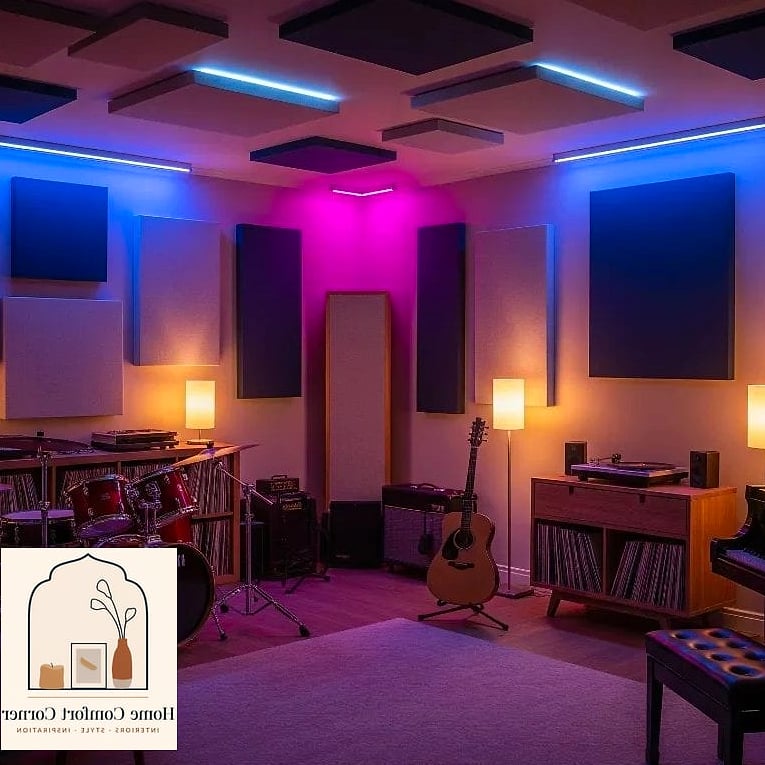
Most people never think to look up, but a painted or wallpapered ceiling can completely change how a music room feels. Deep jewel tones like emerald or navy create a cocoon-like atmosphere that feels intentional and moody in the best way.
This works particularly well in rooms with lower ceilings since a darker color can actually make the space feel more intimate rather than cramped. It’s also a great trick if your walls are already busy with instruments and gear.
Peel-and-stick wallpaper is a solid renter-friendly option if you’re not ready to commit to paint.
Instrument Stands That Double as Sculpture
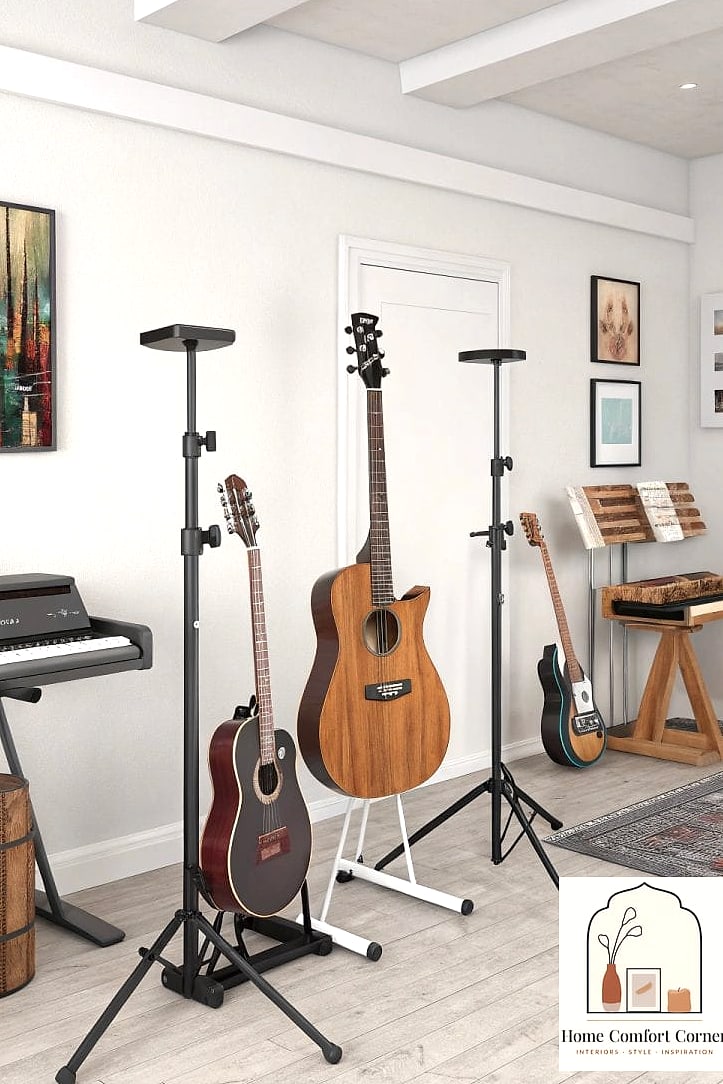
Ditch the plastic guitar stand shoved in a corner and look for wall-mounted hangers or floor stands with a more architectural silhouette. Wood and brass hangers, in particular, turn your instruments into displayed art rather than clutter.
This works great for guitars, banjos, and even brass instruments like trumpets or saxophones. Mounting them at varying heights along a wall creates a rhythm that mirrors the music itself, if you’ll forgive the pun.
Higher-end stands run more, but there are plenty of affordable wall mounts that still look intentional rather than utilitarian.
A Reading Nook for Sheet Music and Lyrics
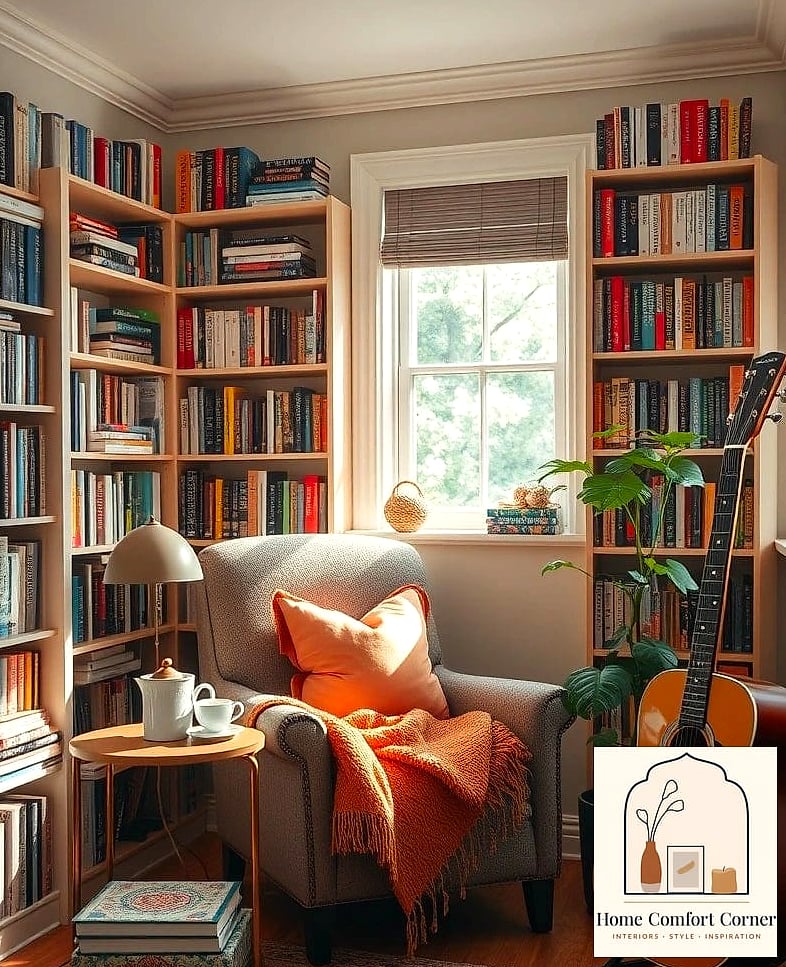
Tuck a small armchair or window seat into the corner of your music room for the moments when you’re not actively playing but still want to be surrounded by the space. Add a side table for your coffee, a small stack of music books, and maybe a throw blanket.
This is especially nice in rooms that double as a songwriting space since you need somewhere to sit and think that isn’t the piano bench. A boucle or velvet chair adds texture without competing with your instruments visually.
Even a small nook like this makes the room feel more multipurpose and less like a single-use space that only works when you’re actively performing.
Wallpaper with a Sheet Music or Sound Wave Print
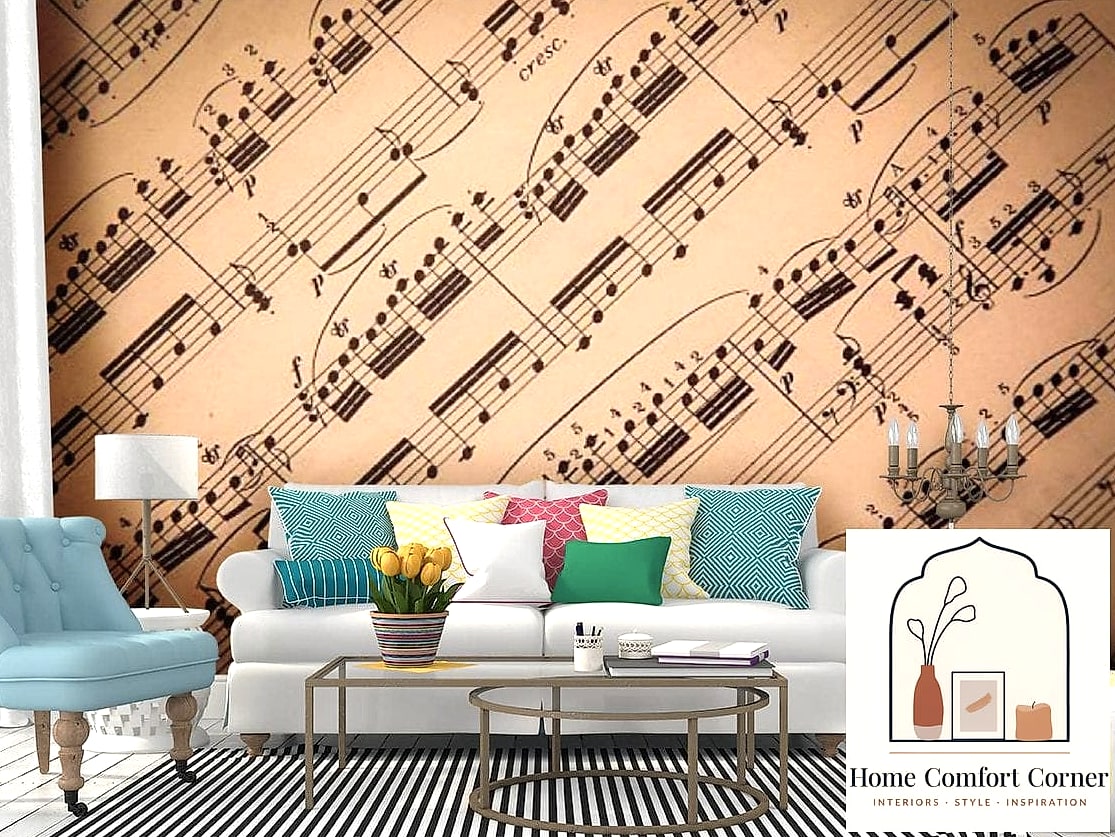
There are some genuinely beautiful wallpapers now featuring subtle sheet music notation, sound wave patterns, or abstract instrument silhouettes. Used on a single accent wall, it adds personality without overwhelming the room.
This works particularly well behind a piano or in a room where the instrument itself is more subdued in color, like a black upright piano against a patterned backdrop. Neutral tones like cream, tan, or soft gray keep it from feeling too theme-y.
Peel-and-stick versions are widely available now, which makes this an easy DIY afternoon project rather than a full renovation.
A Curated Color Palette Inspired by Your Instrument
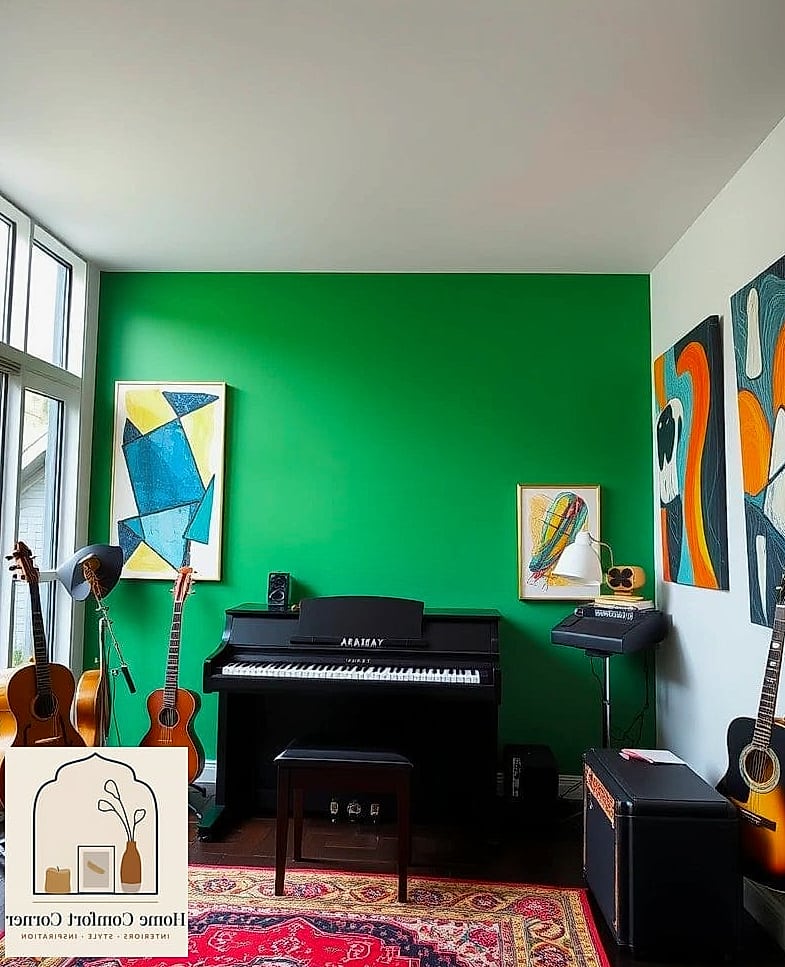
Instead of decorating around generic neutrals, pull your palette from the instrument you spend the most time with. A rich mahogany guitar might inspire warm browns and burnt orange accents, while a black grand piano pairs beautifully with charcoal, brass, and cream.
This creates a cohesive look that feels genuinely tied to the room’s purpose rather than decorated as an afterthought. It also makes shopping for decor easier since you already have a built-in color story to follow.
Try pulling two or three colors max and layering them across textiles, wall art, and small accessories so it doesn’t feel overly matched.
Greenery That Actually Improves Acoustics
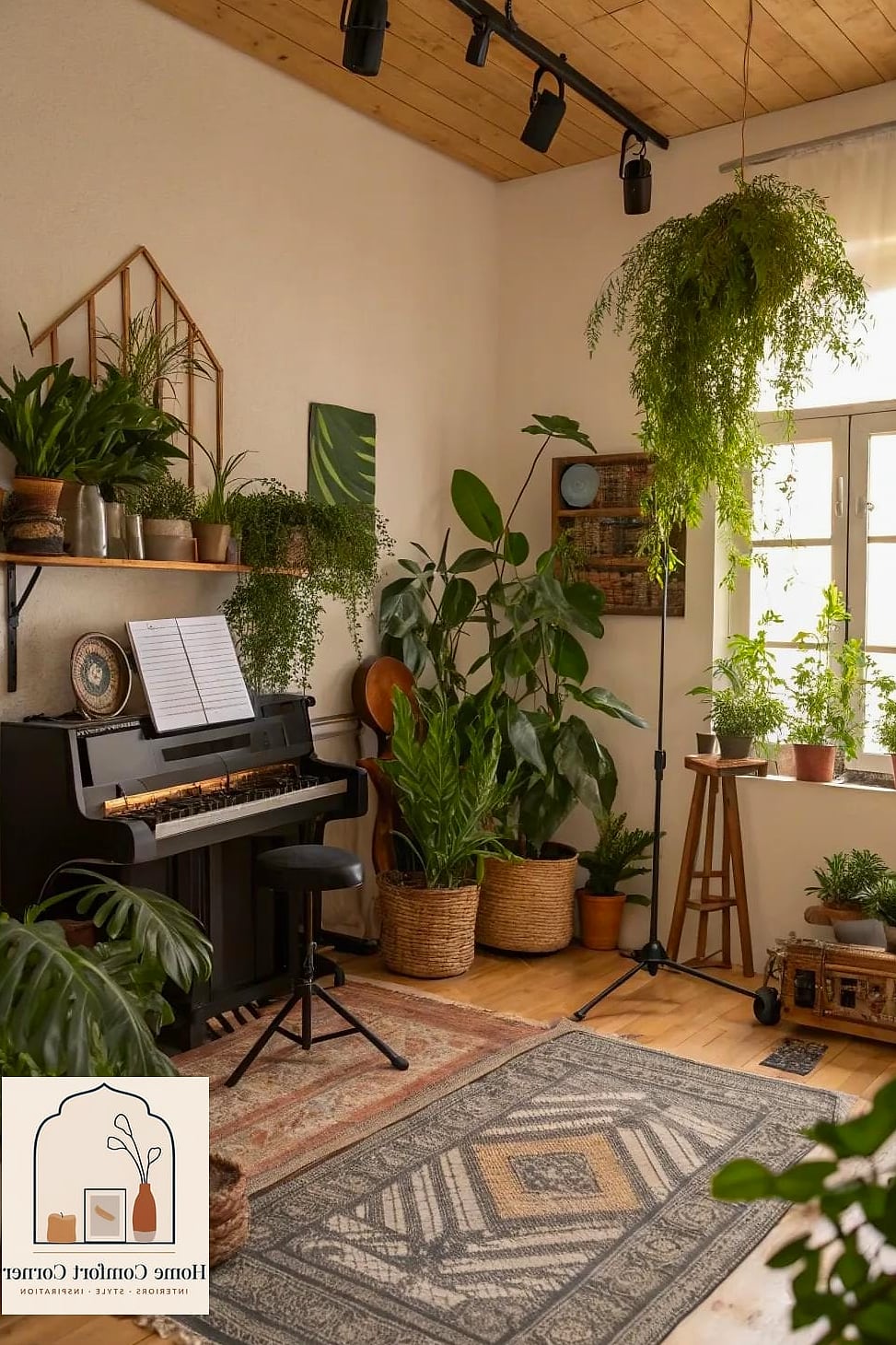
Large leafy plants like fiddle leaf figs or rubber trees do more than look nice, they actually help soften sound reflections in a room full of hard surfaces like wood floors and instrument cases. Cluster a few in varying heights near corners where sound tends to bounce.
This is a great low-cost trick if you’re not ready to invest in acoustic panels but still want to improve the room’s sound quality. Faux plants work fine too if you don’t trust yourself with a watering schedule, and nobody will judge you for it.
Beyond the acoustic benefit, greenery softens all the wood and metal textures common in music rooms and makes the space feel more alive.
A Custom Built-In for Instruments and Equipment
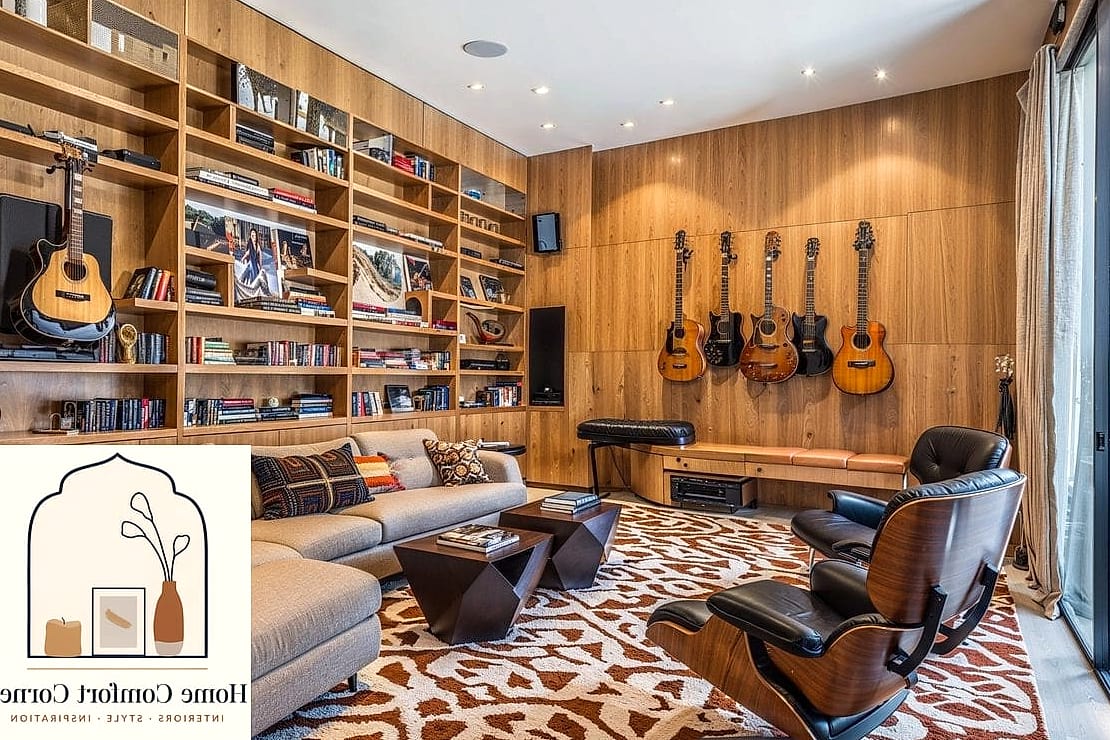
If you’re willing to invest a bit more, a custom built-in unit designed specifically for your instruments and gear is one of the most functional upgrades you can make. Think dedicated slots for guitars, cubbies for amps, and drawers for cables, picks, and small accessories.
This works best in a dedicated music room rather than a shared space, since it’s a bigger commitment than floating shelves or a simple stand. Matching the built-in’s wood tone to your instruments creates a cohesive, showroom-like feel.
It’s a bigger project, but it solves the clutter problem permanently and makes the whole room feel like it was designed with actual musicians in mind rather than retrofitted from a spare bedroom.
Decorating a music room is really about making the space feel like an extension of what you create in it. You don’t need a massive budget or a full renovation, just a handful of intentional choices that reflect how you actually use the room. Start with one or two ideas from this list, see how they change the feel of the space, and build from there.