22 Sewing Room Decor Ideas From Homes We Absolutely Love

- A Dedicated Cutting Table With Storage Underneath
- Pegboard Walls for Visible Tool Storage
- A Vintage Sewing Machine on Display
- Open Shelving for Fabric Bolts
- A Cozy Reading Nook in the Corner
- Thread Organized by Color on the Wall
- A Gallery Wall of Fabric Swatches or Embroidery Hoops
- Baskets and Bins for Scrap Fabric
- A Design Wall for Quilters
- Layered Lighting for Detail Work
- A Bulletin Board for Pattern Inspiration
- Mason Jars or Glass Canisters for Notions
- A Neutral Color Palette With Colorful Fabric as the Accent
- A Rolling Cart for Machine Accessories
- An Ironing Station Built Into the Room
- Personalized Wall Art With a Sewing Theme
- A Fabric Storage System With Clear Bins
- A Statement Rug to Ground the Space
- A Wall Calendar or Project Planner
- Greenery to Soften a Utilitarian Space
- A Labeled Ribbon and Trim Organizer
- A Custom Nameplate or Sign for the Door
22 Sewing Room Decor Ideas From Homes We Absolutely Love
A sewing room is one of those spaces that gets overlooked until you actually try to use it. Then suddenly you’re tripping over thread spools and hunting for scissors under a pile of fabric scraps. The good news is that a little intentional decorating goes a long way here. Whether you’re working with a spare bedroom, a corner of the basement, or a converted closet, these ideas will help your space feel organized, inspired, and genuinely enjoyable to spend time in.
A Dedicated Cutting Table With Storage Underneath
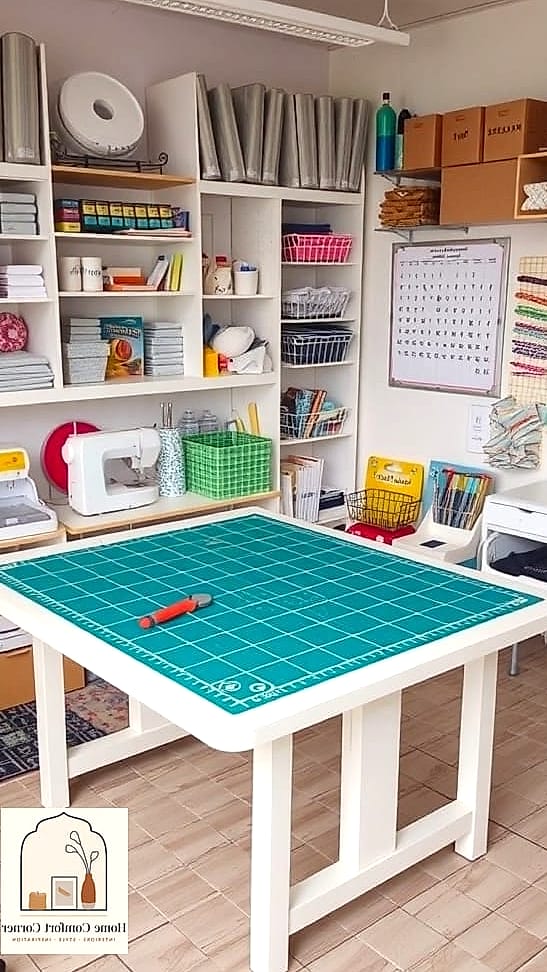
A proper cutting table changes everything about how a sewing room functions. Look for one with drawers or open shelving underneath so rulers, rotary cutters, and pattern weights have a home instead of cluttering the surface. Butcher block tops are popular because they’re sturdy and forgiving if you nick them with a blade. If space is tight, a fold-down or rolling cart version works just as well and tucks away when you’re not using it.
Pegboard Walls for Visible Tool Storage
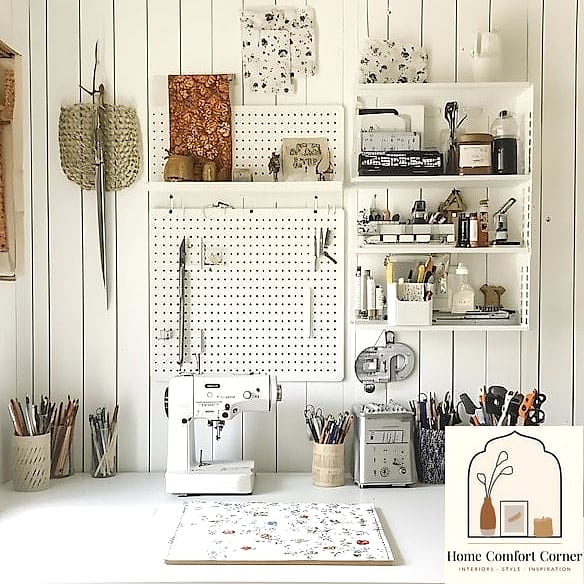
Pegboard is such an underrated addition to a craft space. Paint it a soft sage or blush to match your decor, then hang scissors, rulers, and spools right on the wall where you can see them. This keeps your work surface clear and turns your supplies into part of the room’s visual charm. It’s also incredibly renter-friendly since most pegboard panels can be mounted without permanent damage.
A Vintage Sewing Machine on Display
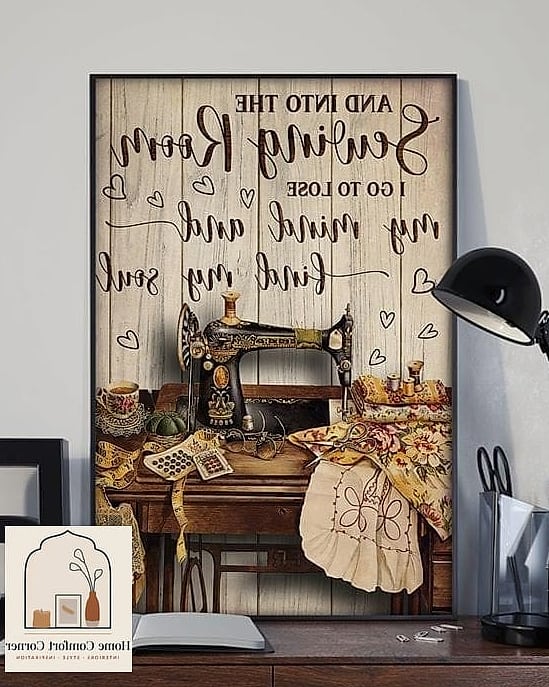
Even if your everyday machine is a modern one, keeping a vintage Singer or Kenmore out as decor adds so much character. Set it on a small side table or shelf near a window. It doesn’t need to be functional to earn its spot in the room. This is one of those details that instantly signals “someone who loves to sew lives here” the moment guests walk in.
Open Shelving for Fabric Bolts
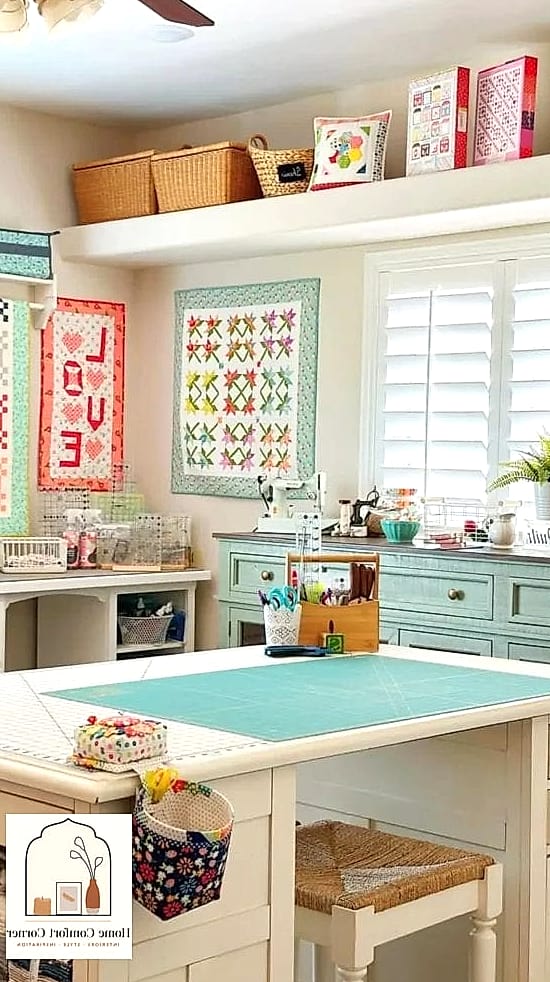
Stacking folded fabric on open shelves does double duty as storage and decor. The colors and patterns become part of your wall art, honestly. Organize by color family for a more curated look, or by fabric type if you want it to stay practical. Floating shelves work great here since they keep the floor space open for a table or ironing board.
A Cozy Reading Nook in the Corner
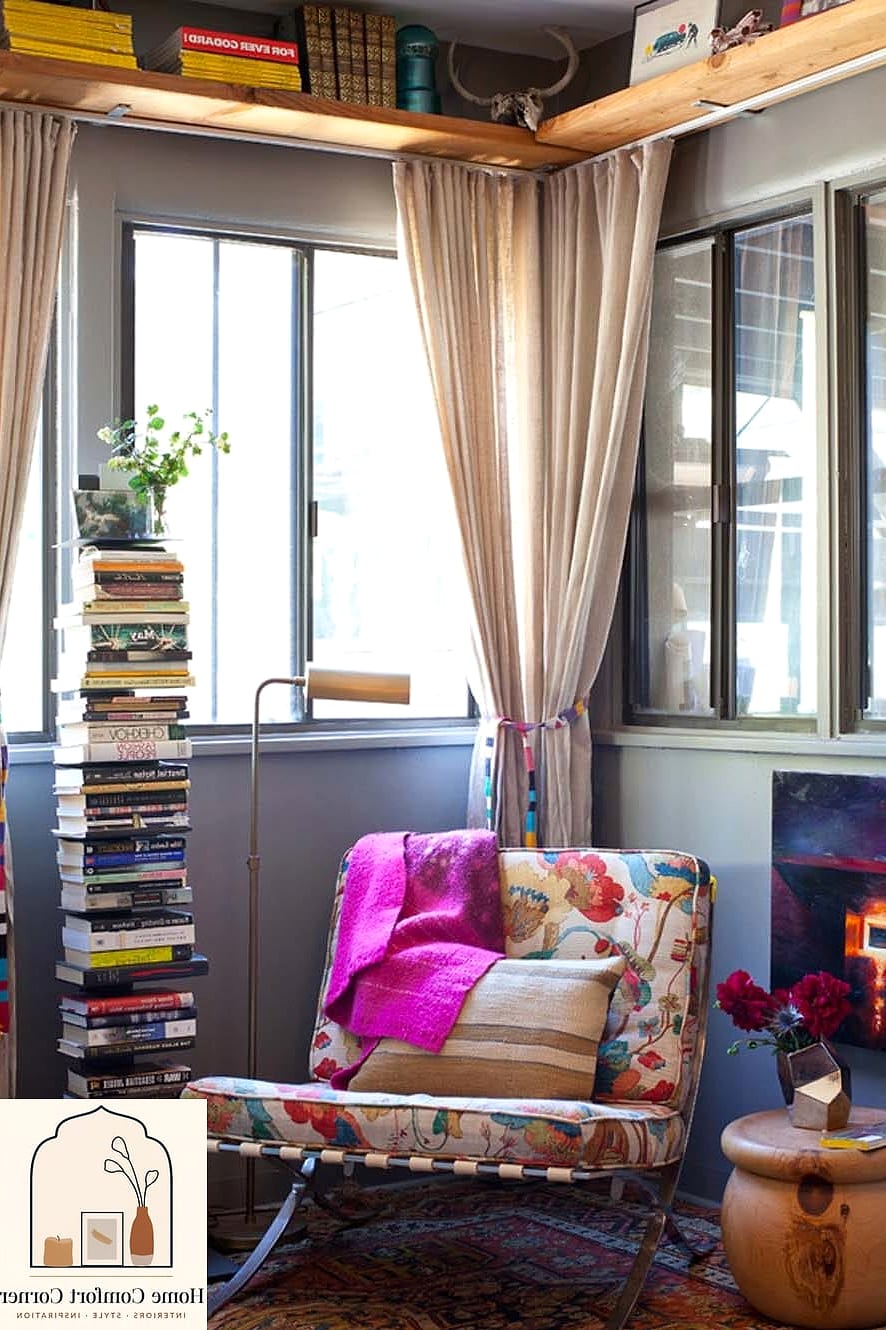
Not every corner needs to be functional storage. Adding a small armchair with a soft throw gives you a spot to hand-stitch, plan a project, or just take a break. A little side table for tea and a floor lamp finishes the look. It makes the room feel less like a workshop and more like a space you actually want to linger in.
Thread Organized by Color on the Wall
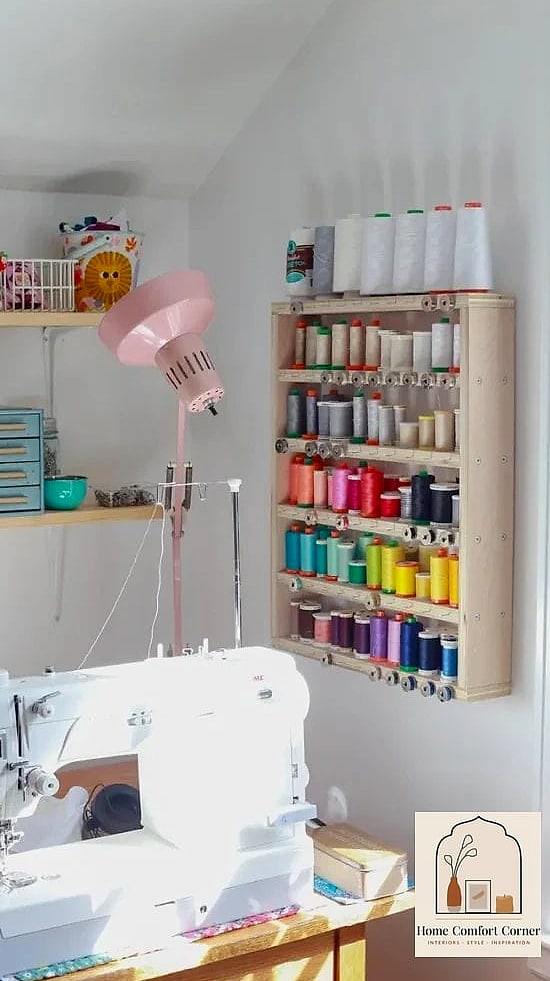
Wall-mounted thread racks are practical, but they’re also genuinely beautiful when your thread is arranged by color. It creates a rainbow effect that brightens up an otherwise utilitarian wall. Look for racks with individual pegs or slots so spools don’t roll around. This is a small detail that makes a huge visual difference for very little cost.
A Gallery Wall of Fabric Swatches or Embroidery Hoops
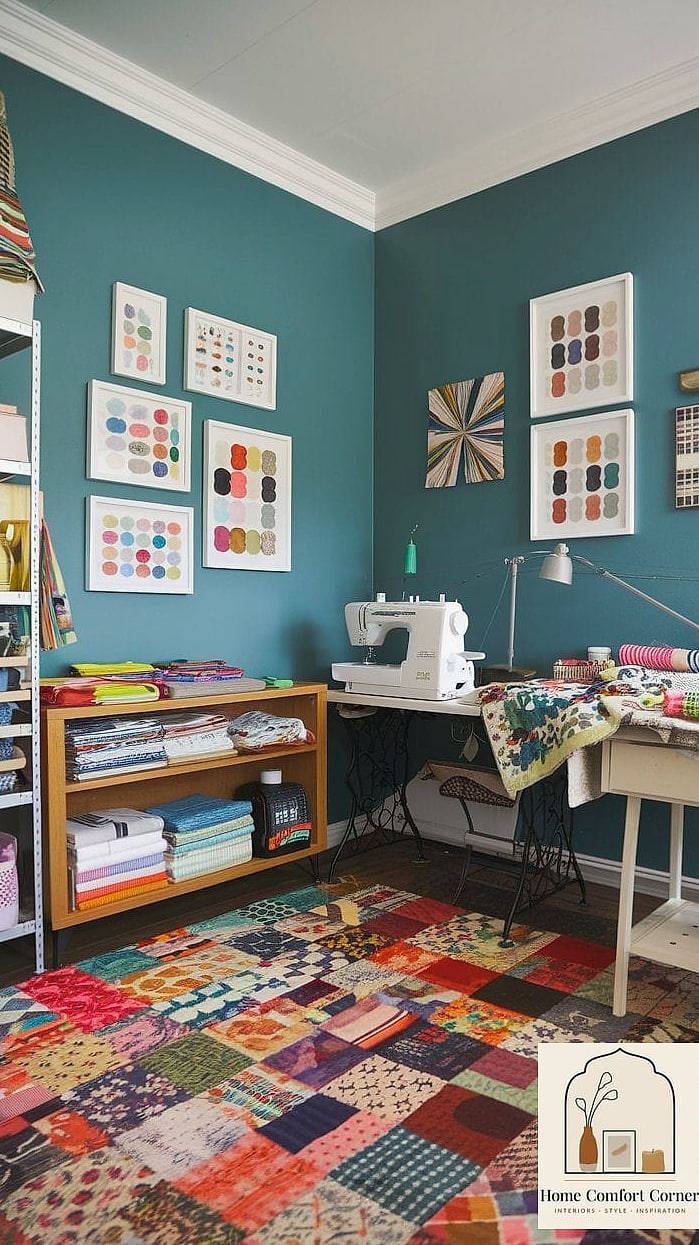
Framed embroidery hoops with finished stitch work make surprisingly charming wall art. Mix in a few fabric swatches in coordinating colors for texture. This is a great way to display pieces you’re proud of instead of letting them sit in a drawer. It also gives the room a handmade, personal feel that a store-bought print just can’t match.
Baskets and Bins for Scrap Fabric
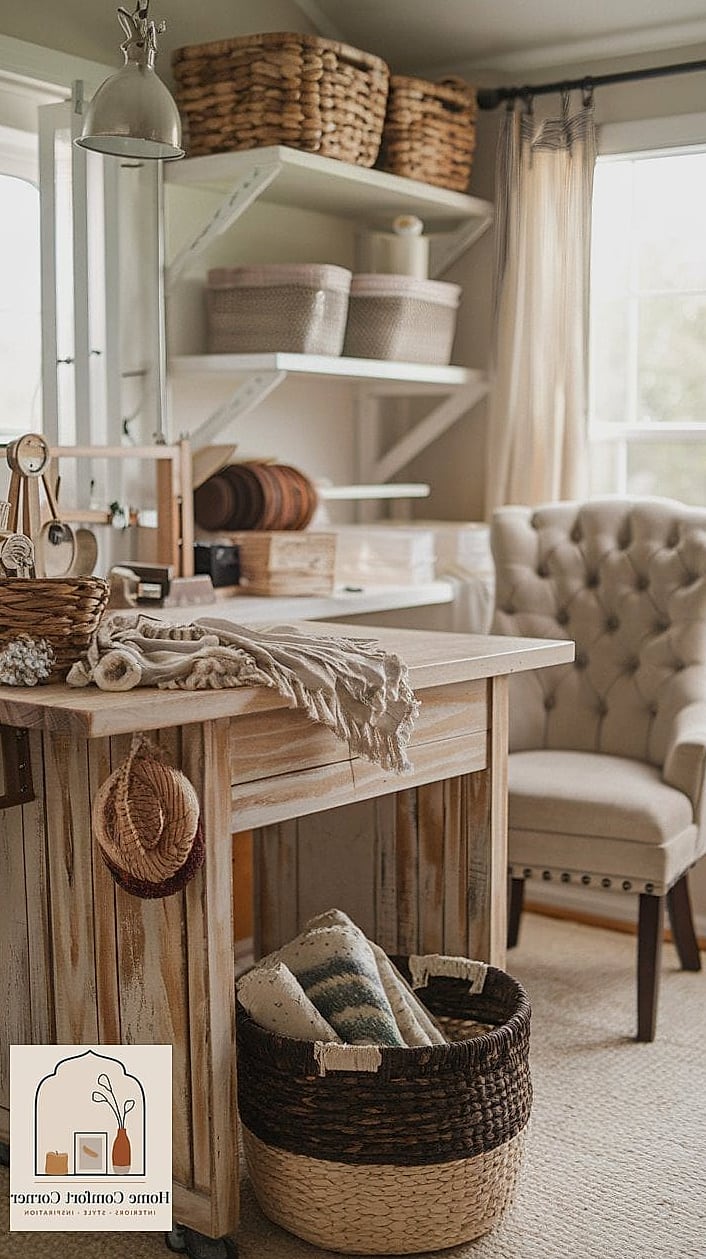
Every sewer ends up with a growing pile of fabric scraps, and woven baskets keep that pile from taking over. Choose baskets in natural materials like seagrass or rattan to add warmth and texture. Label them by fabric type or project if you want an extra layer of organization. This is one of the easiest, most budget-friendly upgrades on this list.
A Design Wall for Quilters
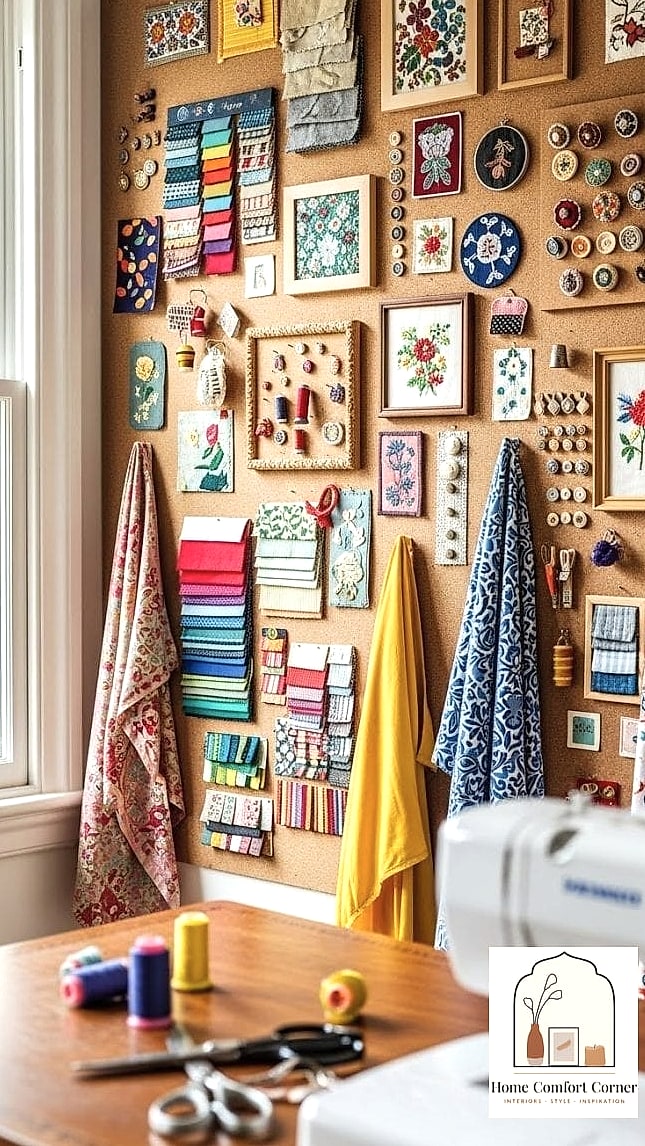
If quilting is your thing, a design wall is worth the setup. A large piece of flannel or batting stapled to foam board lets fabric pieces stick without pins, so you can step back and see your layout before sewing anything together. It doubles as a soft, textured accent wall when you’re not actively working on a project.
Layered Lighting for Detail Work
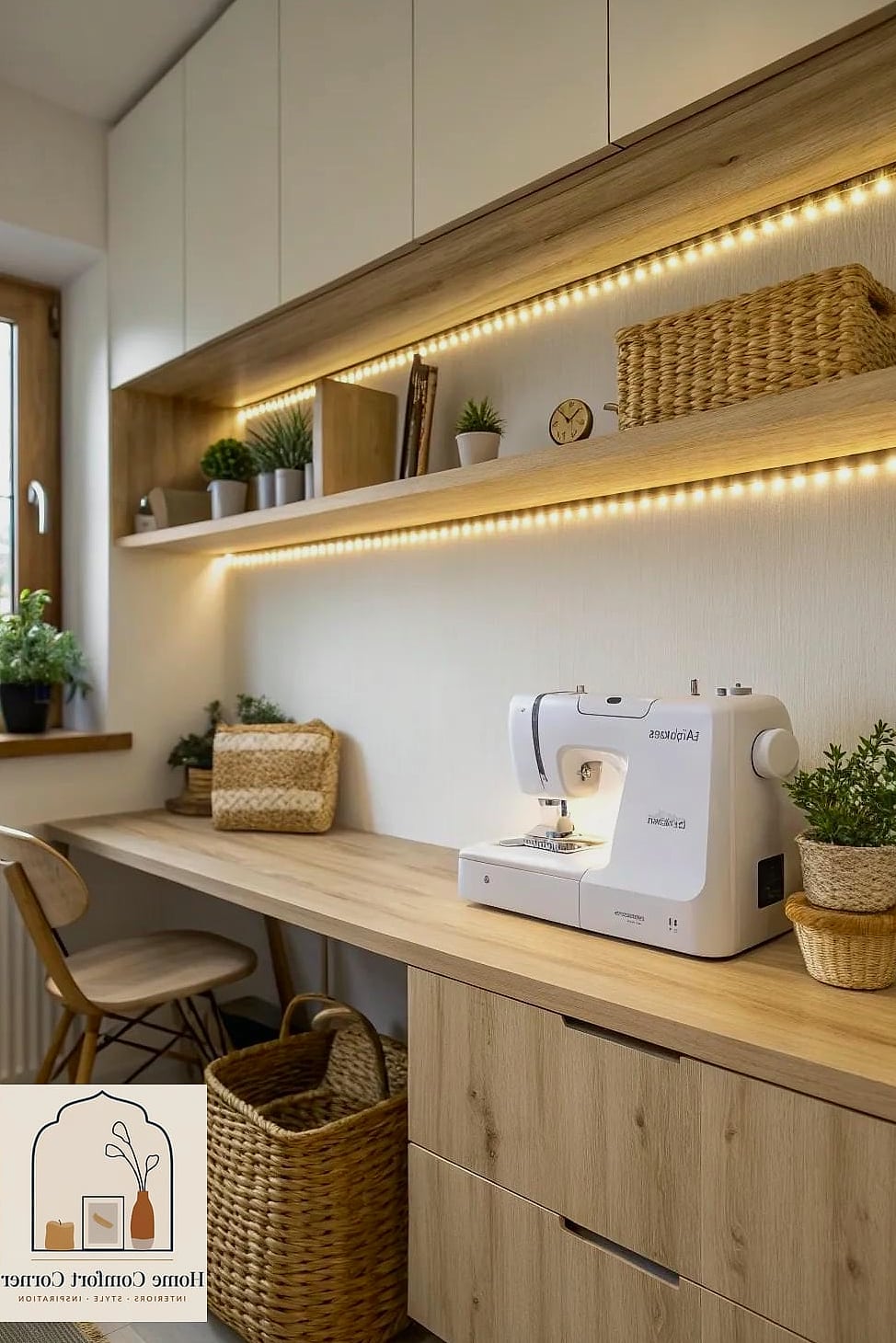
Overhead lighting alone rarely cuts it for sewing. Add a task lamp near your machine and another near your cutting table so you’re not straining your eyes on fine details. Warm-toned bulbs make the room feel more inviting, while a daylight bulb near your workstation helps with accurate color matching. This is one of those upgrades that instantly makes a craft space feel more professional.
A Bulletin Board for Pattern Inspiration
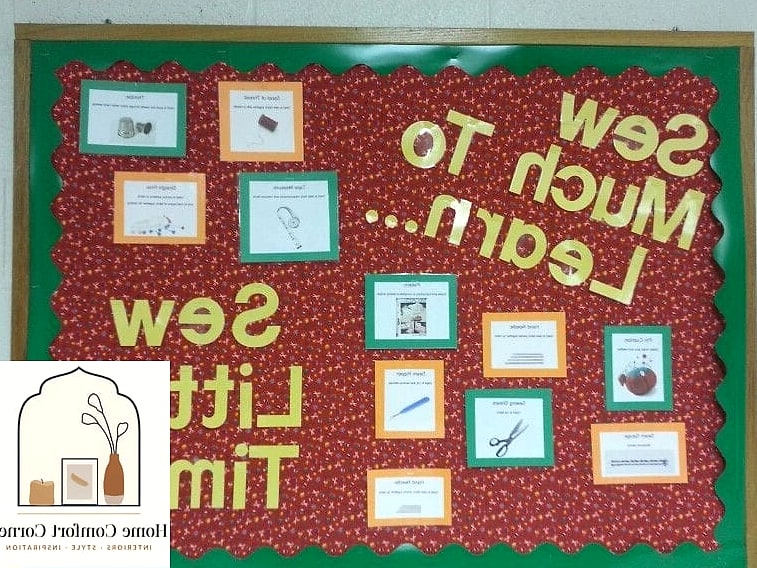
Cork or fabric-covered bulletin boards give you a spot to pin pattern envelopes, magazine clippings, and fabric swatches you’re considering for future projects. It becomes a rotating mood board that reflects whatever you’re currently excited about. Frame it with washi tape or a simple wood border to keep it looking tidy rather than chaotic.
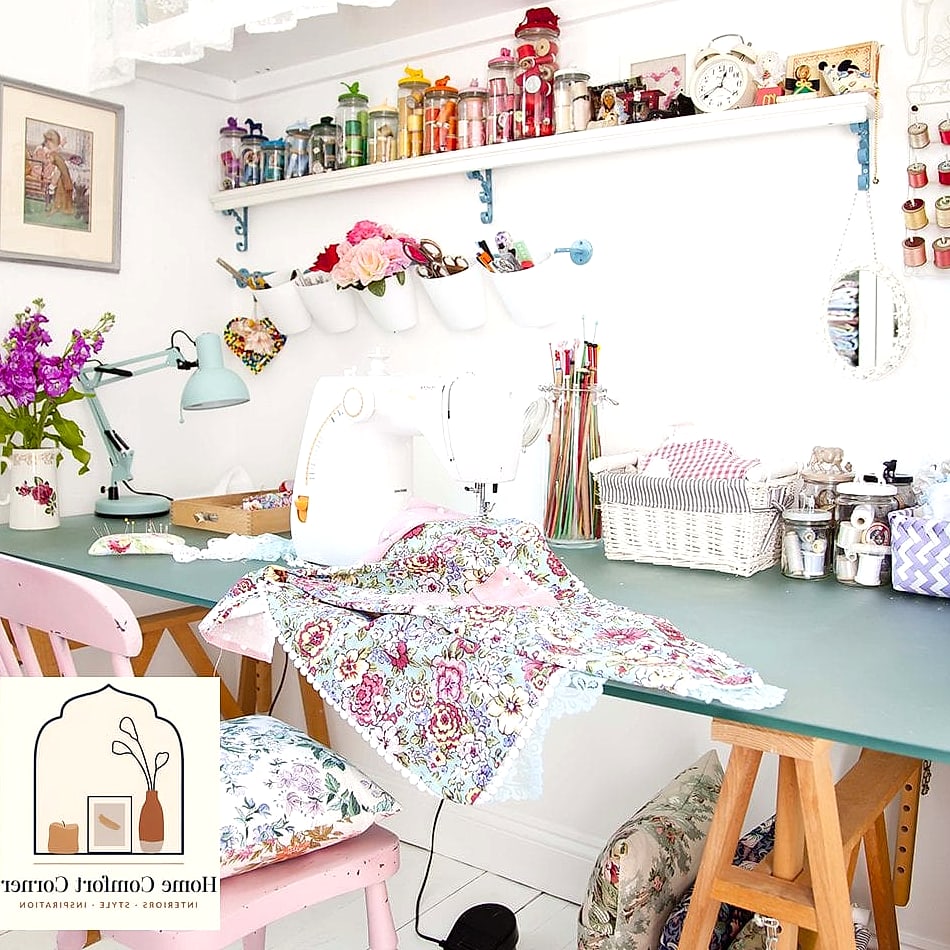
Mason Jars or Glass Canisters for Notions
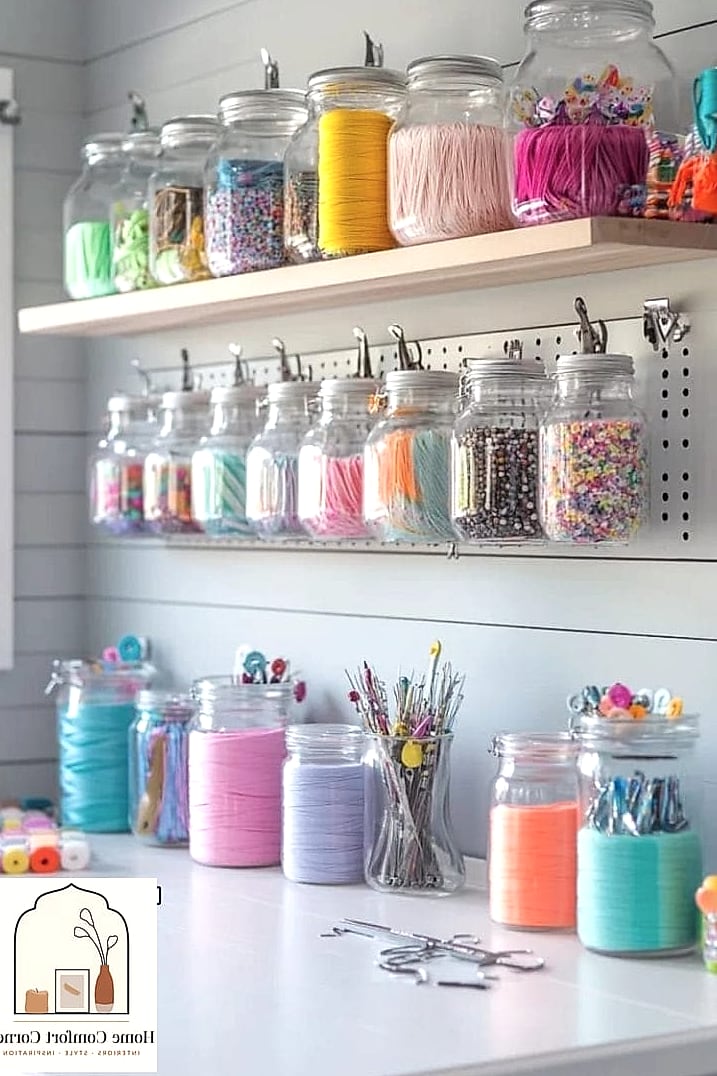
Buttons, bobbins, and trim look surprisingly decorative when stored in clear glass jars instead of hidden in drawers. Line them up on a shelf or windowsill for a cottage-style touch. This works especially well if you have a collection of vintage buttons you want to actually see rather than store away.
A Neutral Color Palette With Colorful Fabric as the Accent
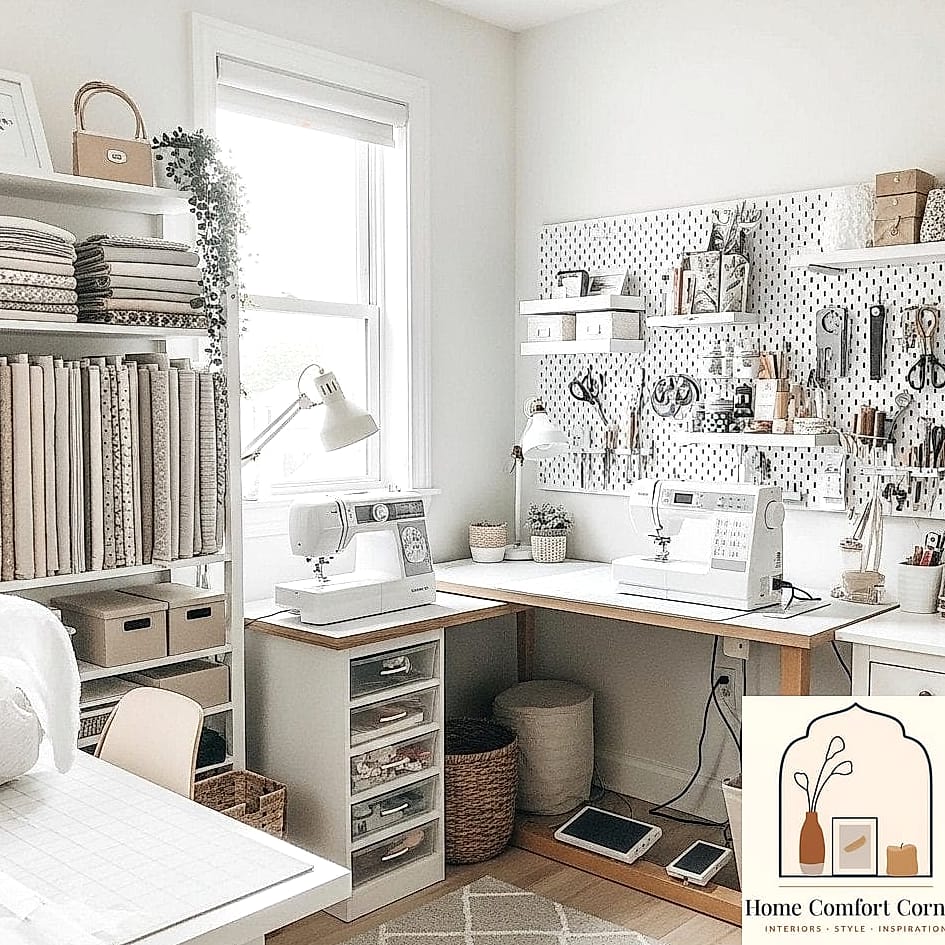
Since fabric and thread already bring so much color into the room, keeping walls and furniture in a neutral palette lets your materials shine. Soft whites, warm grays, or muted greens make great backdrops. This approach also makes the space feel calmer, which is nice when you’re trying to focus on a detailed project.
A Rolling Cart for Machine Accessories
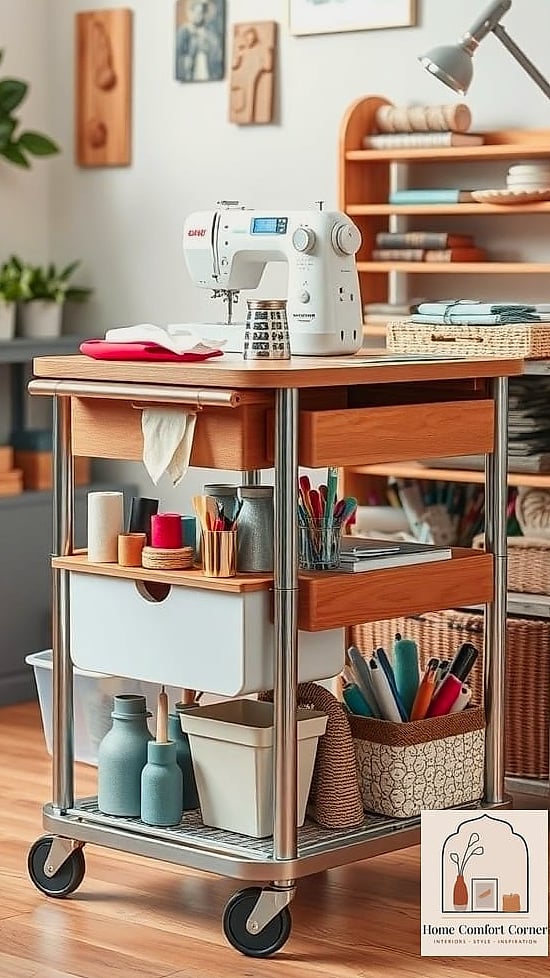
A slim rolling cart next to your sewing machine keeps bobbins, needles, and presser feet within arm’s reach without cluttering your table. Look for one with small drawers rather than open bins so tiny parts don’t get lost. It’s also easy to roll out of the way when you need extra elbow room for a big project.
An Ironing Station Built Into the Room
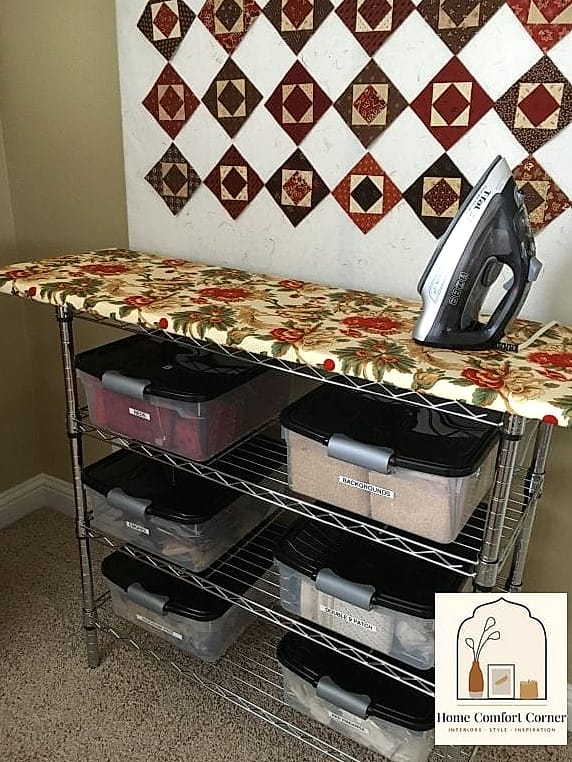
Rather than dragging an ironing board out every time, consider a wall-mounted fold-down version or a small dedicated corner with a compact board and iron caddy. Having pressing set up permanently saves so much time during a project. Add a heat-resistant mat underneath if you’re working on a hard floor to protect it from accidental scorch marks.
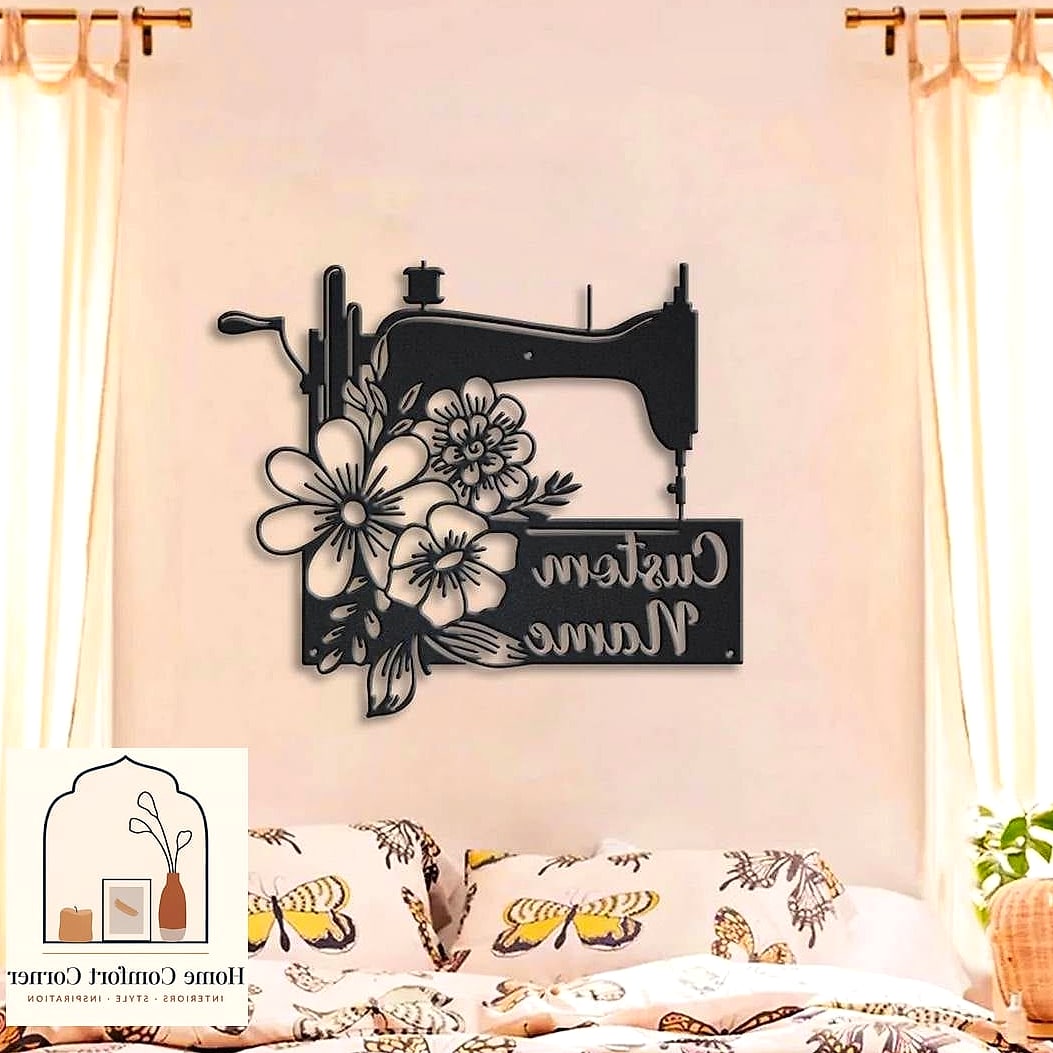
Personalized Wall Art With a Sewing Theme
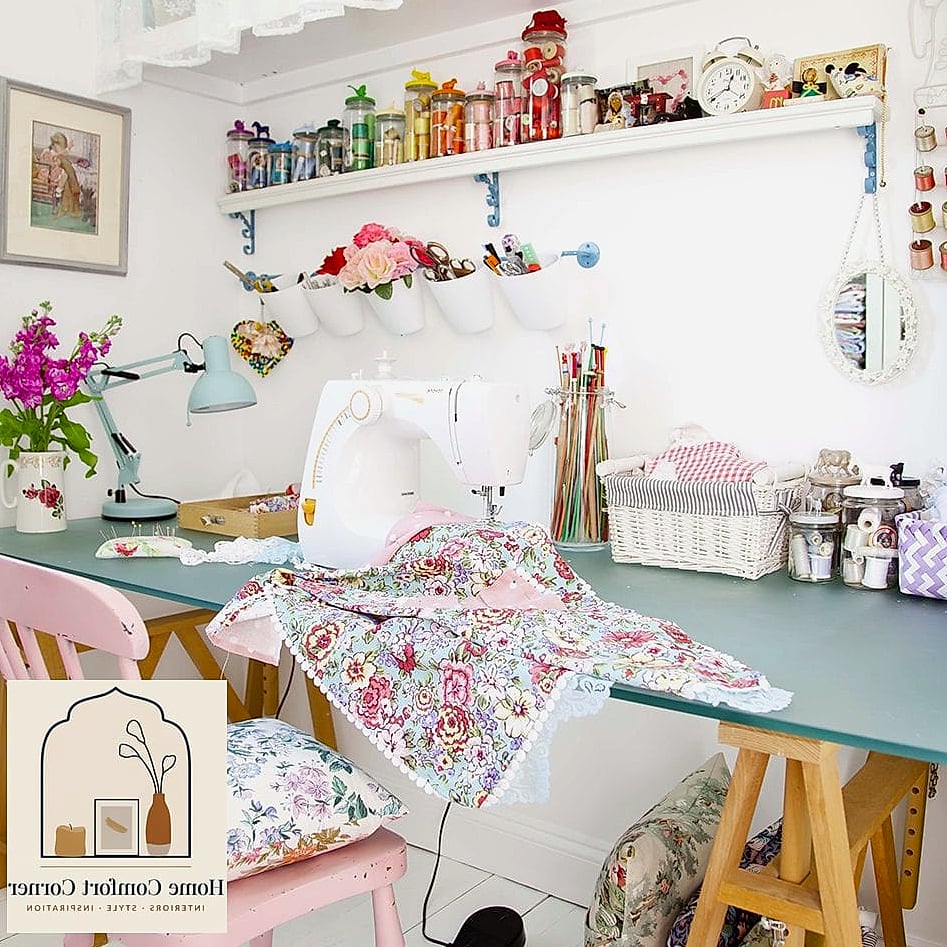
Prints featuring sewing machines, measuring tapes, or fun textile-related quotes add personality without taking up floor space. You can find plenty of budget-friendly prints online, or frame vintage pattern envelopes for something more unique. This is an easy way to make the room feel like yours instead of a generic craft closet.
A Fabric Storage System With Clear Bins
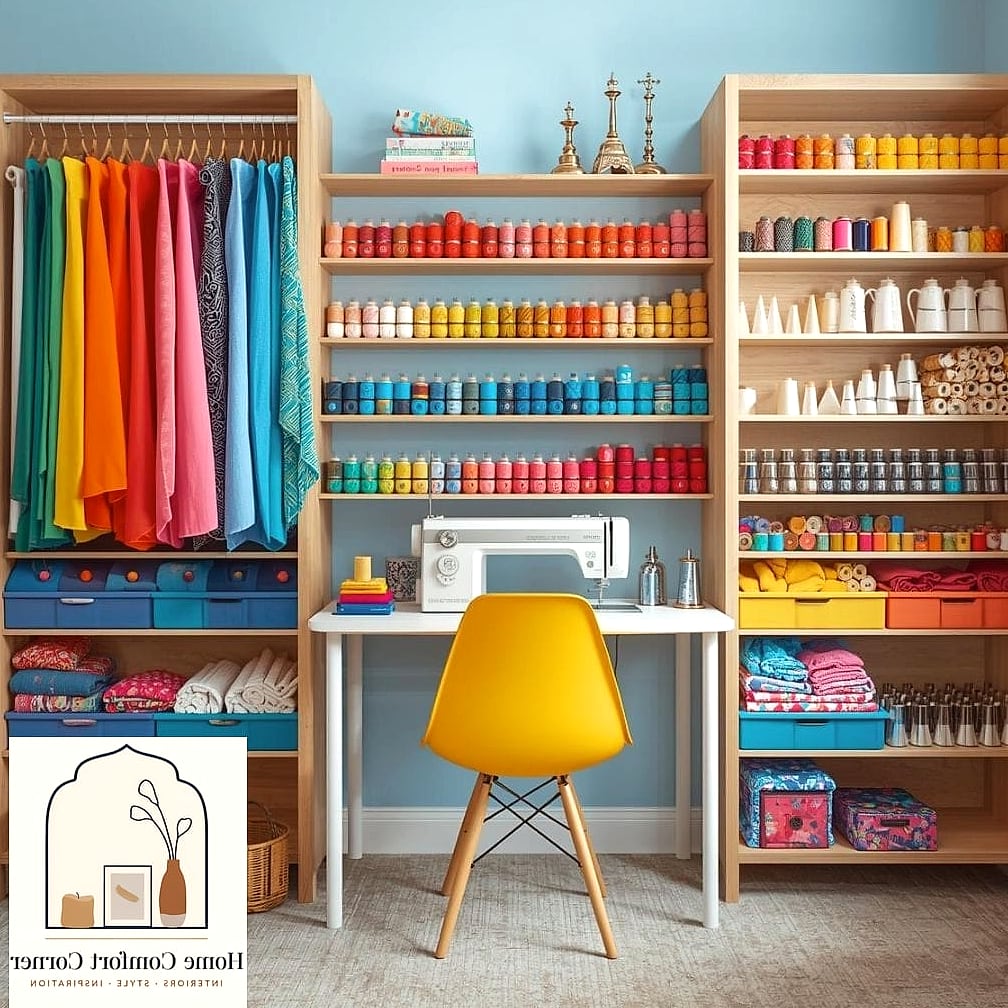
Clear, stackable bins let you see what’s inside without opening every container to search. Sort by fabric weight, color, or project type depending on what makes sense for how you work. Label the front of each bin for quick scanning. This system is especially helpful in smaller rooms where a closet is doing double duty as fabric storage.
A Statement Rug to Ground the Space
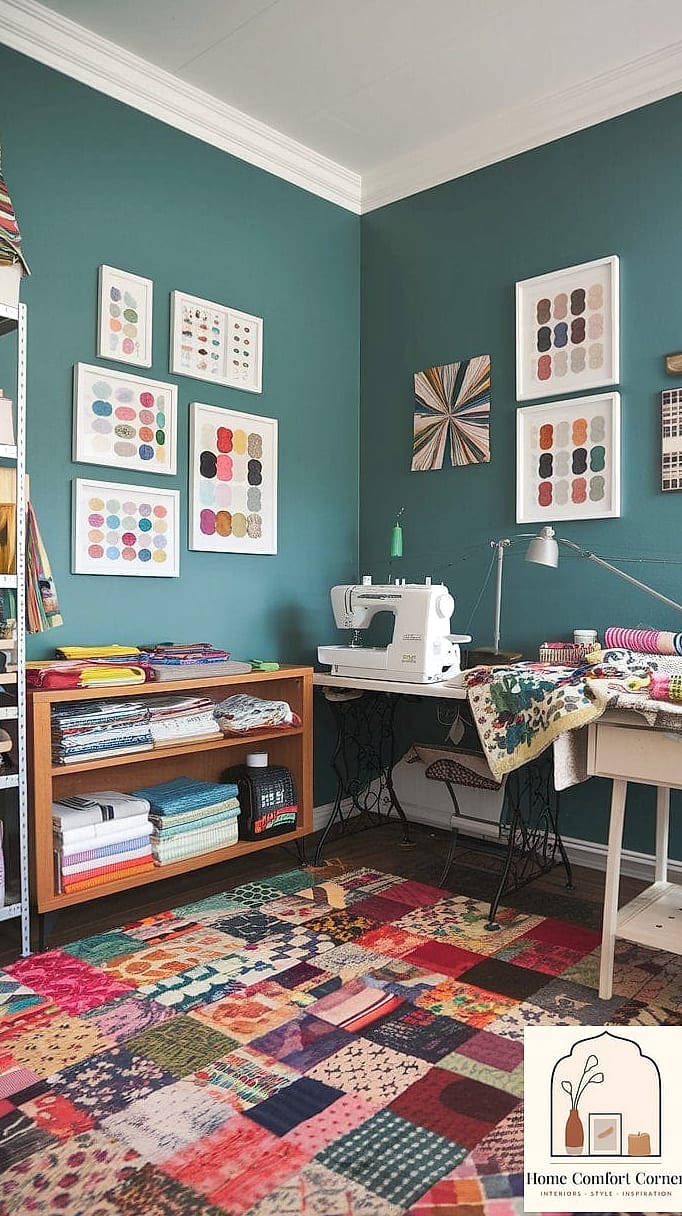
Sewing rooms often have hard flooring since it’s easier to clean up stray threads and pins, but that can make the room feel cold. A patterned or textured rug adds warmth underfoot and helps define the space, especially if your sewing room shares a room with another function. Just be sure it’s low-pile enough that pins and needles don’t disappear into it.
A Wall Calendar or Project Planner
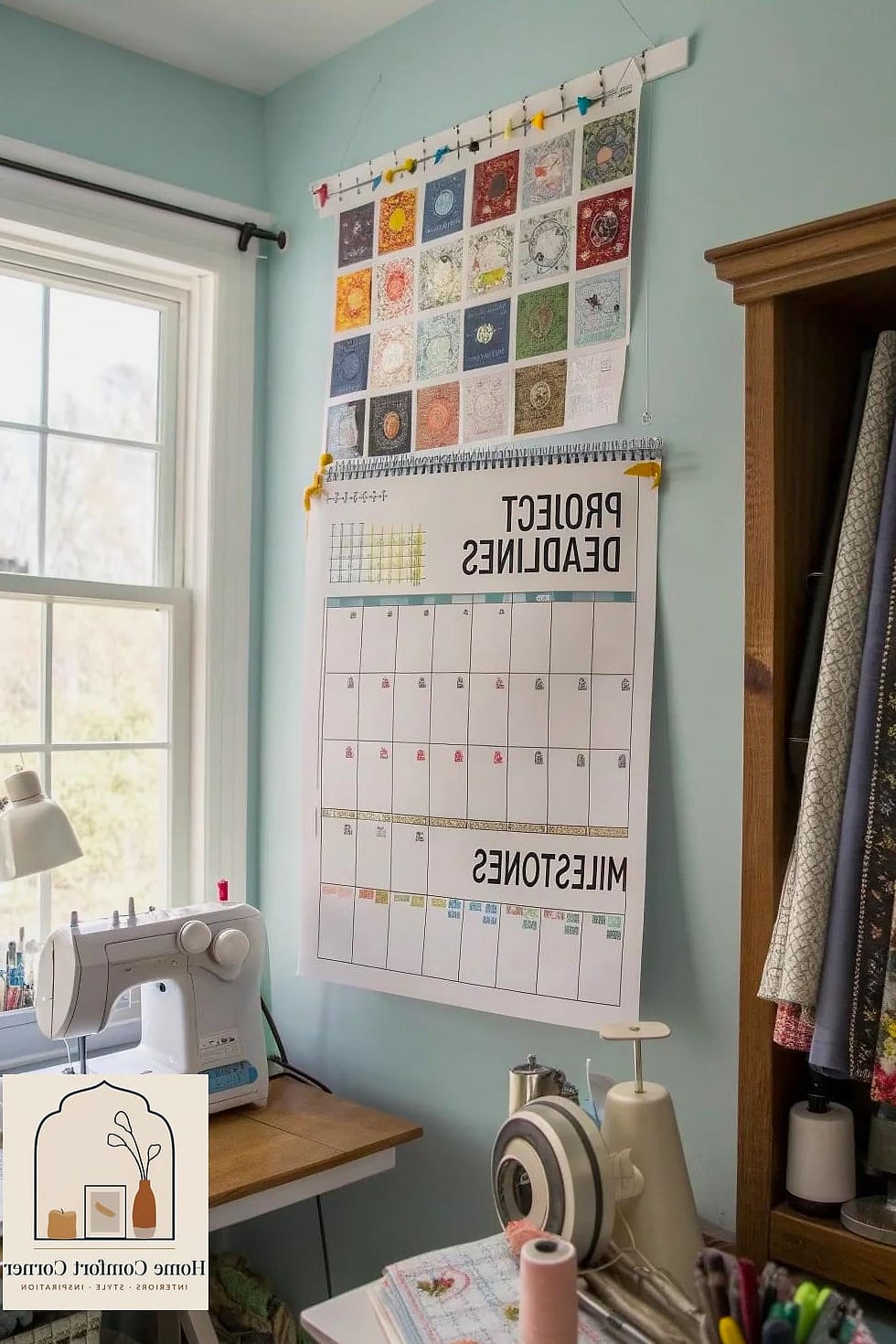
Keeping a calendar or whiteboard visible helps you track deadlines for gifts, custom orders, or personal projects. It also becomes a decorative element when you choose one with a nice frame or design that matches your color scheme. This is especially useful if you sew for other people and need to juggle multiple timelines.
Greenery to Soften a Utilitarian Space
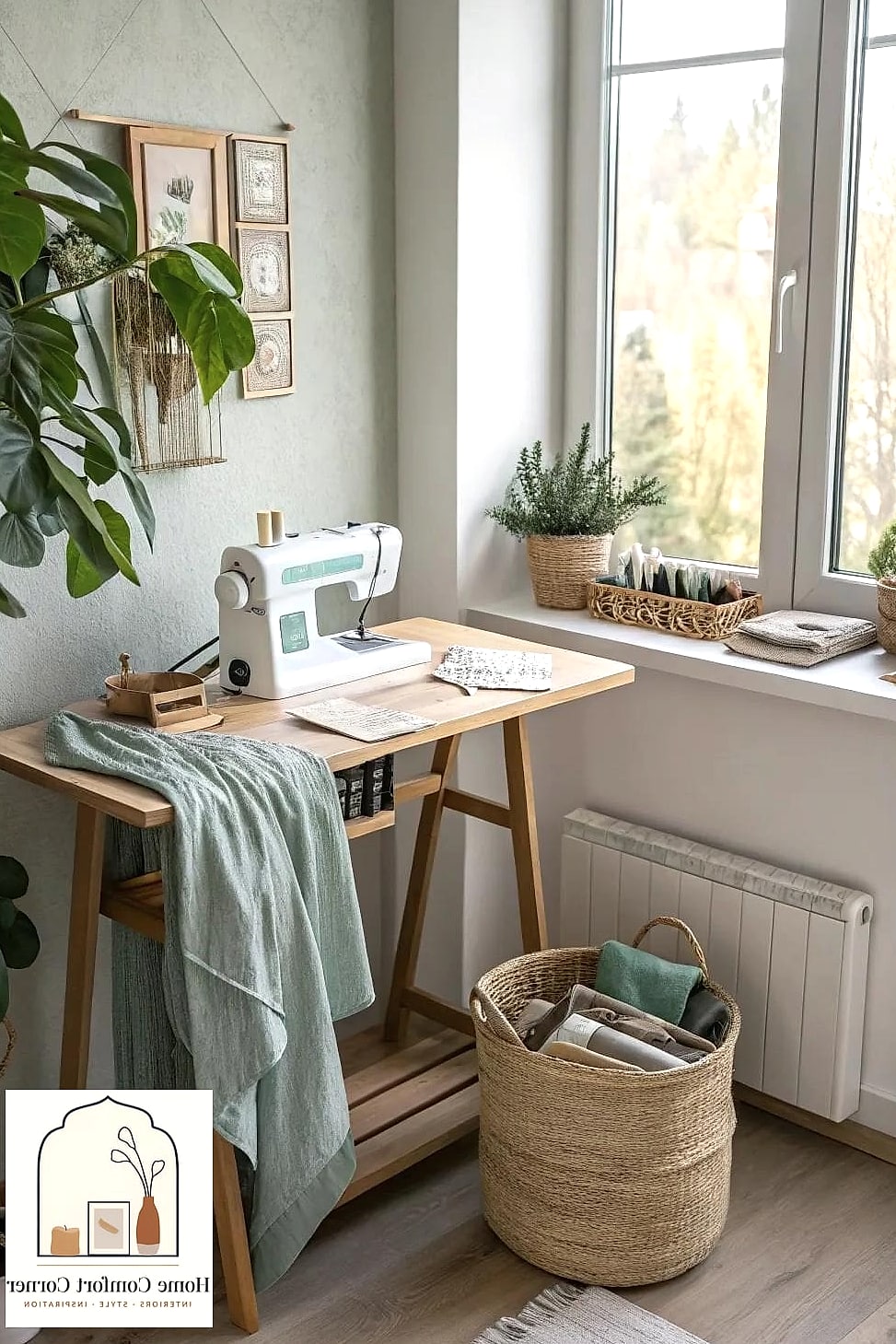
A few potted plants make even the most function-first sewing room feel more like a retreat. Pothos or snake plants are good choices since they tolerate inconsistent watering and lower light. Place them on a windowsill or a floating shelf away from your cutting area so they’re not in the way of your workflow.
A Labeled Ribbon and Trim Organizer
Spools of ribbon and trim tend to end up in a tangled mess if they don’t have a proper home. A wall-mounted dowel rack or a clear drawer organizer keeps them visible and untangled. Arranging by color or width makes it easy to grab exactly what you need without digging through a drawer.
A Custom Nameplate or Sign for the Door
It sounds small, but a little sign that says “Sewing Room” or your name adds so much personality to the entrance. Whether it’s a wood-burned plaque, a printed sign, or something you stitched yourself, it signals that this space matters. It’s a nice finishing touch after you’ve put so much thought into everything inside the room.
Putting together a sewing room that feels good to work in doesn’t require a full renovation or a big budget. A lot of these ideas are simple additions you can knock out over a weekend, while others are worth saving up for if you use the space often. Start with whatever solves your biggest daily frustration, whether that’s finding storage for fabric scraps or fixing the lighting near your machine, and build from there. The rest will come together as you spend more time in the room and figure out what actually works for how you sew.