19 Pooja Room Ideas Indian Modern Designs You Need to See Right Now

- Wall-Mounted Floating Pooja Unit
- Minimalist White Marble Mandir
- Pooja Room with Sliding Glass Doors
- Under-the-Staircase Pooja Nook
- Brass and Copper Accent Pooja Room
- Backlit Marble Jali Wall
- Compact Corner Pooja Shelf
- Vastu-Compliant Northeast Pooja Room
- Pooja Room with Wooden Temple Dome
- Black and Gold Contemporary Pooja Room
- Open Shelving Pooja Display
- Pooja Room Nestled in a Balcony Extension
- Terracotta and Clay Accent Pooja Room
- Pooja Room with Hidden Storage Drawers
- Wall Mural Backdrop Pooja Room
- Multi-Faith or Multi-Deity Modern Pooja Room
- Pooja Room with Integrated Seating
- Fully Enclosed Modern Pooja Cabinet
- Rooftop or Terrace Pooja Pavilion
19 Pooja Room Ideas Indian Modern Designs You Need to See Right Now
Setting up a pooja room in a modern home isn’t as tricky as it looks once you know what actually works. I’ve helped friends squeeze sacred spaces into everything from tiny apartments to sprawling villas, and the same question always comes up: how do you keep it feeling traditional without clashing against sleek, contemporary interiors? These 19 ideas cover every budget, every square footage, and every style preference, so you can pick what actually fits your home instead of copying a Pinterest photo that doesn’t translate to real life.
Wall-Mounted Floating Pooja Unit
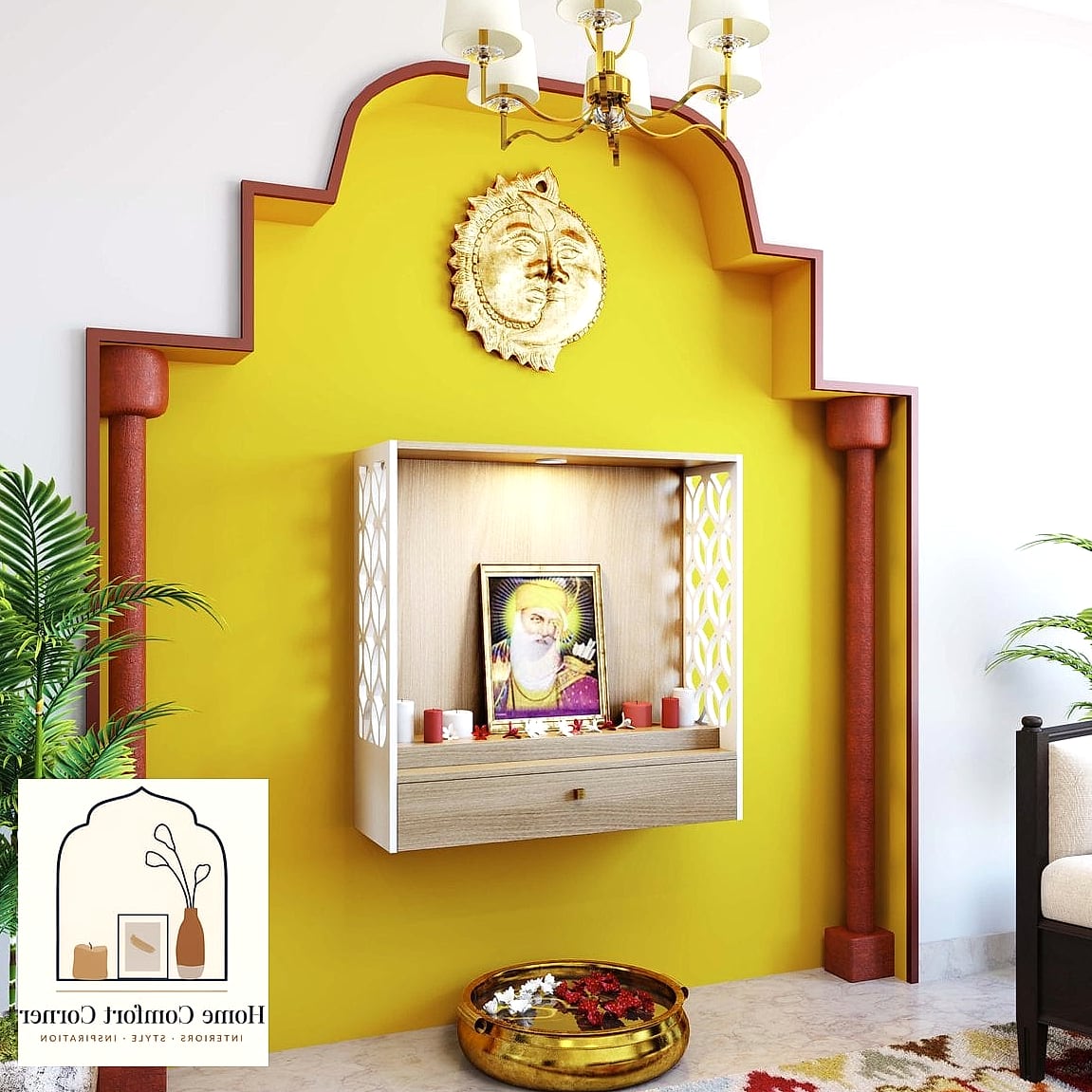
This one’s perfect if floor space is tight. A floating unit mounted at eye level frees up the area underneath for storage baskets or just breathing room. Teak or sheesham wood with hand-carved jali panels gives it that traditional warmth, while the wall-mounted design keeps things looking current. It works especially well in apartments where every square foot counts. Cleaning is easy too, since there’s no base collecting dust bunnies underneath.
Minimalist White Marble Mandir
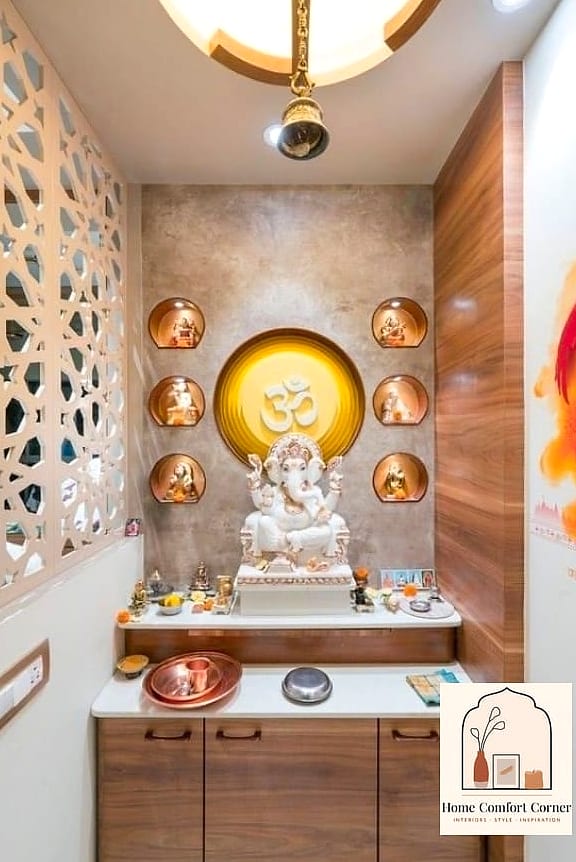
White marble instantly reads as premium, and a mandir carved from it becomes a quiet focal point rather than a busy, ornate structure. Pair it with brass idols and a single hanging pendant light for contrast. This suits homes with a neutral color palette already in place, since the marble won’t fight against your existing decor. Marble does need occasional sealing to prevent staining from incense ash or oil diyas, so keep a soft cloth nearby.
Pooja Room with Sliding Glass Doors
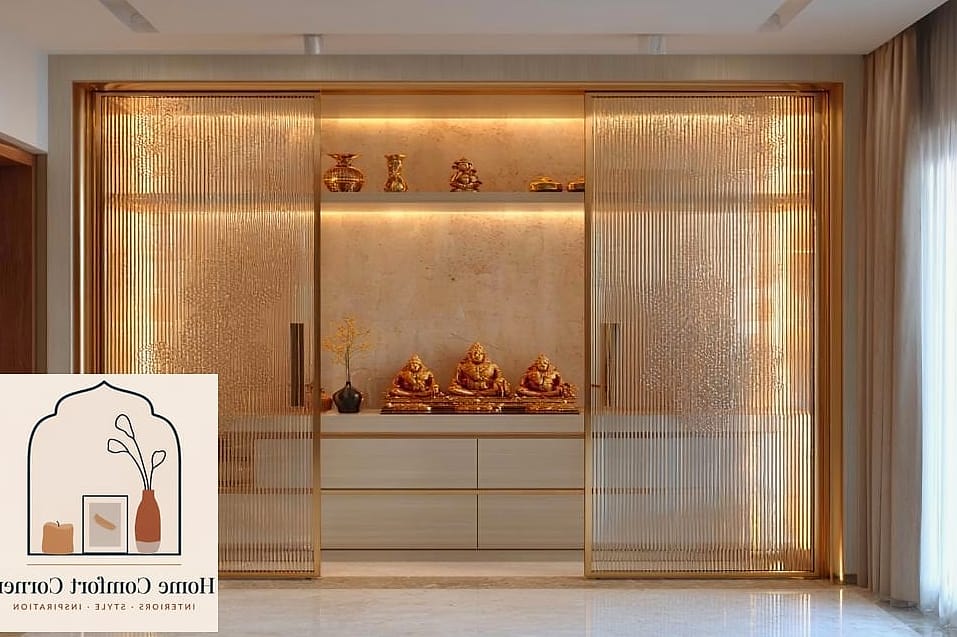
Frosted or fluted glass doors let you close off the space during daily cleaning or when guests are over, without making the room feel sealed shut. Sliding doors save space compared to hinged ones, which matters a lot in smaller homes. I like pairing bronze or brushed brass door frames with the glass for a warmer look than plain aluminum. It’s a genuinely practical upgrade for keeping incense smoke contained too.
Under-the-Staircase Pooja Nook
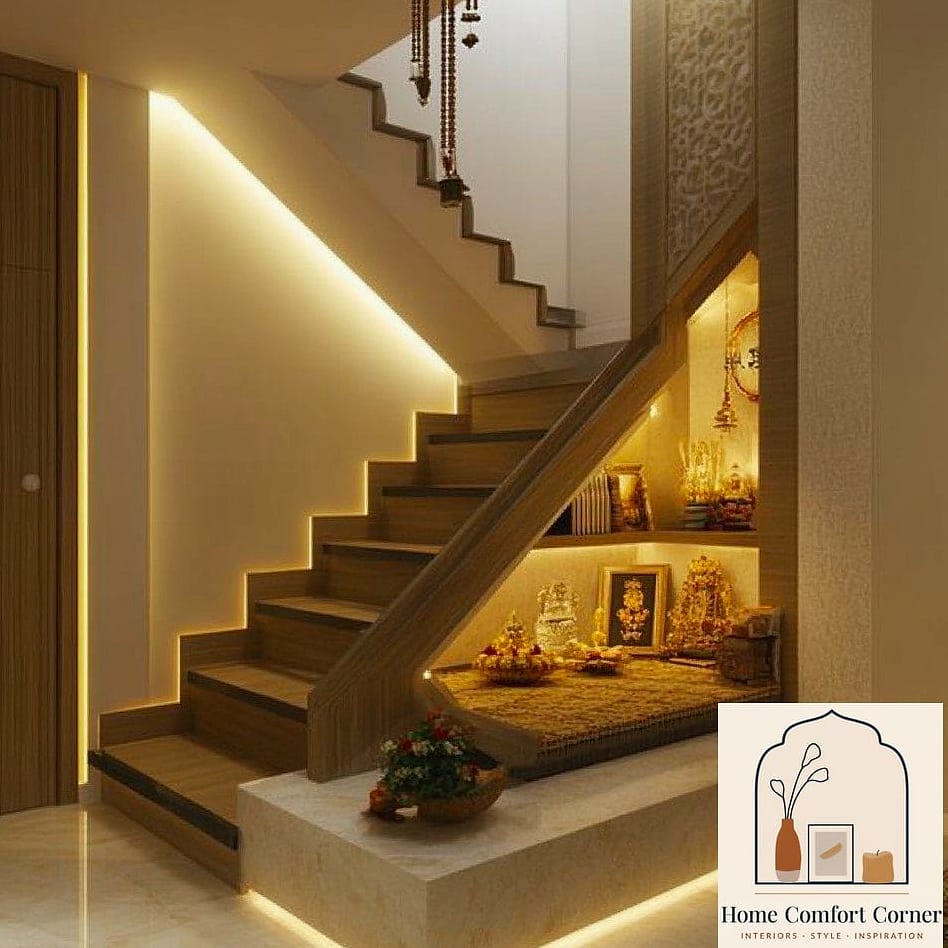
If you’ve got unused space under a staircase, this is one of the smartest ways to use it. Builders often frame it with a small arch or dome-shaped niche to soften the boxy shape of the stairs above. Add a small LED strip and a compact shelf for diyas and you’ve got a full pooja corner without sacrificing a single room. It’s a favorite among homeowners doing renovations who don’t want to give up square footage elsewhere.
Brass and Copper Accent Pooja Room
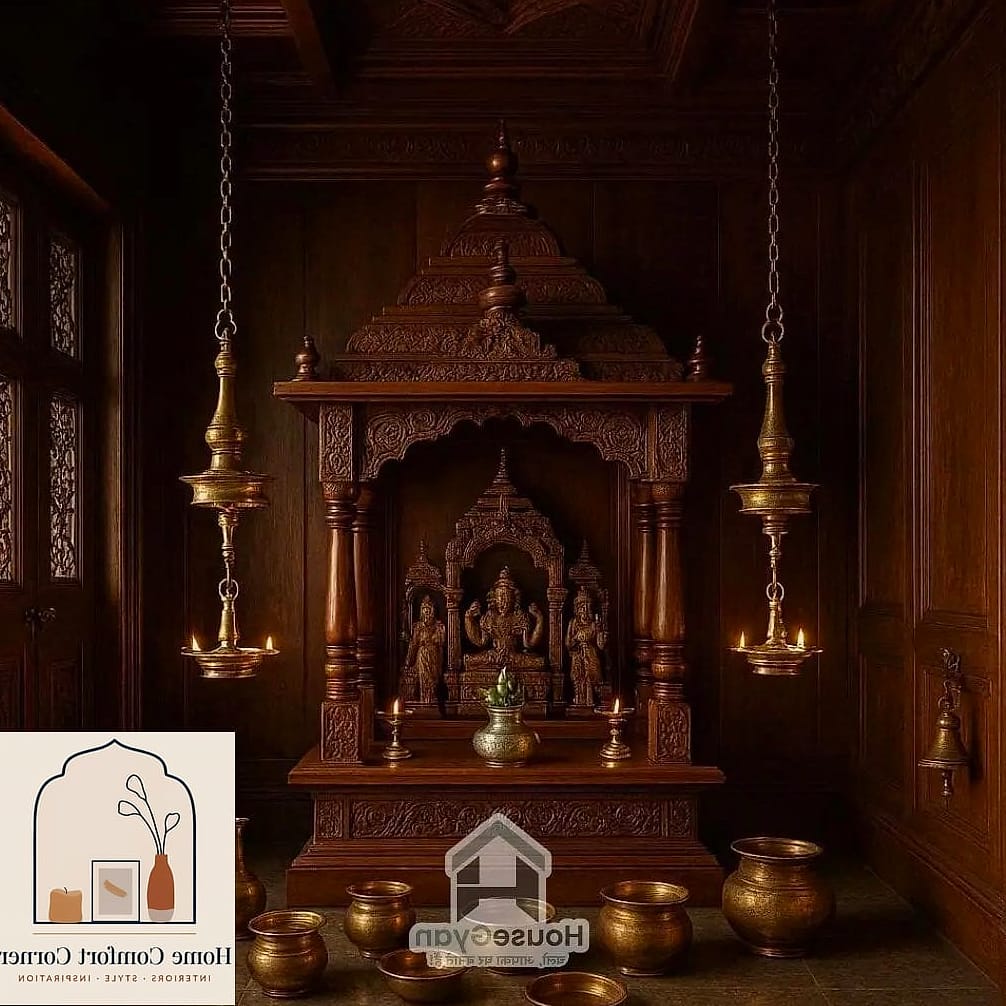
Metallic accents in brass or copper bring warmth and a sense of ritual without looking dated. Think brass bells, copper kalash, and a antique-finish brass jali backdrop. This pairs beautifully with warm wood tones and works in both traditional and transitional homes. The metals do need occasional polishing to keep their shine, though a matte antique finish hides tarnish better if you’re not up for frequent upkeep.
Backlit Marble Jali Wall
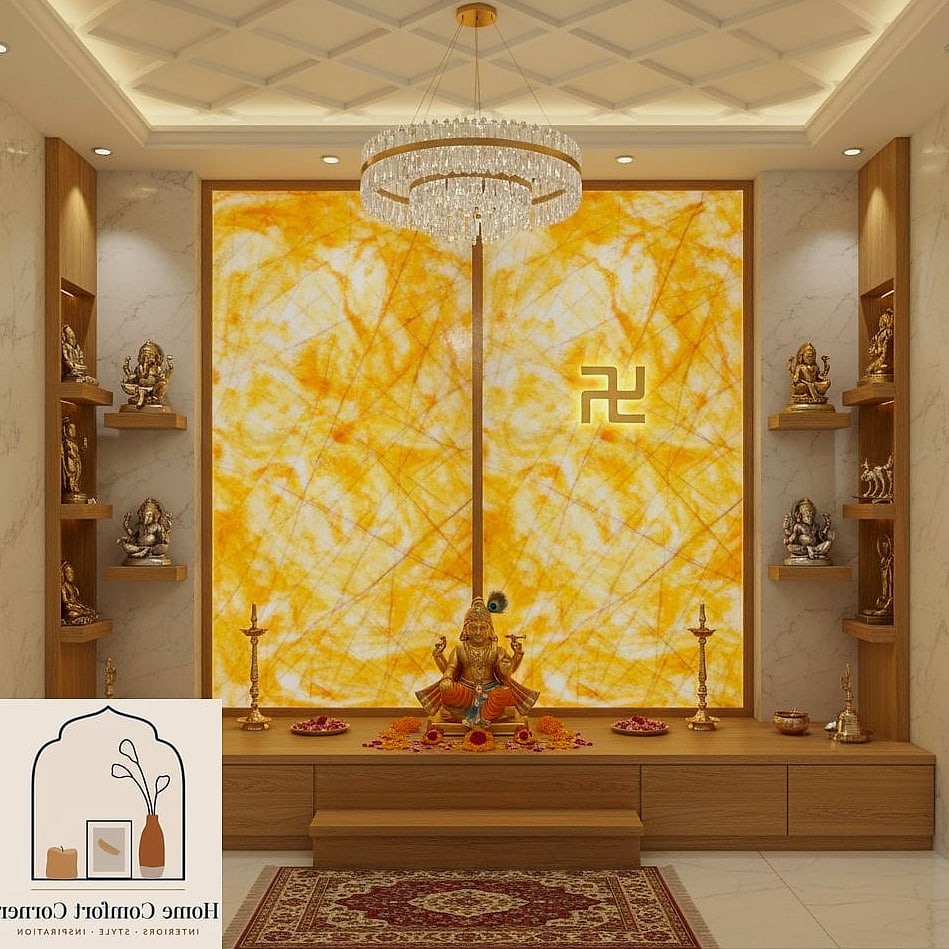
A carved marble or MDF jali panel with LED backlighting turns a flat wall into something dramatic without adding bulk. The light filters through the carved pattern and casts a soft glow across the room, which feels genuinely calming during evening prayers. This idea works well in living rooms where the pooja space needs to blend into an open floor plan rather than sit in its own closed-off room.
Compact Corner Pooja Shelf
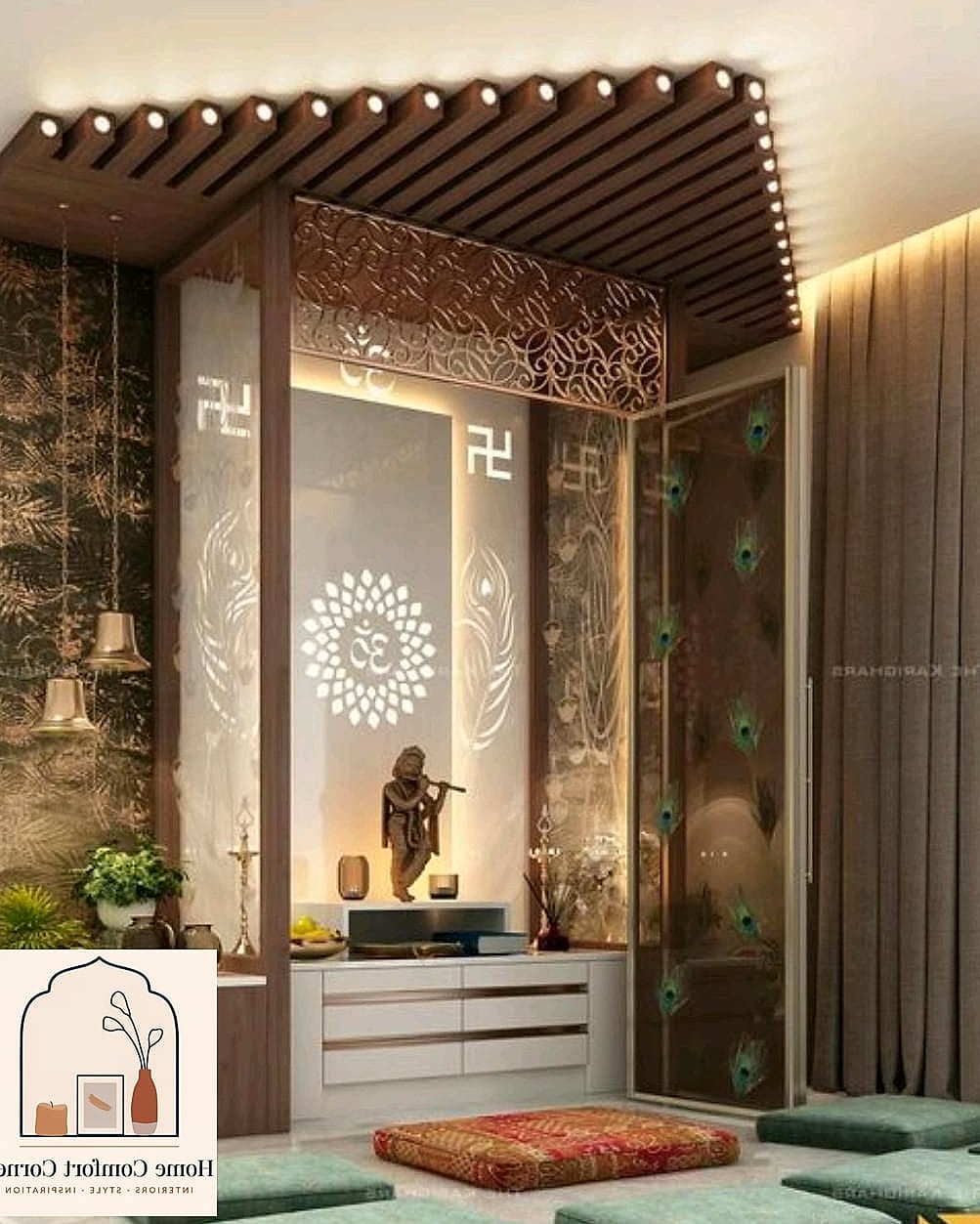
Sometimes you just don’t have a spare room, and that’s fine. A triangular or L-shaped shelf tucked into a corner can hold everything you need. Go for a two or three-tier design so idols, diyas, and prasad plates each get their own spot. This is one of the most renter-friendly options since it often just needs wall anchors instead of major construction, and you can take it with you when you move.
Vastu-Compliant Northeast Pooja Room
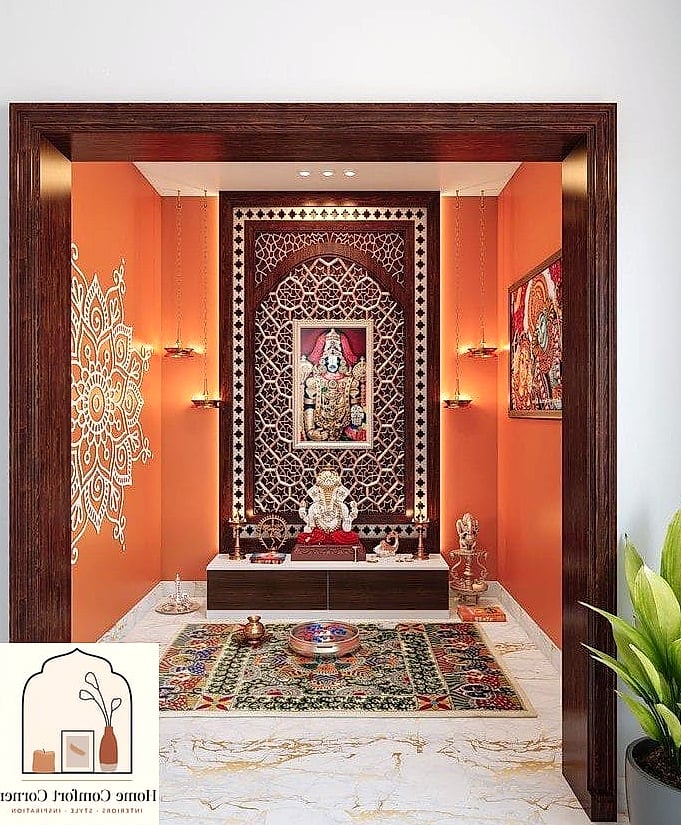
Positioning matters a lot for many families, and the northeast corner (Ishaan Kon) is considered the most auspicious spot. If your layout allows it, dedicating an actual room here rather than a shelf gives the space proper importance. Keep the door facing east or north if possible. This isn’t about aesthetics as much as it is about following tradition, though you can still make it visually stunning with the right materials.
Pooja Room with Wooden Temple Dome
A carved wooden dome or shikhara-style roof above the mandir instantly signals “this is sacred space” even from across the room. Teak wood ages beautifully and develops a rich patina over time. This works best when you have decent ceiling height to let the dome actually stand out instead of feeling cramped. It’s a bit more of an investment but genuinely elevates the whole room’s character.
Black and Gold Contemporary Pooja Room
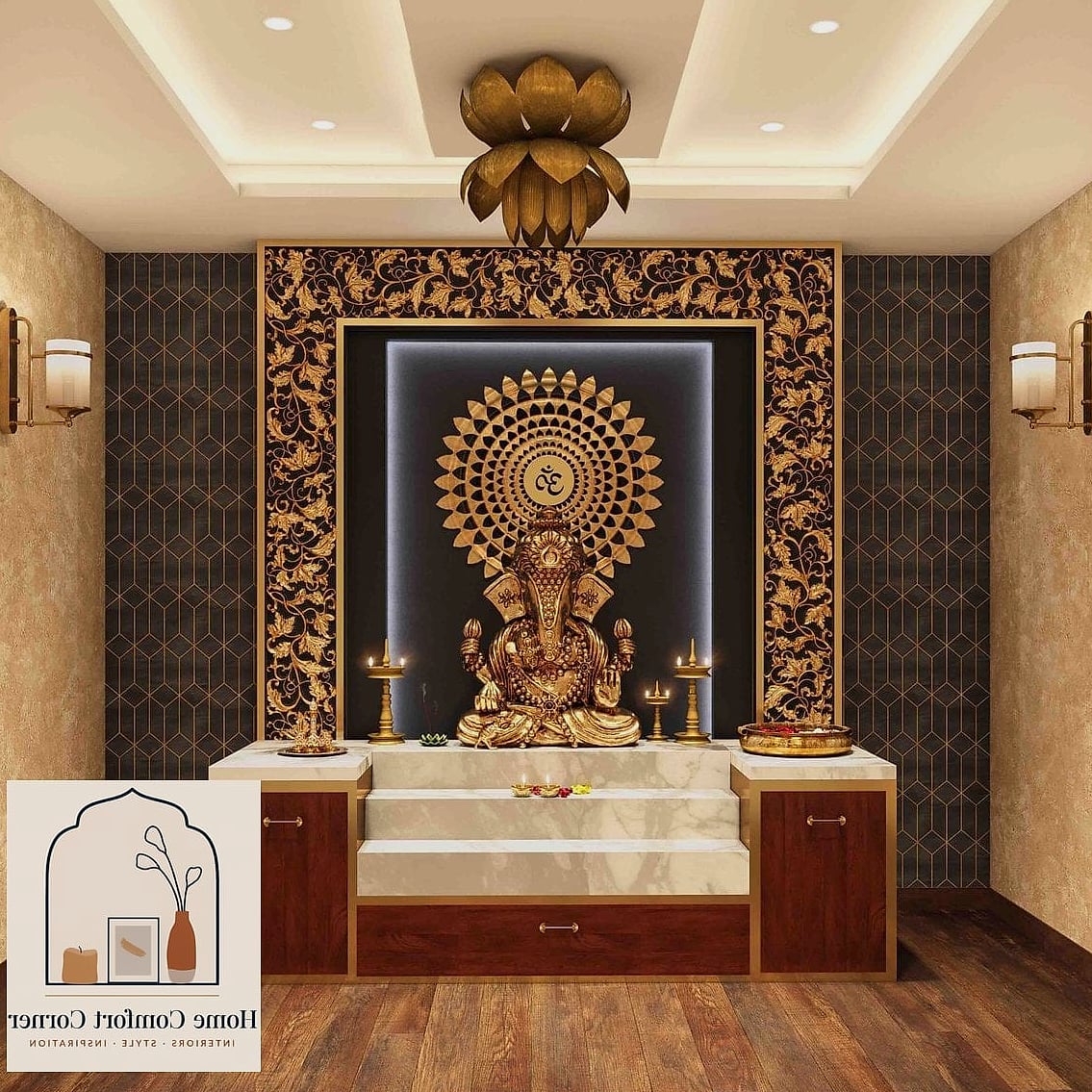
This combination sounds bold, but it works surprisingly well when done with restraint. Matte black cabinetry with gold-trimmed jali inserts feels luxurious without veering into gaudy territory. It suits homes that already lean into a moody, sophisticated palette elsewhere. Just balance the darkness with a warm light source, otherwise the space can feel a little too serious for daily prayer.
Open Shelving Pooja Display
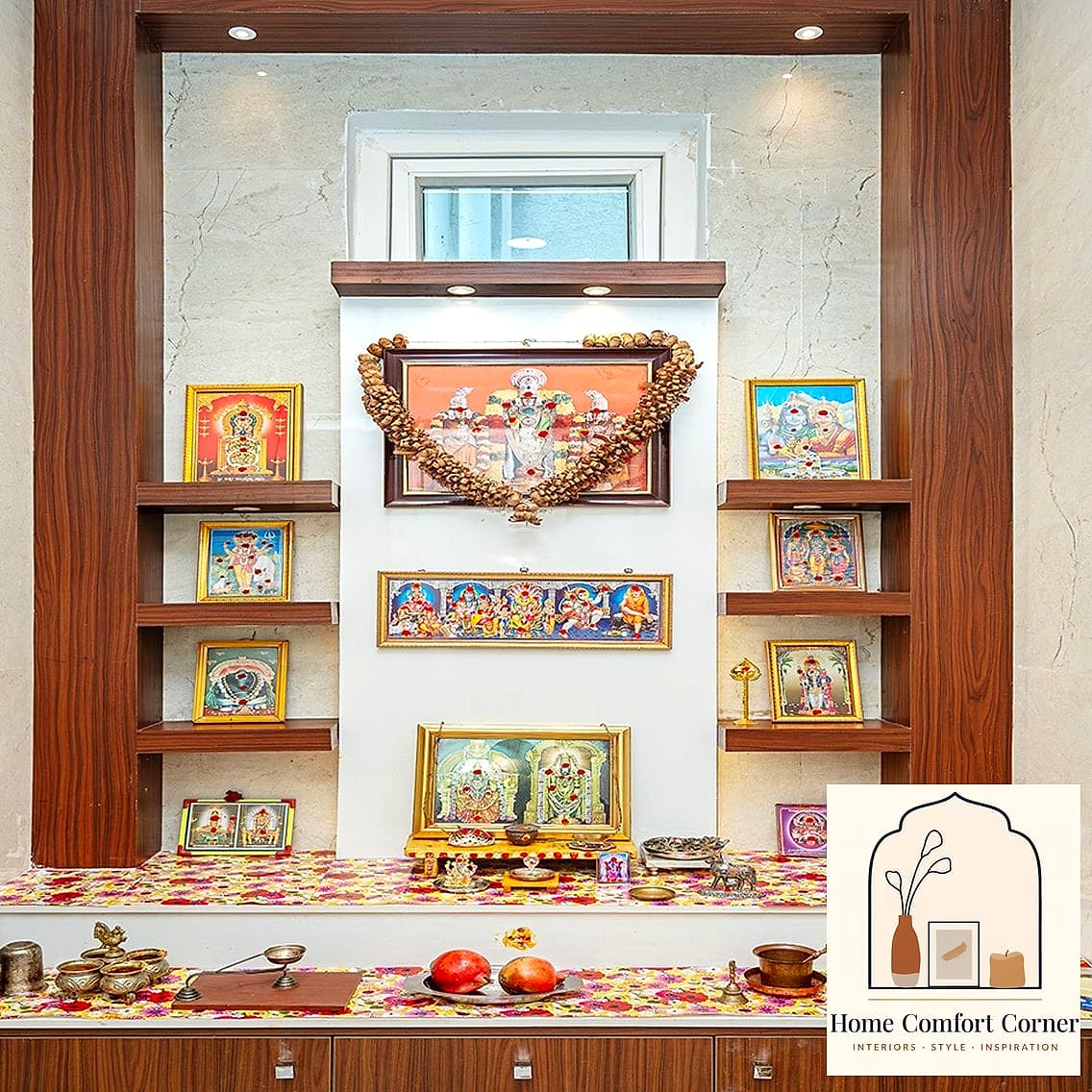
Skip the cabinet altogether and go with open floating shelves instead. This keeps everything visible and easy to reach, which some families genuinely prefer for daily rituals. Style it with a mix of idols, small potted tulsi plants, and brass diyas at varying heights for visual interest. It’s budget-friendly too, since open shelving costs far less than a built-in cabinet with doors.
Pooja Room Nestled in a Balcony Extension
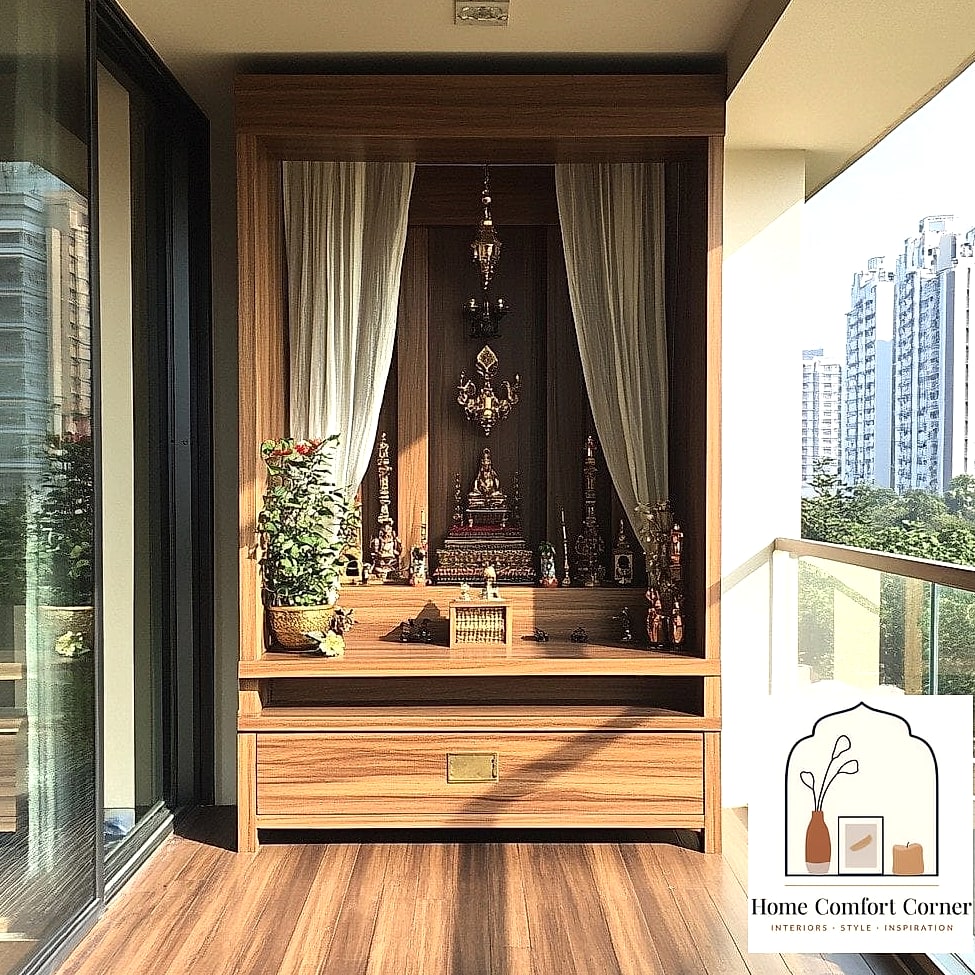
If you’ve got an enclosed balcony that’s not doing much, converting a section of it into a pooja space works surprisingly well. Natural light streams in, which feels appropriate for a space meant for morning prayers. Add sheer curtains for privacy and a weatherproof wooden or stone base since balconies see more temperature swings than interior rooms. This is a clever fix for apartments without a dedicated extra room.
Terracotta and Clay Accent Pooja Room
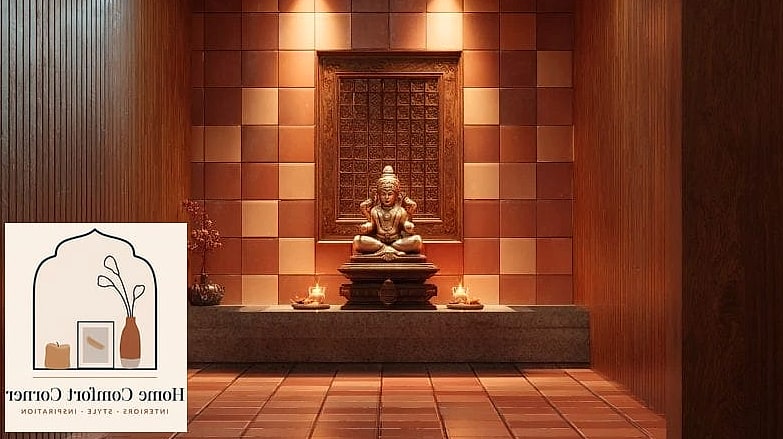
For a more earthy, rustic take, terracotta tiles or clay diya holders bring in texture that feels grounded and warm. This pairs nicely with exposed brick or stone accent walls if your home has that kind of aesthetic already. It’s a departure from the usual marble-and-brass combo and feels more organic. Terracotta is porous though, so a light sealant helps it resist staining from oil and turmeric.
Pooja Room with Hidden Storage Drawers
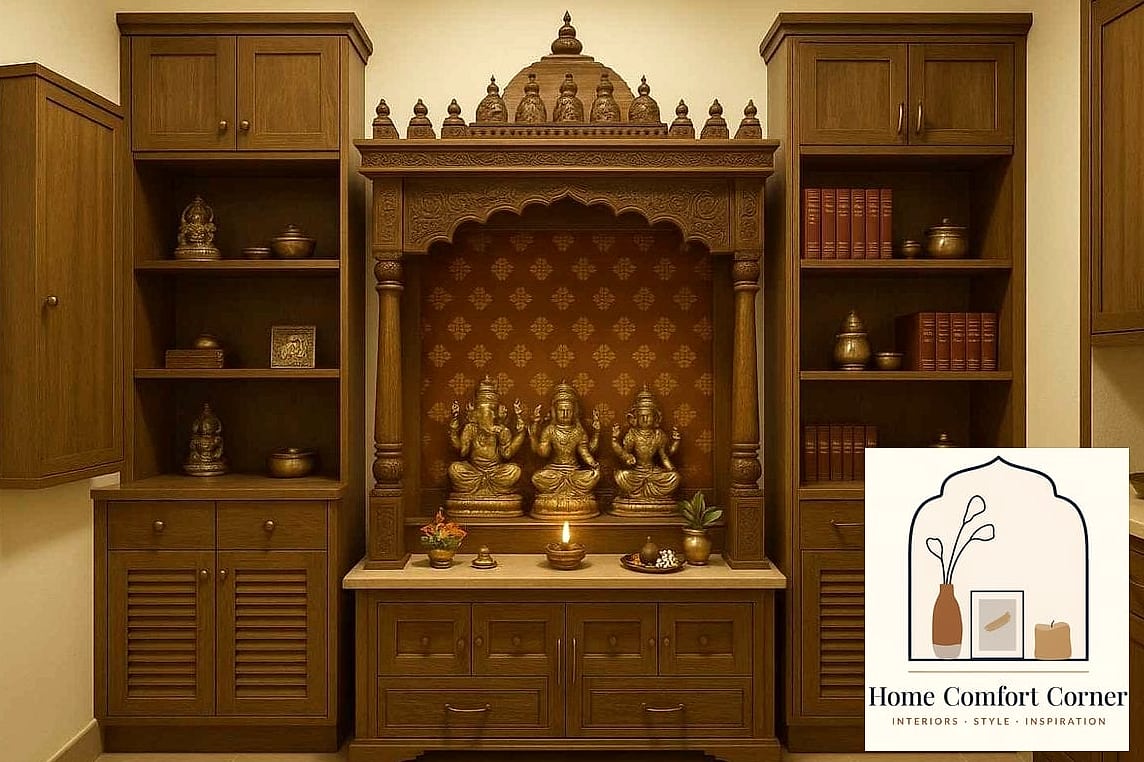
Practicality matters just as much as looks. Built-in drawers below the mandir platform keep incense sticks, matchboxes, extra diyas, and cotton wicks organized instead of cluttering the surface. Soft-close hardware keeps things quiet during use. This is especially handy for families who do daily rituals and need quick access to supplies without digging through a messy cabinet.
Wall Mural Backdrop Pooja Room
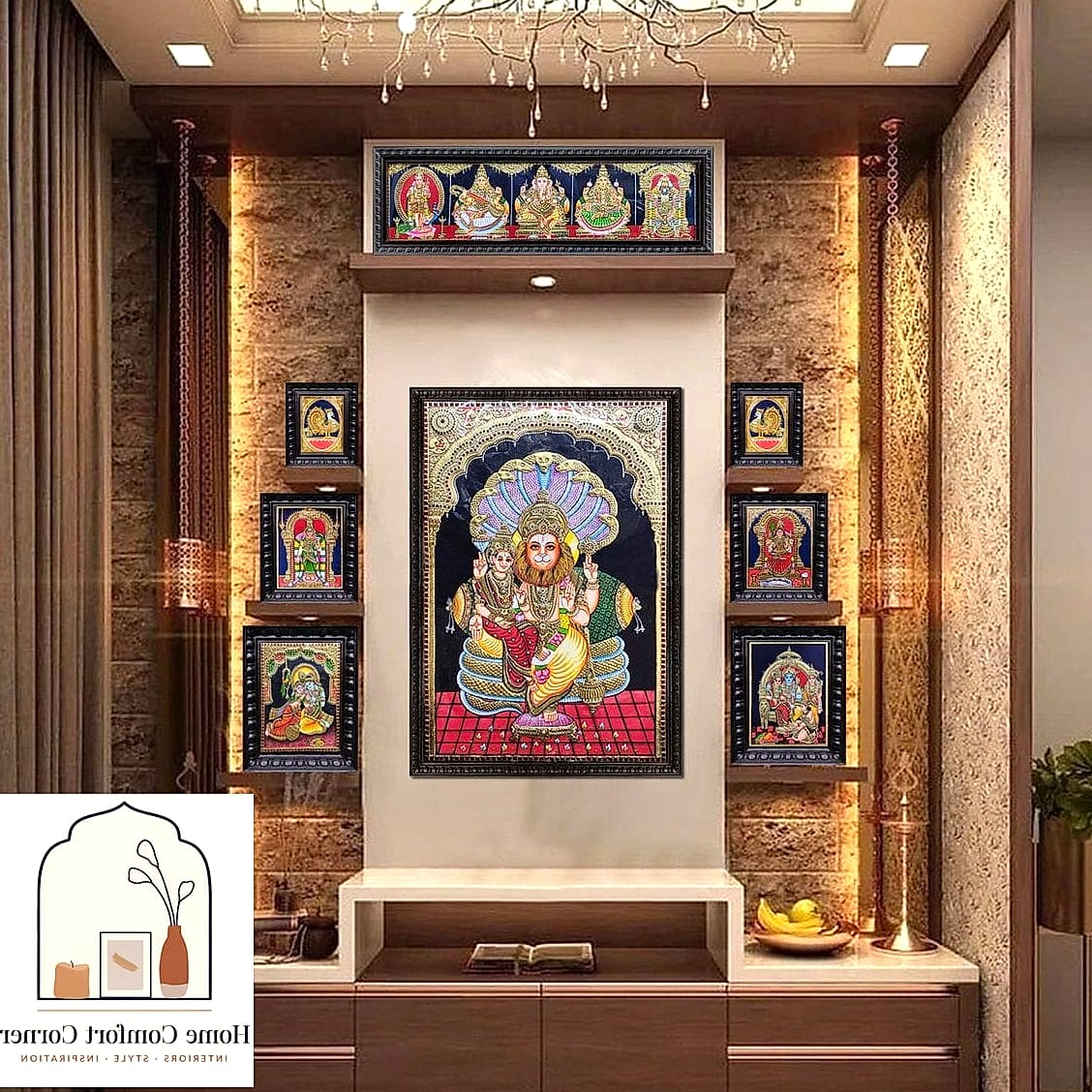
A hand-painted or wallpaper mural behind the mandir, showing lotus motifs, mandala patterns, or a temple silhouette, gives the space personality without needing elaborate carving work. This is one of the more budget-friendly ways to make a plain pooja corner feel intentional and designed. Peel-and-stick wallpaper options exist too, which makes this a solid choice for renters who can’t paint murals directly on walls.
Multi-Faith or Multi-Deity Modern Pooja Room
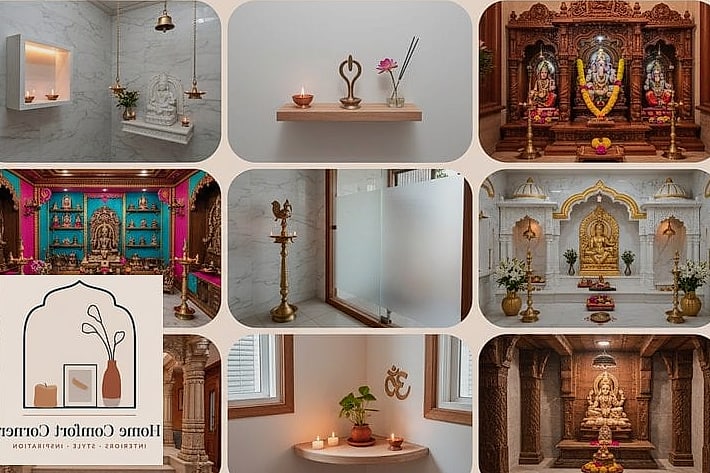
Bigger families often need to accommodate multiple deities or even multiple faiths under one roof. A wider mandir with tiered shelving and separate niches keeps everything organized instead of crowded together. Symmetry helps here, mirrored shelves on either side of a central idol create balance. This layout works best in a dedicated room rather than a small nook, simply because it needs more width.
Pooja Room with Integrated Seating
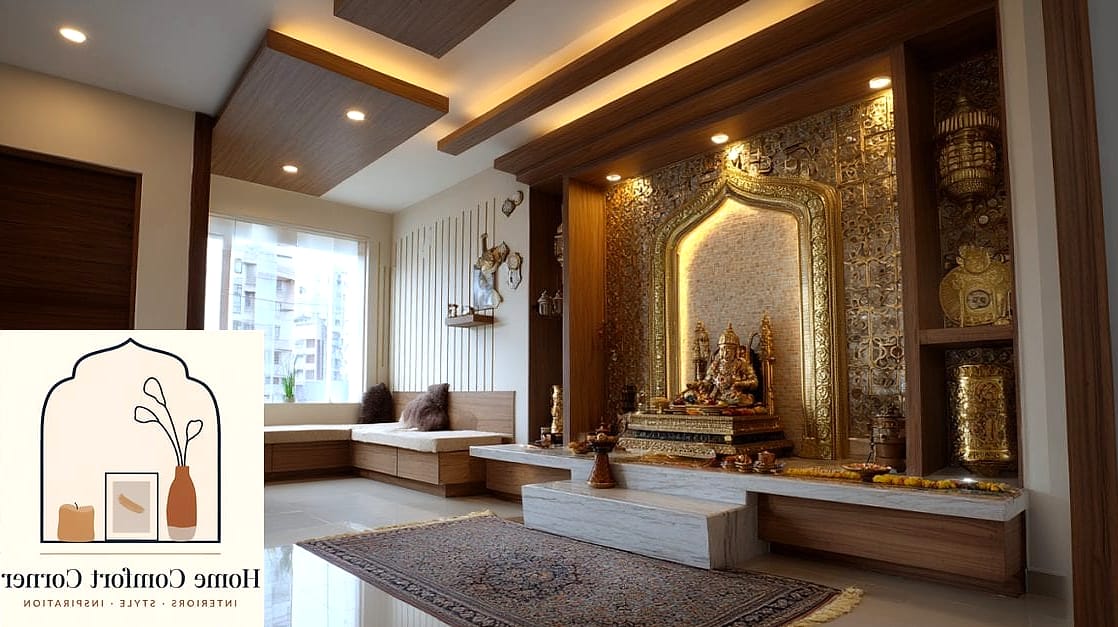
Adding a low wooden bench or floor cushion seating area in front of the mandir makes daily prayer more comfortable, especially for older family members. A built-in ledge finished in the same wood as the cabinet keeps things cohesive. This is a small addition that makes a big difference for families who spend more than a few minutes at a time in prayer.
Fully Enclosed Modern Pooja Cabinet
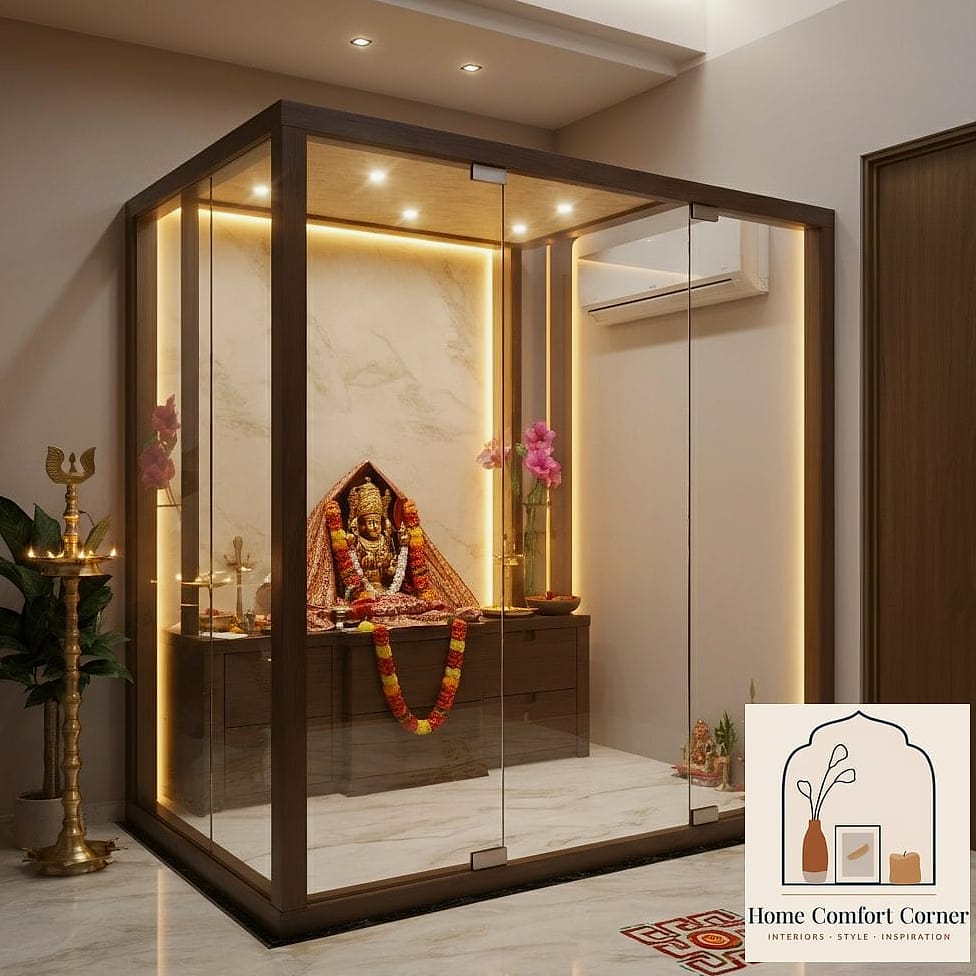
For homes where the pooja space needs to disappear when not in use, a cabinet with folding or bi-fold doors is the answer. Close it up and it looks like any other piece of furniture in the living room. Open it up and you’ve got a full mandir setup inside. This is a smart pick for open-concept homes or smaller apartments where a separate room simply isn’t in the cards.
Rooftop or Terrace Pooja Pavilion
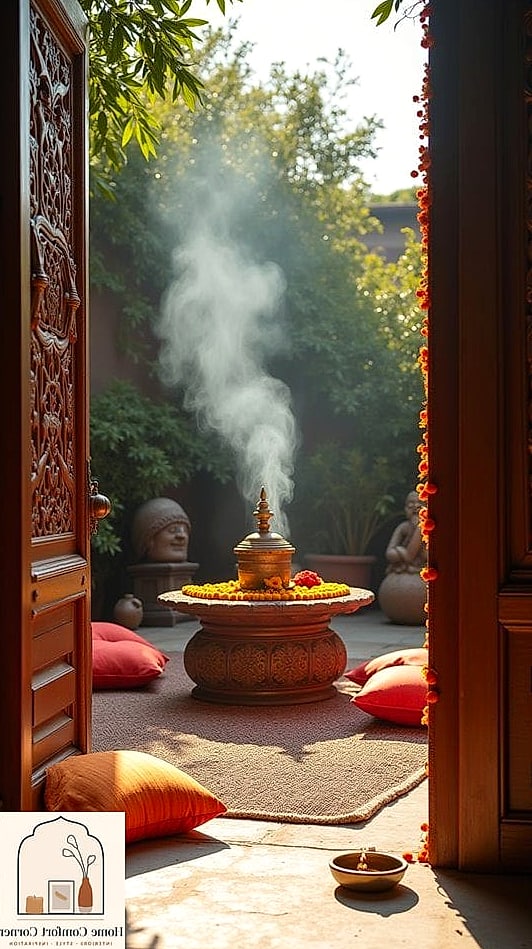
For homes with outdoor space, a small open-air pavilion on the terrace brings a different kind of serenity to daily rituals. A stone or wooden chatri-style canopy overhead protects against sun and light rain while keeping the space open to fresh air. This is more of a luxury option and needs weatherproof materials throughout, but it’s genuinely one of the most peaceful setups I’ve seen in person.
Building or updating a pooja room really comes down to matching the design to how your family actually uses the space day to day. Some of these ideas need a contractor and a real budget, others you can pull off in a weekend with basic tools. Either way, the goal is the same: a space that feels calm, personal, and genuinely yours every time you walk into it.