18 Mudroom Ideas Entryway Ideas That Will Transform Your Space
- Built-In Bench with Cubbies Below
- Wall-Mounted Hooks in a Row
- Herringbone Tile Flooring
- Open Shelving for Baskets and Bins
- Board and Batten Wall Treatment
- Shoe Storage Bench with Slatted Front
- Drop Zone Command Center
- Wallpapered Ceiling or Accent Wall
- Vintage Runner Rug
- Built-In Locker System
- Reclaimed Wood Accents
- Pet Supply Station
- Statement Lighting Fixture
- Chalkboard or Corkboard Wall
- Built-In Bootjack or Boot Tray Area
- Two-Tone Cabinetry
- Glass-Front Cabinets for Display
- Layered Rugs and Greenery
18 Mudroom Ideas Entryway Ideas That Will Transform Your Space
Your entryway is the first thing you see when you walk in and the last thing you see before you leave, so it makes sense to actually put some thought into it. A well-planned mudroom keeps shoes, coats, bags, and random clutter from taking over your living room, and it sets the tone for the rest of your home. Whether you’ve got a dedicated mudroom or just a small entry closet to work with, these 18 mudroom ideas entryway ideas will help you create a space that’s both functional and genuinely nice to look at.
Built-In Bench with Cubbies Below
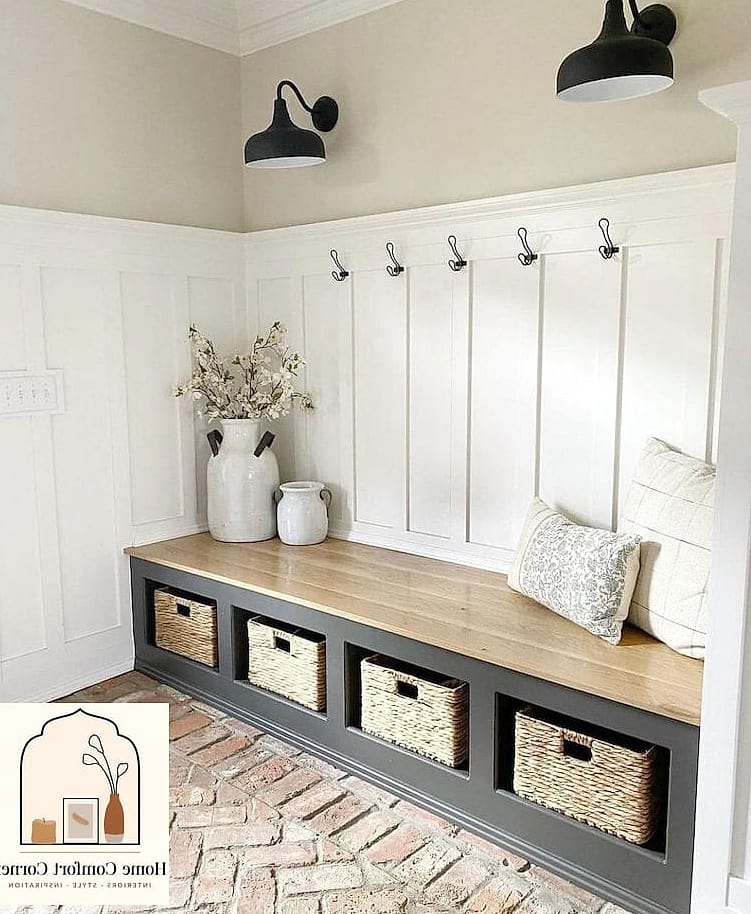
This is the classic mudroom setup for a reason. A built-in bench gives everyone a spot to sit and pull off their shoes, while the open cubbies underneath keep individual pairs organized instead of piled in a heap.
It works especially well in family homes where each person can claim their own cubby. Add a wood or upholstered cushion on top for comfort, and you’ve got a spot that’s practical and inviting. Painted wood in a soft sage or navy adds character without going overboard.
Wall-Mounted Hooks in a Row
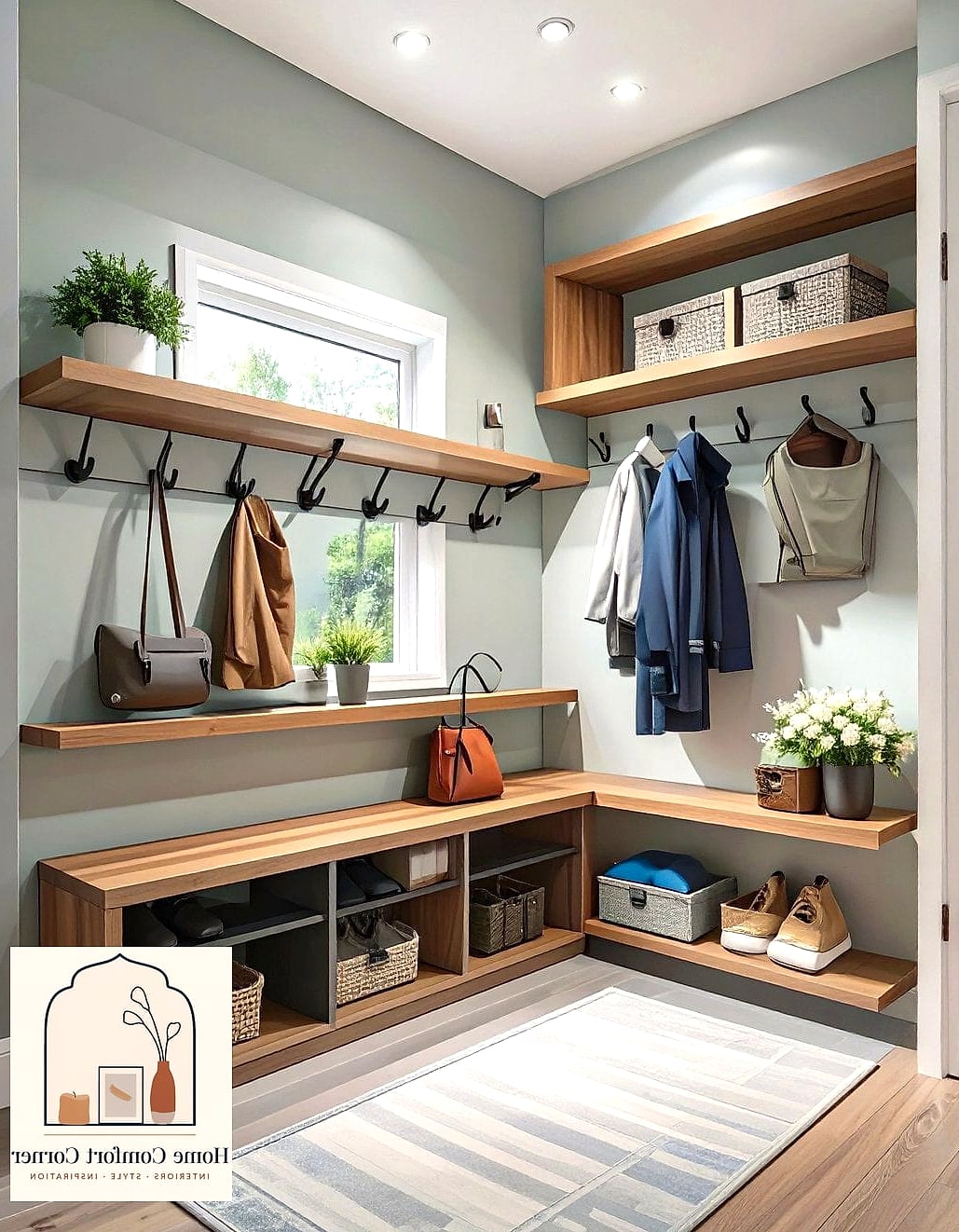
Sometimes the simplest solution is the best one. A row of matching hooks mounted at varying heights gives everyone in the house a place to hang coats, backpacks, and bags without digging through a closet.
Brushed brass or matte black hooks look great against a painted wall and are easy to install yourself over a weekend. This is a renter-friendly option too, since many hooks can be mounted with minimal wall damage or removed later.
Herringbone Tile Flooring
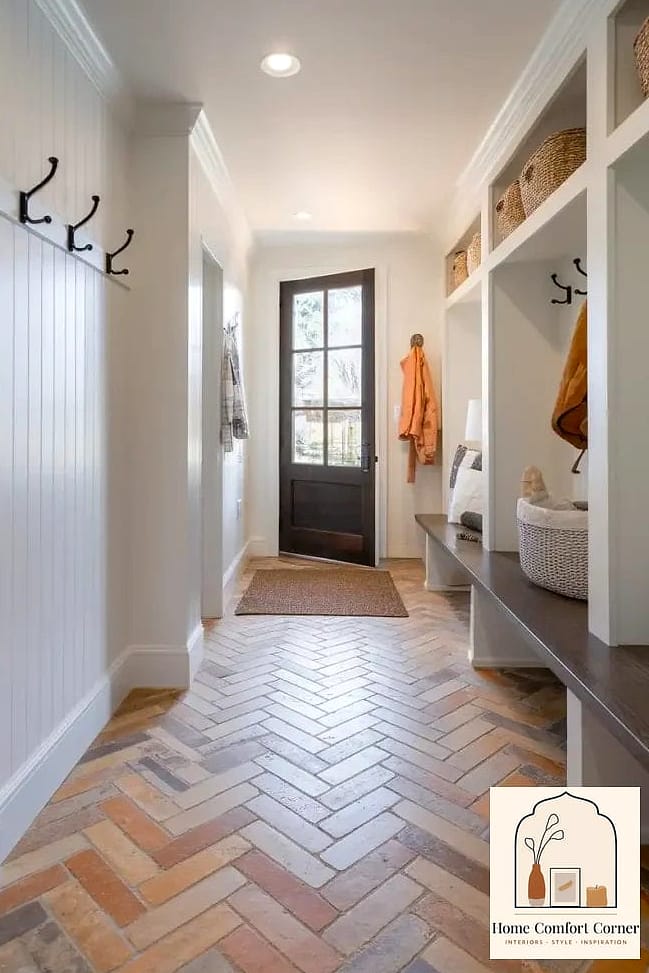
Mudrooms take a beating from wet boots, muddy paws, and dropped umbrellas, so flooring matters more here than almost anywhere else in the house. Porcelain tile laid in a herringbone pattern brings in visual interest while standing up to daily traffic.
Go with a warm terracotta or classic black-and-white combo depending on your style. Porcelain resists moisture and stains far better than wood, and it’s easy to wipe down after a rainy day.
Open Shelving for Baskets and Bins
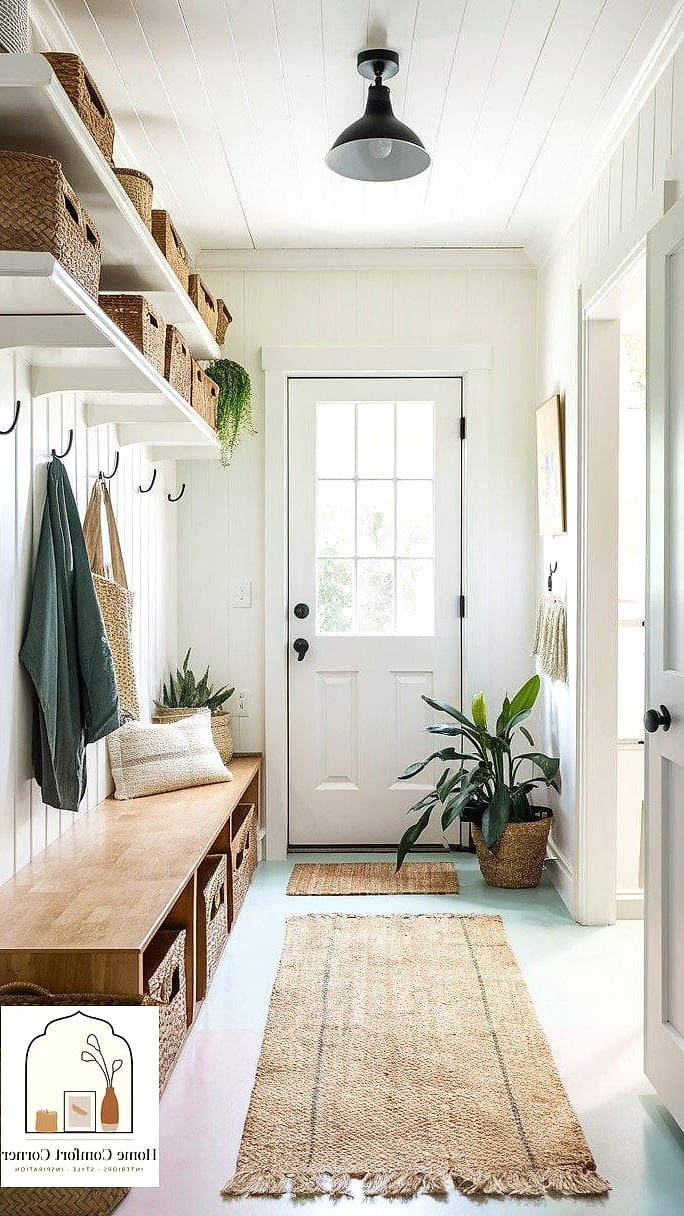
Open shelving above or beside a bench gives you a spot to stash baskets and bins for things like gloves, hats, and dog leashes. It’s a system that keeps small items contained without needing a closed cabinet.
Woven baskets add texture and warmth, while labeled bins help kids (and adults) actually put things back where they belong. This setup is also budget-friendly since you can find shelving brackets and baskets at almost any home store.
Board and Batten Wall Treatment
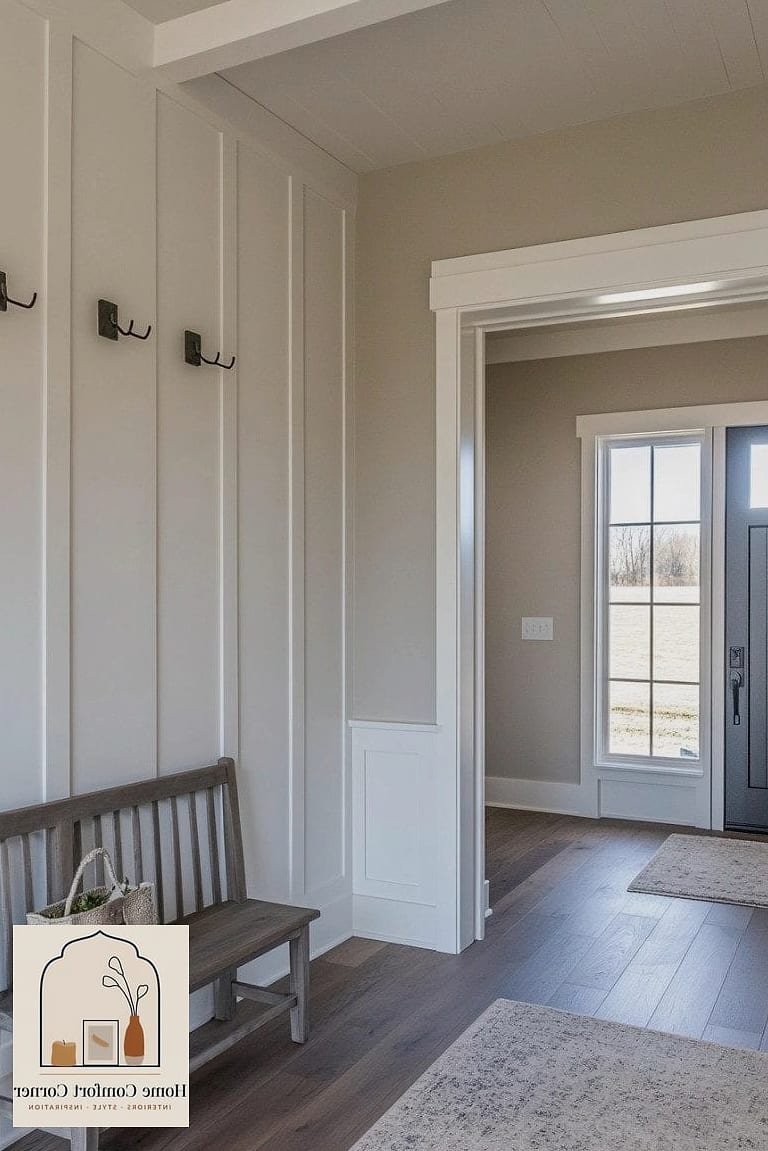
Board and batten paneling instantly makes a plain entryway feel more custom, and it pairs beautifully with hooks or a bench. The vertical lines add architectural interest to a space that might otherwise just be a hallway.
Paint it a deep color like hunter green or charcoal for drama, or keep it white for a classic farmhouse look. This is a moderate DIY project, but plenty of homeowners tackle it themselves with basic tools and a weekend of patience.
Shoe Storage Bench with Slatted Front
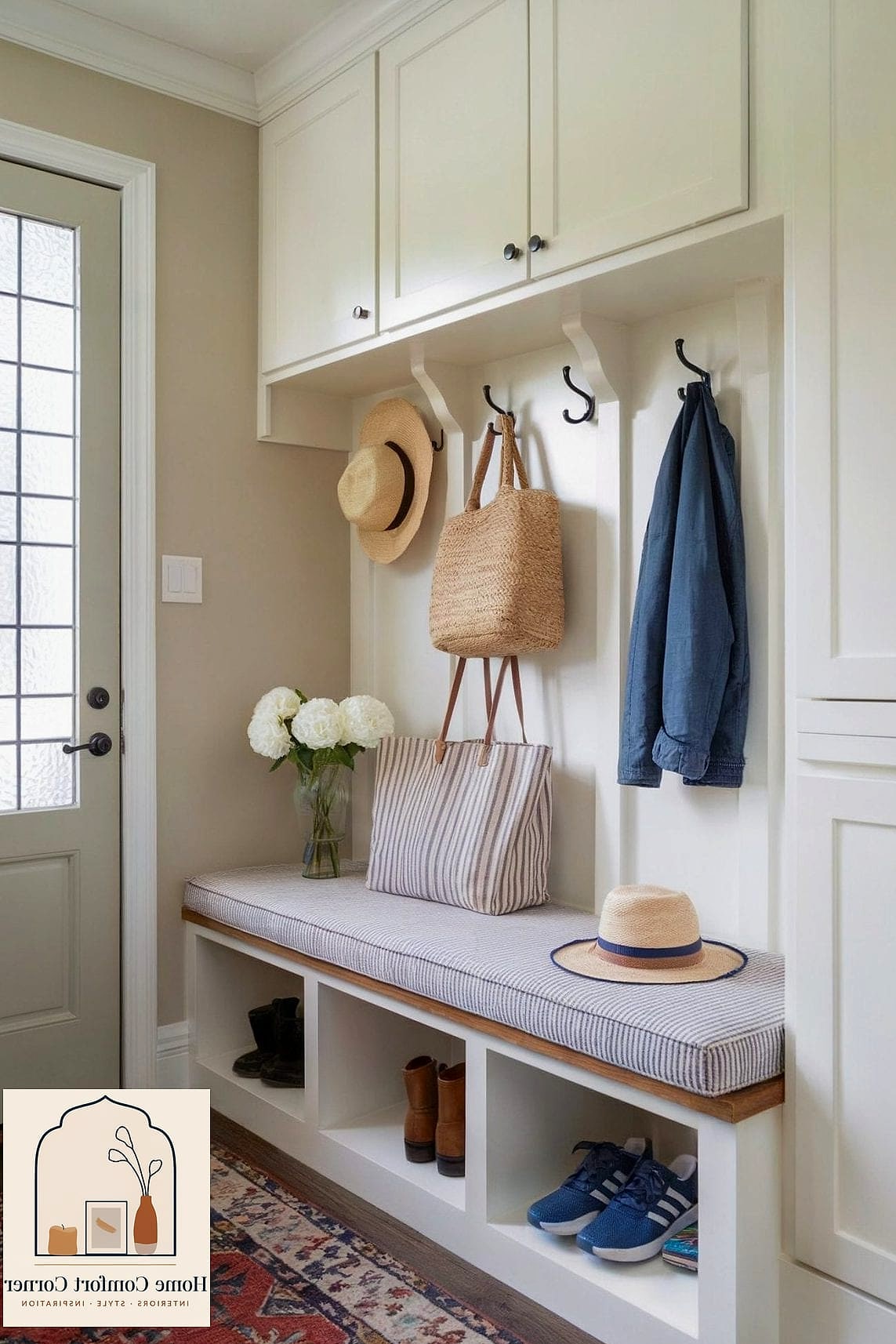
If shoes are your biggest clutter culprit, a bench with a slatted or louvered front designed specifically for shoe storage solves that problem fast. Shoes slide in underneath while the top doubles as seating.
This option works well in smaller entries where floor space is limited. Look for versions with adjustable shelves so you can fit boots in winter and sandals in summer without rearranging everything.
Drop Zone Command Center
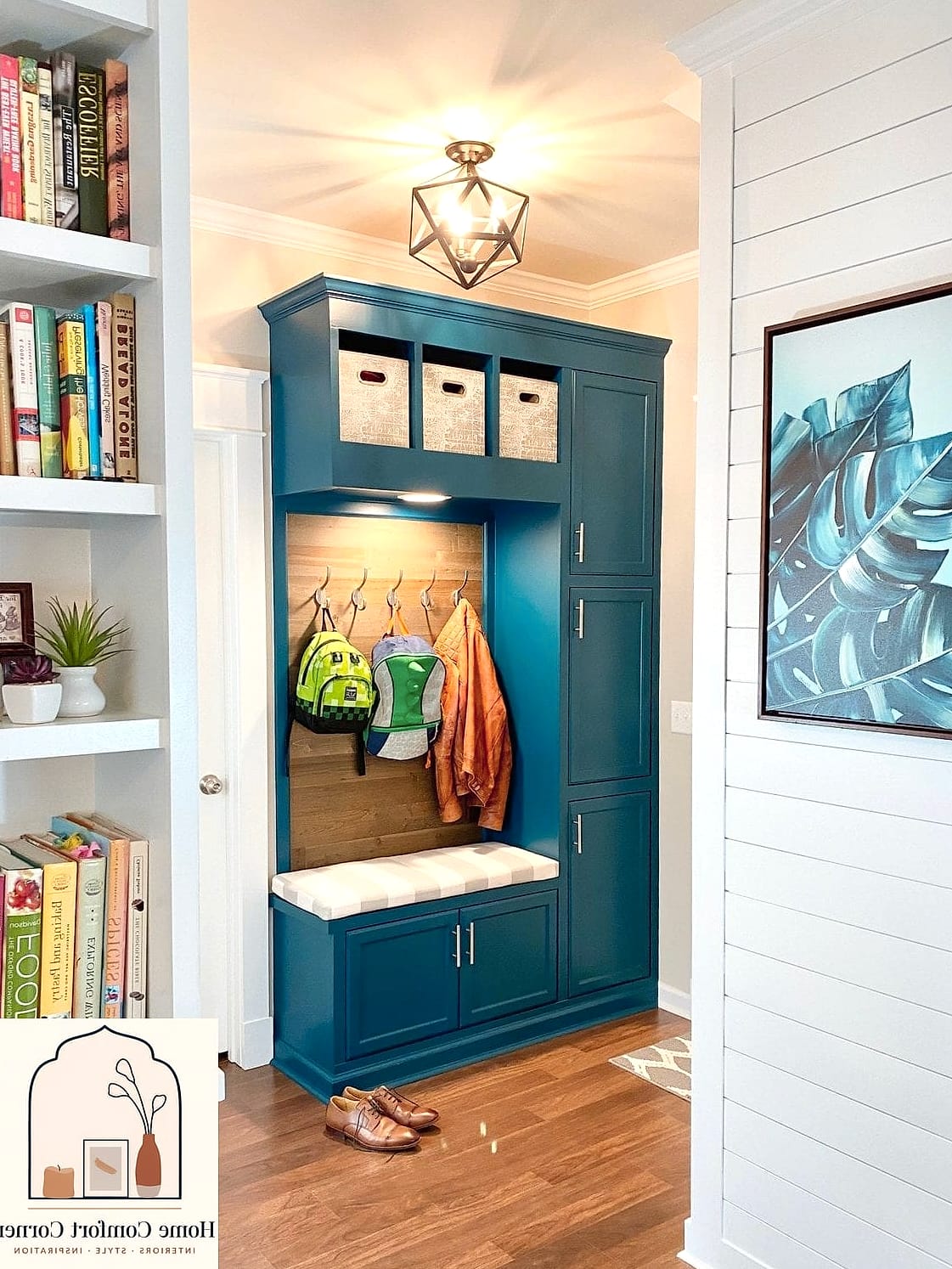
Beyond coats and shoes, most households need a spot to catch keys, mail, and daily essentials. A small wall-mounted organizer with a mirror, mail slots, and a key hook creates what a lot of organizers call a drop zone.
This is one of those upgrades that instantly makes a chaotic entry feel more under control. Add a small chalkboard or whiteboard section for family reminders, and you’ve got a genuinely useful little command center.
Wallpapered Ceiling or Accent Wall
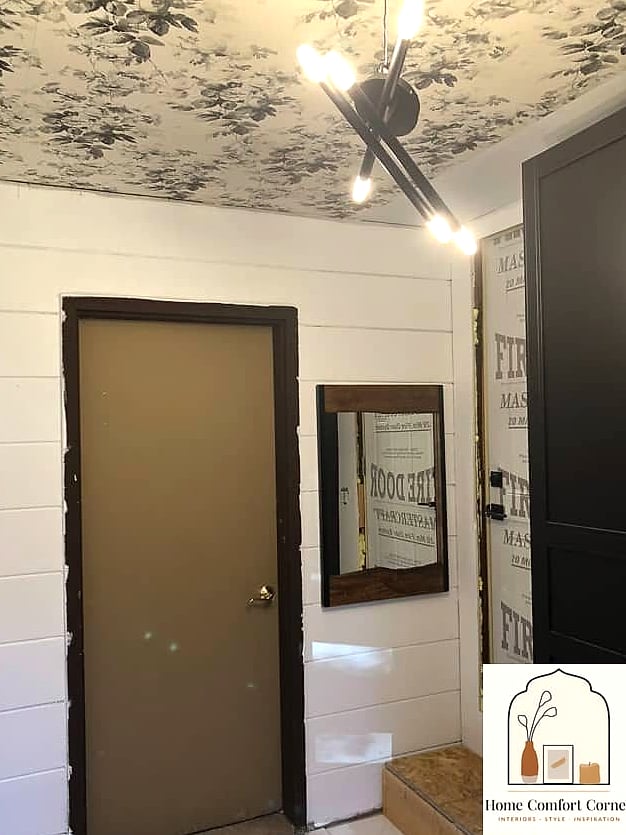
Mudrooms are a great place to take a wallpaper risk since it’s a smaller, more contained space than a living room or bedroom. A bold botanical print or geometric pattern on the ceiling or a single accent wall adds personality fast.
Peel-and-stick wallpaper is a great option here if you’re renting or just don’t want a long-term commitment. It’s an easy afternoon project that makes a huge visual difference.
Vintage Runner Rug
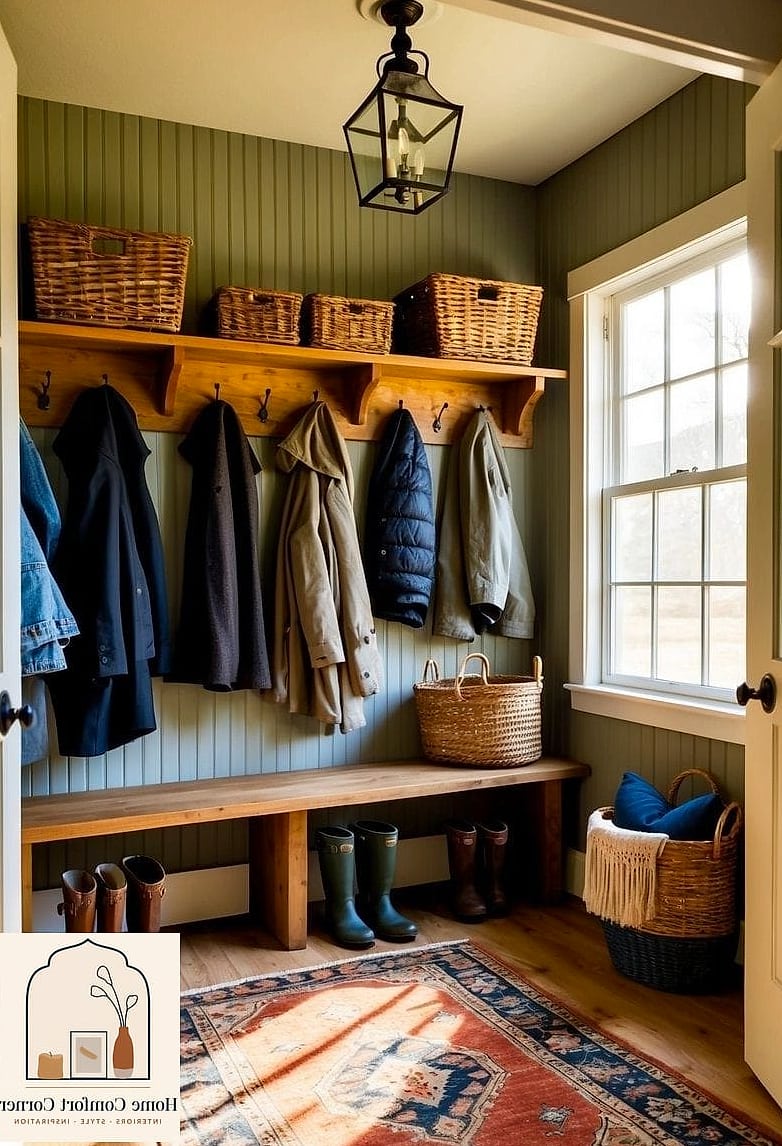
A patterned runner rug adds warmth underfoot and helps define the entry space, especially if it flows into an open-plan area. Vintage-style or Persian-inspired rugs in deep reds and blues hide dirt better than solid light colors.
Look for a low-pile option that’s easy to vacuum and won’t bunch up near doors. This is a simple swap that changes the whole feel of the entry without any construction involved.
Built-In Locker System
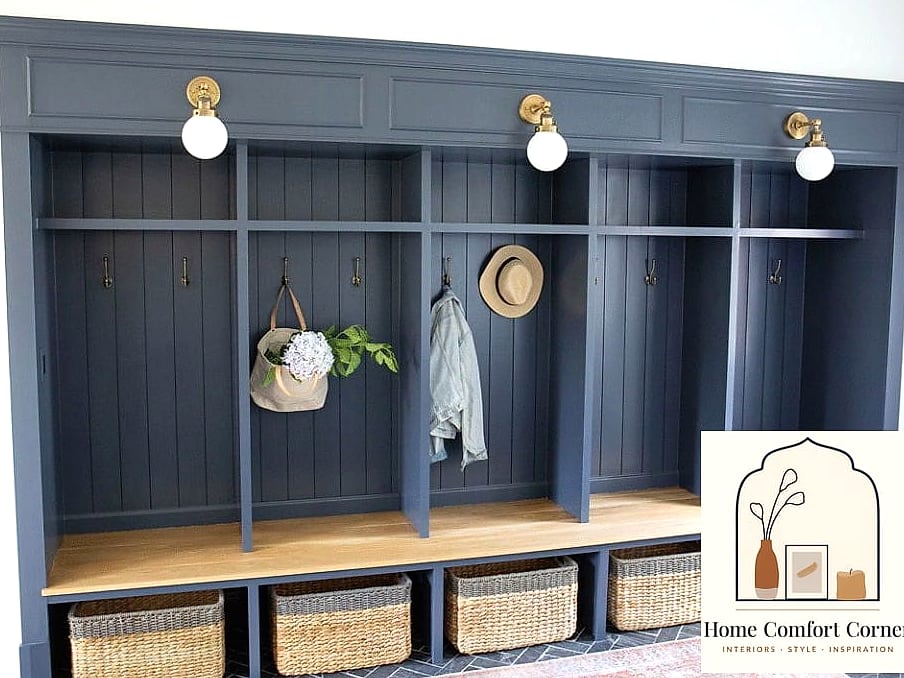
For larger mudrooms, a locker-style setup with individual compartments gives each family member their own dedicated space, similar to a school locker room but styled for home. Each locker typically includes a hook, a shelf, and sometimes a small door.
This is more of an investment piece, often custom-built or ordered as a modular system, but it’s incredibly effective for keeping a busy household organized. Painted a soft white or two-tone finish, it looks polished rather than institutional.
Reclaimed Wood Accents
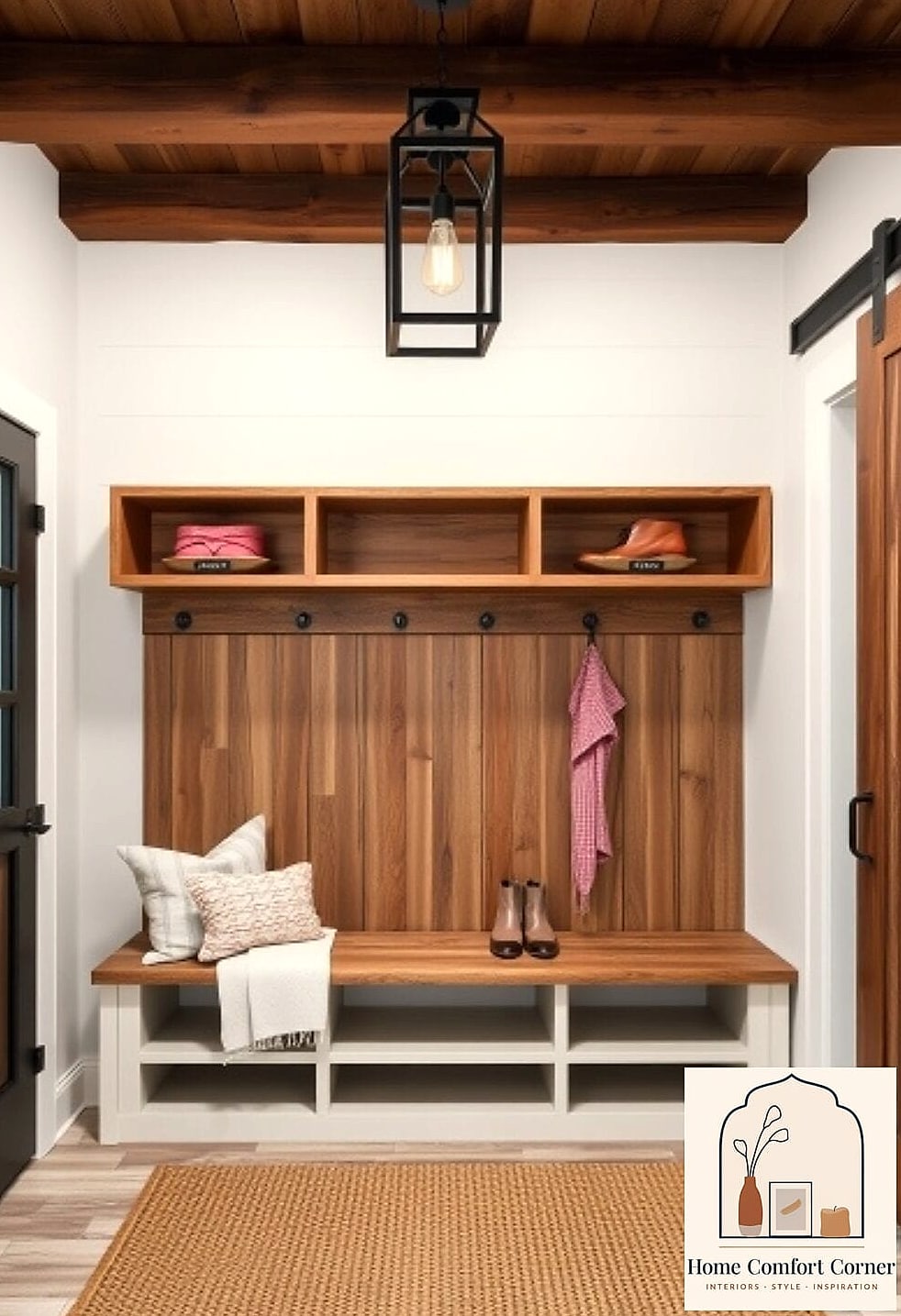
Reclaimed wood beams, shelves, or wall paneling bring warmth and texture into what can otherwise be a pretty utilitarian space. The natural grain and imperfections add character that new lumber just can’t replicate.
This pairs nicely with black metal hardware or brushed brass for contrast. It’s a great option if your home leans farmhouse, rustic, or industrial, and it’s a good way to work in sustainable materials if that matters to you.
Pet Supply Station
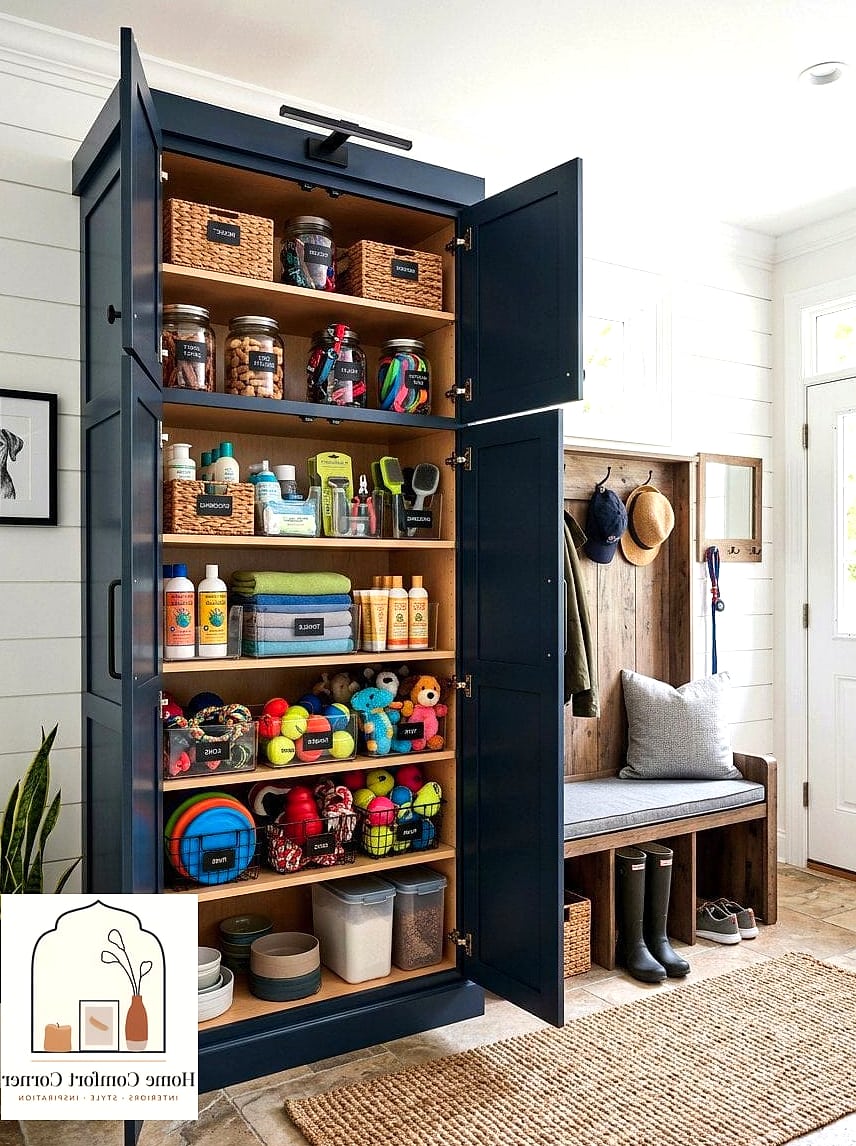
If you’ve got a dog or cat, dedicating a small corner of the mudroom to pet gear keeps leashes, food bowls, and towels out of the main living space. A built-in feeding nook or a simple shelf with labeled bins works well here.
Add a hook specifically for the leash so it’s never a scramble to find before a walk. Washable mats underneath food bowls make cleanup quick, which matters a lot more than it sounds like it would.
Statement Lighting Fixture
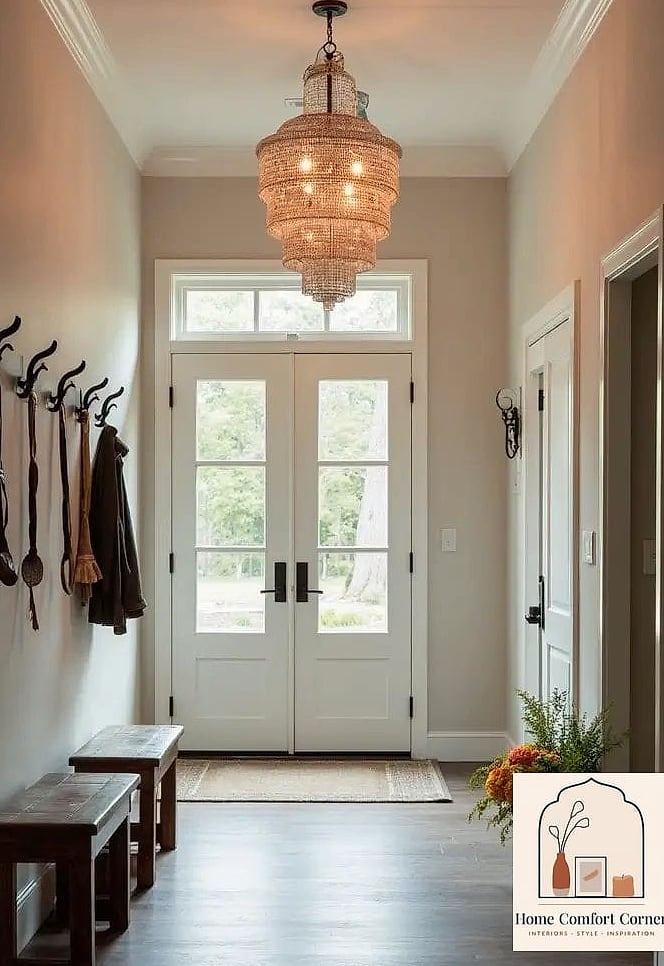
Entryways often get overlooked when it comes to lighting, but a statement fixture here sets the mood the second someone walks in. A pendant light or small chandelier adds a touch of unexpected elegance to a functional space.
Layered lighting, meaning a mix of overhead and task lighting near a mirror or bench, makes the space more usable in early mornings or evenings. Warm-toned bulbs feel more welcoming than stark white light.
Chalkboard or Corkboard Wall
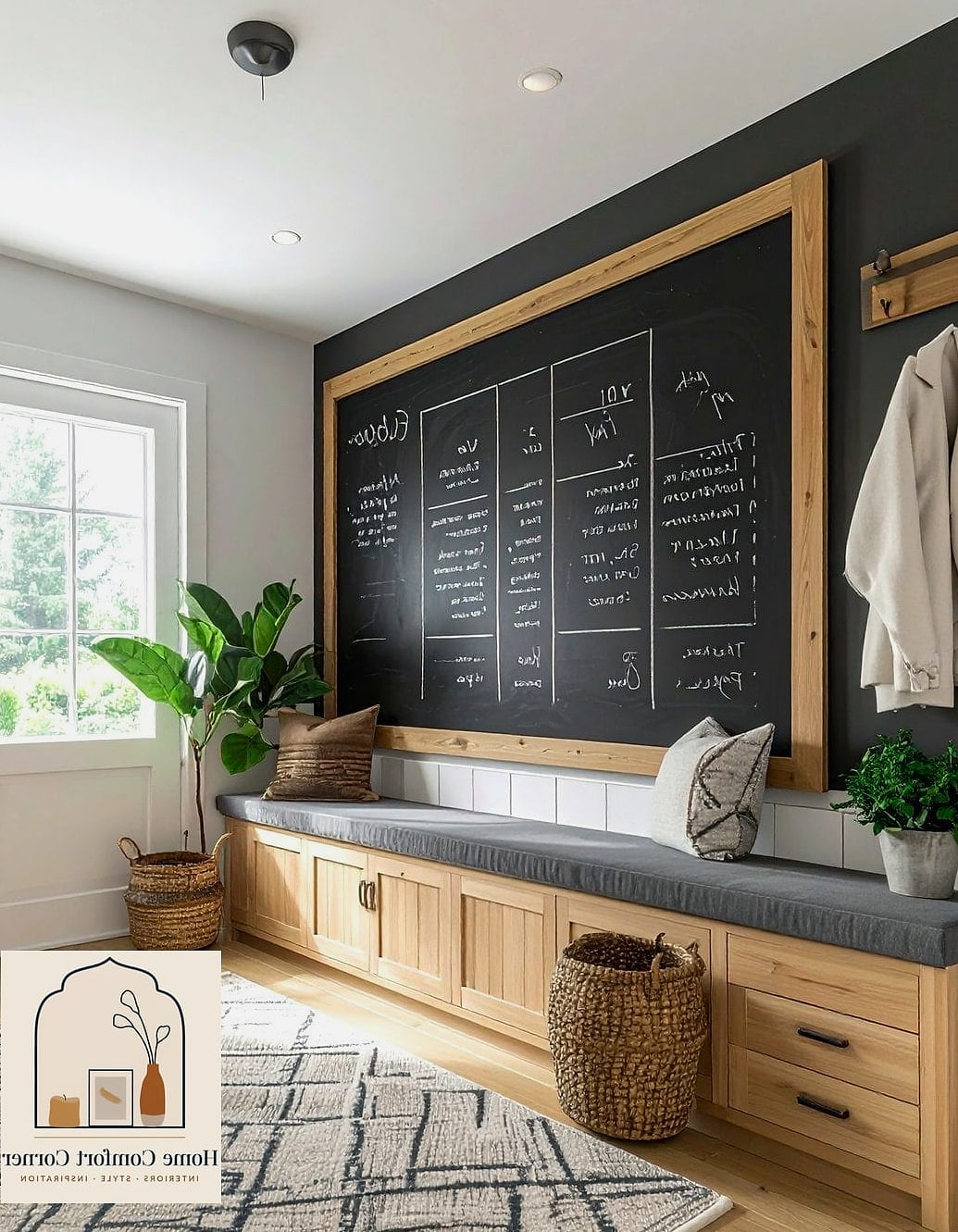
A dedicated wall for notes, reminders, and kids’ artwork keeps the important stuff visible without cluttering the fridge. Chalkboard paint is inexpensive and can cover an entire wall or just a small framed section.
Corkboard works similarly and is great for pinning up school schedules or takeout menus. Either option adds a functional, slightly playful element to the space.
Built-In Bootjack or Boot Tray Area
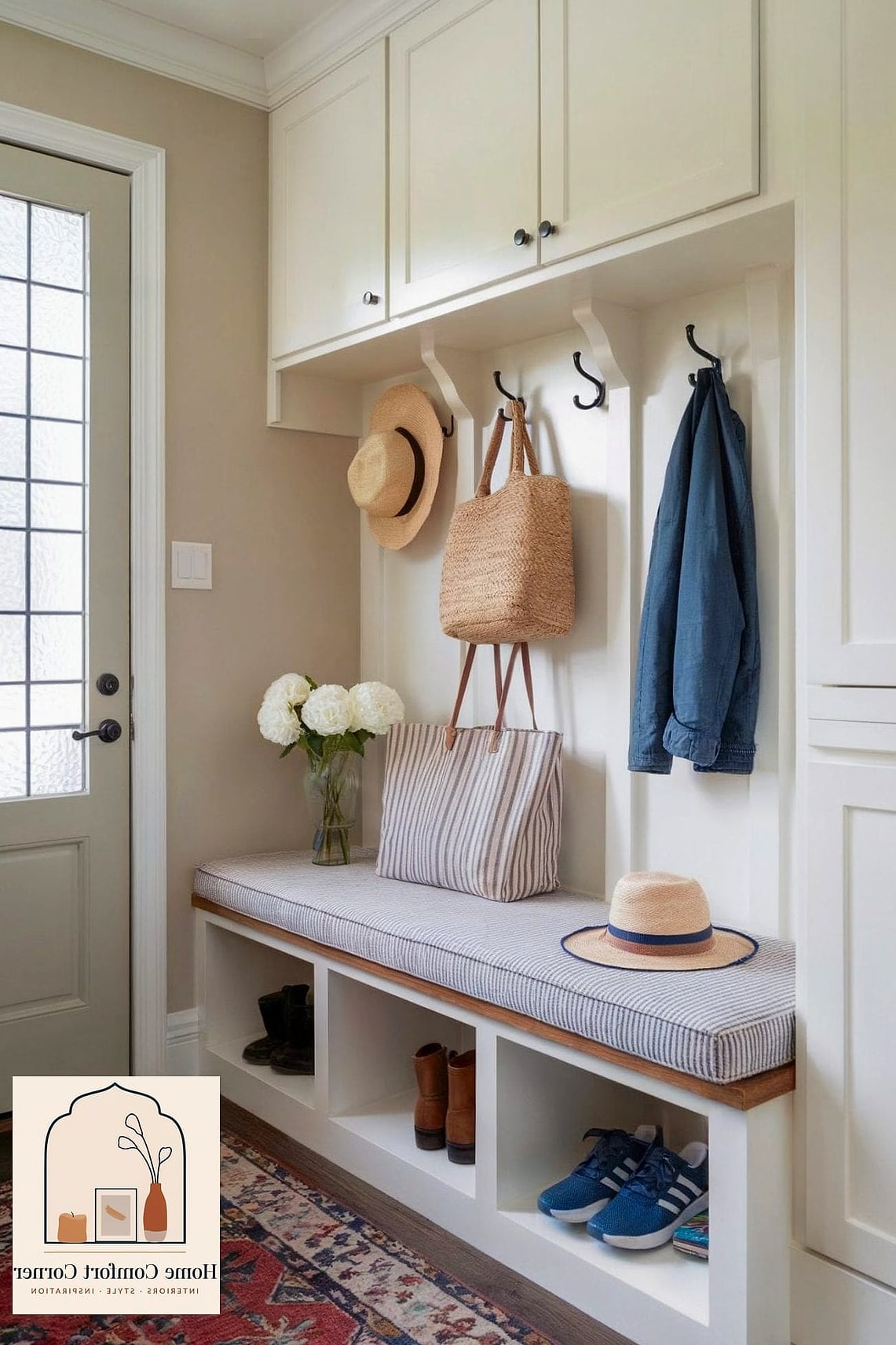
For homes in snowy or rainy climates, a designated boot area saves your floors from constant water damage. A boot tray or built-in slatted platform lets boots dry without soaking into the flooring underneath.
Pair it with a small stool for easy on-and-off, plus a nearby hook for wet umbrellas. This is a small addition that makes a noticeably big difference during muddy seasons.
Two-Tone Cabinetry
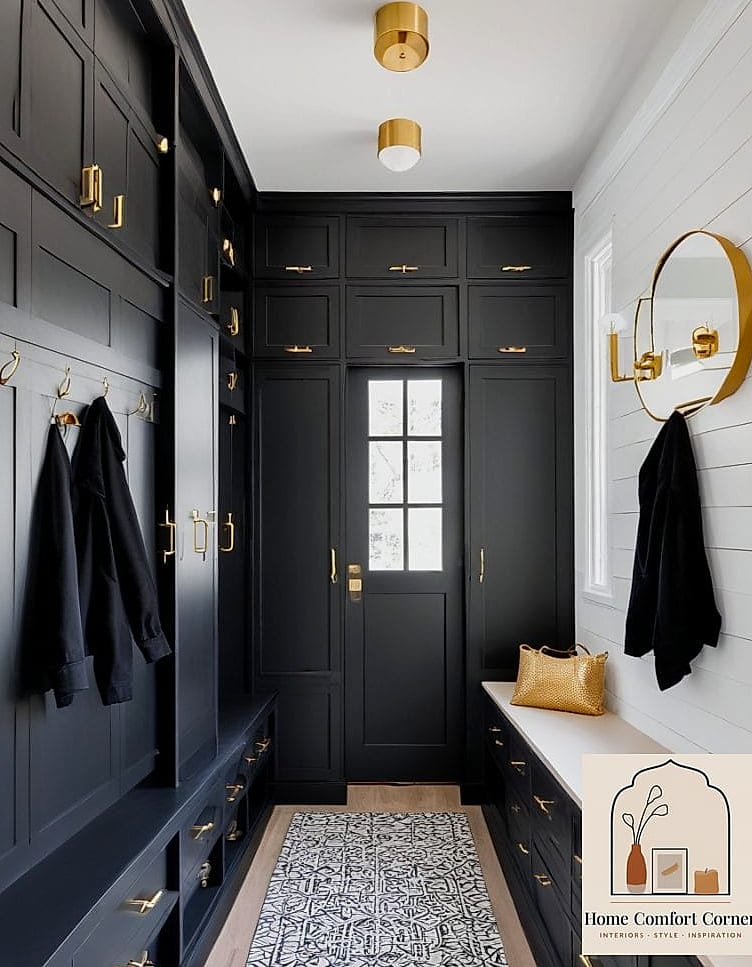
Mixing two paint colors on your mudroom cabinetry, like a darker base with a lighter upper section, adds dimension without overwhelming a small space. It’s a trend that’s shown up a lot in kitchens and it translates really well to entryways too.
Try navy on the bottom cabinets with a soft cream on top, or go moodier with black and warm wood tones. Quartz or butcher block countertops on top of a bench area give you a spot to set down bags or mail.
Glass-Front Cabinets for Display
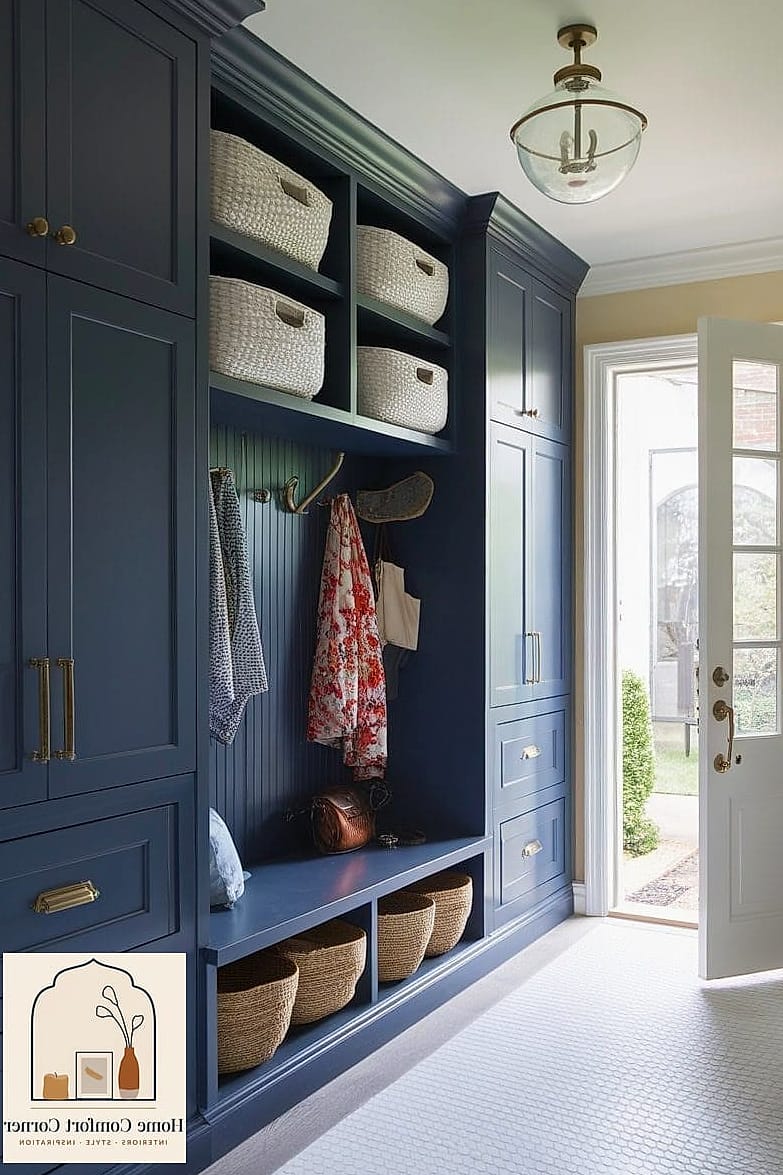
If you want your mudroom to feel a bit more elevated, glass-front upper cabinets let you display baskets, books, or decorative items while still keeping them protected from dust. It’s a nice middle ground between open shelving and fully closed storage.
This works especially well in mudrooms that double as a butler’s pantry or laundry entry. Frosted or reeded glass adds a bit of texture if you don’t want everything fully visible.
Layered Rugs and Greenery
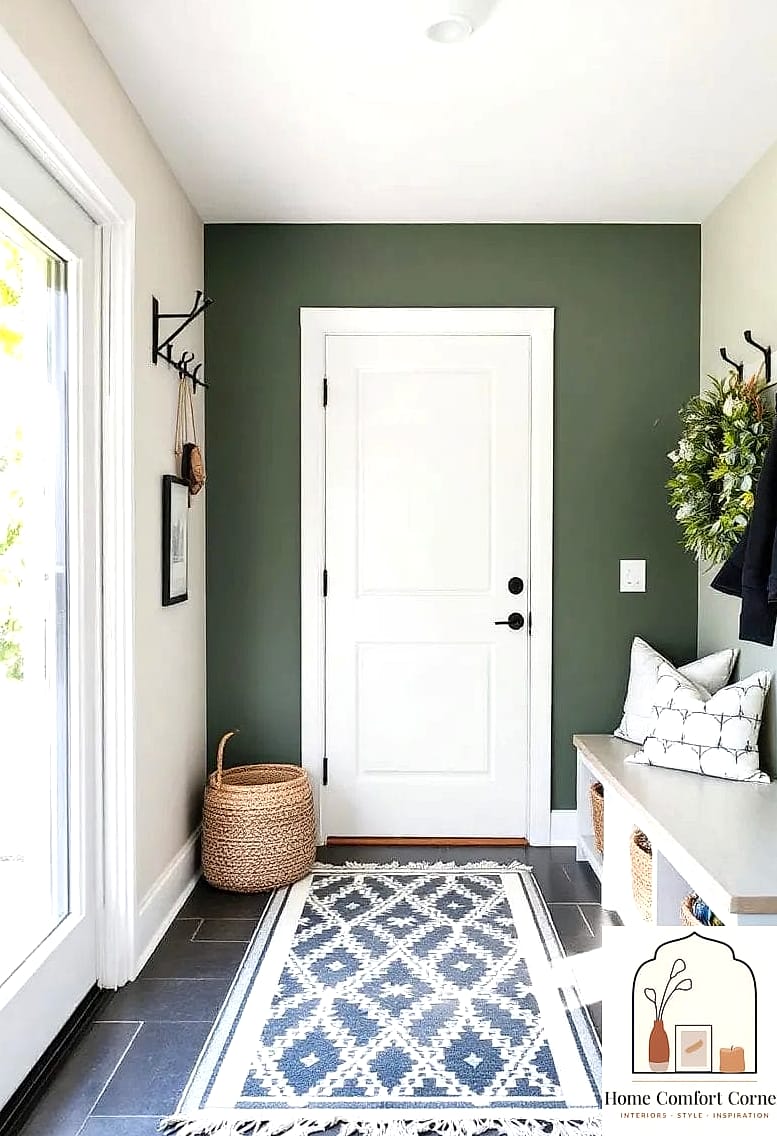
Finishing touches make a big difference in how finished a mudroom actually feels. Layering a smaller accent rug over a larger jute or sisal rug adds texture, while a simple potted plant or two brings some life into what’s often a purely functional room.
Low-maintenance plants like pothos or snake plants handle the temperature swings near an entry door better than more delicate varieties. It’s a small styling move, but it makes the whole space feel considered rather than just practical.
Whichever combination of these ideas fits your home and your budget, the goal is the same: a space that helps everyone get in and out the door without losing their mind looking for a missing shoe. Start with the storage basics that solve your biggest daily headache, then layer in the styling details as you go. Small changes, like adding hooks or a runner rug, can make a noticeable difference even before you tackle a bigger project like built-in lockers or board and batten walls.