19 Playroom Ideas Looks We’re Obsessed With This Year

- Soft Neutral Walls with a Bold Accent Ceiling
- Built-In Window Bench with Hidden Storage
- Open Shelving Styled Like a Boutique
- Climbing Wall Built Into a Playroom Corner
- Vintage Rug Layered Over Soft Carpet Tiles
- Pegboard Wall for Endless Reconfiguration
- Reading Nook with a Canopy or Tent
- Chalkboard or Whiteboard Accent Wall
- Toy Storage Disguised as Furniture
- Color-Coded Bin System with Labels
- Faux Grass Rug for an Indoor Picnic Vibe
- Gallery Wall of Kids’ Own Artwork
- Play Kitchen Styled Like a Real One
- Ceiling-Mounted Swing or Hammock Chair
- Art Station with a Dedicated Water Source or Easel
- Nature-Inspired Palette with Wood and Greenery
- Loft or Platform Bed Doubling as Play Space
- Interactive Learning Wall with Magnetic Panels
- Cozy Layered Lighting Instead of One Overhead Fixture
19 Playroom Ideas Looks We’re Obsessed With This Year
If you’ve been putting off giving the kids’ space a real design refresh, this is your sign. Playrooms have come a long way from plastic bins shoved in a corner. These days they’re getting the same thoughtful treatment as living rooms and kitchens, and honestly, it shows. I pulled together 19 playroom ideas looks we’re obsessed with this year, and every single one balances style with the reality of daily chaos, because let’s be real, that’s what actually matters when kids are involved.
Soft Neutral Walls with a Bold Accent Ceiling
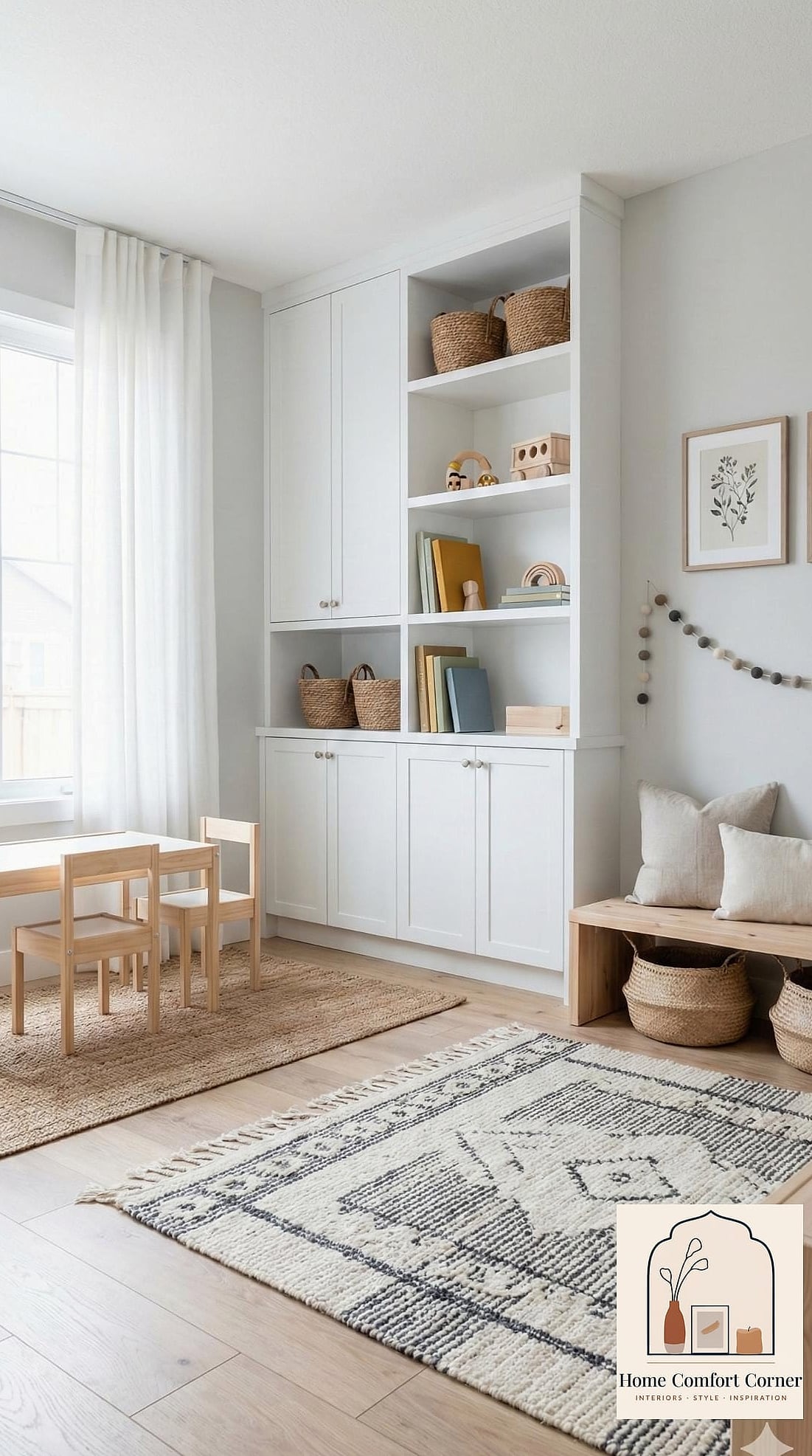
Painting the ceiling has become one of my favorite tricks for playrooms, and it’s such a low-lift way to add personality. Keep the walls a warm neutral like oatmeal or soft greige so toys and art pop against them, then go bold overhead with a color like terracotta, sage, or even a deep navy.
This works especially well in playrooms with lower ceilings because it draws the eye up without feeling heavy. It’s also a great option for renters since most of the color commitment lives somewhere less permanent than the walls. A gallon of ceiling paint runs you maybe $40, so it’s a budget-friendly way to make the room feel intentional.
Built-In Window Bench with Hidden Storage
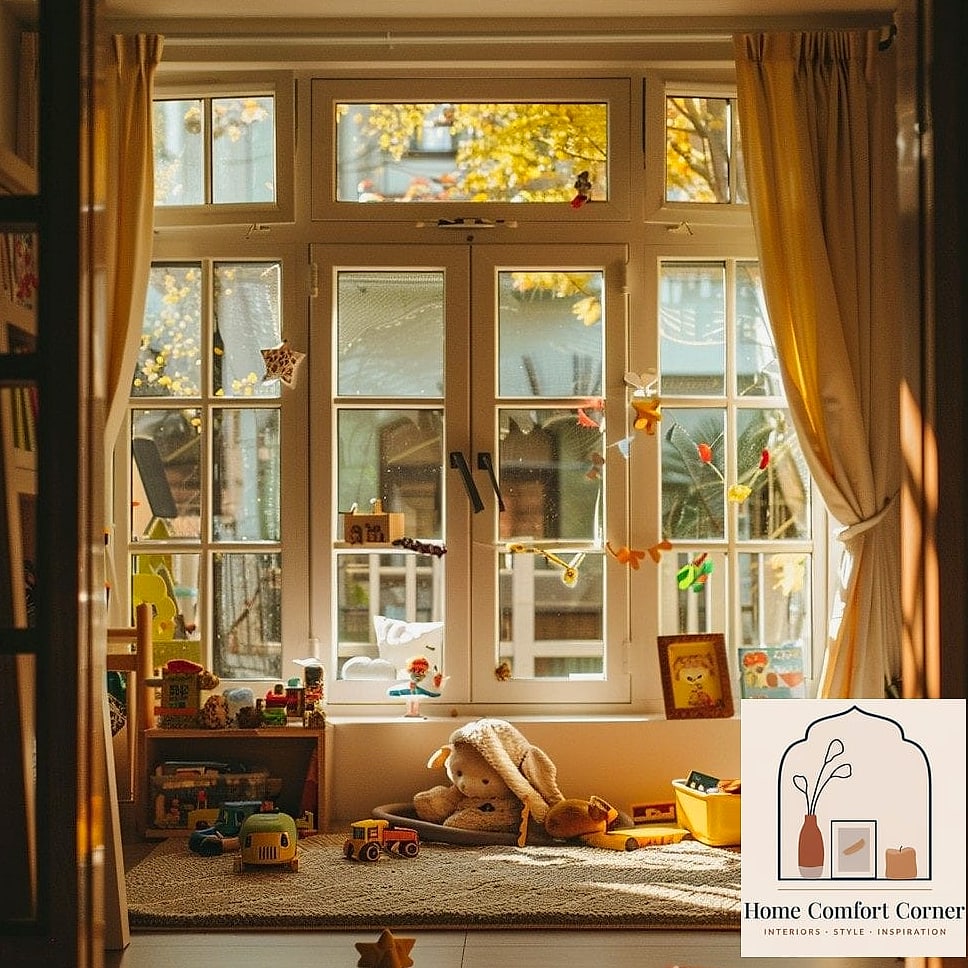
A built-in bench under a window does double duty as seating and storage, and it’s one of those upgrades that instantly makes a playroom feel more custom without requiring a full renovation. Lift-top benches with hinged lids are great for stashing bulky toys, while drawer-style benches work better for frequently used items.
This is a smart choice for smaller playrooms where floor space is tight, since it eliminates the need for a separate toy chest. Cushion the top in a durable, wipeable fabric and you’ve got a reading nook that also swallows up clutter. It’s not the easiest DIY, but a handy homeowner can pull it off in a weekend with basic lumber and a Kreg jig.
Open Shelving Styled Like a Boutique
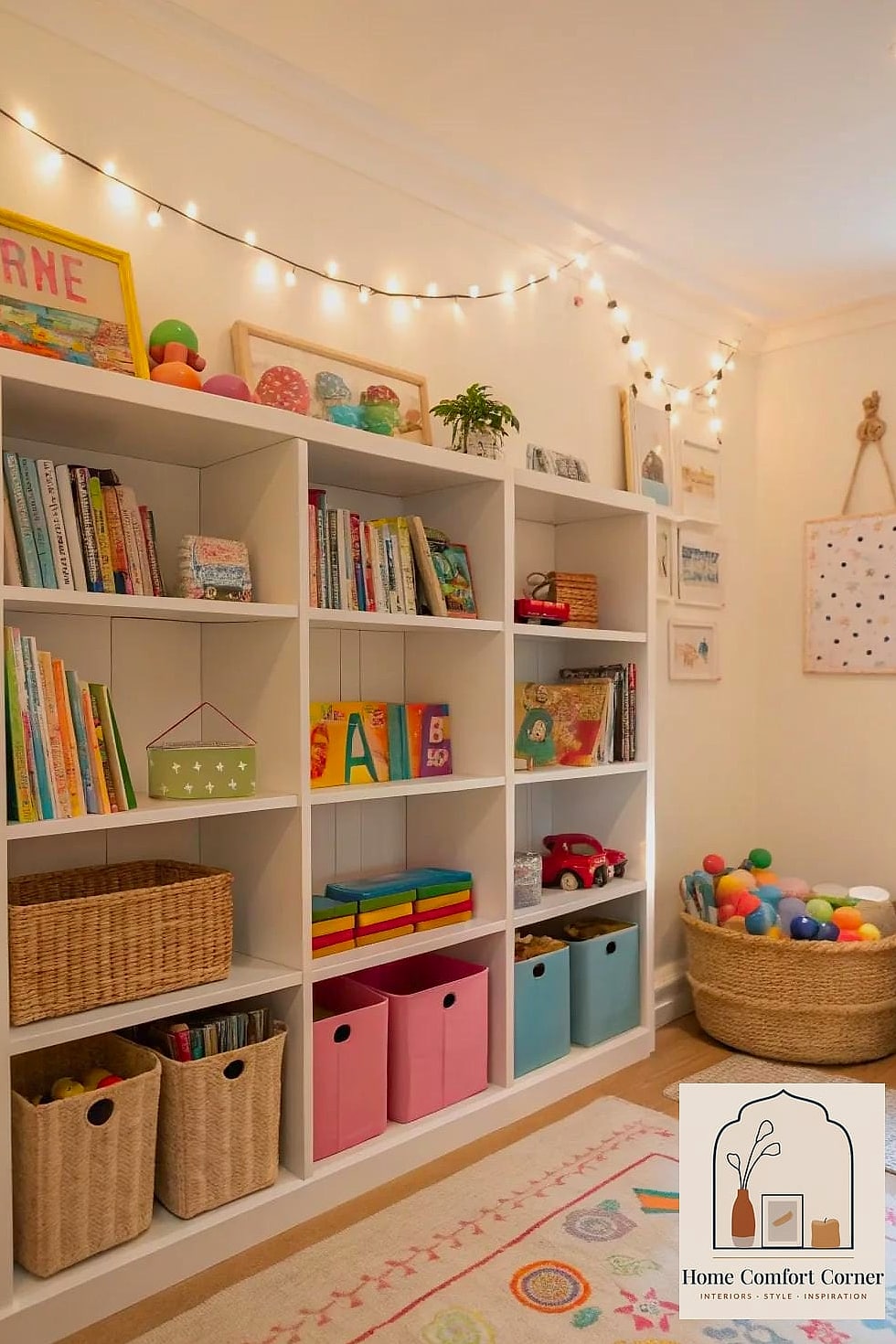
Open shelving gets a bad rap in playrooms because people assume it just means visual chaos, but styled right, it looks more like a little toy boutique. Group toys by color or category, use matching baskets for the smaller stuff, and leave a little breathing room instead of packing every shelf edge to edge.
Floating shelves work well for books and display pieces, while a sturdy freestanding unit handles bins and bigger toys. This is a great system for families who want kids to see their options and pick things out independently, which honestly cuts down on the “I’m bored” complaints. Just keep the bottom shelves for daily-use toys and save the top ones for things you control access to.
Climbing Wall Built Into a Playroom Corner
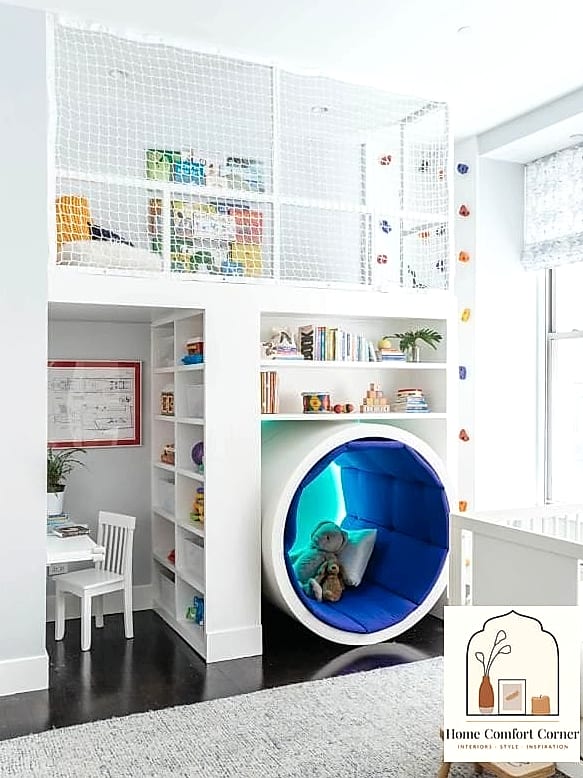
This one’s a bit of a splurge, but a small climbing wall tucked into an unused corner has become a genuine trend this year, and I get why. It gives kids a physical outlet indoors, especially useful during winter months or rainy stretches when outdoor play isn’t happening.
Look for kits with textured, colorful holds that double as decor even when nobody’s climbing. Pair it with a thick crash mat underneath for safety, and make sure there’s enough clearance from furniture. It’s not a DIY-friendly project unless you’re experienced with wall anchors, so this is one where professional installation is worth the cost.
Vintage Rug Layered Over Soft Carpet Tiles
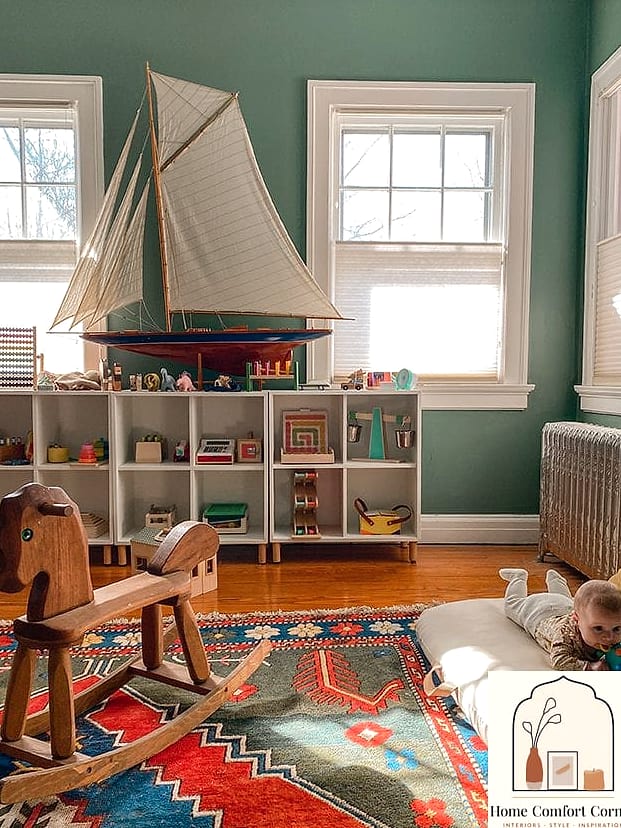
Layering a vintage-style rug over interlocking foam or carpet tiles gives you cushioned play space without sacrificing style. The foam tiles handle the padding and shock absorption for tumbles, while the rug on top brings in pattern and warmth so it doesn’t look like a daycare.
This combo is particularly great for families with younger kids who spend a lot of time on the floor. Choose a low-pile, stain-resistant rug since spills are inevitable, and pick foam tiles in a neutral tone so they blend in rather than stealing attention. It’s also fully reversible if you’re renting, since nothing needs to be glued down.
Pegboard Wall for Endless Reconfiguration
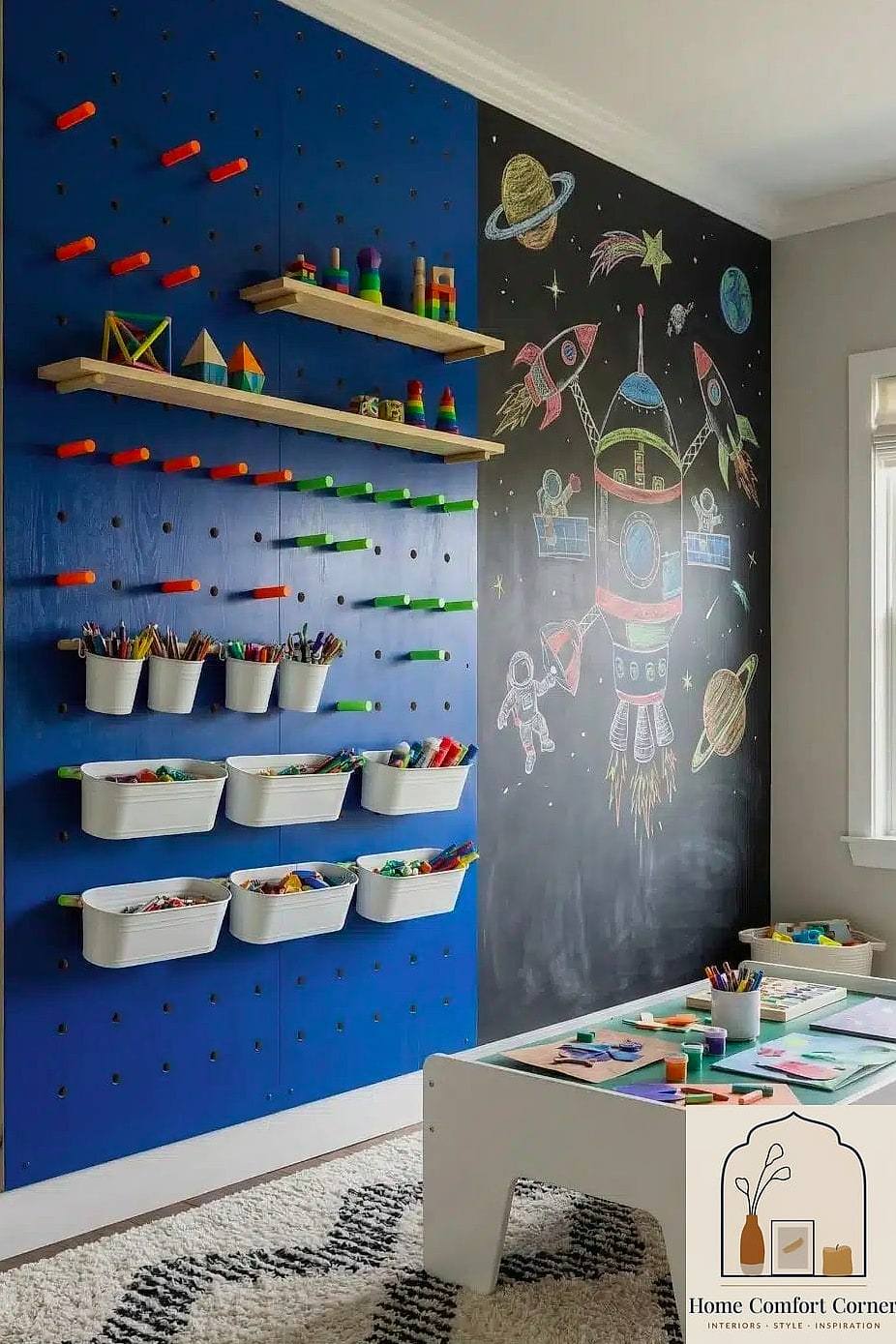
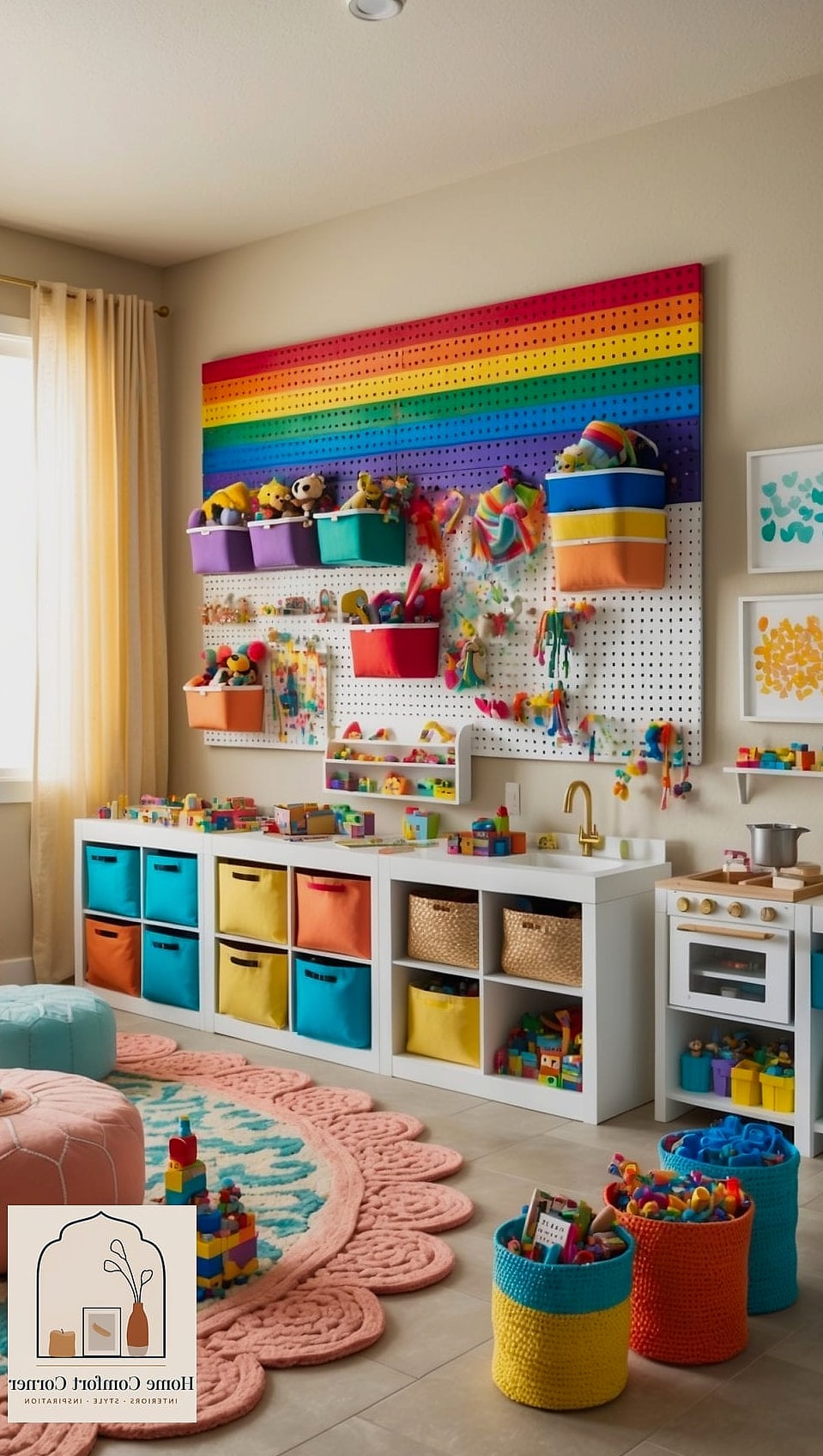
A pegboard wall might be my favorite entry on this whole list because it grows with your kid. Paint a large pegboard panel to match the wall color, add hooks, small shelves, and bins, and you’ve got a fully customizable storage system that can shift as interests change.
It works beautifully for dress-up costumes, art supplies, or sports gear, and rearranging it takes minutes. This is also a genuinely great DIY project since pegboard panels are inexpensive and cutting them to size is simple. Just make sure it’s anchored securely into studs since kids will inevitably hang or pull on it.
Reading Nook with a Canopy or Tent
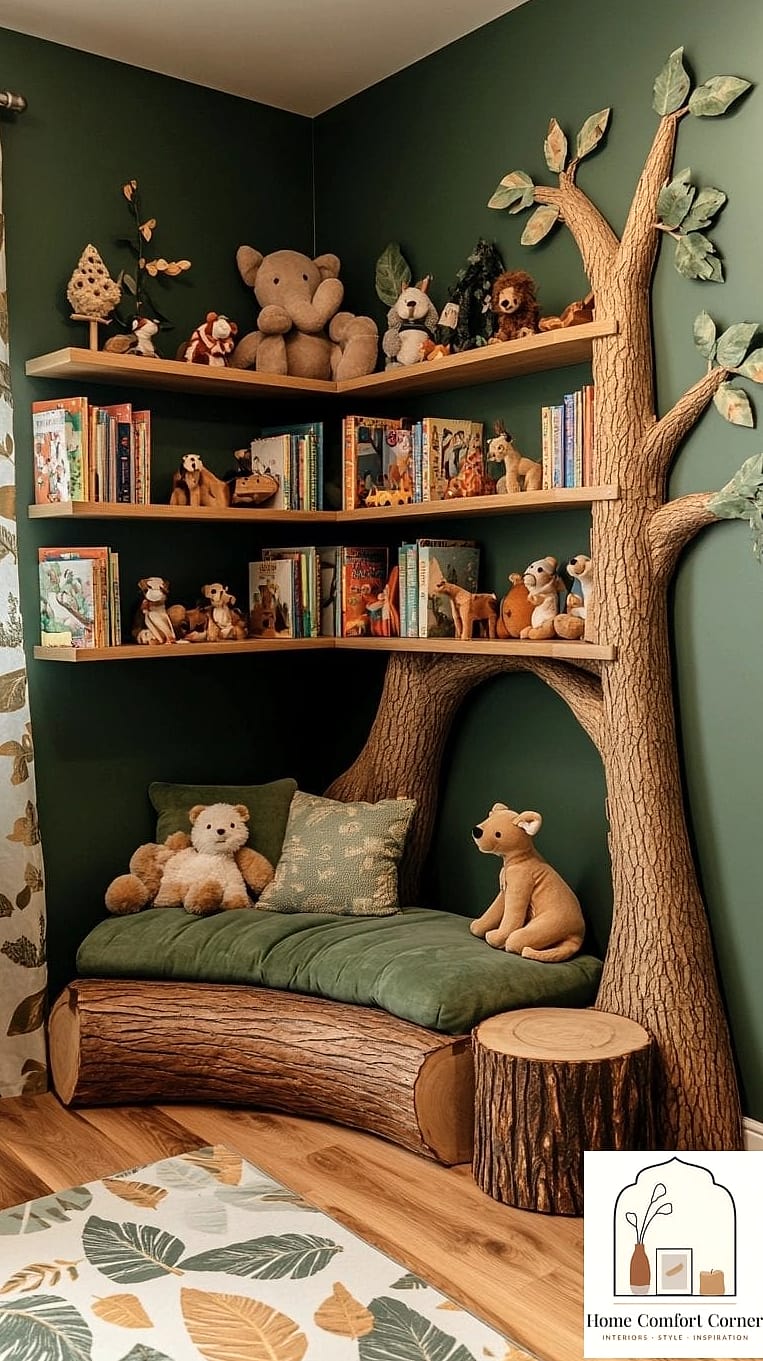
A cozy reading nook with a small canopy, teepee, or fabric tent has stuck around as a playroom favorite for good reason. It gives kids their own little hideaway, which matters more than people realize when the rest of the house feels shared and busy.
Tuck it into a corner with a floor cushion or small bean bag, add a string of warm LED lights, and layer in a few soft blankets. This is an easy renter-friendly addition since most tent structures are freestanding. Rotate books seasonally in a small basket nearby to keep the space feeling fresh without buying all new furniture.
Chalkboard or Whiteboard Accent Wall
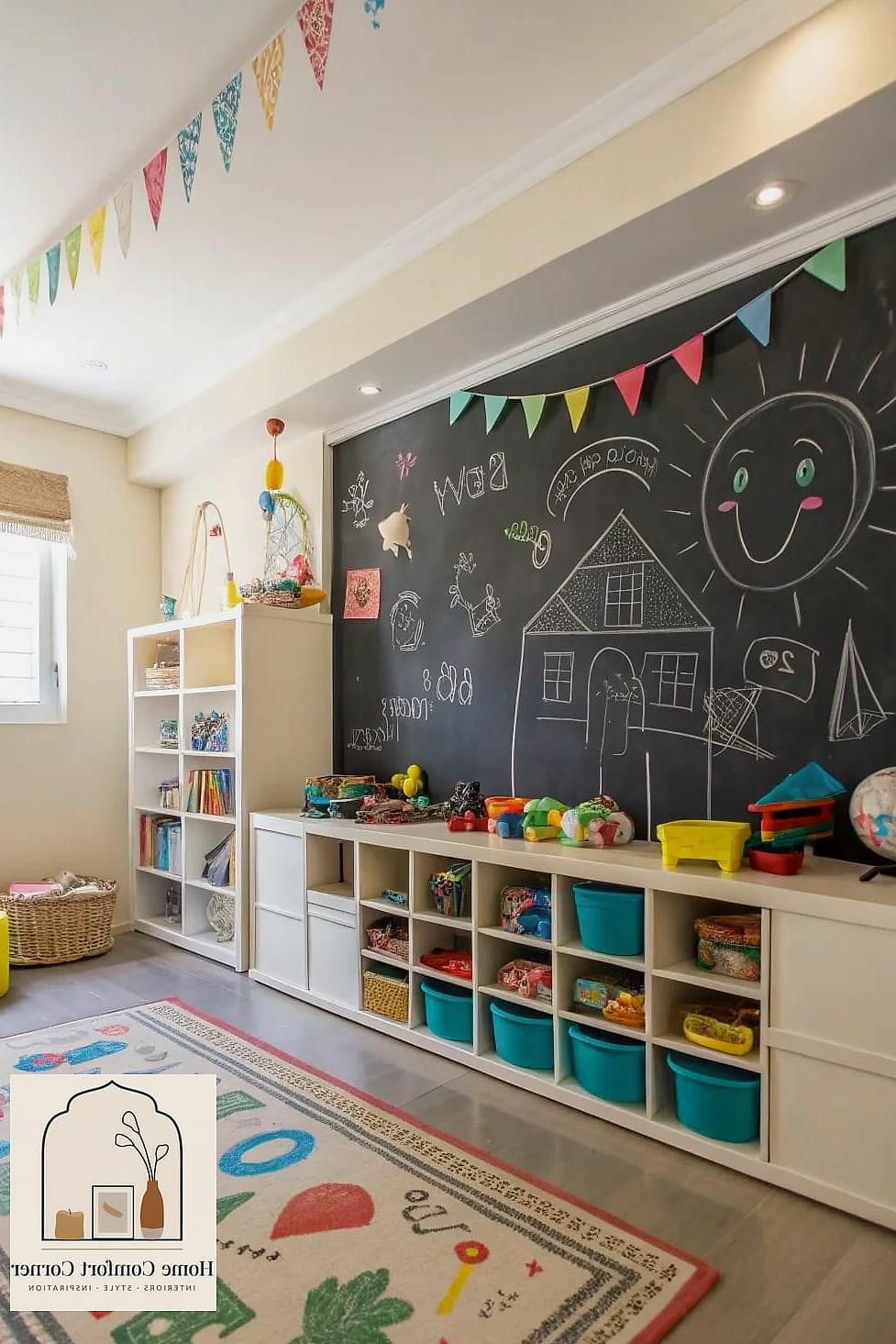
An entire wall painted in chalkboard or whiteboard paint turns blank vertical space into an activity zone, and it’s one of the more practical playroom ideas looks on this list because it actually gets used daily. Kids draw, practice letters, or just doodle, and cleanup is as simple as an eraser or damp cloth.
This works best on a wall that doesn’t already have a lot going on, since the drawing itself becomes the decor. Frame it with simple wood trim for a more finished look. It’s an inexpensive weekend project, and the paint itself typically runs under $30 for a standard-size wall.
Toy Storage Disguised as Furniture
Storage ottomans, bench seats, and cabinets that look like regular furniture rather than obvious toy bins have become a go-to for playrooms that double as guest-ready spaces. From the outside they read as stylish seating, but they open up to swallow a surprising amount of clutter.
This is ideal for playrooms that share space with a living room or family room, since it keeps the toy factor low-key. Look for pieces with soft-close hinges if you’ve got little fingers around. It’s a pricier option than open bins, but the visual payoff is worth it if the room needs to feel more grown-up at a glance.
Color-Coded Bin System with Labels
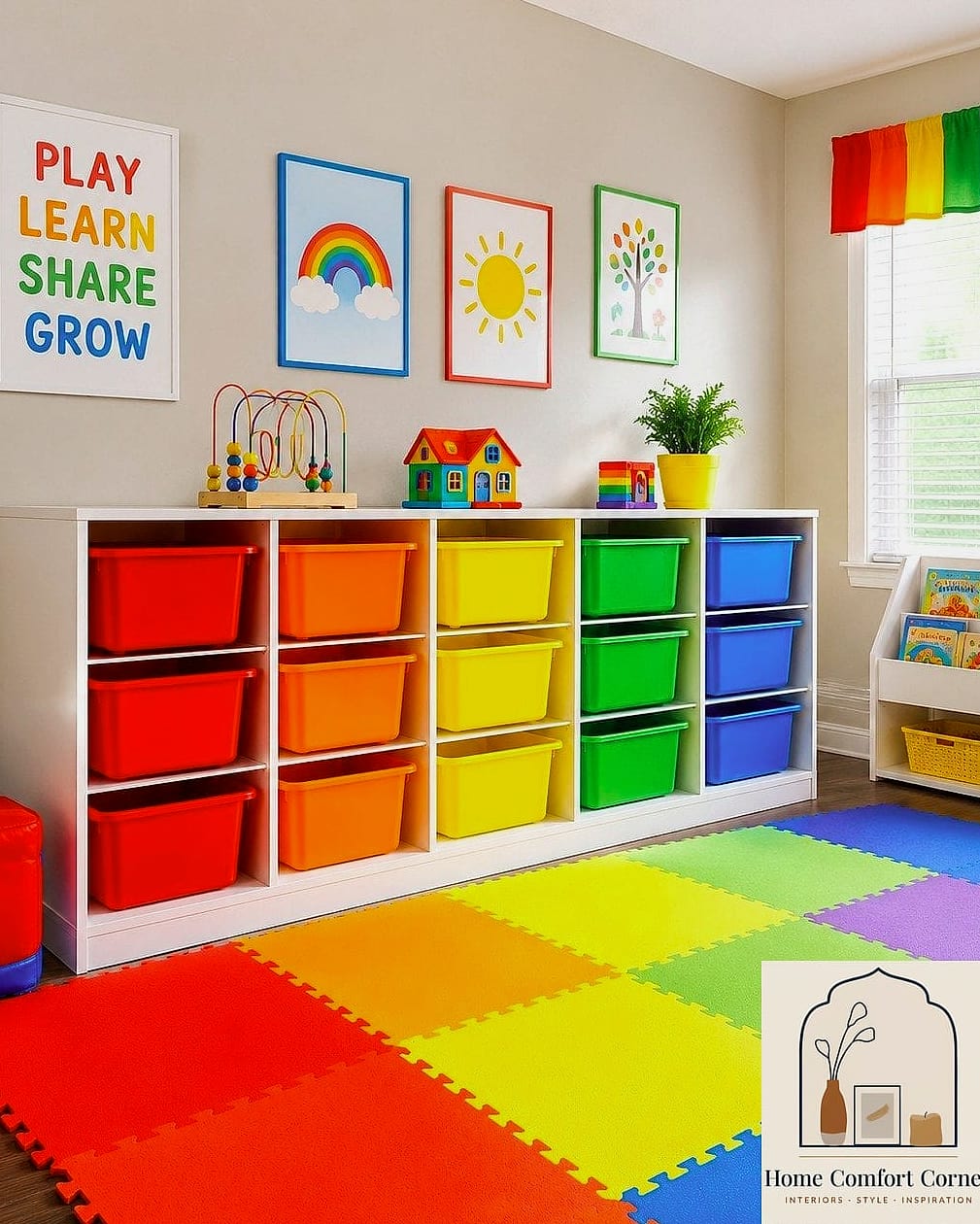
This isn’t the flashiest idea on the list, but it might be the most functional, and functional deserves some love too. Assign each toy category its own color, use matching bins, and add picture labels for kids who aren’t reading yet.
It teaches independent cleanup skills fast, since even a three-year-old can match a red bin to a red-labeled shelf. Clear bins work well if you want visibility, while solid-color bins hide mess better. Either way, this system genuinely cuts down on the daily “where does this go” back and forth.
Faux Grass Rug for an Indoor Picnic Vibe
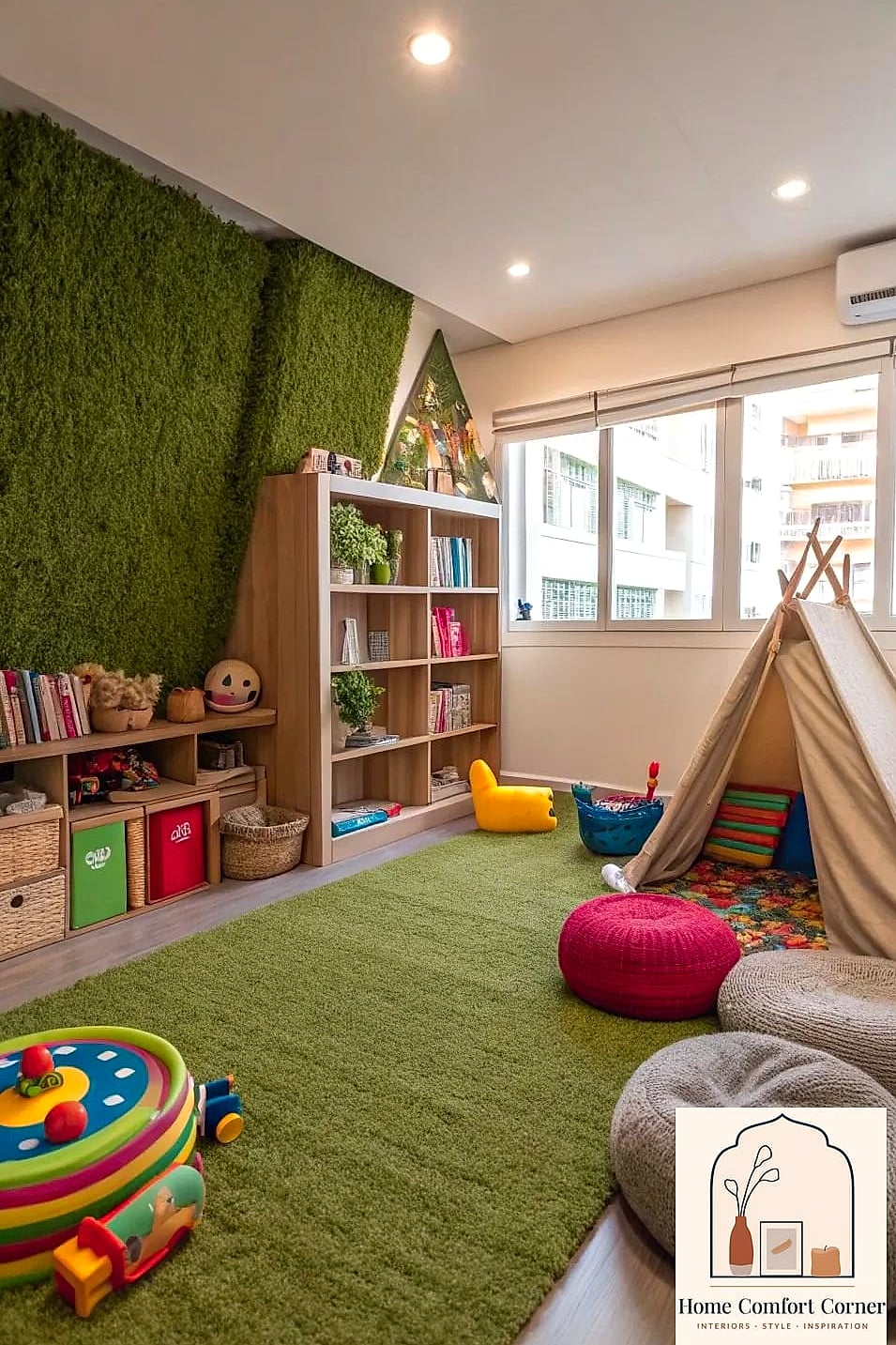
A faux grass or turf-style rug has popped up in a lot of playroom inspiration this year, and it brings a playful, outdoorsy feel indoors. It’s especially fun paired with a small picnic table or a play kitchen setup, giving the whole area a little backyard energy.
This is a durable, low-maintenance option since turf rugs are built to handle wear and spills without much fuss. It photographs really well too, which is probably part of why it’s trending. Keep the rest of the palette simple so the grass doesn’t compete with too many other bold elements.
Gallery Wall of Kids’ Own Artwork
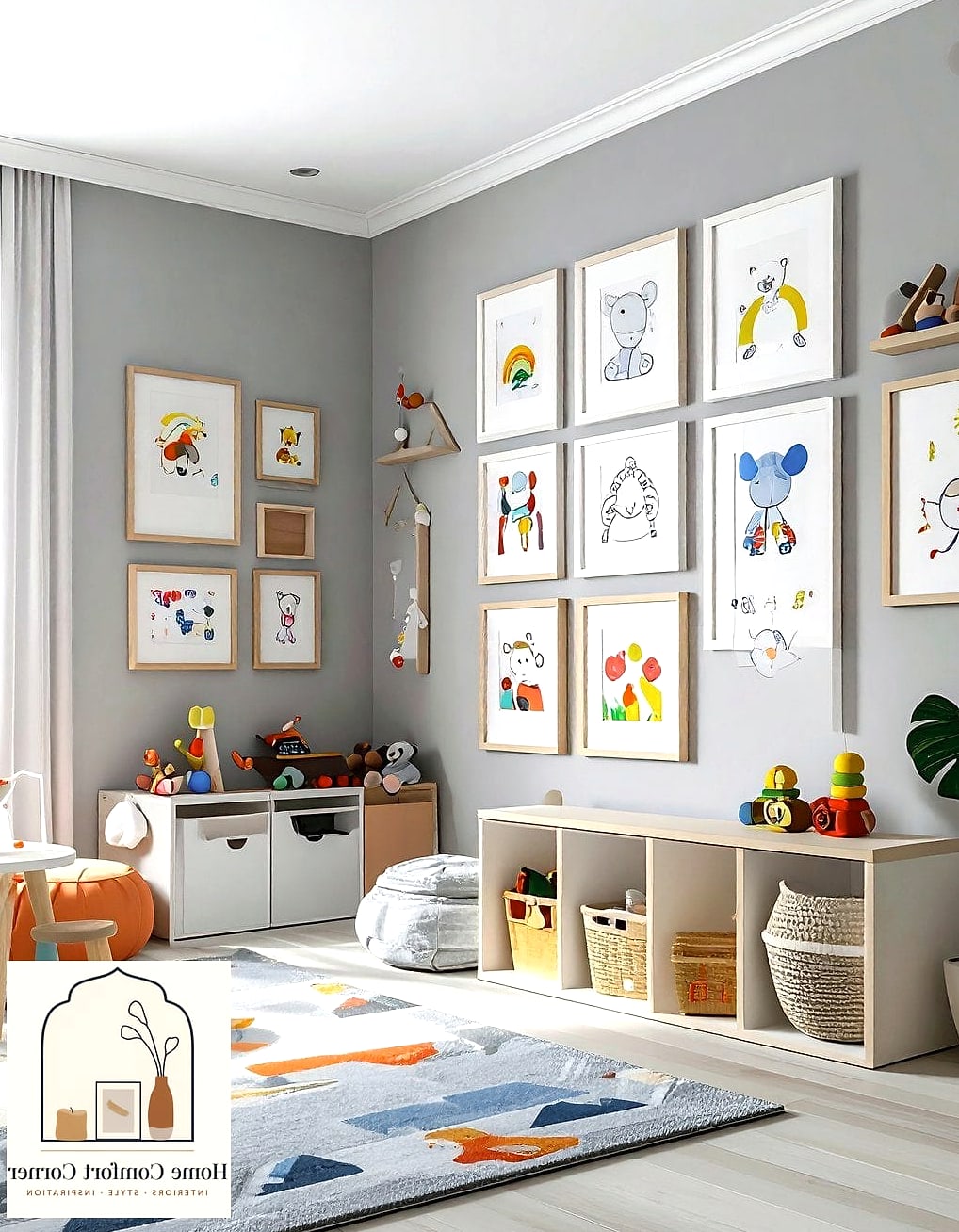
Instead of store-bought art, a gallery wall filled with your kid’s actual drawings and paintings feels personal and constantly changing. Use simple matching frames so the display looks curated even though the content rotates.
This is one of the most budget-friendly playroom ideas looks out there since you’re not buying new art, just framing what already exists. Swap pieces out monthly or seasonally to keep it current. It also gives kids a real sense of ownership over the space, which tends to make them more invested in keeping it tidy.
Play Kitchen Styled Like a Real One
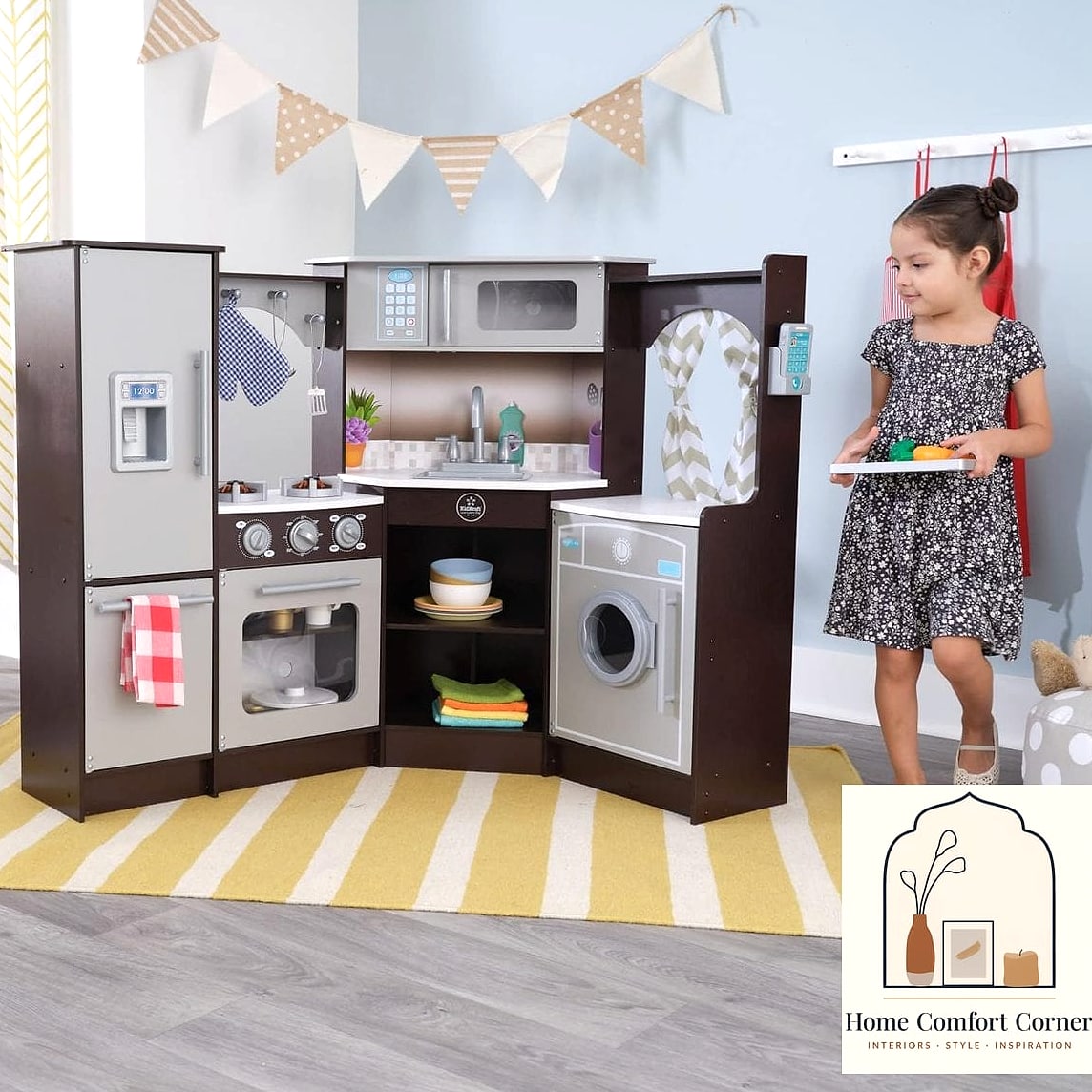
Mini play kitchens have gotten a serious style upgrade lately, moving away from bright plastic and toward wood tones, matte black hardware, and finishes that mimic real cabinetry. Some families even go the DIY route, building one from a small cabinet base.
This works great as a focal point in larger playrooms and holds up well for imaginative play over the years. Add a few open shelves nearby for play food storage in small baskets. It’s a bit of an investment if you’re buying designer versions, but budget builds using thrifted furniture are just as charming.
Ceiling-Mounted Swing or Hammock Chair
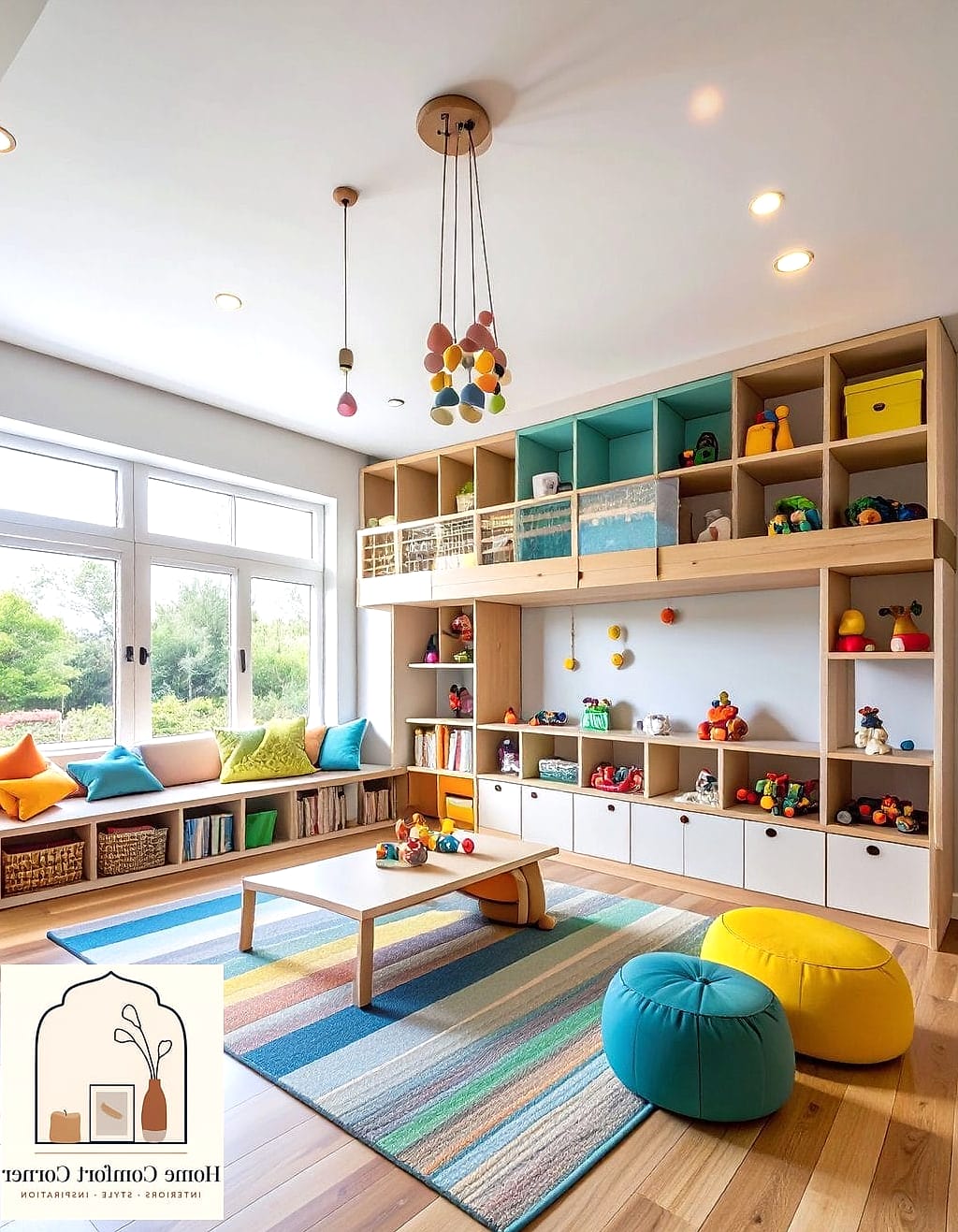
An indoor swing or hammock chair hung from a ceiling joist has become one of those playroom features that photographs beautifully and gets used constantly. It offers sensory input for kids who like to move while they read or decompress.
Make sure it’s professionally anchored into a joist, not just drywall, since weight capacity matters here. Position it somewhere with clearance on all sides for safe swinging. This is a fantastic option for playrooms with higher ceilings, and it adds a soft, organic shape that breaks up all the straight lines of shelving and furniture.
Art Station with a Dedicated Water Source or Easel
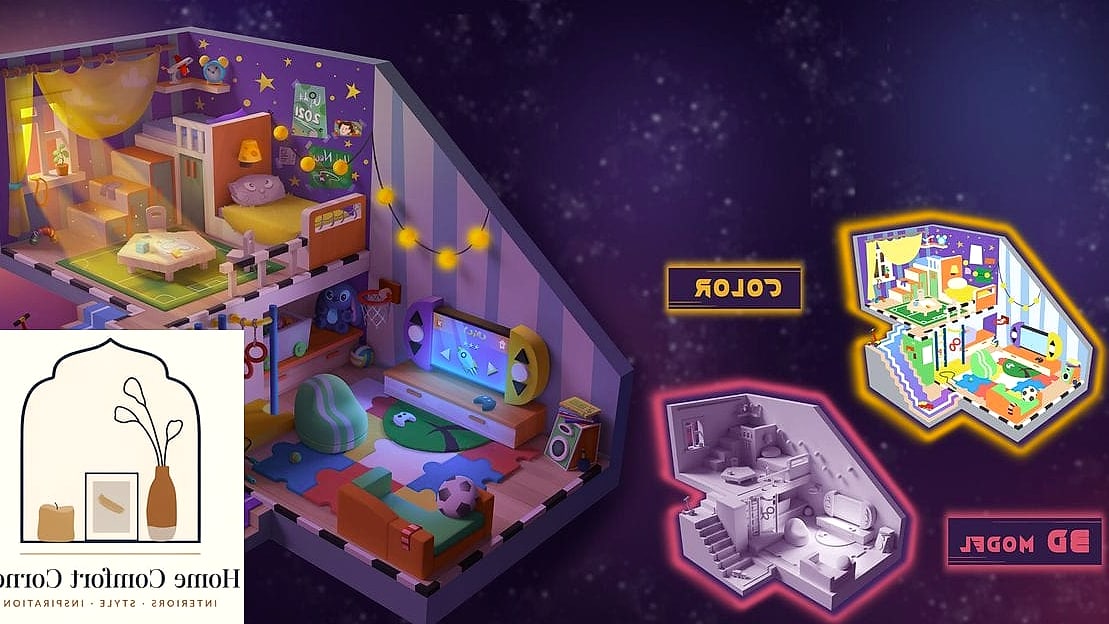
A designated art corner with a small easel, a tray for supplies, and a washable mat underneath keeps creative messes contained to one spot instead of spreading across the whole room. Some families are even adding a mini sink nearby if plumbing allows, though a simple water jug and basin works just as well.
This setup is genuinely family-friendly for households with more than one artistic kid, since everyone knows where supplies live. Use a vinyl or laminate mat under the easel for easy wipe-down. It’s a small footprint idea that makes a big difference in how contained the mess stays.
Nature-Inspired Palette with Wood and Greenery
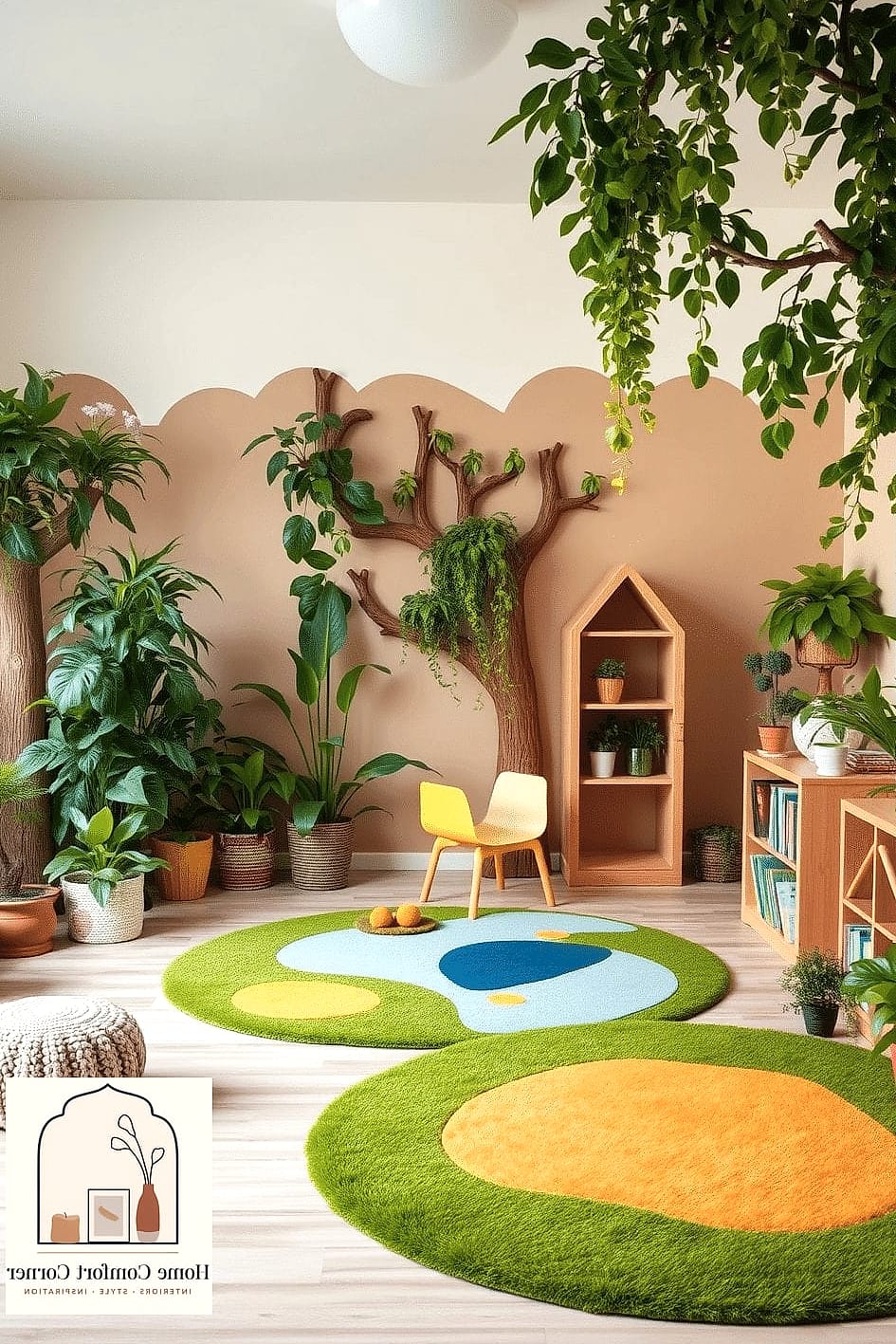
Moving away from primary colors, a lot of this year’s playroom inspiration leans into warm wood tones, sage and clay accents, and real or faux greenery. It creates a calmer environment that doesn’t feel overstimulating, which some parents find genuinely helps with focus during quiet play.
Rattan baskets, wood toy shelves, and a few potted plants (or sturdy faux ones if little hands are grabby) round out the look. This palette also transitions well as kids get older, since it’s not tied to a specific character phase. It’s an easy direction if you want the room to feel more like an extension of your home’s overall style.
Loft or Platform Bed Doubling as Play Space
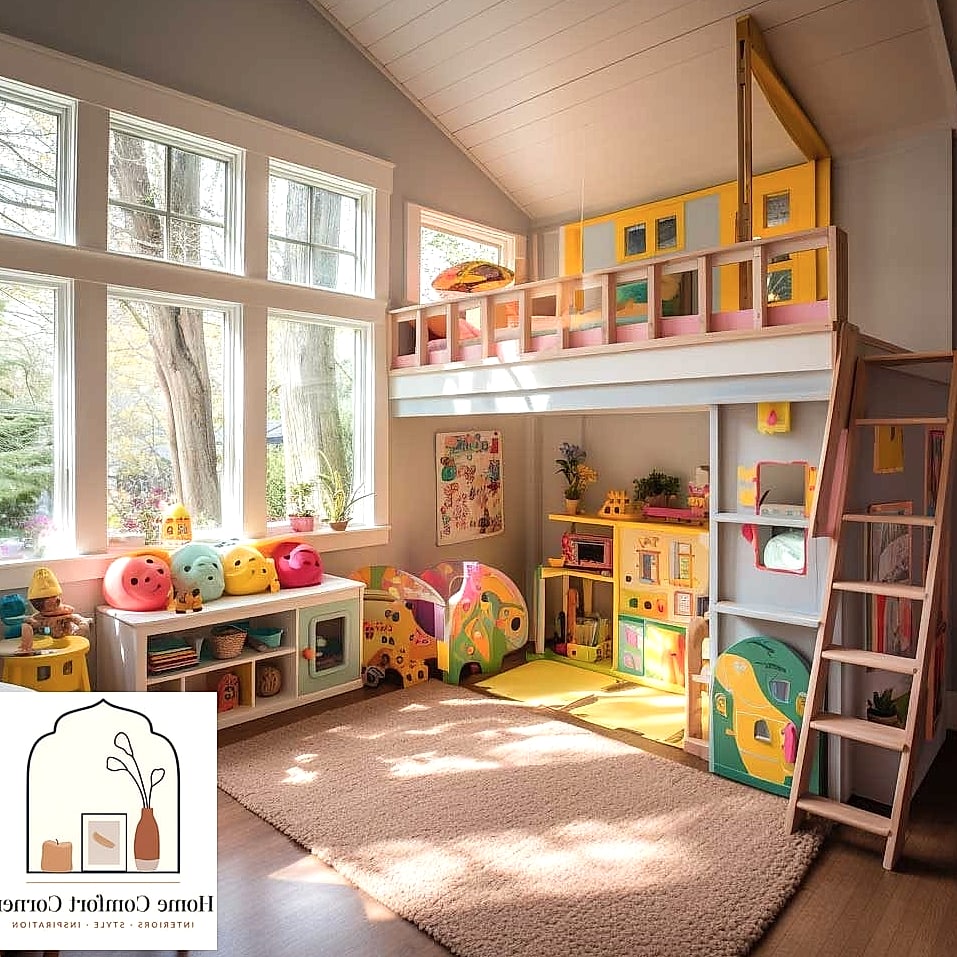
In playrooms that also function as a bedroom, a loft or platform bed frees up the entire floor underneath for play. Tuck a small table, reading corner, or tent underneath and you’ve essentially doubled your usable square footage.
This is a smart solution for smaller homes where a dedicated playroom isn’t really an option. Just make sure any loft structure meets safety guardrail requirements for the child’s age. It’s a bigger investment upfront, but the space efficiency makes it worth considering if square footage is tight.
Interactive Learning Wall with Magnetic Panels
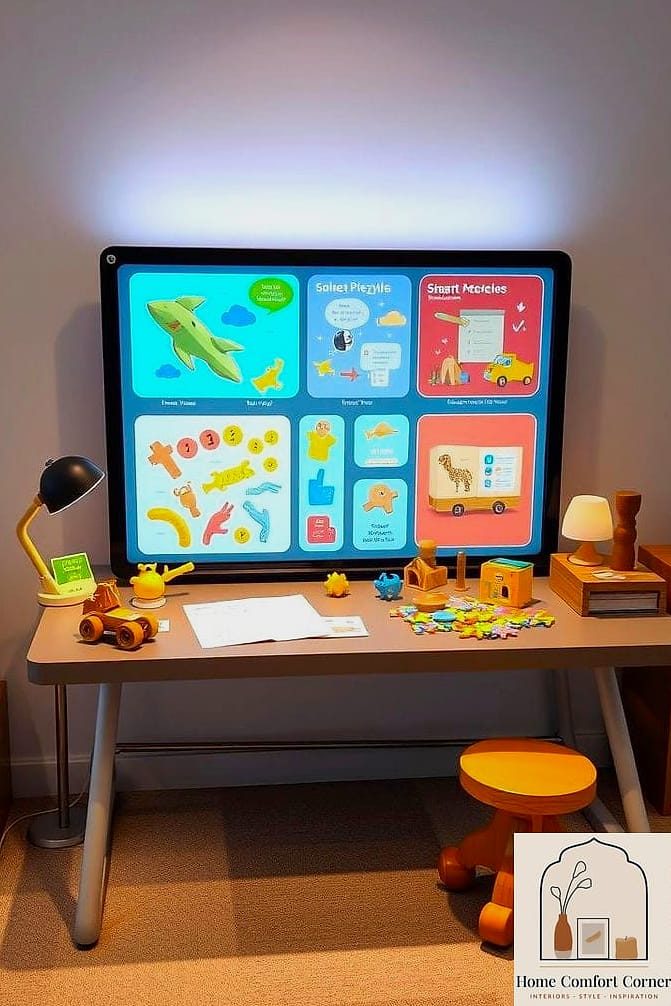
Magnetic panels or a full magnetic wall paint treatment let kids build, sort, and rearrange letters, shapes, or felt pieces without anything falling apart or getting lost under furniture. It’s a nice alternative to a chalkboard wall if you want something less messy.
This works particularly well for playrooms shared by kids of different ages, since the activities scale up or down easily. Combine it with a small shelf underneath to hold the magnetic pieces in a labeled bin. It’s a subtle addition that doesn’t dominate the room visually but adds a lot of functional value.
Cozy Layered Lighting Instead of One Overhead Fixture
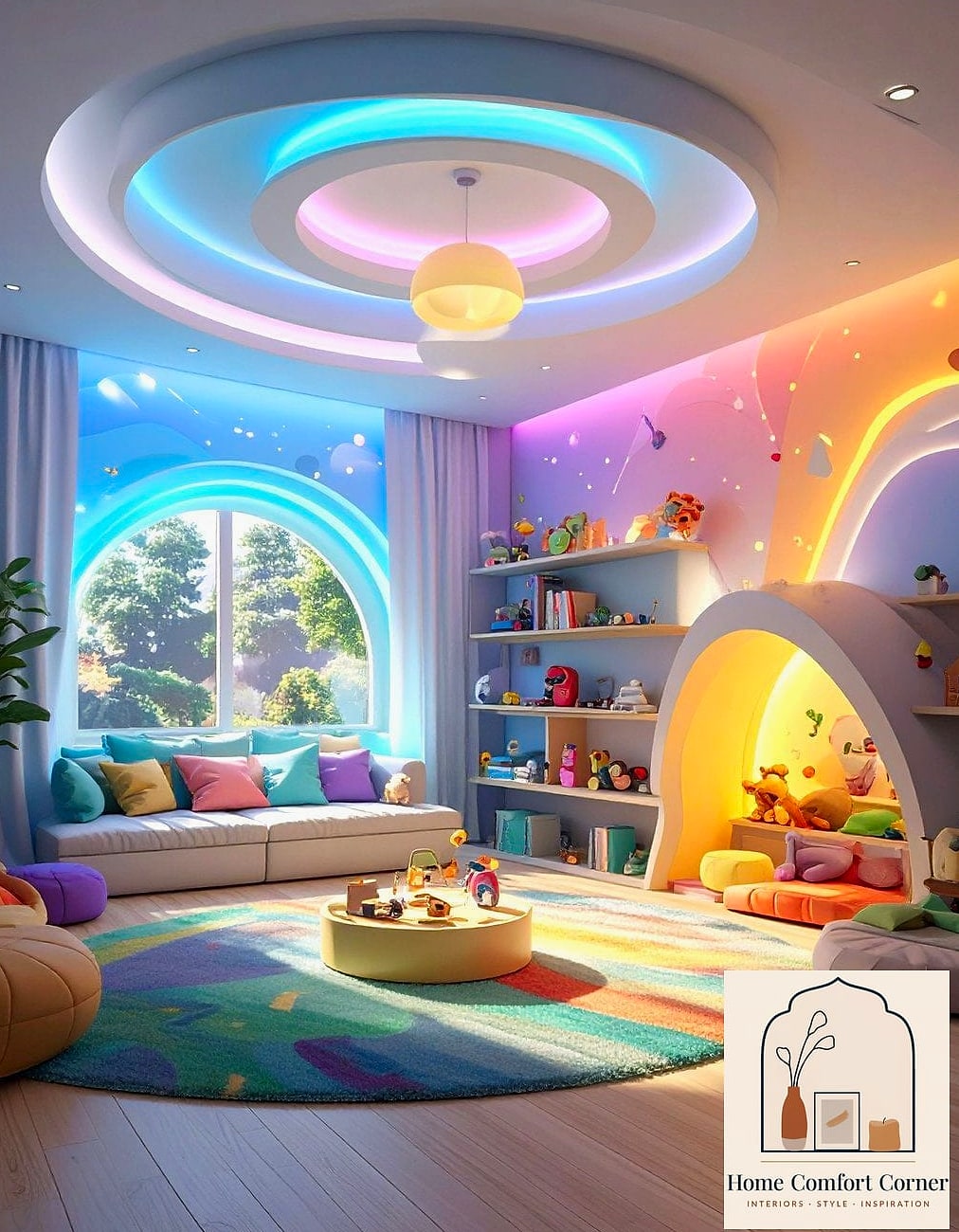
Ditching the single overhead light for layered lighting, think a floor lamp, string lights, and maybe a small table lamp, makes playrooms feel warmer and less like a classroom. It also gives you flexibility to dim things down during quiet time without plunging the whole room into darkness.
This is an easy, renter-friendly update since none of it requires electrical work. Choose warm-toned bulbs over cool white for a cozier feel. It’s a small change, but layered lighting genuinely shifts the whole mood of the room from clinical to inviting.
Putting even a handful of these ideas together can completely change how a playroom feels and functions. You don’t need to tackle all 19 playroom ideas looks we’re obsessed with this year at once, pick two or three that fit your space and budget, and build from there. The best playrooms are the ones that actually get used, mess and all.