12 Clean Room Aesthetic Designs That Maximize Style and Function
- Monochrome Walls With Layered Textures
- Built-In Storage That Hides Everything
- Matte Black Fixtures Against Soft Neutrals
- Floating Shelves With Curated Display
- Natural Wood Accents for Warmth
- Streamlined Bedding With Hidden Storage
- Open Concept Bathroom Vanity Styling
- Textured Neutral Rugs as a Grounding Element
- Curtains in Soft, Flowing Fabrics
- Minimalist Kitchen Countertops With Zero Clutter
- Layered Lighting Instead of One Overhead Fixture
- Greenery as the Only Pop of Color
12 Clean Room Aesthetic Designs That Maximize Style and Function
There’s a reason “clean room aesthetic” has become such a popular search term over the last couple of years. People are tired of clutter, tired of decor that looks nice but doesn’t actually work for daily life, and tired of rooms that feel busy the second you walk in. A clean room aesthetic strips things back without making a space feel cold or unfinished. It’s calm, it’s functional, and honestly, it makes cleaning and maintaining your home a lot easier too.
I’ve pulled together twelve real, livable ways to bring this look into your home, whether you’re working with a bedroom, a bathroom, a kitchen, or even a home office. These aren’t just pretty ideas either. Each one is built around function first, because a room that looks good but drives you crazy to maintain isn’t really doing its job.
Monochrome Walls With Layered Textures
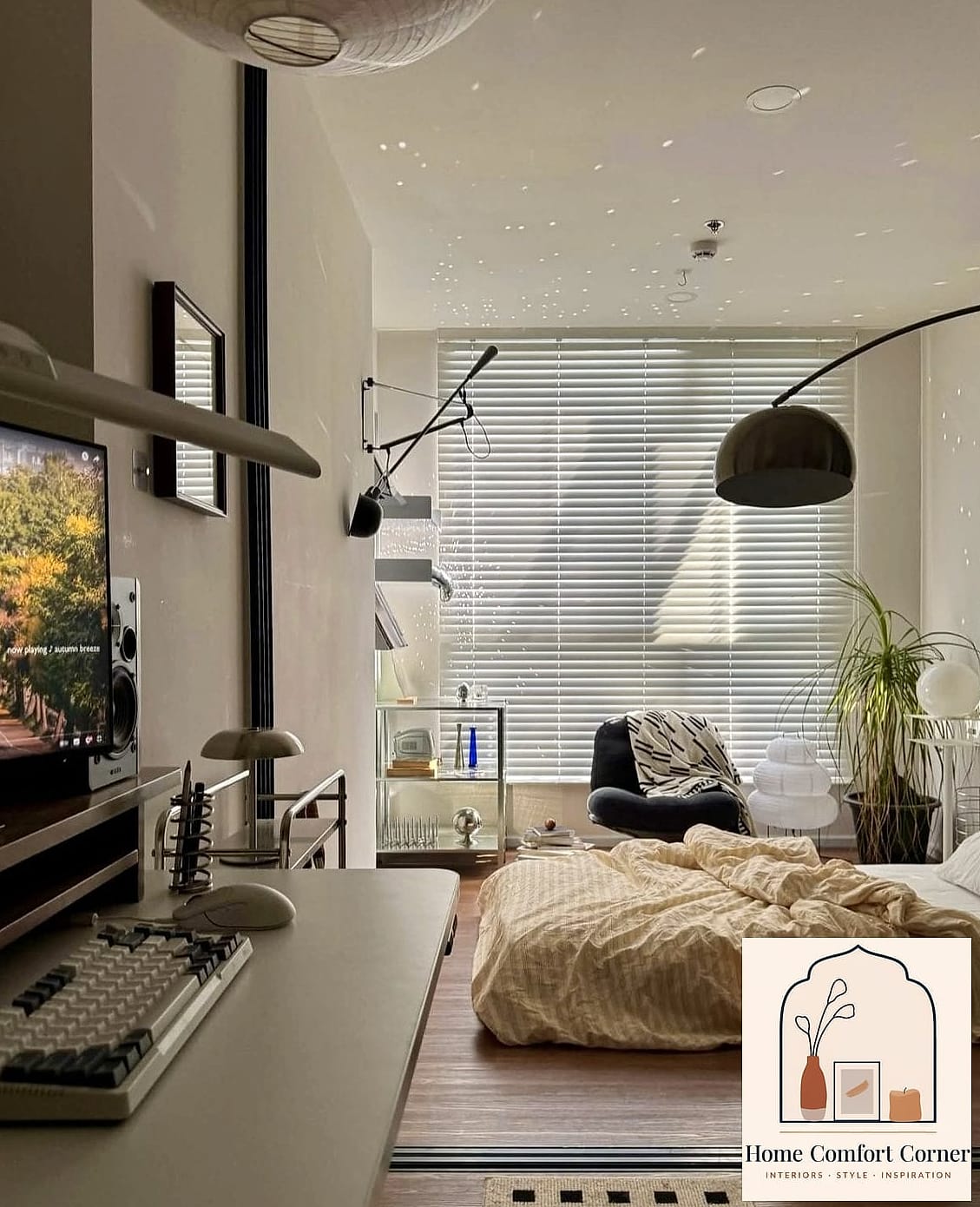
A monochrome color palette is the backbone of most clean room aesthetic designs, and for good reason. When your walls, trim, and larger furniture pieces stay within one or two shades, your eye doesn’t have to work overtime processing color contrast.
This works especially well in bedrooms and living rooms. Soft whites, warm greige, or a muted sage all read as calming rather than sterile. The trick is layering in texture through a wool throw, a linen duvet, or a nubby area rug so the space doesn’t feel flat.
Budget-friendly versions lean on paint and textiles, while higher-end takes might include limewash finishes or textured plaster walls. Either way, this look is genuinely low maintenance since scuffs and marks are easier to touch up on a consistent color scheme.
Built-In Storage That Hides Everything
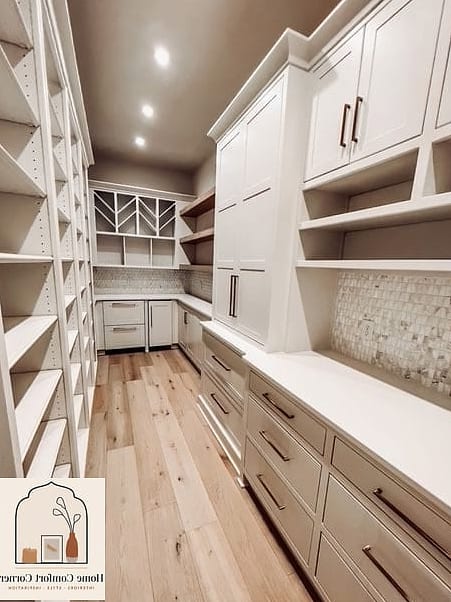
Open shelving gets a lot of love in design content, but for an actual clean room aesthetic, built-in storage with doors is often the better move. Cabinets, closed shelving units, and custom millwork let you keep everyday items close without them being visible.
This is a favorite in home offices and bedrooms where paperwork, chargers, and miscellaneous items tend to pile up. A wall of matching cabinetry in a neutral tone disappears visually while giving you serious storage capacity.
If a full built-in isn’t in the budget, modular storage systems from places like IKEA or The Container Store can mimic the look. Just keep the finishes consistent so it reads as one cohesive piece rather than mismatched furniture.
Matte Black Fixtures Against Soft Neutrals
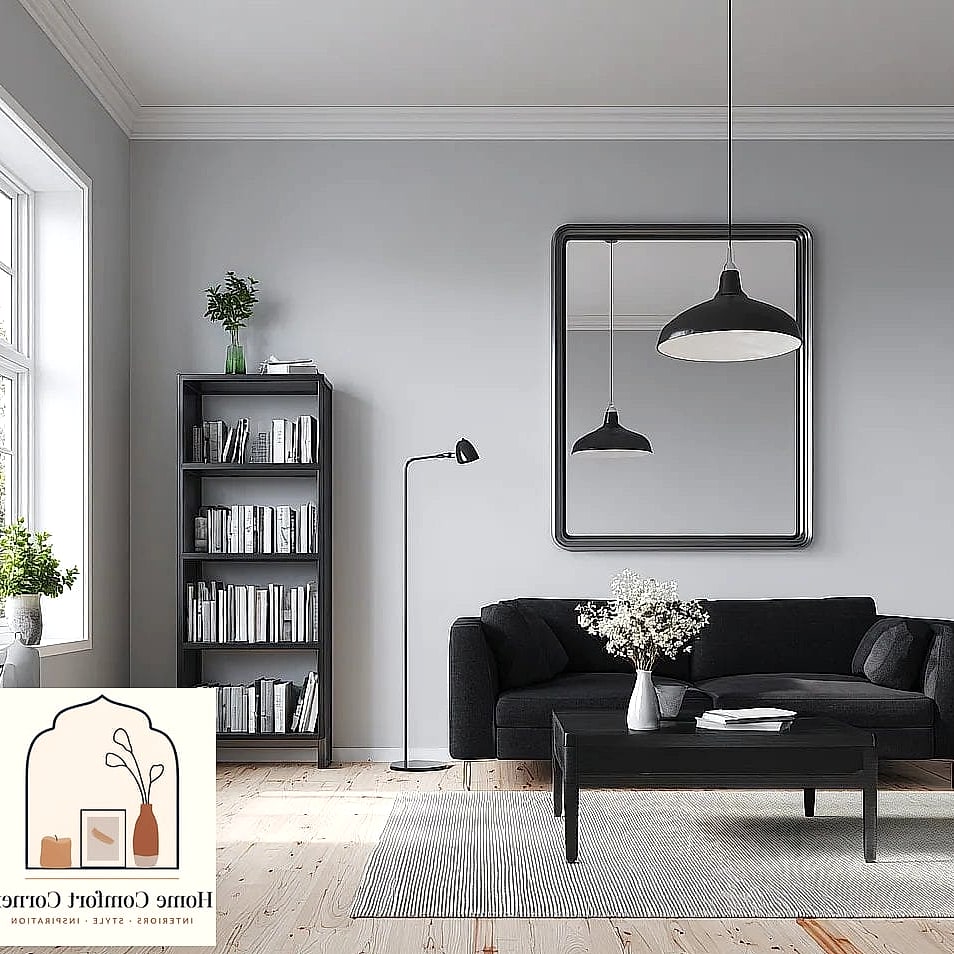
Contrast is what keeps a clean room aesthetic from feeling boring, and matte black fixtures are one of the easiest ways to add it. Door handles, faucet hardware, light switches, or even a black-framed mirror against a soft white or beige backdrop creates visual interest without adding clutter.
Bathrooms and kitchens benefit most from this pairing. A matte black faucet against white subway tile or a warm stone countertop reads as intentional and modern.
Maintenance-wise, matte finishes actually hide water spots and fingerprints better than polished chrome, which is a nice bonus for busy households. Just avoid abrasive cleaners since they can dull the matte coating over time.
Floating Shelves With Curated Display
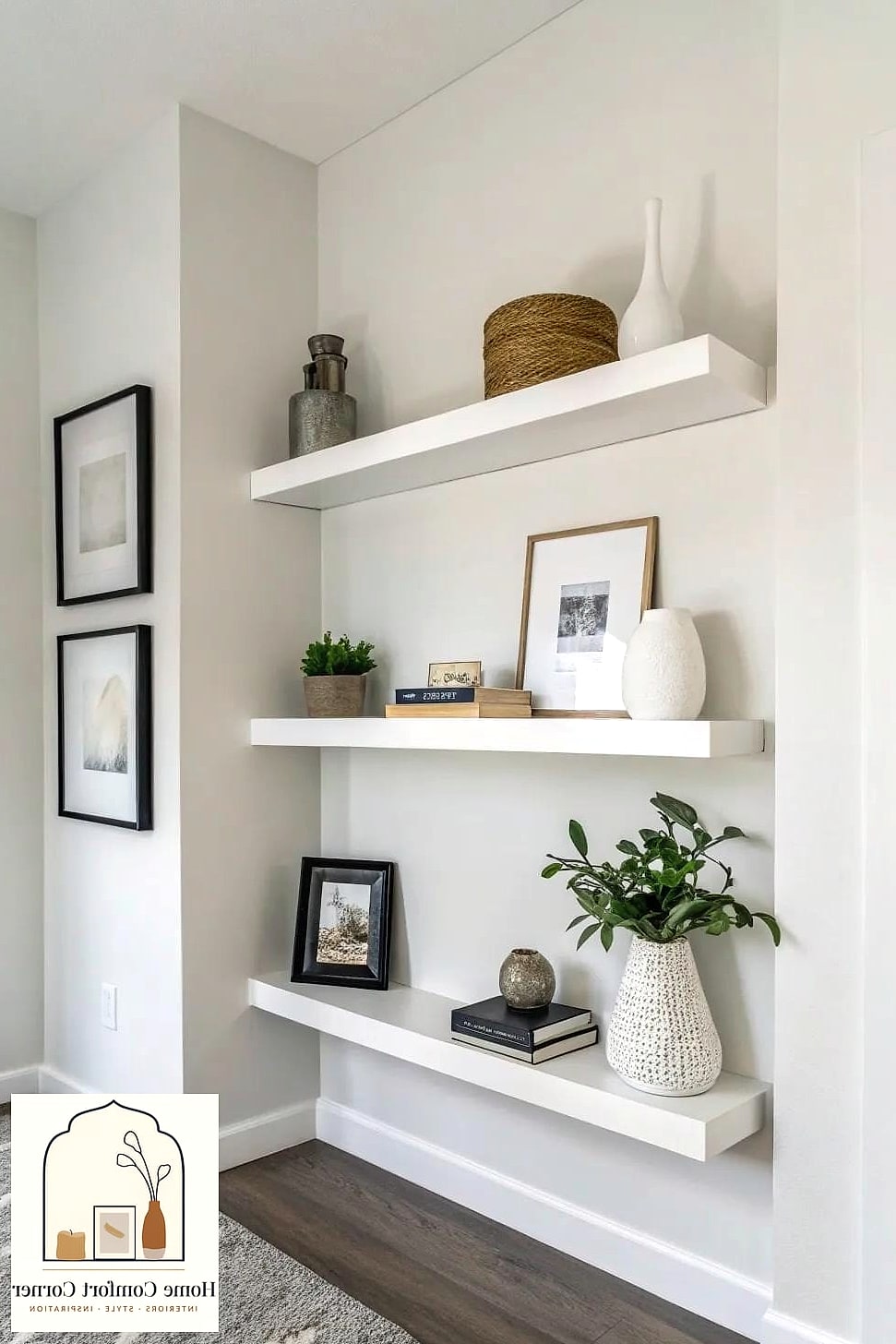
A completely empty room isn’t the goal here. Clean doesn’t mean bare. Floating shelves styled with just a handful of intentional objects give you personality without visual noise.
Think three or four items per shelf: a plant, a stack of books, one ceramic vase. This works beautifully in entryways, living rooms, and even small bathrooms where you want a decorative touch without eating up floor space.
The key is restraint. It’s tempting to keep adding pieces once a shelf looks a little empty, but resist that urge. Fewer, better objects always read as more polished than a shelf packed edge to edge.
Natural Wood Accents for Warmth
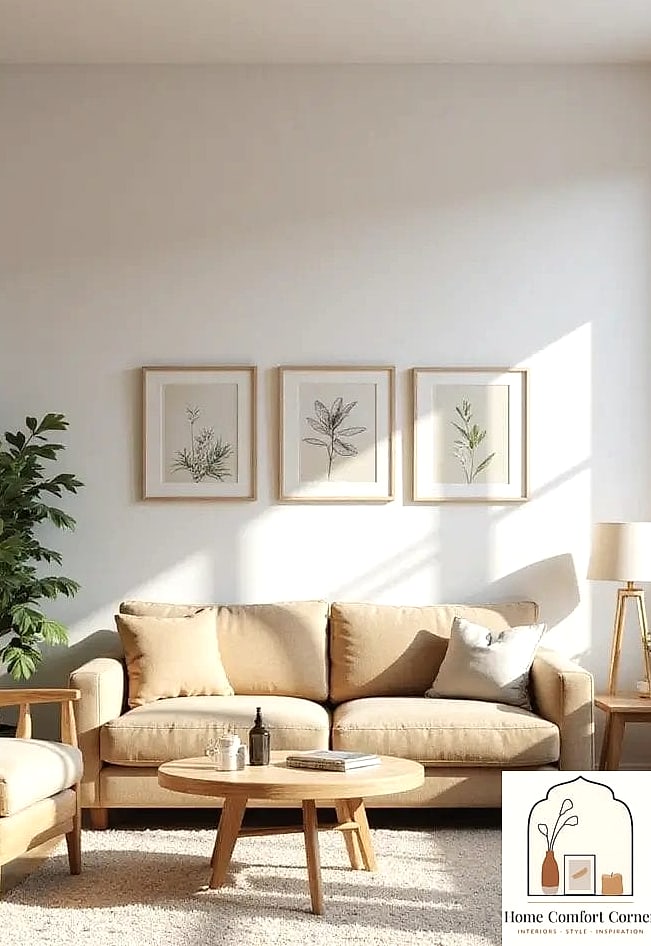
One common complaint about minimalist or clean spaces is that they can feel cold. Natural wood tones solve that problem instantly. Whether it’s a butcher block countertop, a wood accent wall, or simple oak furniture legs, wood brings warmth without adding visual clutter.
Kitchens see this most often with butcher block islands or open wood shelving paired with white cabinetry. Bedrooms might use a wood bed frame or nightstand to soften an otherwise neutral palette.
Lighter woods like ash or white oak tend to feel more contemporary, while walnut or darker stains lean slightly more traditional. Either direction fits comfortably within a clean room aesthetic as long as you’re not mixing too many wood tones in one space.
Streamlined Bedding With Hidden Storage
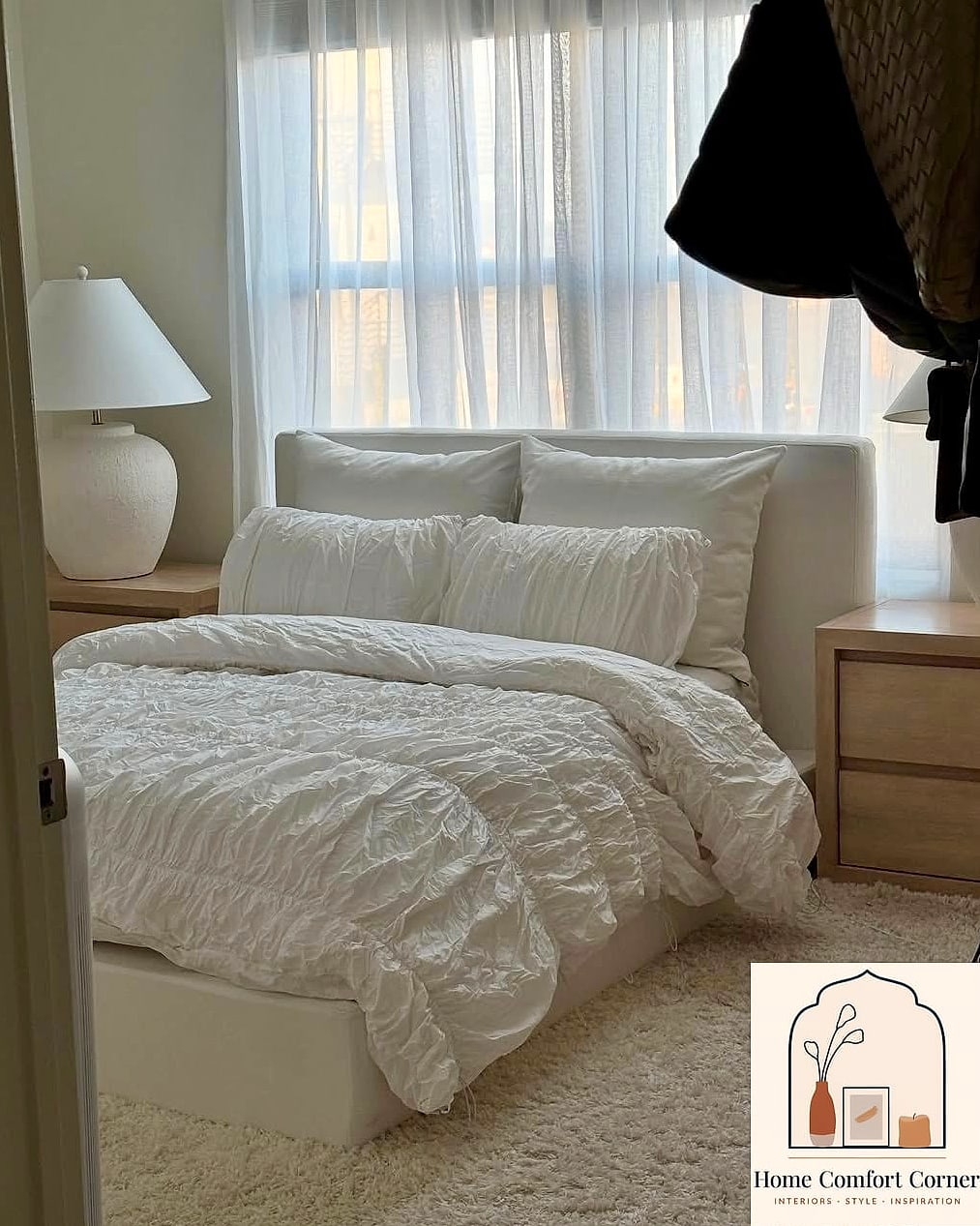
Bedrooms are probably the most common place people apply this aesthetic, and bedding plays a huge role. A duvet in a solid neutral, minimal throw pillows, and a bed frame with clean lines instantly simplifies the whole room.
Pair that with under-bed storage bins or a bed frame with built-in drawers, and you’ve solved the clutter problem before it starts. This is especially handy in smaller bedrooms or apartments where closet space is limited.
I always tell people to invest a little more in quality linens here since they’re doing a lot of visual work. A slightly higher thread count or a nice linen blend photographs and feels noticeably better than budget polyester sets.
Open Concept Bathroom Vanity Styling
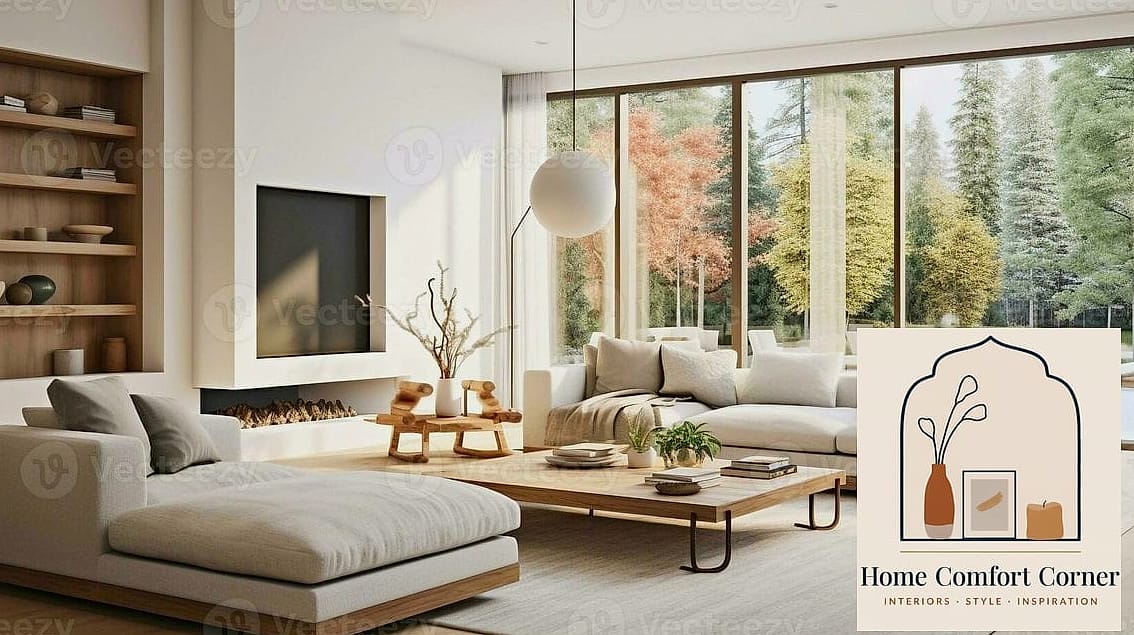
Bathroom counters are notorious clutter zones, but a clean room aesthetic handles this well with a few strategic swaps. Clear glass or matching ceramic containers for cotton swabs and toiletries keep things visible but organized rather than scattered.
A single tray under your sink items, one small plant, and a neutral soap dispenser is usually enough styling. Everything else, like extra toiletries or cleaning supplies, belongs in a drawer or under-sink organizer.
This is a genuinely practical approach for families too, since it’s easy to reset the counter in under a minute. Drawer organizers with small compartments make daily upkeep almost automatic.
Textured Neutral Rugs as a Grounding Element
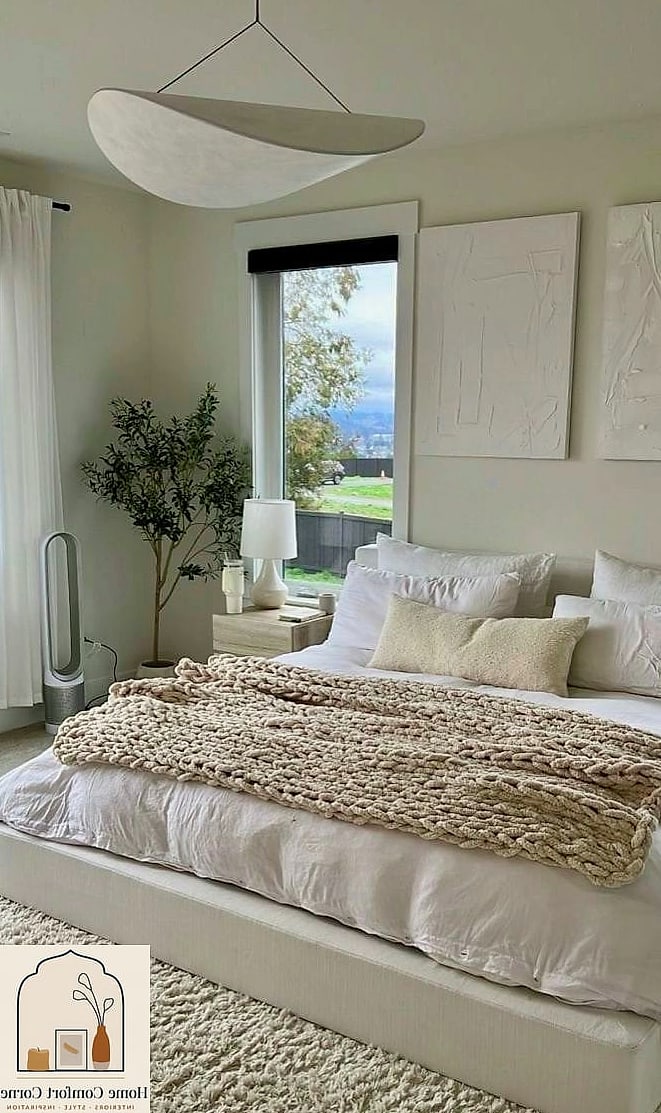
A room can have perfectly neutral walls and furniture and still feel unfinished without the right rug. Textured neutral rugs, think chunky wool, jute, or a subtle bouclé pattern, add depth underfoot without introducing competing colors.
Living rooms and bedrooms both benefit from this layering technique. Jute rugs tend to work well in more casual or coastal-leaning spaces, while a plush wool rug feels a bit more elevated.
For households with pets or kids, look for rugs labeled as stain-resistant or easy-clean, since natural fiber rugs can be trickier to spot-clean than synthetic blends.
Curtains in Soft, Flowing Fabrics
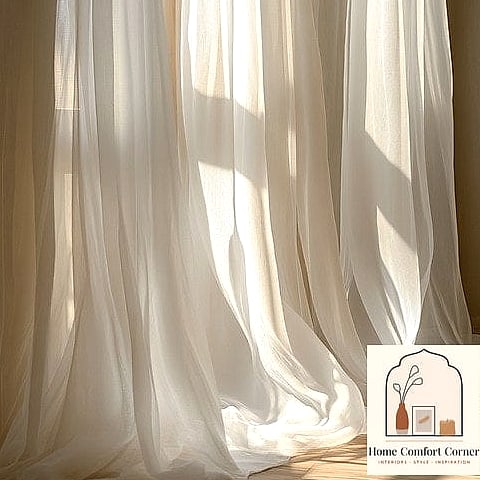
Window treatments get overlooked a lot, but they genuinely change how a room feels. Linen or cotton curtains in a soft neutral tone soften hard architectural lines and let light filter through gently rather than harshly.
This works in nearly every room, though bedrooms and living rooms see the biggest visual payoff. Floor-length curtains hung close to the ceiling also make a room feel taller, which is a nice trick for smaller spaces.
Machine-washable fabrics are worth prioritizing here since curtains collect dust more than people expect. A quick wash every few months keeps them looking fresh instead of dingy.
Minimalist Kitchen Countertops With Zero Clutter
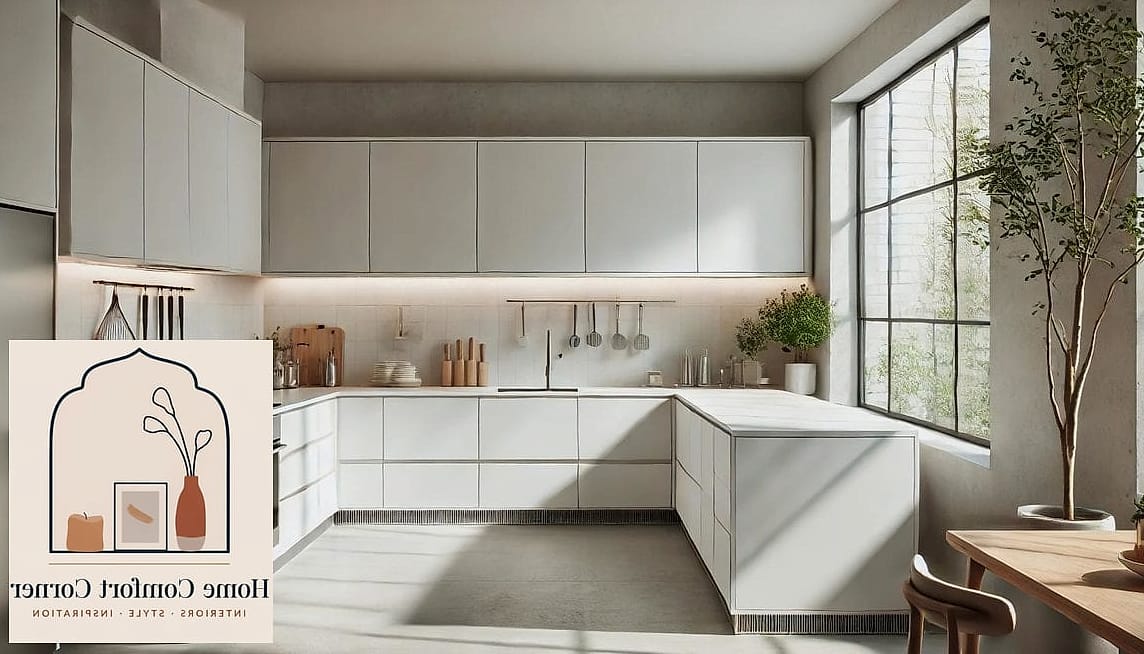
Kitchens are one of the hardest rooms to keep visually calm because so much daily activity happens there. A minimalist countertop approach means keeping only your most-used appliances out, like a coffee maker or a stand mixer if you bake often, and tucking everything else into cabinets or a pantry.
Quartz or honed marble countertops in a soft white or warm gray tend to photograph and live beautifully within this aesthetic. They’re also fairly low maintenance compared to some natural stone options, especially quartz, which resists staining and doesn’t need sealing.
If counter space is tight, a small appliance garage with a tambour door is a smart way to hide toasters and blenders while keeping them accessible.
Layered Lighting Instead of One Overhead Fixture
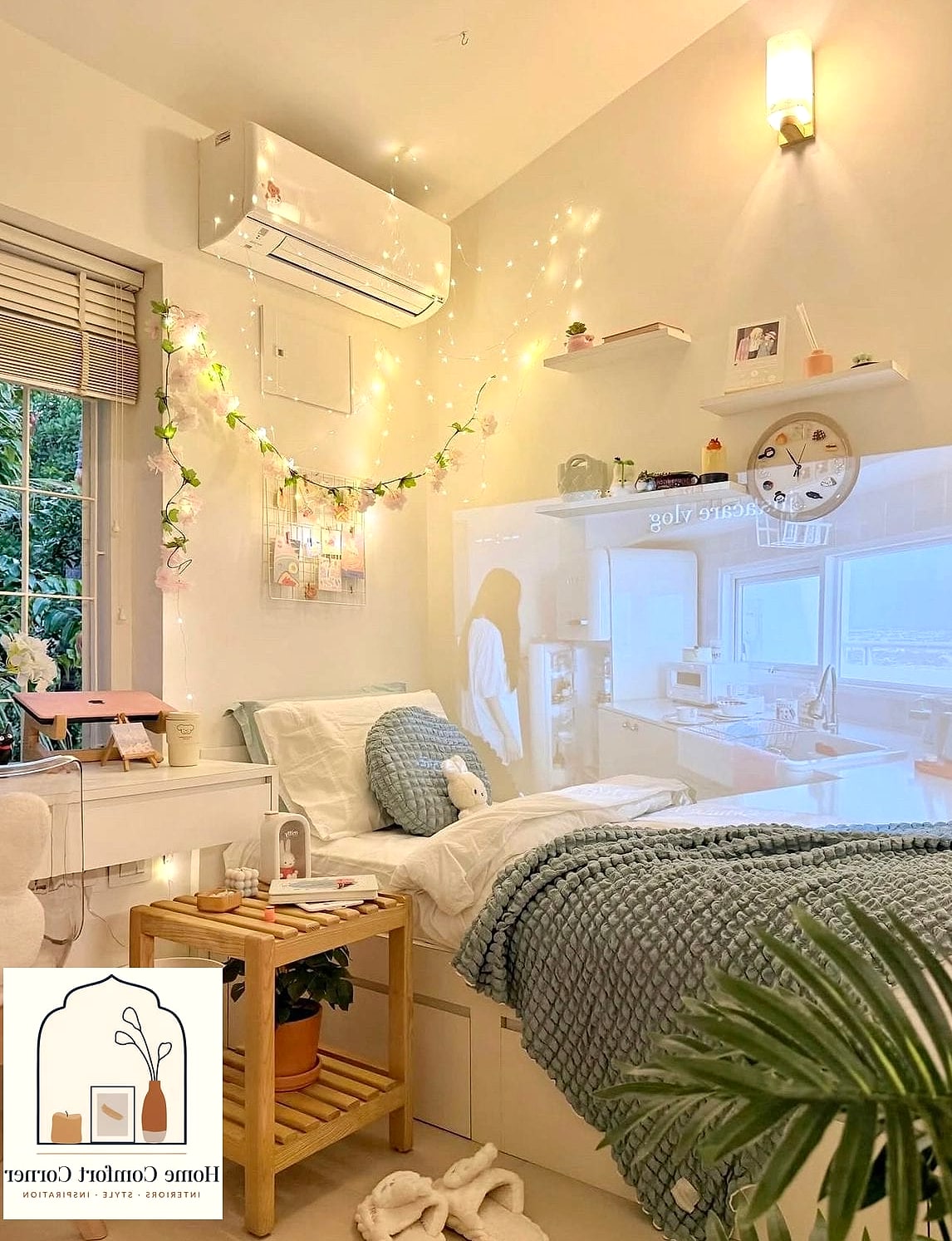
Harsh overhead lighting is one of the fastest ways to make a clean, minimal room feel sterile instead of cozy. Layered lighting, meaning a mix of overhead, task, and ambient sources, softens the space and adds dimension.
A dimmable overhead fixture, a table lamp with a warm bulb, and maybe a small plug-in sconce give you flexibility depending on the time of day. This is particularly effective in bedrooms and living rooms where mood matters more than pure function.
Warm white bulbs, generally in the 2700K to 3000K range, tend to suit this aesthetic better than cooler daylight bulbs, which can feel a bit clinical against neutral color palettes.
Greenery as the Only Pop of Color
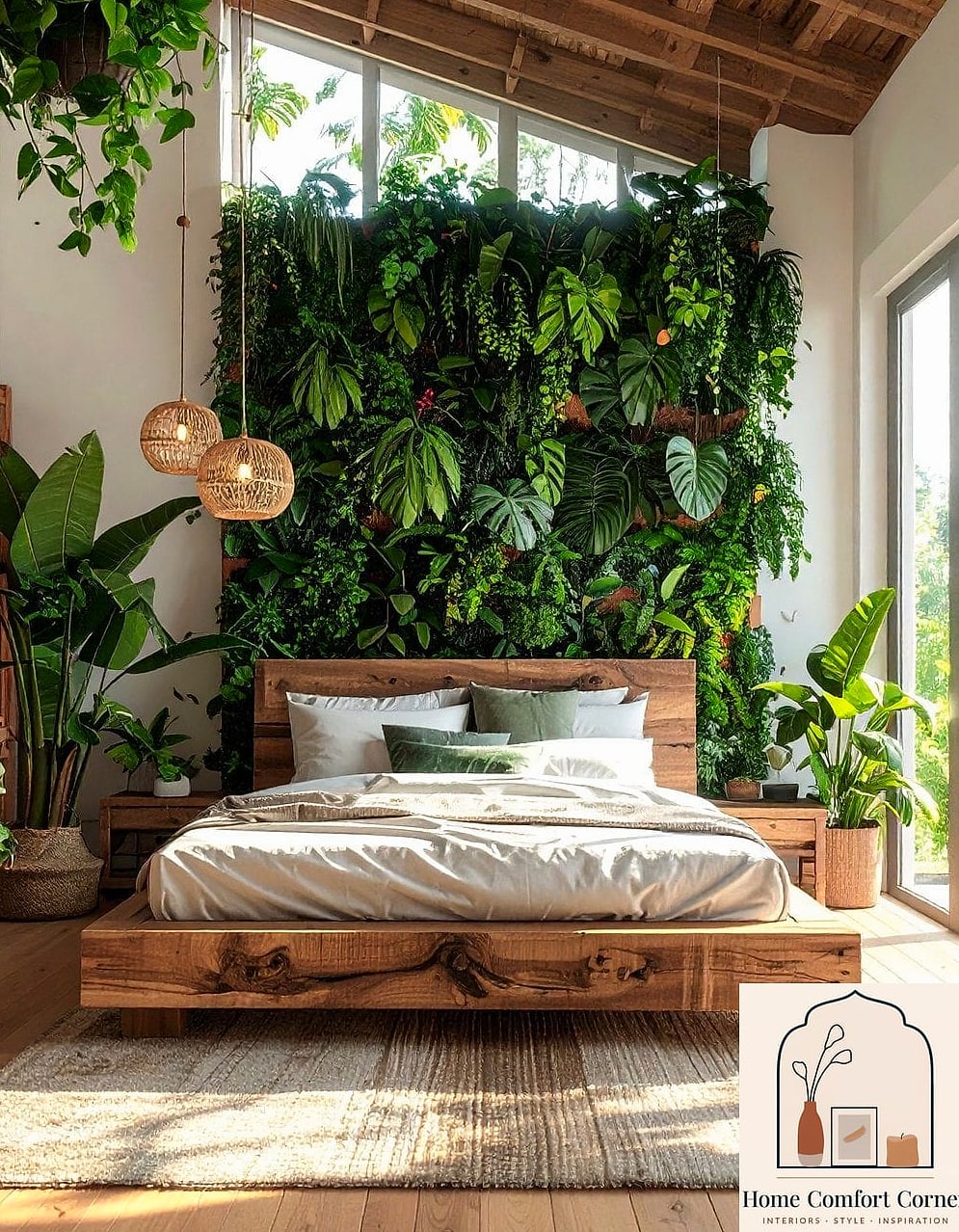
Plants are doing a lot of heavy lifting in this final idea. Rather than introducing color through art or accent pillows, a lot of clean room aesthetic designs rely almost entirely on greenery for visual interest.
One or two well-placed plants, a fiddle leaf fig in a corner, a trailing pothos on a shelf, add life and a subtle color contrast against neutral backdrops. This approach works in literally any room, including bathrooms with enough natural light.
Low-maintenance options like snake plants or ZZ plants are great for beginners or anyone who travels often, while pothos and philodendrons offer that trailing, organic look without demanding much care.
Bringing a clean room aesthetic into your home doesn’t require a full renovation or a big budget. A lot of these ideas start with small swaps, editing down what’s on display, choosing a tighter color palette, or adding one intentional storage solution. Pick two or three that fit your space and your budget, and build from there. The rest will follow naturally as you get a feel for what actually makes your rooms function better day to day.