11 Dining Room Decor Designs That Maximize Style and Function

- Statement Lighting as the Room’s Anchor
- Built-In Banquette Seating
- Open Shelving for Display and Storage
- A Bold Wallpapered Accent Wall
- Mixed Seating for Visual Interest
- A Statement Rug Under the Table
- A Statement Buffet or Sideboard
- Layered Textiles on the Table
- A Gallery Wall Above the Buffet
- Greenery and Natural Textures
- A Multi-Functional Extendable Table
11 Dining Room Decor Designs That Maximize Style and Function
Your dining room shouldn’t just be the place you eat twice a year during holidays. It’s a room that deserves real thought, whether you’re hosting weekly family dinners or just want a spot that feels good to walk past on your way to the kitchen. The best dining rooms balance good looks with actual usability, and that’s a lot easier to pull off than people think. Here are eleven ways to get there.
Statement Lighting as the Room’s Anchor
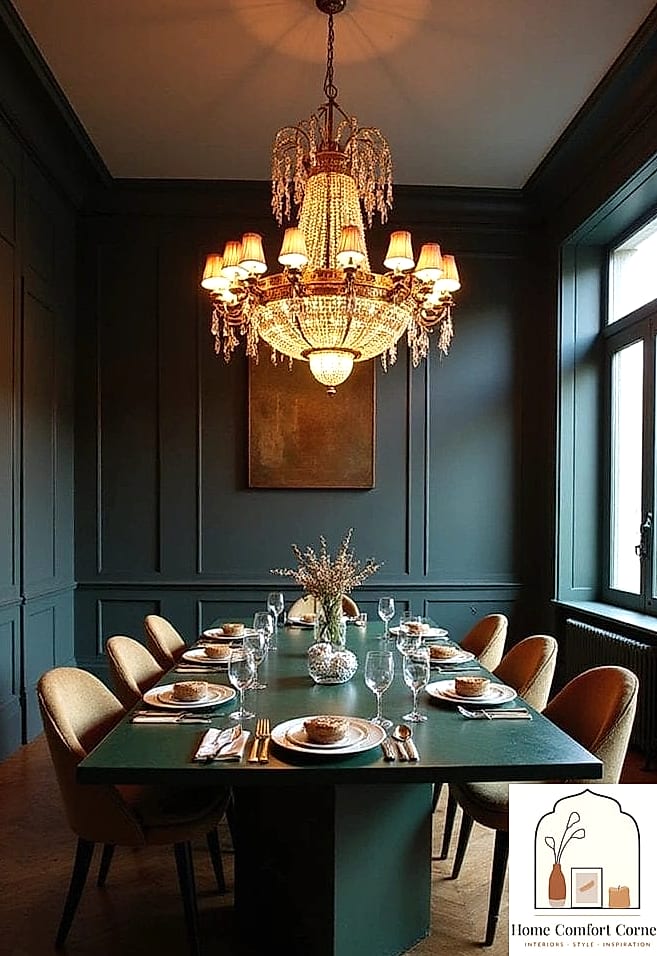
A dining room lives or dies by its lighting, and this is the upgrade that gets noticed first. A large pendant or a linear chandelier hung at the right height (about 30 to 36 inches above the table) instantly makes the space feel intentional.
This works especially well in rooms with higher ceilings, though smaller fixtures can be layered for lower ones. Brass and matte black finishes are having a moment, and both pair well with wood tones or painted walls. If you’re renting, look for plug-in pendant options that don’t require rewiring.
The practical bonus here is dimmability. A dimmer switch lets the same fixture handle bright family dinners and moodier dinner parties without needing two separate light sources.
Built-In Banquette Seating
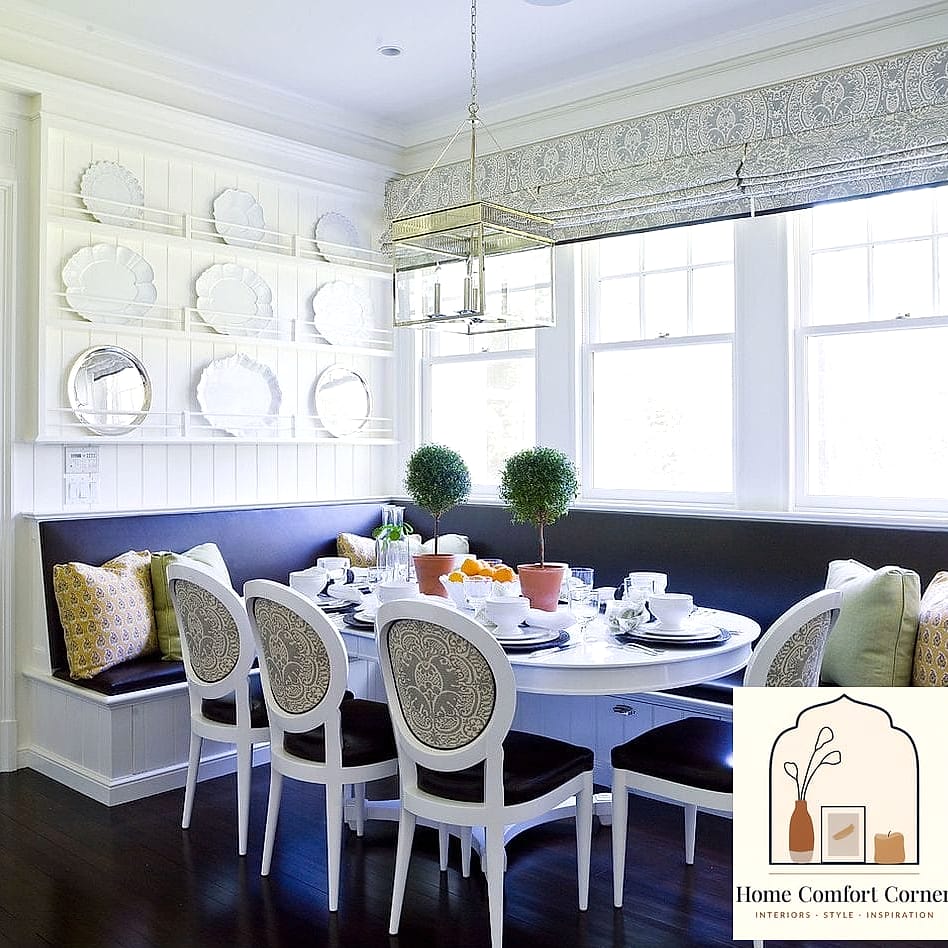
Banquettes solve two problems at once: they save floor space and they add a cozy, restaurant-style feel. This is a favorite in smaller dining nooks or homes where an eat-in kitchen doubles as the dining area.
You can go custom with built-in cabinetry underneath for storage, which is great for stashing table linens or extra chairs. Or keep it simpler with a bench against the wall and a few loose chairs on the other side.
Upholstery in a performance fabric makes this option family-friendly and easier to wipe down after spills. It’s not the cheapest project on this list if you go custom, but a freestanding bench version can be surprisingly budget-friendly.
Open Shelving for Display and Storage
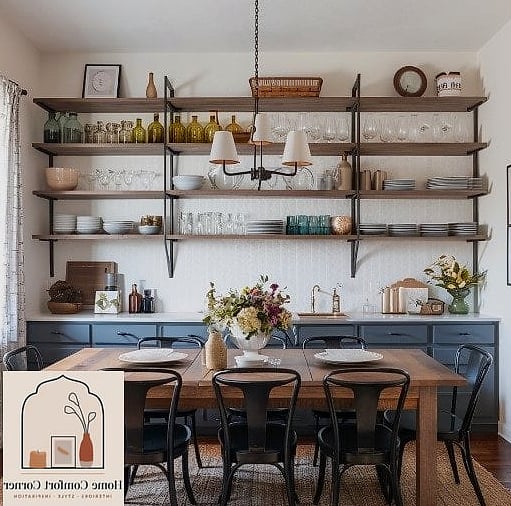
Open shelving isn’t just a kitchen trend anymore. In the dining room, a few floating shelves on an accent wall give you a spot to display glassware, ceramics, or a rotating mix of seasonal decor without committing to a full hutch.
This works best in rooms with a bit of extra wall space, ideally near the table but out of the way of foot traffic. Mixing in baskets or bins on lower shelves keeps things from looking too precious and adds a hidden storage element for napkins or placemats.
Wood shelves with black brackets read a little more industrial, while painted shelves that match the wall feel more built-in and seamless.
A Bold Wallpapered Accent Wall
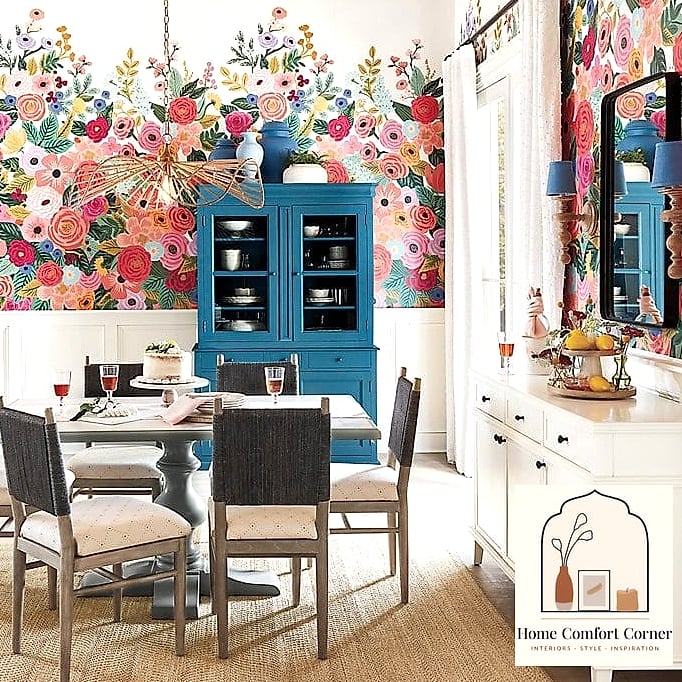
Wallpaper has made a serious comeback, and the dining room is one of the best places to use it since you’re not living in the space all day like you would a bedroom. A single accent wall behind the table or buffet lets you go bold without overwhelming the whole room.
Botanical prints, grasscloth textures, and geometric patterns are all popular right now. Peel-and-stick versions are great for renters or anyone nervous about commitment, and they’ve come a long way in quality over the past few years.
If patterned wallpaper feels like too much, a textured grasscloth in a neutral tone still adds depth without competing with your furniture or artwork.
Mixed Seating for Visual Interest
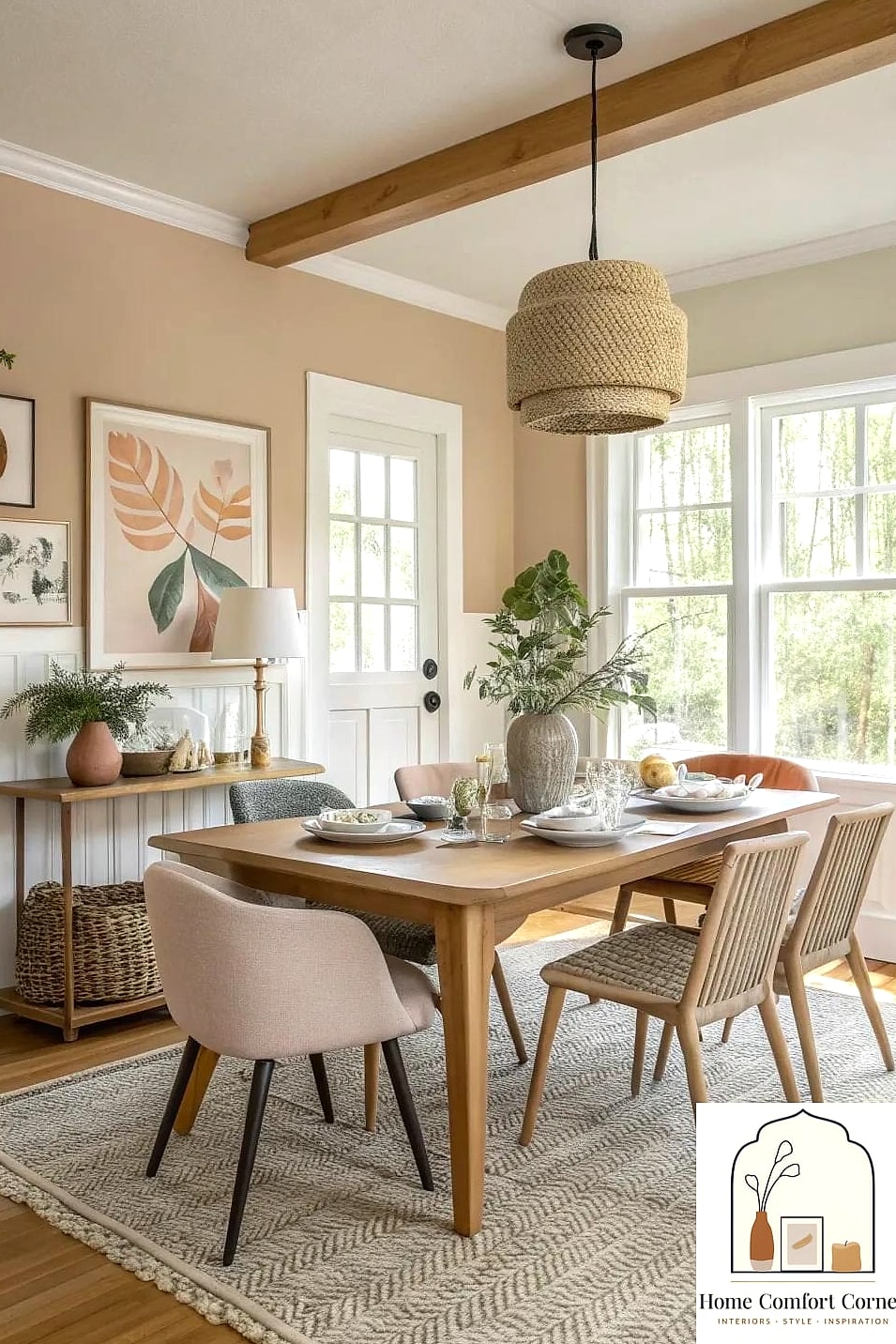
Matchy-matchy dining sets can feel a little stiff. Swapping in two different chair styles, like upholstered chairs at the heads of the table and simpler wood chairs along the sides, gives the room some personality without much extra effort.
This is an easy way to stretch a budget too, since you can mix a few splurge chairs with more affordable ones. It also makes it simple to replace individual chairs down the road instead of hunting for a discontinued matching set.
Keep some visual thread running through the mix, whether that’s a shared wood tone or a consistent color palette, so it reads as intentional rather than mismatched.
A Statement Rug Under the Table
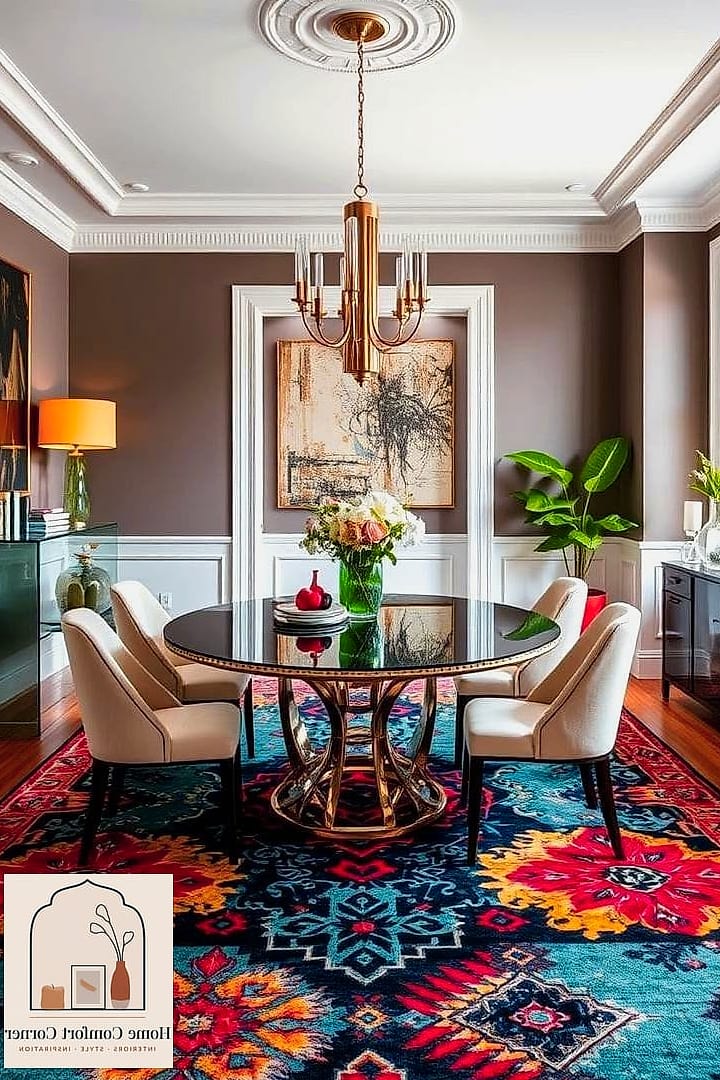
An area rug grounds the whole dining space and adds warmth, especially over hardwood or tile floors. The key is sizing it right: you want enough rug that chairs stay on it even when pulled out, which usually means 24 to 30 inches of extra rug on each side of the table.
Flatweave and low-pile rugs are the most practical choice here since dining rooms see their fair share of spills and dropped forks. A patterned rug in warm tones also hides crumbs better than a solid light color.
For a more elevated look, layering a smaller vintage-style rug over a jute base rug adds texture without sacrificing durability.
A Statement Buffet or Sideboard
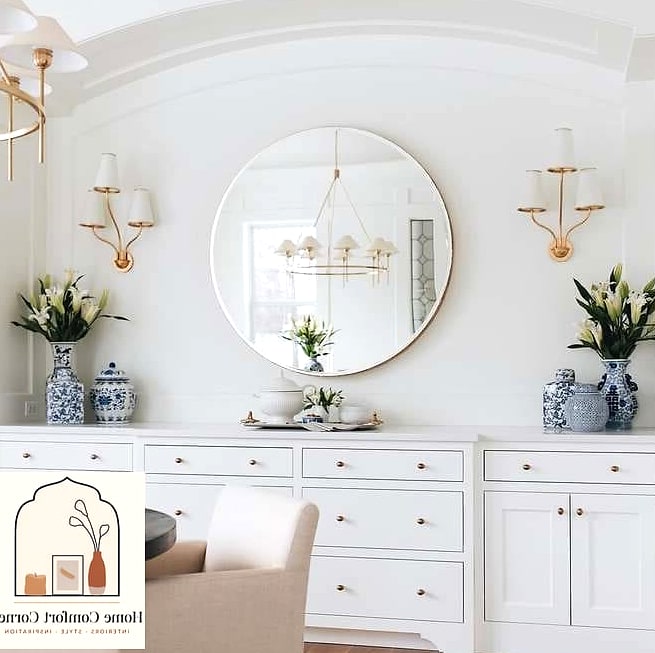
A good buffet does double duty as storage and as a display surface for decor, table linens, or serving pieces you don’t want cluttering your kitchen cabinets. It’s also one of the easiest ways to add character to a dining room that otherwise feels a little flat.
Vintage and secondhand sideboards bring warmth and history that new furniture sometimes lacks, and refinishing an old piece is a satisfying weekend project if you’re the DIY type. For a more modern look, a low-profile piece with brass hardware and clean lines keeps things streamlined.
Drawer organizers inside make it easier to actually use the storage instead of letting it become a junk drawer at dining room scale.
Layered Textiles on the Table
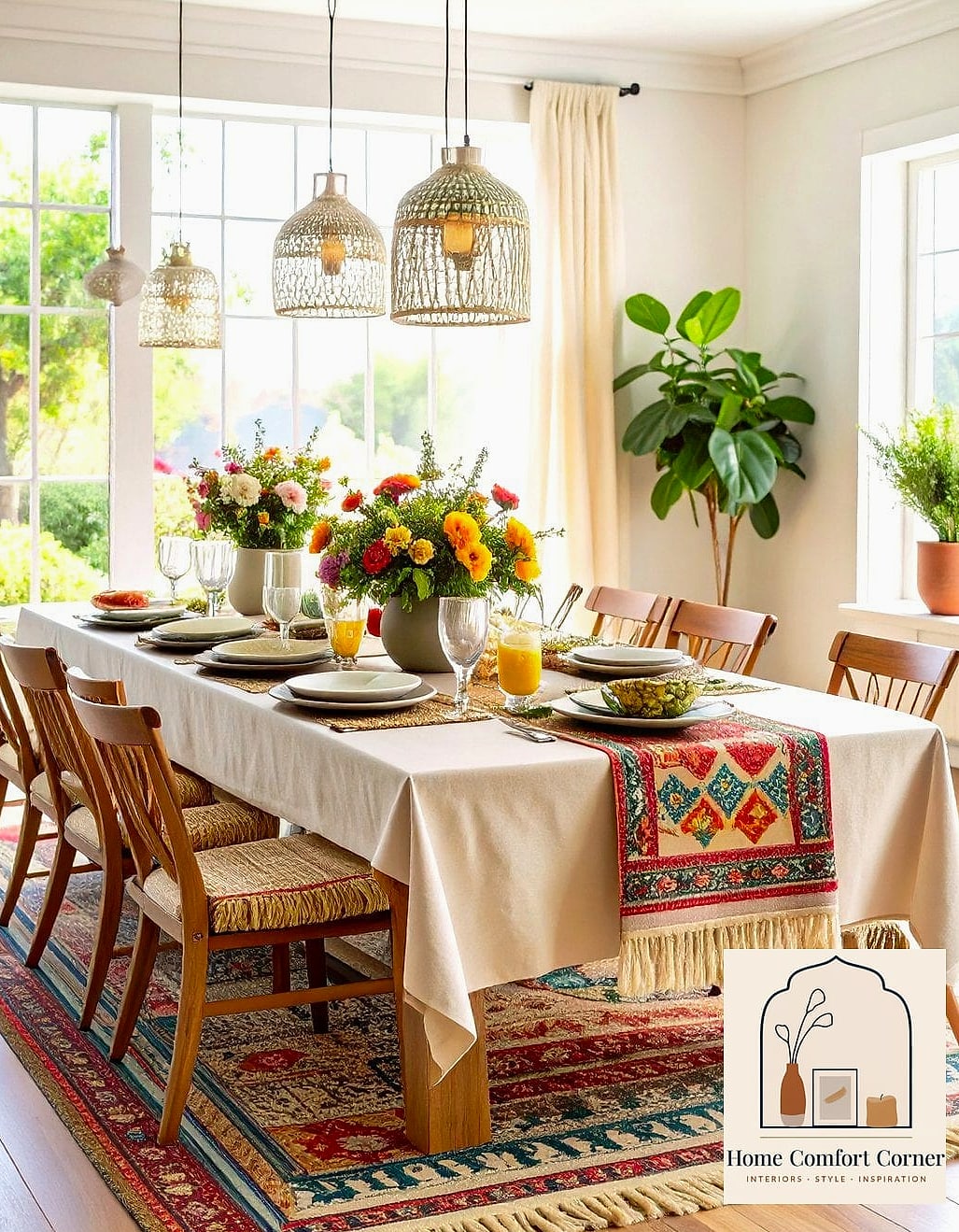
Table styling doesn’t need to be complicated, but a few layered textiles make a dining table feel finished even when it’s not set for a big meal. A table runner over a solid tablecloth, or even just a runner on a bare wood table, adds texture and color without much effort.
Linen and cotton blends are the most practical, since they wash easily and soften with use. This is also one of the most affordable updates on this list, and it’s easy to swap seasonally, whether that’s a lighter linen for summer or something in a deeper tone for fall and winter.
Cloth napkins in a coordinating color take this a step further and cut down on paper towel use, which is a small win for anyone trying to be a little more sustainable at home.
A Gallery Wall Above the Buffet
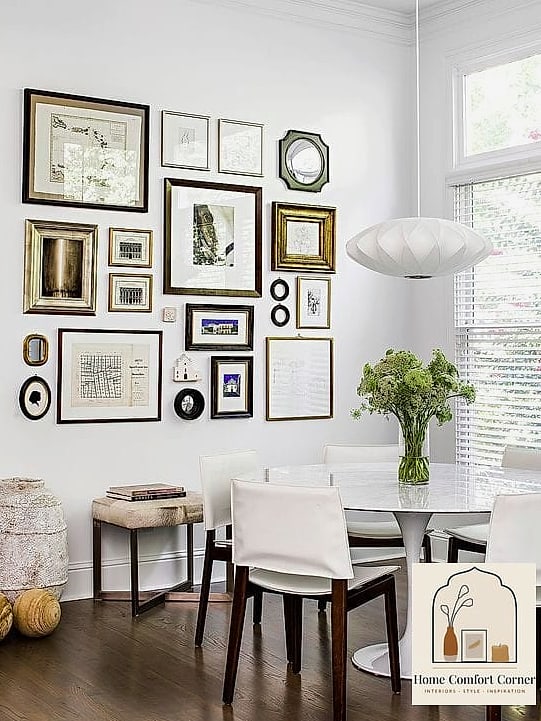
The wall above a buffet or sideboard is often left bare, which is a missed opportunity. A gallery wall here adds personality and gives guests something to look at during long dinners.
Mixing frame sizes and finishes keeps it from feeling too formal, and you don’t need original art to pull this off. Vintage prints, family photos, and even pressed botanicals in simple frames all work together if you keep a consistent color story.
If a full gallery feels like too much commitment, one oversized piece of art centered above the buffet has a similar impact with a lot less planning.
Greenery and Natural Textures
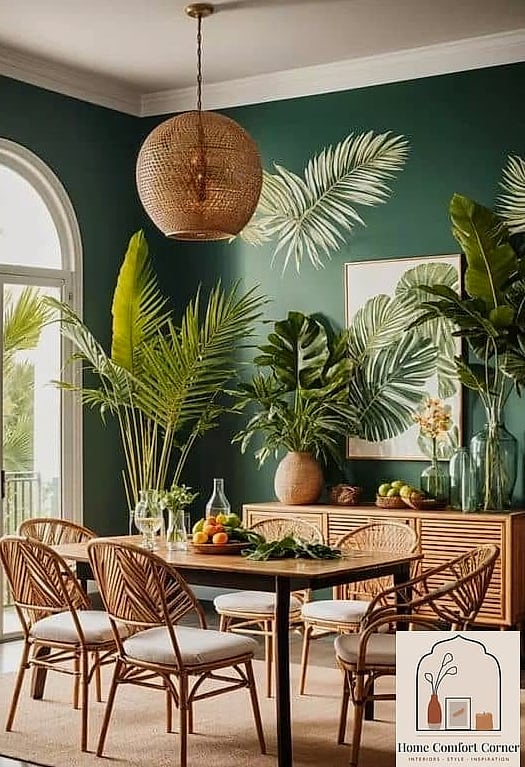
Plants bring a dining room to life in a way that’s hard to replicate with decor alone. A trailing plant on the buffet, a small potted arrangement as a centerpiece, or a larger floor plant in the corner all add warmth and a bit of the outdoors.
Low-maintenance options like pothos or snake plants are good picks if your dining room doesn’t get much natural light, and they’re forgiving if you forget to water on schedule. For centerpieces, a simple vase with dried or faux stems means you’re not scrambling to replace wilted flowers before every dinner party.
Pairing greenery with natural materials like a woven placemat or a wood bowl centerpiece ties the whole look together.
A Multi-Functional Extendable Table
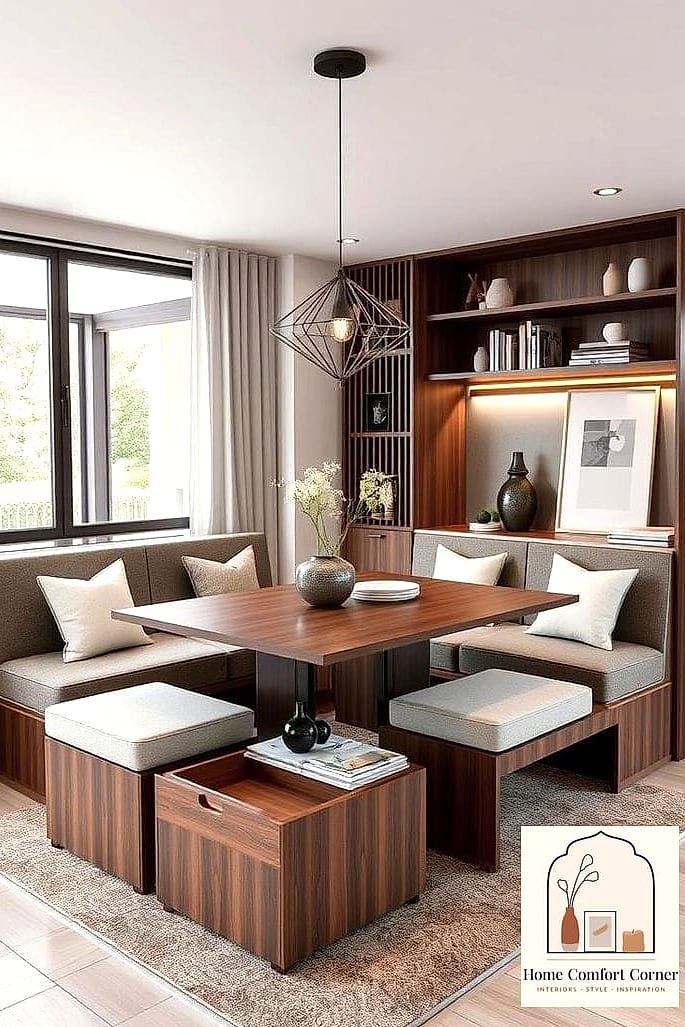
Not every home has room for a dedicated dining table that seats twelve, and that’s where an extendable table earns its keep. It looks streamlined day to day and expands when you’re hosting a bigger group, which makes it one of the most practical choices on this list for smaller homes.
Round or oval extendable tables tend to work well in tighter spaces since they’re easier to walk around. Wood tables with a durable sealed finish hold up better to daily use and are easier to wipe clean than more delicate finishes.
If your dining room doubles as a home office or craft space some days, this kind of table makes that transition a lot smoother too, since you’re not sacrificing seating capacity for flexibility.
Pulling together a dining room that works this hard doesn’t mean doing all eleven of these at once. Pick the ones that solve an actual problem in your space first, whether that’s storage, seating, or just a room that feels a little unfinished, and build from there. The best dining rooms usually come together in layers anyway, not all in one weekend.