7 Spa Interior Design Ideas That Work in Any Size Home
7 Spa Interior Design Ideas That Work in Any Size Home
You don’t need a sprawling master bathroom or a five-figure renovation budget to make your home feel like a retreat. Some of the most relaxing spaces I’ve seen were carved out of tiny apartment bathrooms and awkward corner nooks. It’s really about intention, not square footage.
Spa-inspired design is having a moment right now, and for good reason. After years of chaotic schedules and cluttered homes, people just want somewhere to breathe. Below are seven ideas that scale up or down depending on what you’re working with, whether that’s a full primary bath or a half bath the size of a closet.
Natural Stone and Stone-Look Surfaces
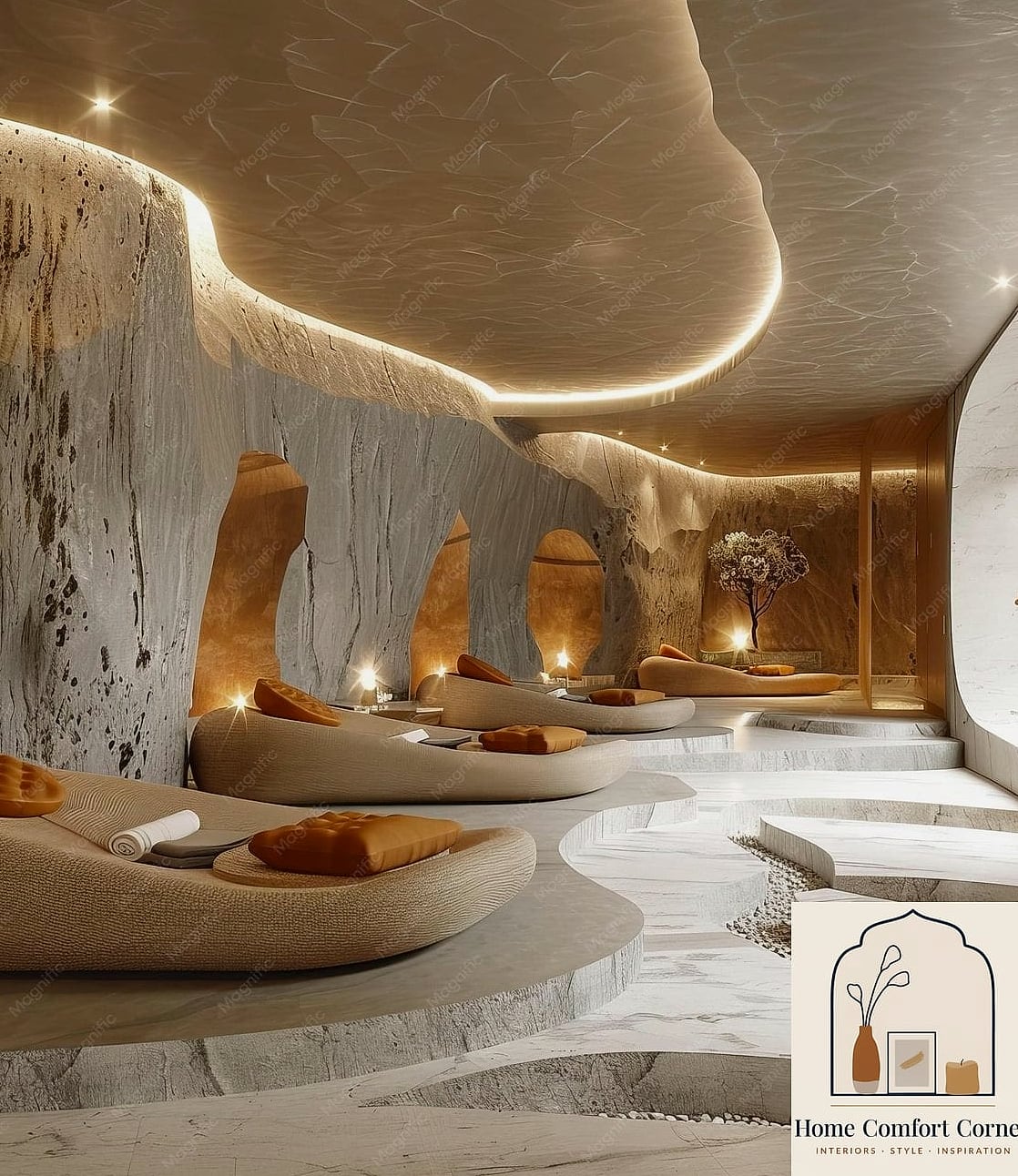
There’s a reason spas lean so heavily on stone. It’s cool to the touch, visually calming, and it photographs beautifully in that soft, editorial way. Marble is the classic choice, but honestly, it’s not always practical for a busy household because it stains and etches if you’re not careful with it.
Porcelain tile that mimics marble or travertine gives you that same organic, veined look without the maintenance headache. It resists water and scratches far better, which makes it a smart pick for families or renters who don’t want to babysit a surface.
If you’re working with a smaller bathroom, stick to one or two stone-look surfaces rather than covering every wall. A stone-look vanity top paired with plain walls reads as intentional. Covering everything in veined marble-look tile can start to feel more like a hotel lobby than a personal retreat.
Budget-wise, peel-and-stick stone-effect tiles have gotten surprisingly good and are worth considering for a renter-friendly refresh behind a mirror or as a small accent wall.
A Freestanding or Deep Soaking Tub
I know, this one sounds like it requires a mansion. But even a small bathroom can sometimes fit a compact freestanding tub if you’re willing to skip a separate shower enclosure, or you can get a similar feeling with a deep alcove tub and a nice tile surround.
The appeal here is obvious. There’s something about a soaking tub that just signals “this room exists for relaxation,” even if you only use it once a month. It becomes the visual anchor of the space.
For smaller homes, look at Japanese-style soaking tubs. They’re narrower and deeper than standard American tubs, so they take up less floor space while still giving you that full-body soak. Some are compact enough to fit in bathrooms under 40 square feet.
If a new tub genuinely isn’t in the cards, refinishing an existing tub in a matte white or soft warm tone, and adding a wooden tub caddy for candles and a book, gets you 80 percent of the feeling for a fraction of the cost.
Warm Wood Accents Against Cool Materials
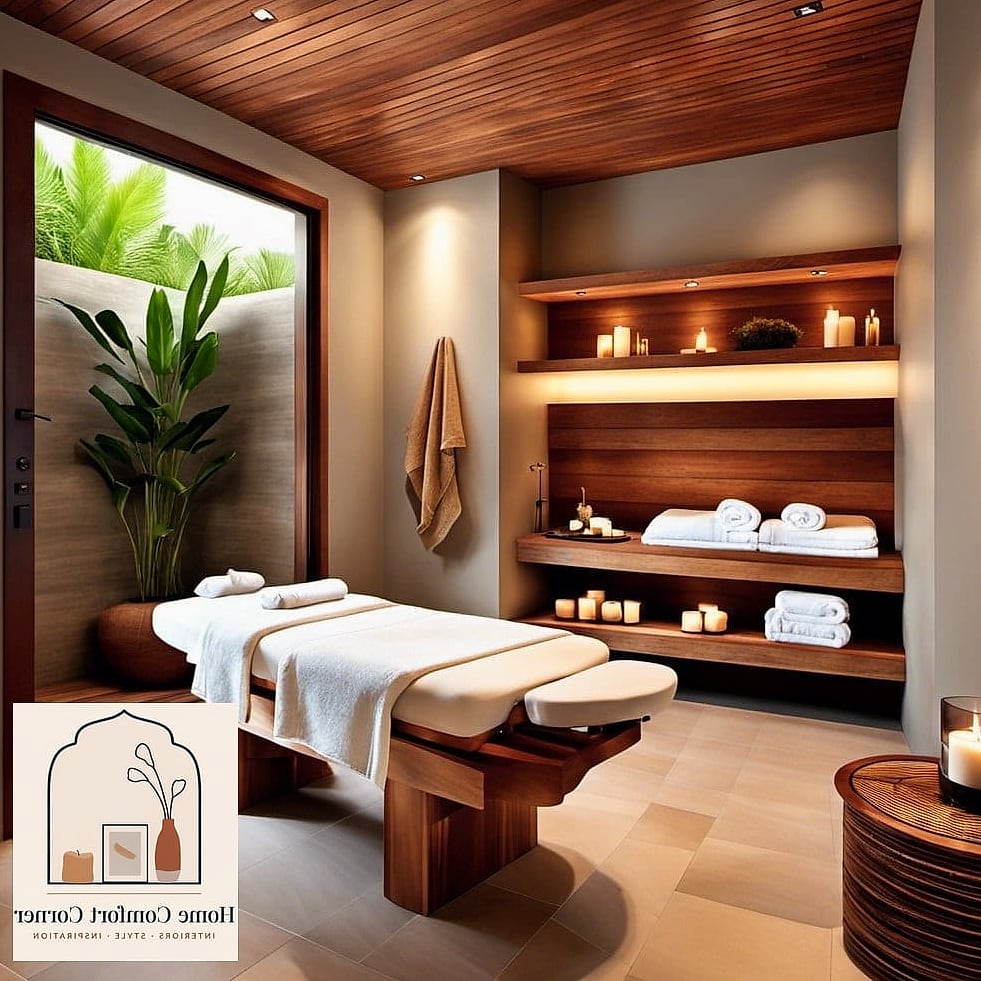
Spas almost always mix warm wood tones against cooler materials like stone, tile, or matte white surfaces. That contrast is doing a lot of the emotional work in making a space feel welcoming rather than clinical.
Think teak bath mats, a wood vanity with a butcher block-style top, or slatted wood wall paneling behind a tub. Even a simple wood stool or small wood shelf can shift a bathroom’s whole personality.
This idea works beautifully in tiny bathrooms because wood accents don’t need to be large to register visually. A single floating wood shelf holding rolled towels and a plant does more than people expect.
For humid bathrooms, look for teak or bamboo specifically, since they handle moisture better than most other woods without warping. A light coat of teak oil every few months keeps them looking rich instead of dried out.
Layered, Dimmable Lighting
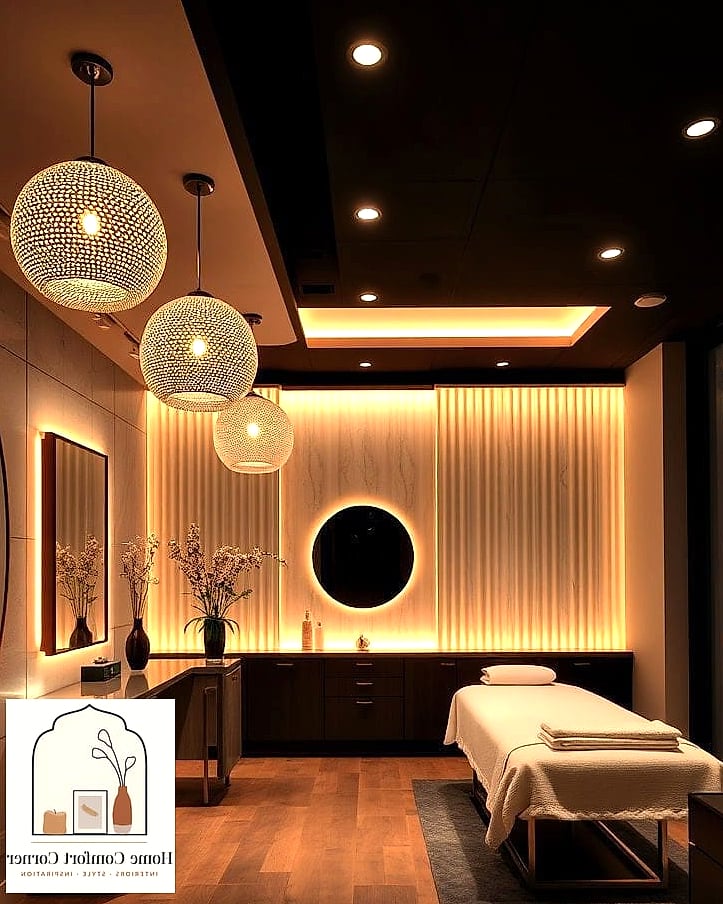
This is probably the most underrated item on this list, and it’s also one of the cheapest fixes if your current bathroom is lit like an operating room.
Spas use layered lighting on purpose. There’s usually soft ambient light, a dimmer option, and then task lighting near mirrors that can be brightened when you actually need to see what you’re doing. Overhead-only lighting flattens everything and makes even a beautifully designed bathroom feel sterile.
Swapping your main fixture for one on a dimmer switch is a weekend project for most DIYers, and it instantly changes the mood at night. Add a warm-toned sconce or two near the tub, and consider battery-operated flameless candles if you like the ambiance but don’t want to deal with actual flames near towels.
Color temperature matters more than people realize. Stick to warm white bulbs, generally in the 2700K to 3000K range, rather than the cooler, bluish light that’s common in newer builds. That blue-toned light is one of the fastest ways to kill a relaxing atmosphere.
A Calming, Neutral Color Palette
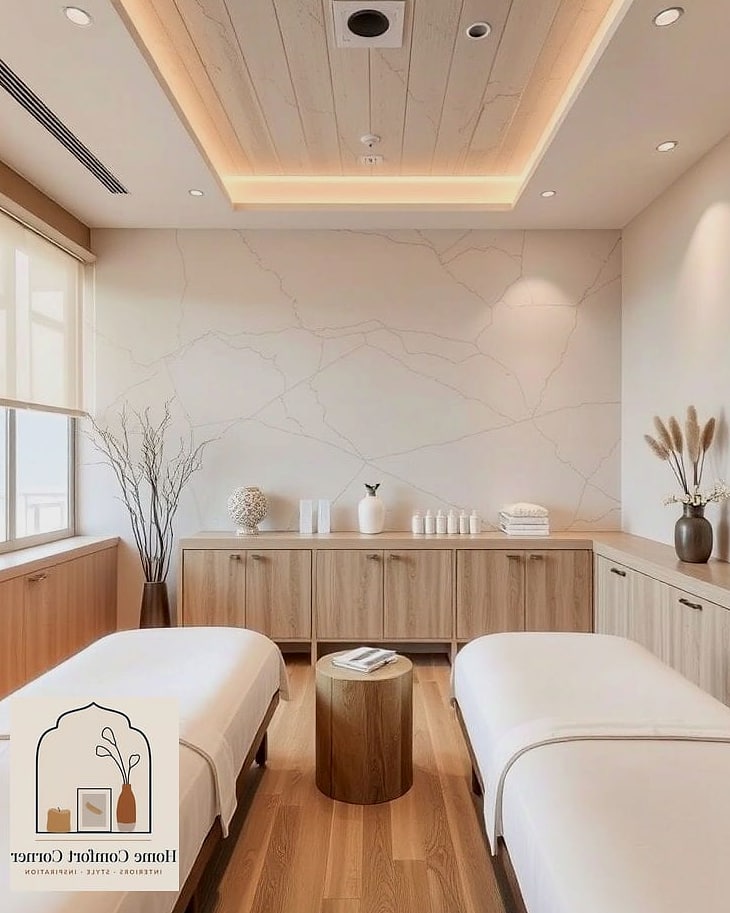
Bold colors have their place, but spa-style rooms almost always lean into a quiet, neutral color palette. Think warm whites, soft greiges, sage, sandy tan, or muted clay tones. Nothing too stark, nothing too saturated.
The psychology here is real. Busy patterns and high-contrast colors keep your eyes moving and your brain slightly more alert. Soft, tonal color schemes let your eyes rest, which is exactly what you want in a space meant for unwinding.
This is one of the easiest and cheapest upgrades on this entire list. A gallon of the right paint color transforms a room more than almost anything else you could do, and it works in a rental as long as you’re allowed to paint or you use a removable wallpaper in a similar tone.
If you want visual interest without breaking the calm, add texture instead of color. A woven basket, a linen shower curtain, or a textured plaster-look paint finish gives depth without disrupting the palette.
Built-In or Curated Storage for a Clutter-Free Look
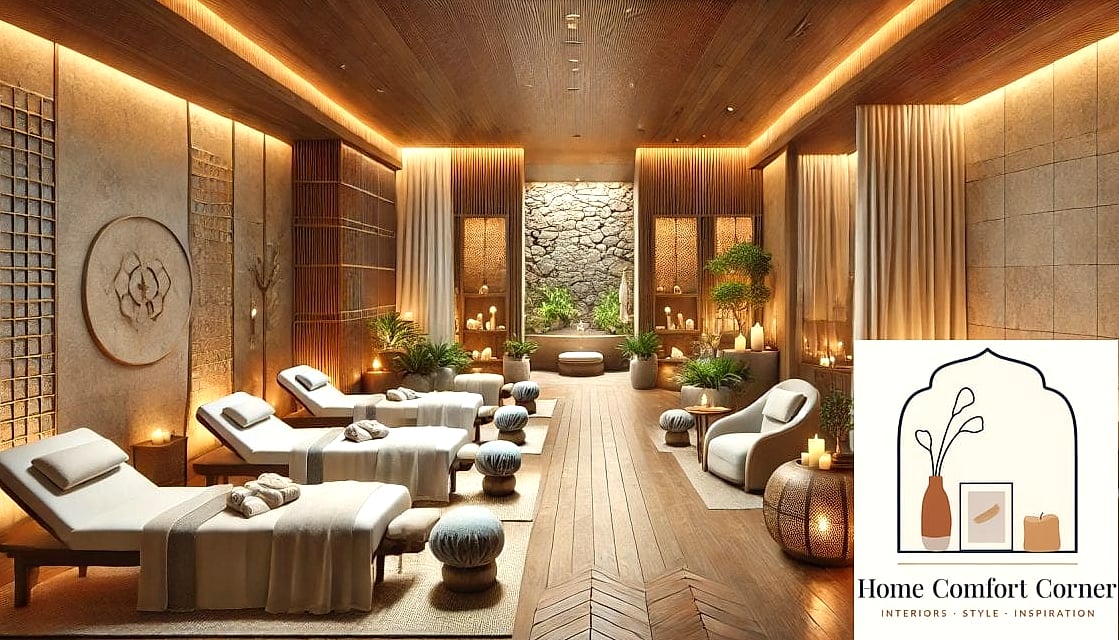
Clutter is the enemy of a spa feeling, full stop. You can have gorgeous tile and perfect lighting, but if there are six half-empty shampoo bottles and a hairdryer cord tangled on the counter, none of it reads as relaxing.
Built-in niches in the shower are ideal if you’re already renovating, since they eliminate the need for wire caddies hanging off the showerhead. For homes that aren’t mid-renovation, a simple corner shelf or a teak shower caddy accomplishes something similar.
Open shelving with matching baskets or bins is a great middle ground. You get storage without a wall of cabinet doors, but everything still looks tidy because it’s grouped and hidden inside coordinated containers rather than sitting out loose.
For small bathrooms especially, look at drawer organizers sized specifically for bathroom drawers. They sound minor, but keeping toothpaste, floss, and skincare items divided and out of sight makes a tiny counter feel dramatically calmer.
Greenery and Natural Elements
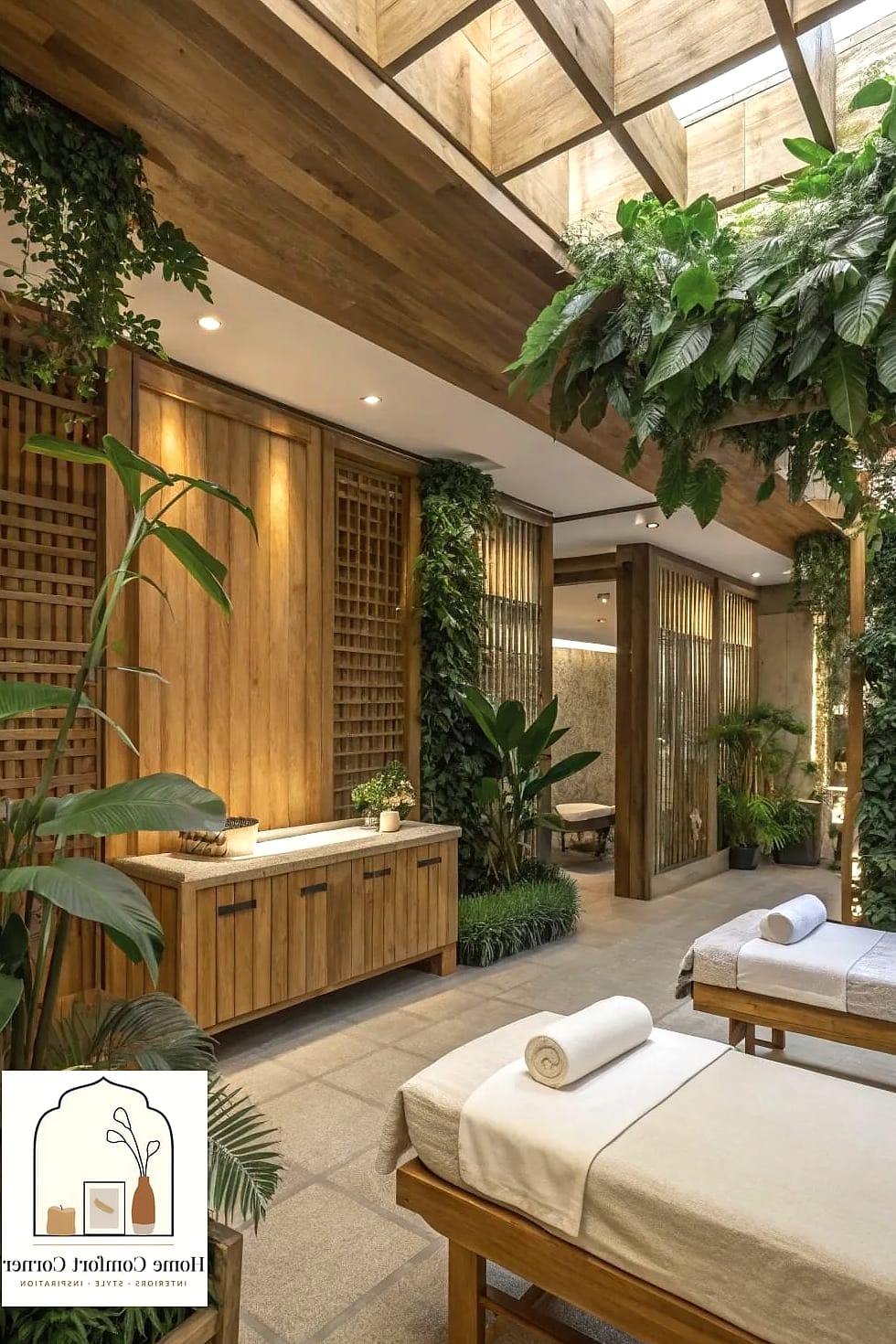
Plants do something for a bathroom that almost no other design choice can replicate. They bring life into a space that’s otherwise all hard surfaces, and they visually soften sharp lines like vanity edges and mirror frames.
Not every plant loves bathroom humidity and low light, though, so choose carefully. Pothos, snake plants, and ZZ plants are pretty forgiving and tolerate lower light conditions common in windowless bathrooms. If you’ve got a bright bathroom window, ferns thrive in that humid environment and genuinely seem happier there than almost anywhere else in the house.
If you’re not confident in your plant care abilities, and no judgment here, high-quality faux greenery has come a long way and can still deliver the visual softness without the maintenance.
Beyond plants, other natural elements work too. A small stack of river stones, a wood tray, or a simple ceramic vessel with dried eucalyptus all add that organic, grounded feeling spas are known for.
Putting It All Together
None of these seven ideas require you to gut your bathroom or spend a fortune. Pick two or three that fit your space and your budget, and layer them in gradually. A dimmer switch and a fresh coat of warm neutral paint alone can shift a room’s entire personality in a weekend.
The goal with spa interior design ideas that work in any size home isn’t to recreate a resort. It’s to build a space that genuinely makes you want to slow down for ten extra minutes. Start small, live with it, and add from there.