23 Tiny Mudroom Ideas Entryway Ideas That Work in Any Size Home
- Slim Bench with Hooks Above
- Wall-Mounted Shoe Rack
- Over-the-Door Storage
- Built-In Cubbies for Each Family Member
- Baskets on Open Shelving
- Drop Zone Console Table
- Pegboard Wall System
- Mudroom Nook Under the Stairs
- Vertical Shoe Cabinet
- Chalkboard or Whiteboard Wall
- Layered Rug for Durability
- Floating Shelf with Hooks Below
- Corner Bench with Storage
- Mirror Above a Console
- Hanging Basket Storage
- Built-In Bench with Cushion
- Command Center for Mail and Keys
- Boot Tray by the Door
- Sliding Barn Door Closet
- Ladder Shelf for Layers
- Tile Accent Flooring
- Narrow Coat Closet Makeover
- Multi-Purpose Console with Baskets
23 Tiny Mudroom Ideas Entryway Ideas That Work in Any Size Home
If you’ve ever tripped over a pile of shoes the second you walk in the door, you already know why mudrooms matter so much. The good news is you don’t need a big dedicated room to make one work. A narrow hallway, an awkward corner, or even a strip of wall by the door is enough to build real function into your entryway. Here are 23 ideas that prove small spaces can still handle everything a busy household throws at them.
Slim Bench with Hooks Above
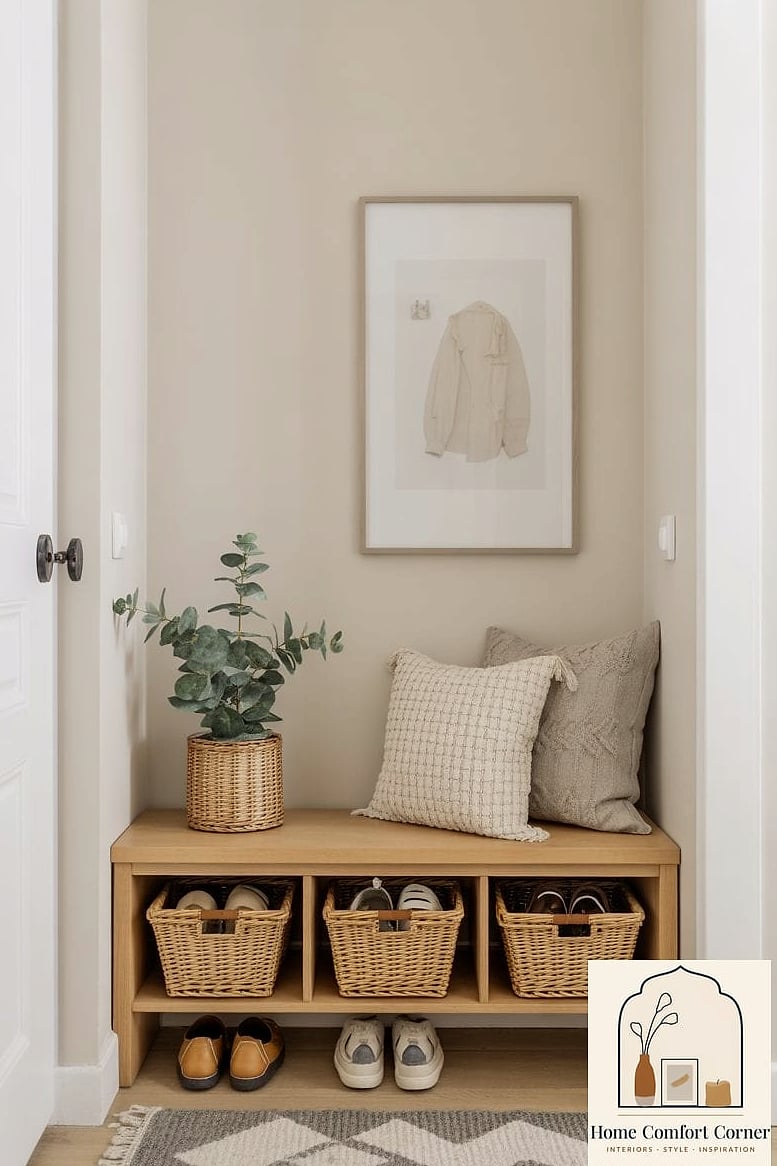
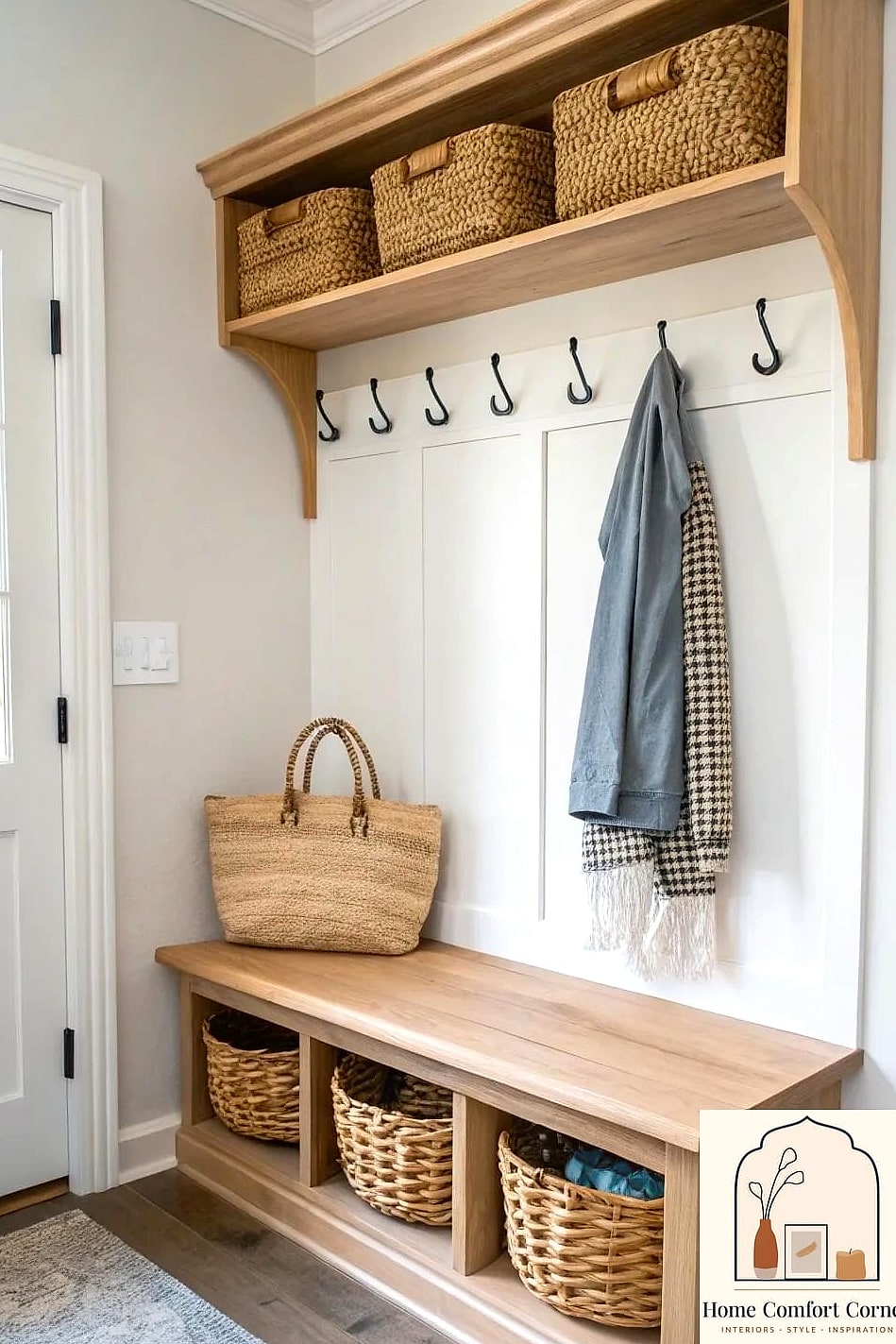
A narrow bench along one wall gives you a spot to sit and pull off boots without stealing much floor space. Add a row of hooks above it and you’ve got a landing zone for coats, bags, and leashes in one glance. Wood tones warm up the space, while a painted finish in a soft neutral color palette keeps things bright in tight hallways. This setup works especially well for families who need somewhere to sit while wrangling kids’ shoes in the morning rush.
Wall-Mounted Shoe Rack
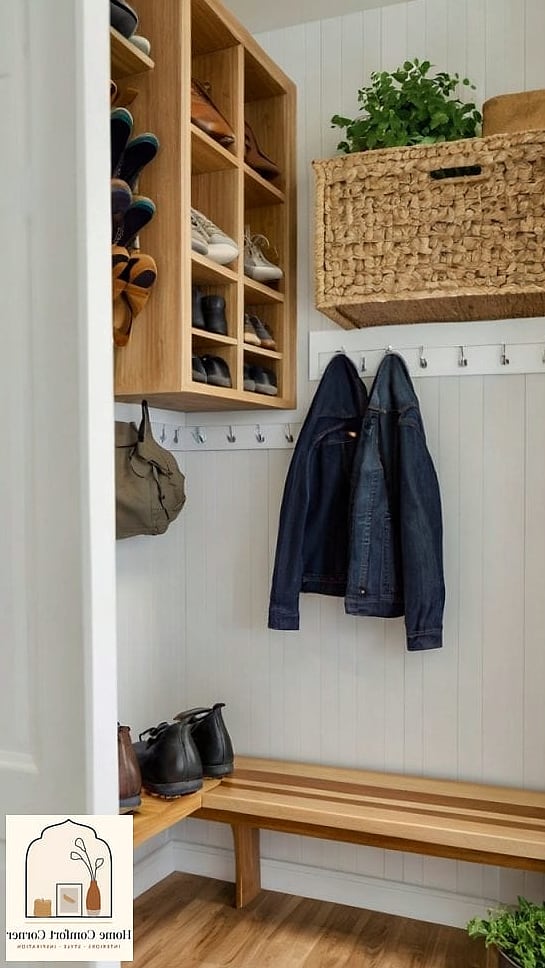
Floor space is precious in a small entryway, so getting shoes up and off the ground makes a real difference. A slim wall-mounted rack holds several pairs without eating into your walking path. Metal or wood finishes both work, depending on whether your entry leans modern or more traditional. It’s a budget-friendly option that’s also incredibly renter-friendly since most versions just need a couple of screws.
Over-the-Door Storage
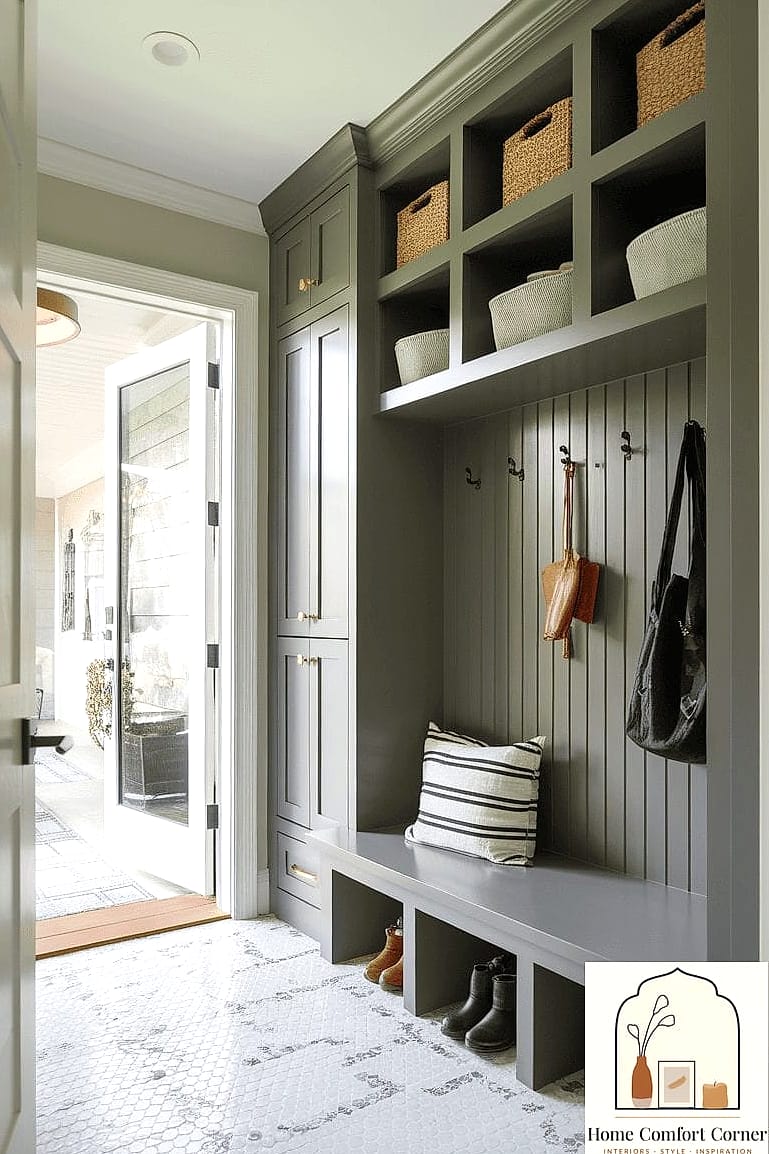
When there’s genuinely no wall space to spare, the back of the door becomes your best friend. Over-the-door organizers with pockets or hooks are perfect for umbrellas, dog leashes, gloves, and mail. This is one of those upgrades that instantly makes a cramped entry feel more organized without requiring a single tool beyond a hanger hook. Pet owners especially love having leashes and poop bags in one grab-and-go spot.
Built-In Cubbies for Each Family Member
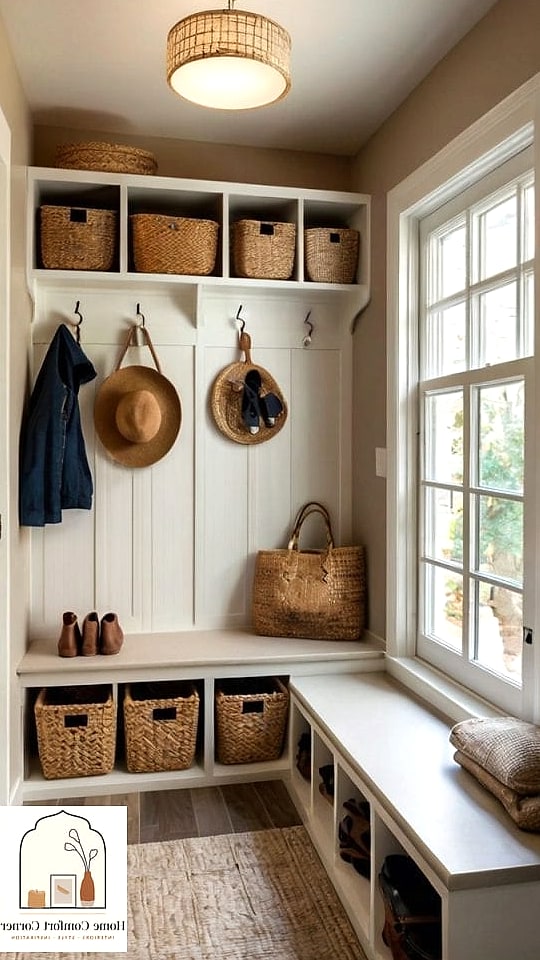
If you have even 24 inches of wall depth, built-in cubbies can be sized to fit one per family member. Each person gets their own hooks, a shelf for shoes, and maybe a basket up top. This keeps backpacks and jackets from turning into one giant heap. Painted MDF keeps costs down, while stained wood adds a more custom, furniture-like look.
Baskets on Open Shelving
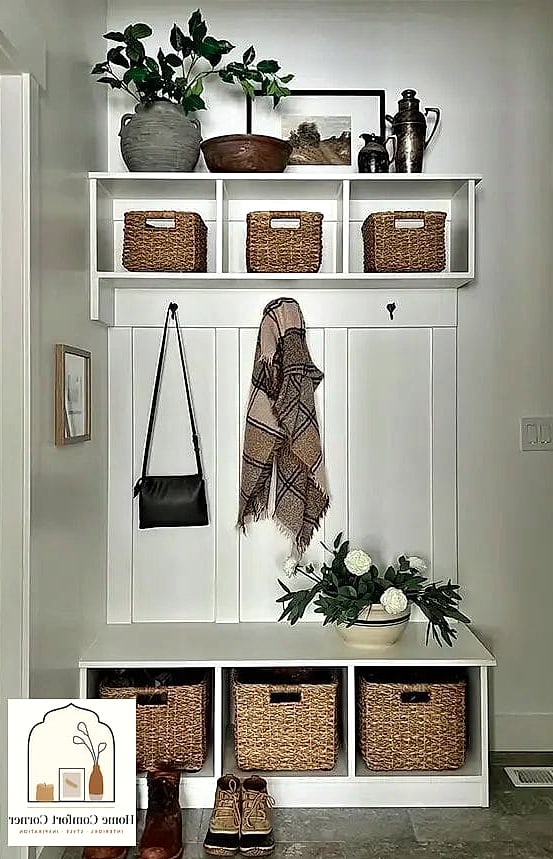
Open shelving with a row of woven baskets underneath is an easy way to corral small items without a full closet. Baskets hide clutter while still looking intentional, and you can label them for hats, scarves, or dog gear. This works great in a tiny mudroom ideas entryway ideas setup where a closed cabinet just wouldn’t fit. Natural rattan or seagrass baskets bring in texture and warmth against a plain wall.
Drop Zone Console Table
A slim console table by the front door can double as a landing spot for keys, mail, and sunglasses. Add a drawer for smaller items like pet treats or spare chargers, and a basket underneath for shoes. This is a great renter-friendly option since it’s furniture rather than a built-in, so it moves with you. Choose a table with a durable, easy-wipe finish if you’ve got kids tracking things in.
Pegboard Wall System
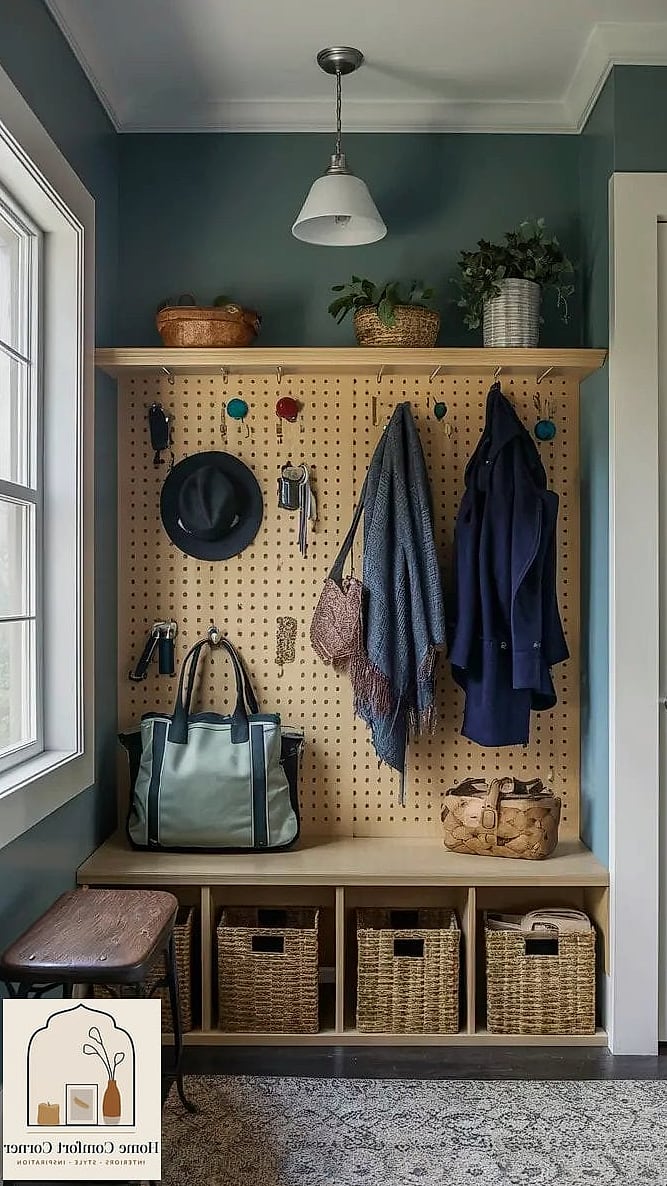
Pegboards aren’t just for garages anymore. A painted pegboard mounted near the entry gives you a fully customizable spot for hooks, small shelves, and baskets that you can rearrange anytime. It’s especially DIY-friendly since you can build the whole thing in an afternoon. This idea shines in awkward, narrow entries where standard furniture just won’t fit right.
Mudroom Nook Under the Stairs
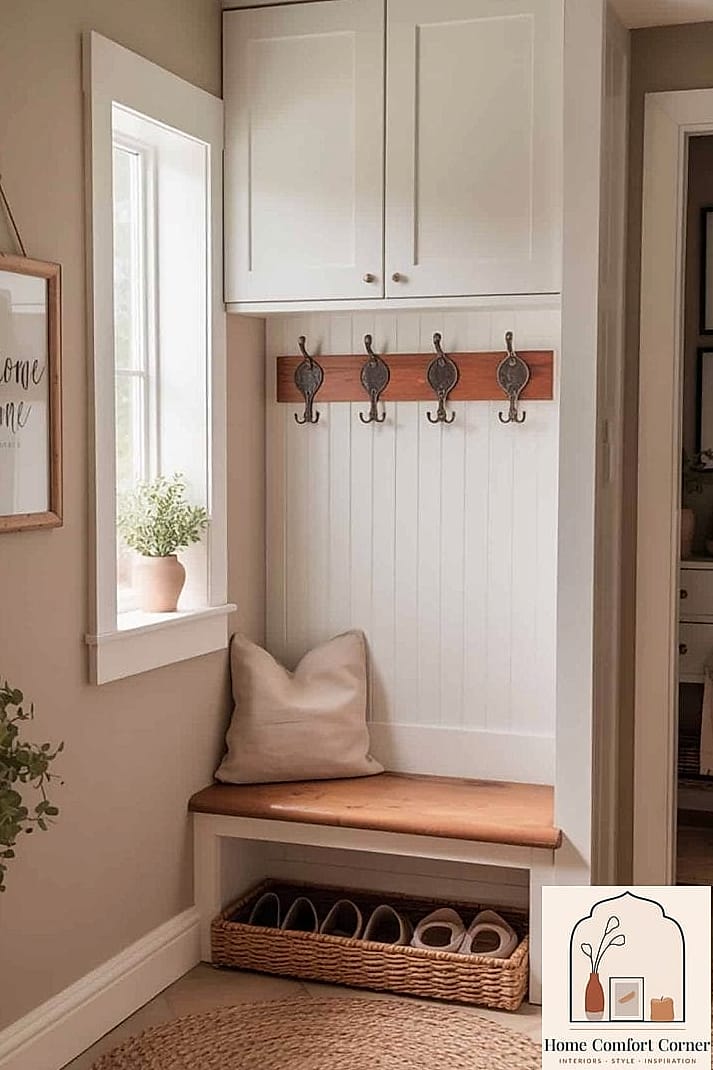
That triangular dead space under a staircase is often ignored, but it can fit a mini mudroom setup with hooks, a small bench, and shoe storage. It’s not a huge footprint, but it’s enough to keep the main hallway clear. Adding a light fixture inside makes the nook feel purposeful rather than like leftover space. This is one of my favorite tricks for older homes where the entry itself is basically nonexistent.
Vertical Shoe Cabinet
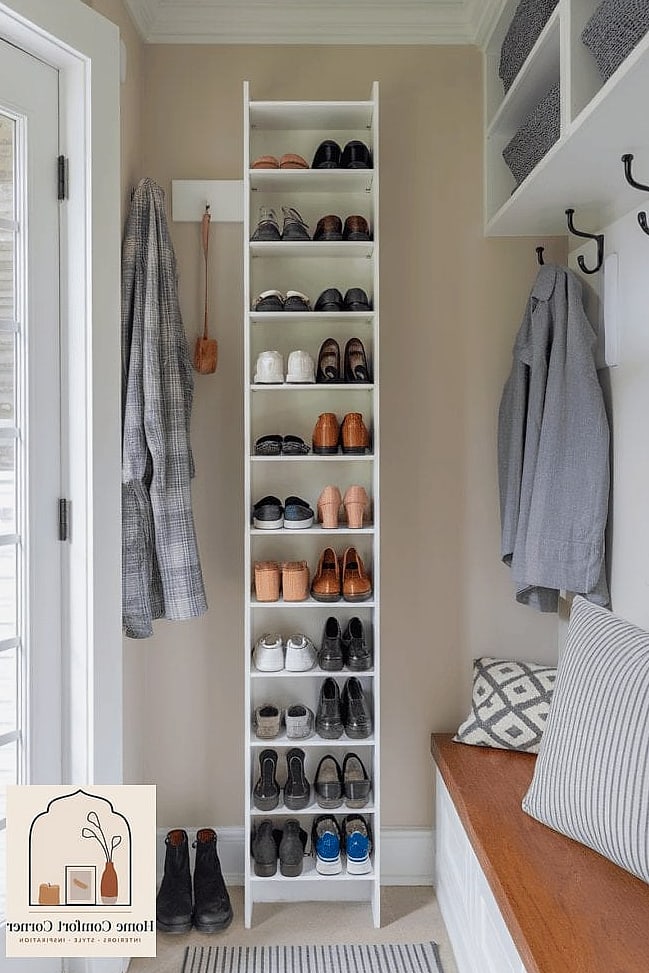
When floor space is at a premium, going vertical solves a lot of problems. A tall, narrow shoe cabinet tucks into a corner and holds way more pairs than you’d expect from its footprint. Slatted or louvered doors help with airflow so shoes don’t get musty. Look for matte finishes in black or warm wood tones to keep the piece from feeling bulky.
Chalkboard or Whiteboard Wall
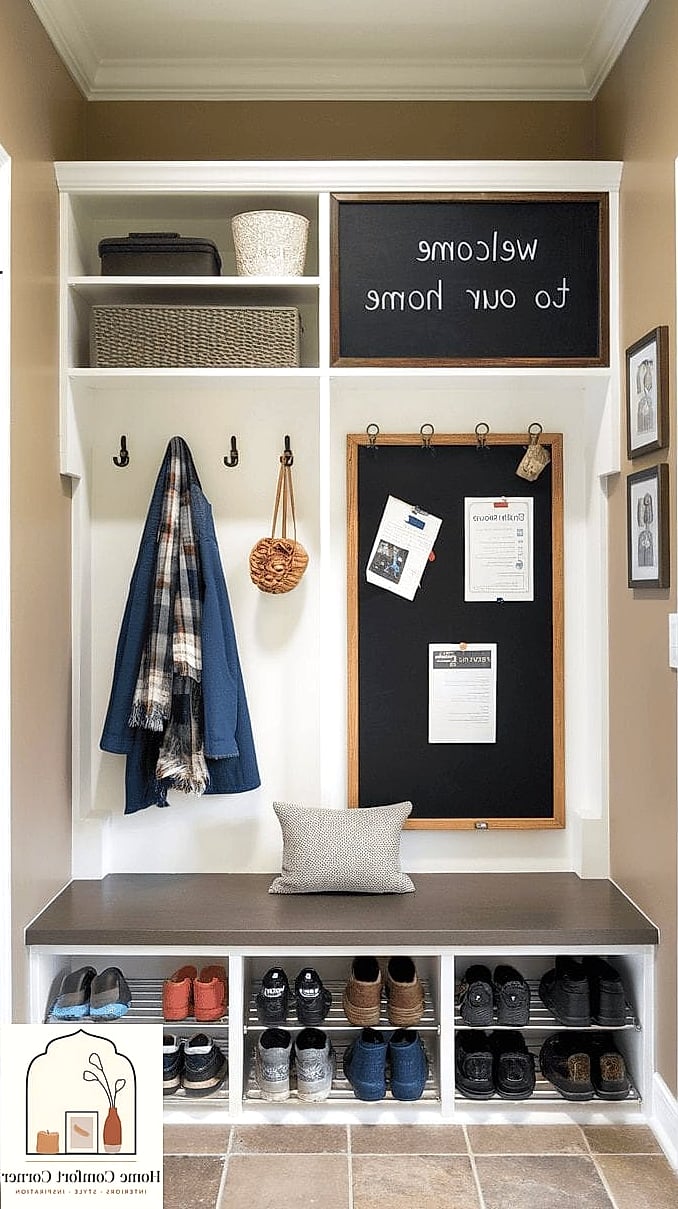
A small chalkboard panel near the door lets you leave reminders, grocery lists, or a family schedule right where everyone will see it on their way out. It’s a low-cost addition that adds personality without taking up any real space. Pair it with a single hook below for keys so the whole zone feels connected.
Layered Rug for Durability
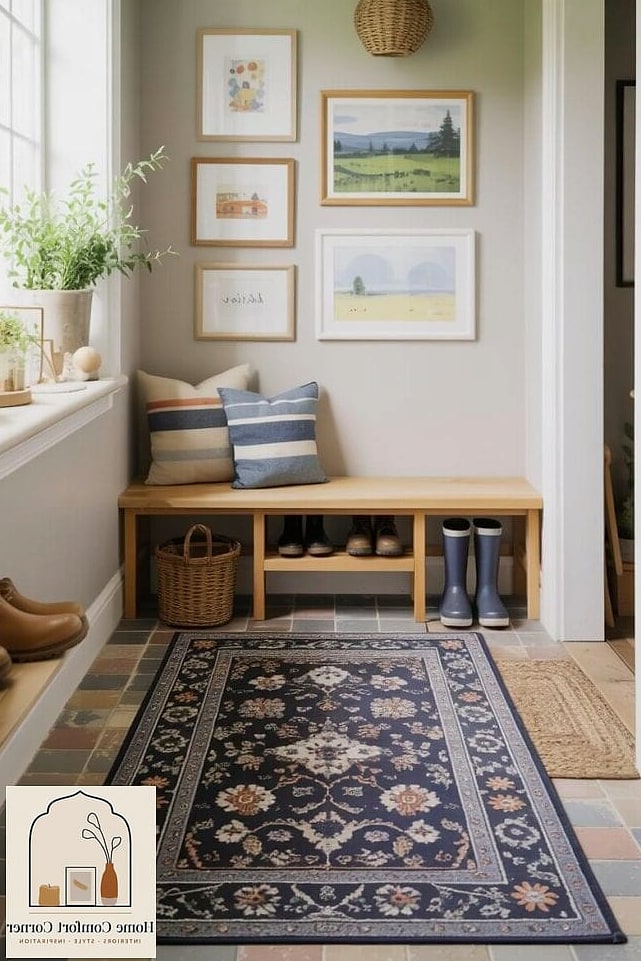
A durable, low-pile rug or runner in the entry protects flooring from wet shoes and muddy paws. Layering a smaller accent rug on top of a larger one adds visual interest while giving you an easy way to swap styles seasonally. Look for machine-washable options if you’ve got kids or pets, since this spot takes the most daily wear in the whole house.
Floating Shelf with Hooks Below
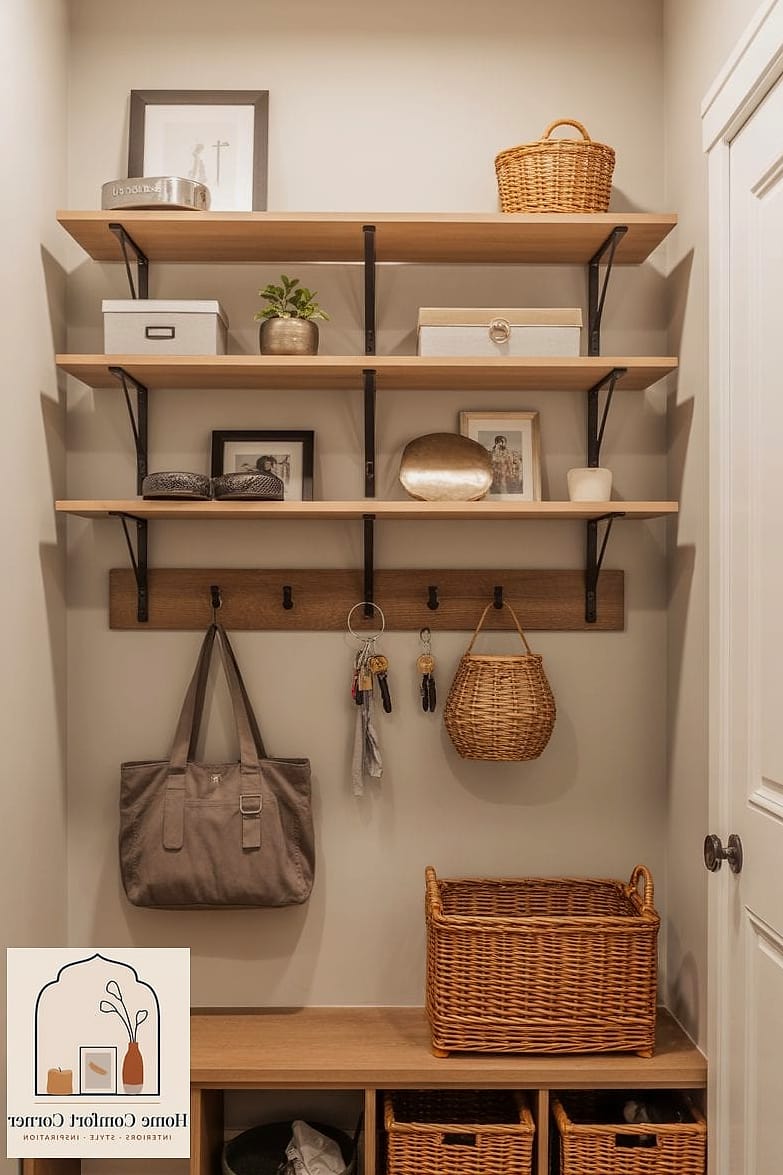
Floating shelves feel less bulky than a full cabinet, which matters in a tight hallway. Mount one at coat height with hooks screwed in underneath for a clean, layered look. Use the shelf top for a catchall tray, a small plant, or seasonal decor. This combo gives you storage in two directions without adding depth to the wall.
Corner Bench with Storage
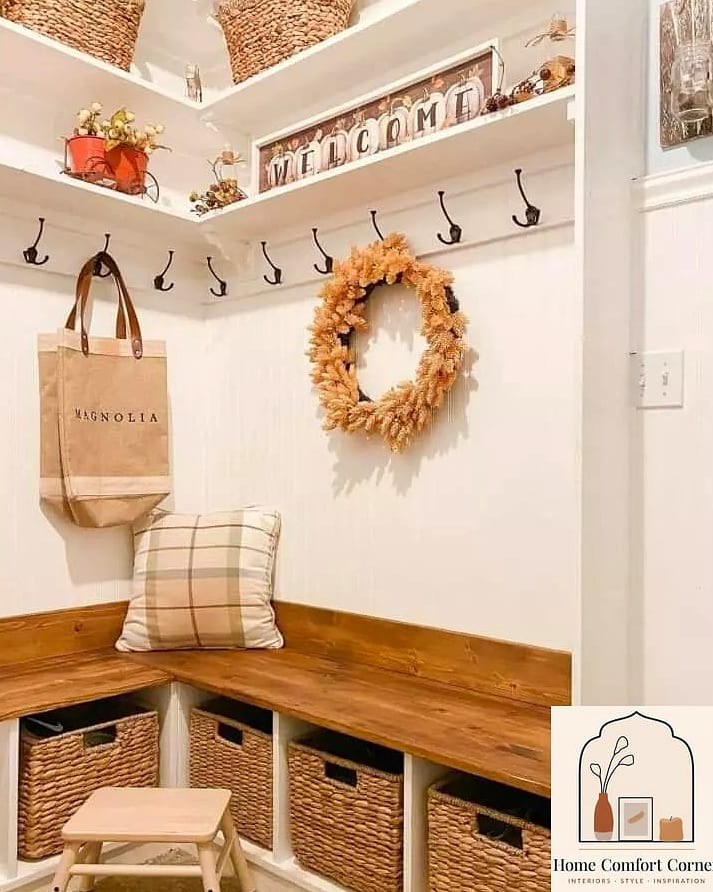
An L-shaped or corner bench makes use of space that usually goes to waste. Lift-top seating adds hidden storage underneath for off-season shoes or sports gear. This is a smart pick for family-friendly entries where kids need a spot to sit and get ready without blocking the door.
Mirror Above a Console
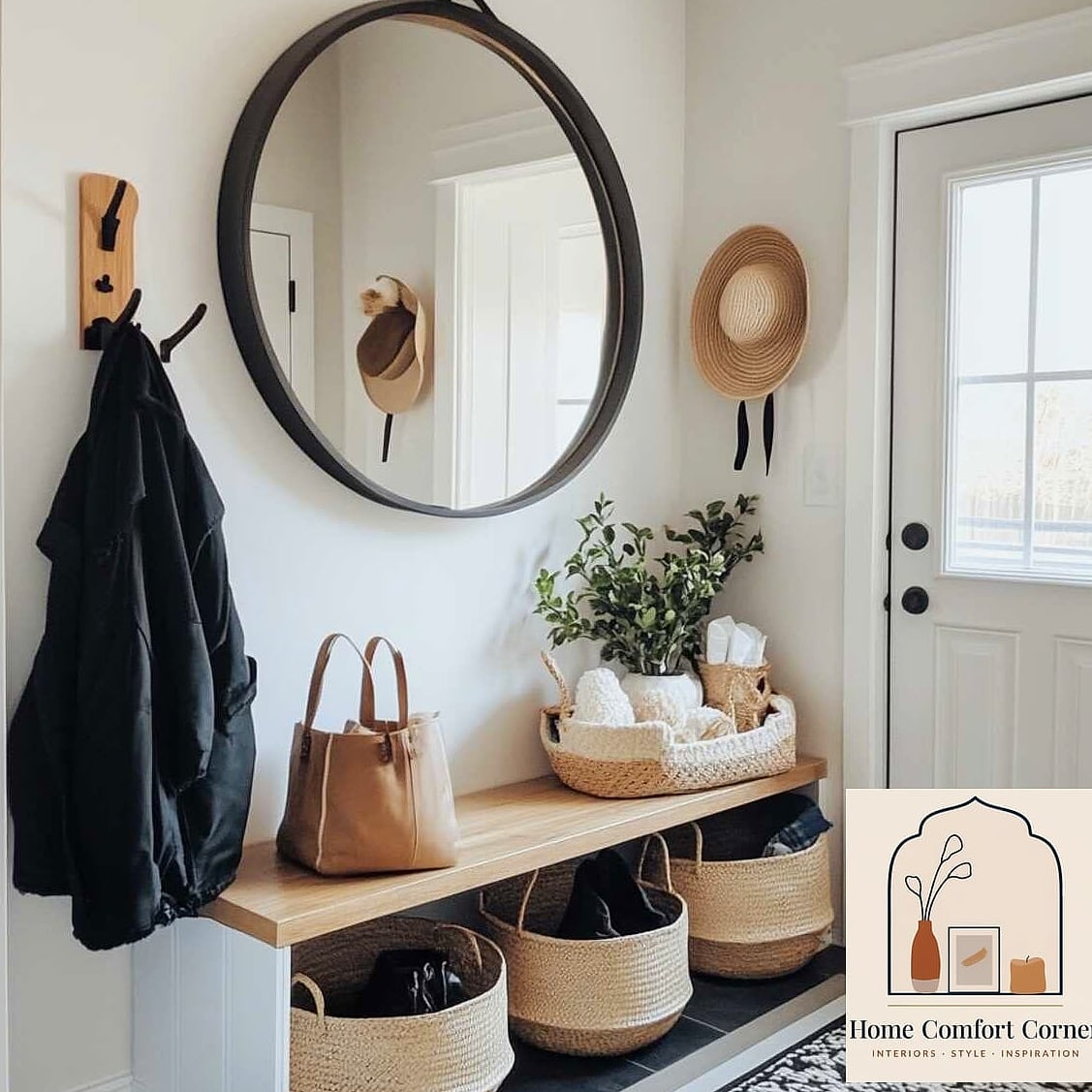
A mirror above your entry console does double duty: it lets you do a last-minute outfit check and it visually bounces light around a small space, making the whole area feel bigger. Frame it in brushed brass or black hardware to tie in with other metal finishes nearby. It’s a simple styling trick that upgrades the whole look of the entry.
Hanging Basket Storage
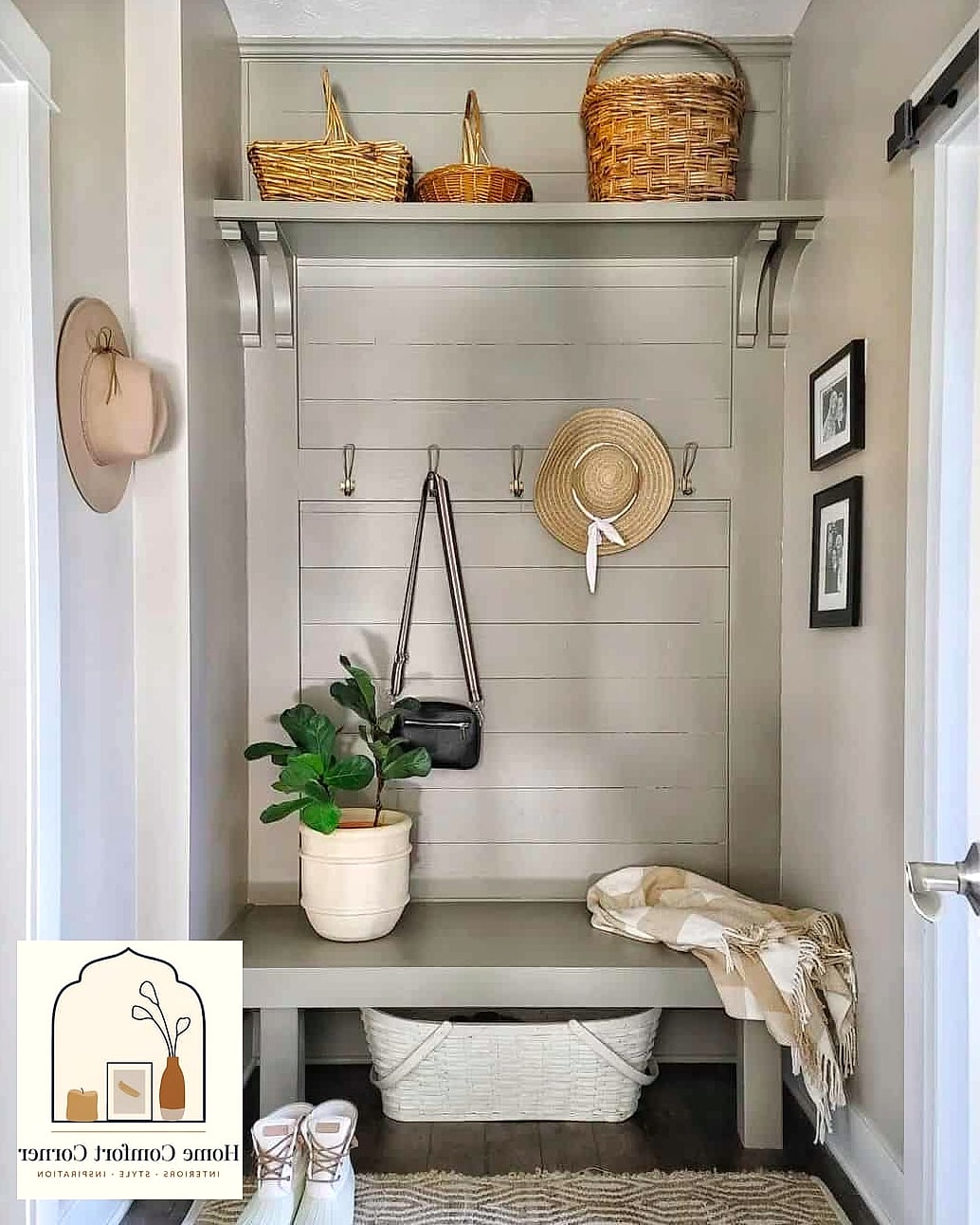
For entries where wall-mounted furniture isn’t an option, a cluster of hanging baskets on hooks can hold hats, mittens, or dog toys. It’s a soft, textural option that works well in cottage or farmhouse-style homes. Swap the baskets out seasonally, using deeper ones for winter gear and shallower ones for summer essentials.
Built-In Bench with Cushion
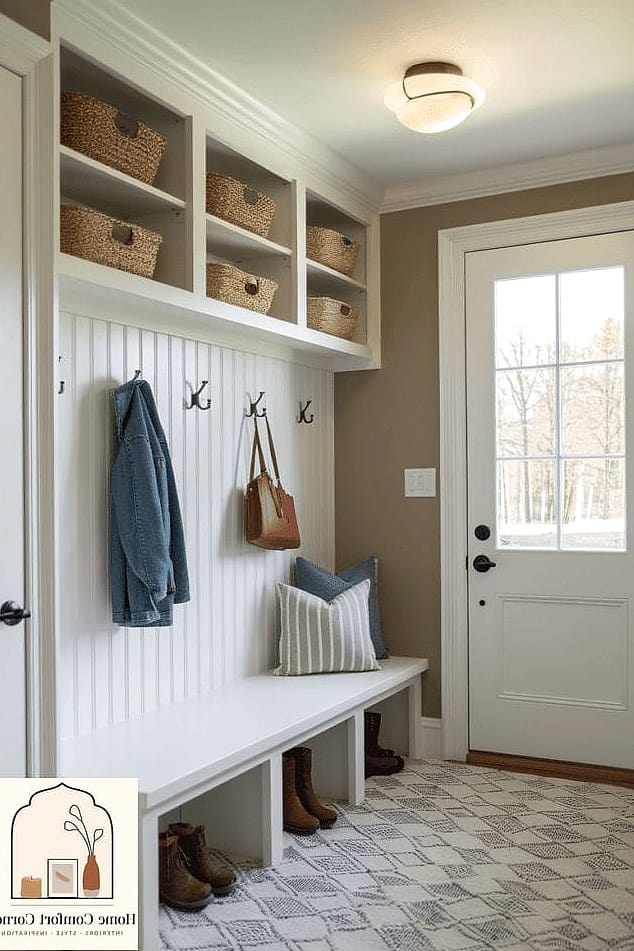
A built-in bench with a cushioned top makes the entry feel more like a real room rather than an afterthought. Add a hidden storage compartment below the seat for shoes or blankets. A performance fabric cushion resists stains and wipes clean easily, which matters a lot near a high-traffic door.
Command Center for Mail and Keys
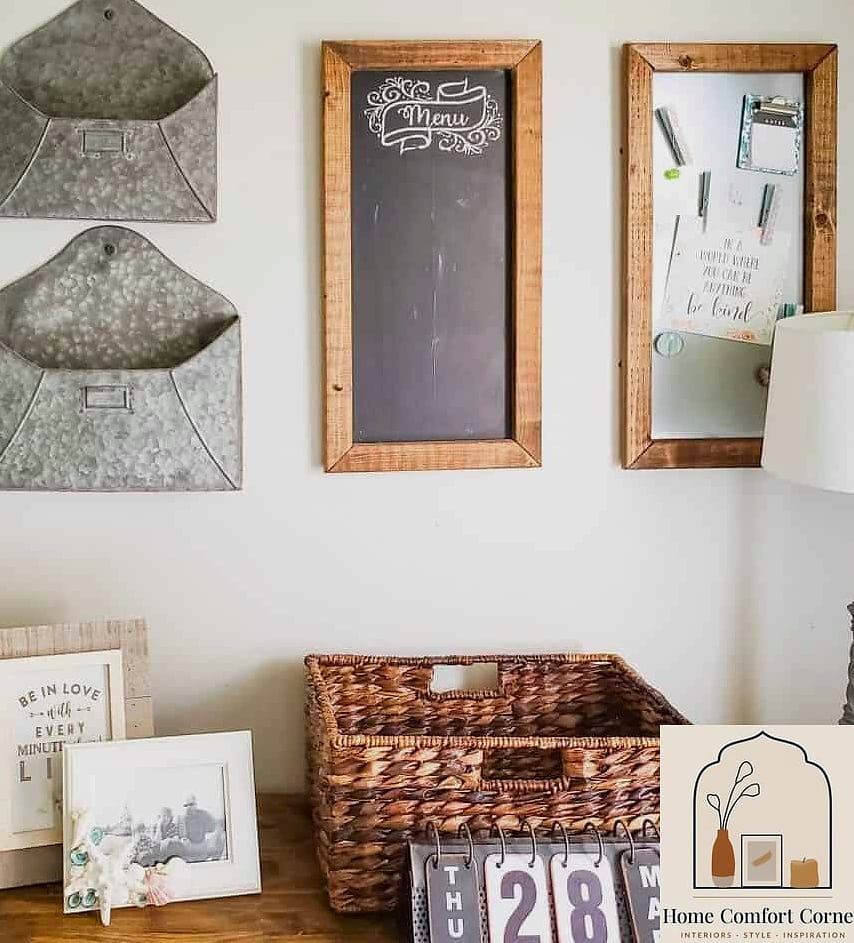
A small wall-mounted organizer with slots for mail, hooks for keys, and a spot for sunglasses keeps the little things from piling up on the console table. This is especially useful in tiny mudroom ideas entryway ideas layouts where surface space is limited. Choose a design with a cork or chalkboard insert so it also works as a message center.
Boot Tray by the Door
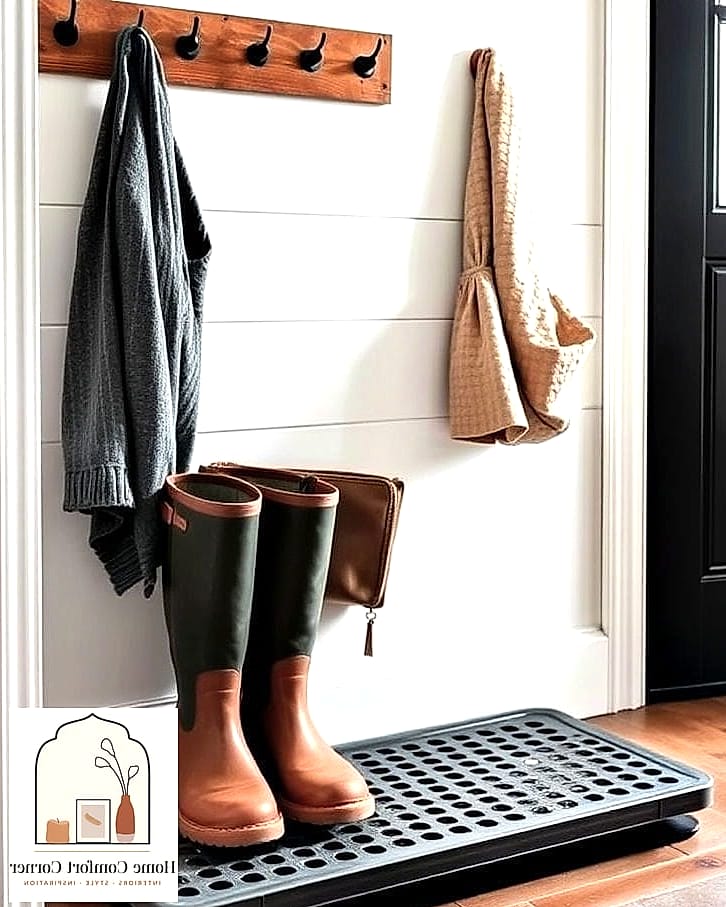
A simple boot tray placed right inside the door catches drips and dirt before they spread across your floors. Rubber or metal trays hold up best against constant moisture, and they’re an easy, inexpensive addition to any entry, tiny or not. Pair it with a small mat on top for extra grip and a softer look.
Sliding Barn Door Closet
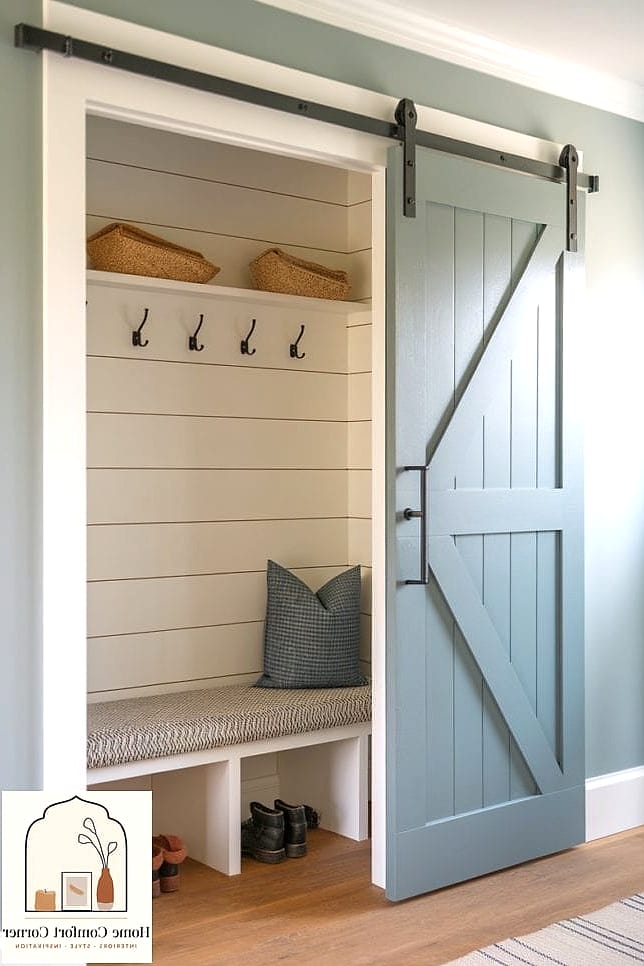
If your entry closet door swings out and eats up walking space, replacing it with a sliding barn door solves the problem instantly. It’s a stylish upgrade that also happens to be practical, since sliding doors need zero clearance. Wood finishes add a rustic touch, while a painted black door leans more modern and sleek.
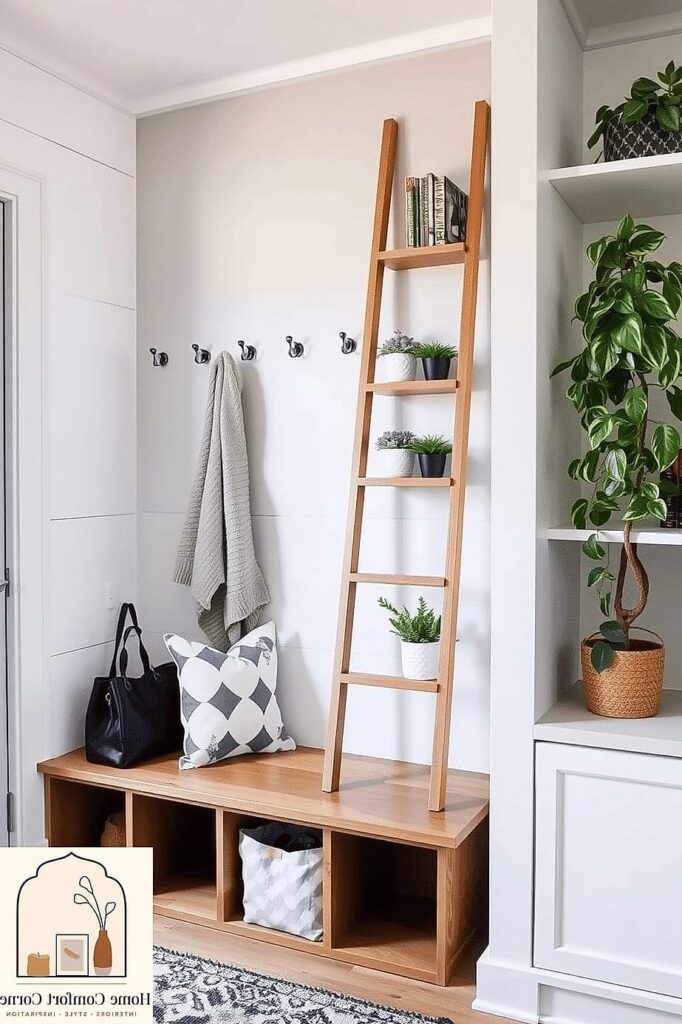
Ladder Shelf for Layers
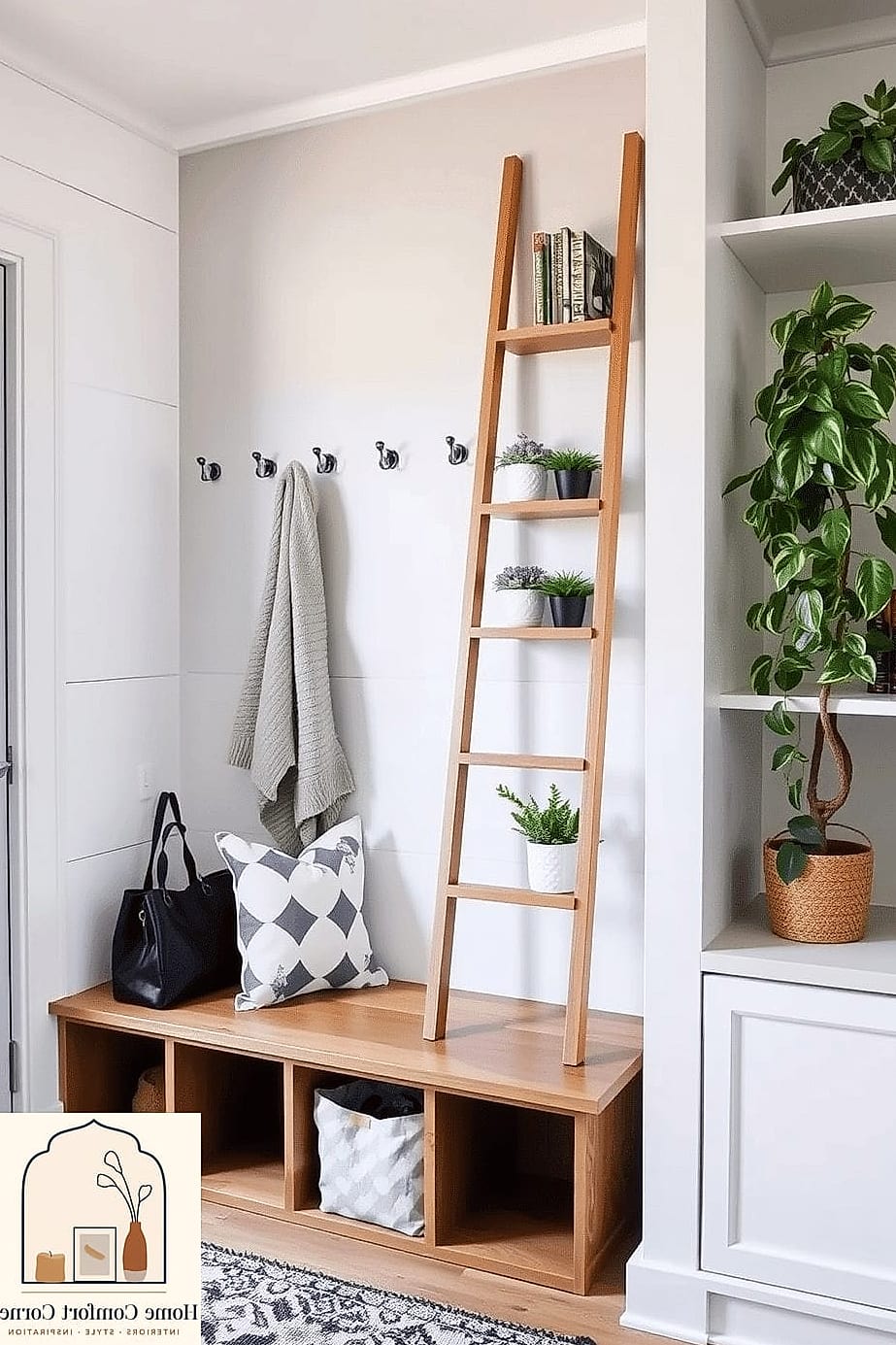
A leaning ladder shelf takes up almost no floor space but gives you multiple tiers for baskets, shoes, or folded blankets. It’s an easy DIY-friendly piece that doesn’t require mounting anything to the wall, which makes it great for renters. Style the top rung with a small plant or seasonal decor to soften the look.
Tile Accent Flooring
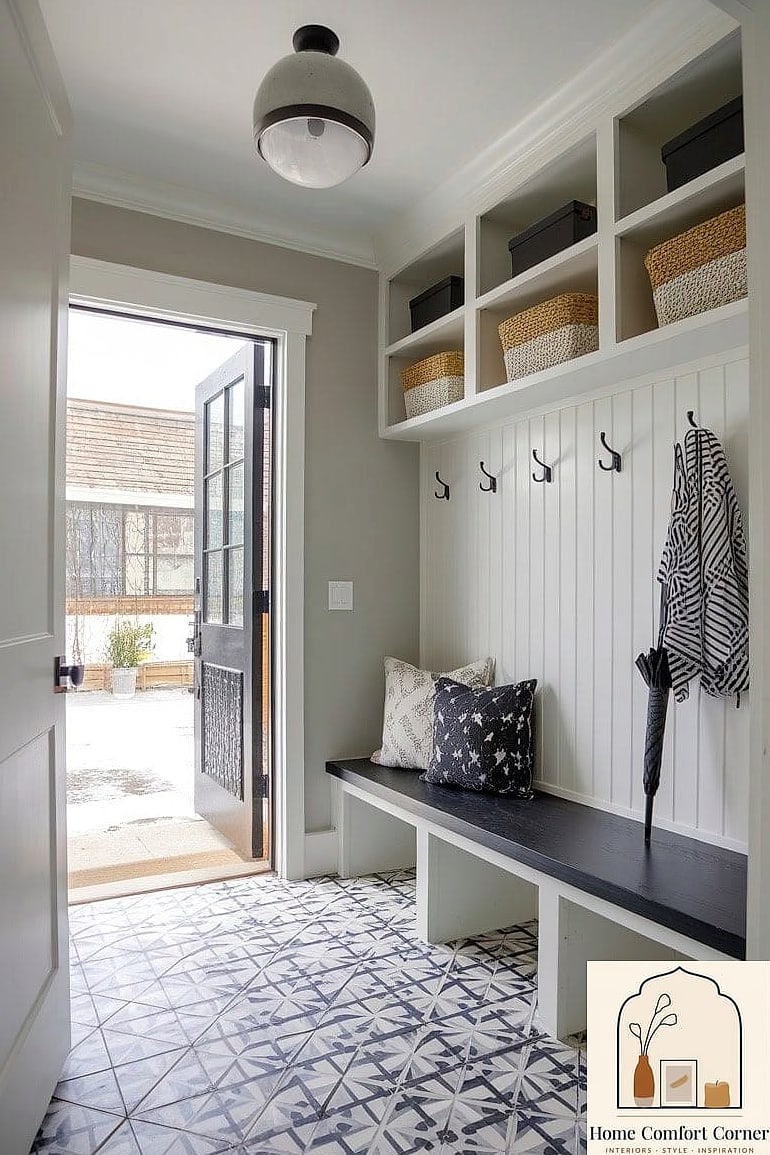
Swapping in porcelain tile or a patterned mosaic in just the entry area helps define the space and stands up to dirt and moisture far better than carpet. A herringbone pattern or checkerboard layout adds character without needing extra square footage. This is a slightly bigger project, but it pays off in durability for years of muddy boots and rainy days.
Narrow Coat Closet Makeover
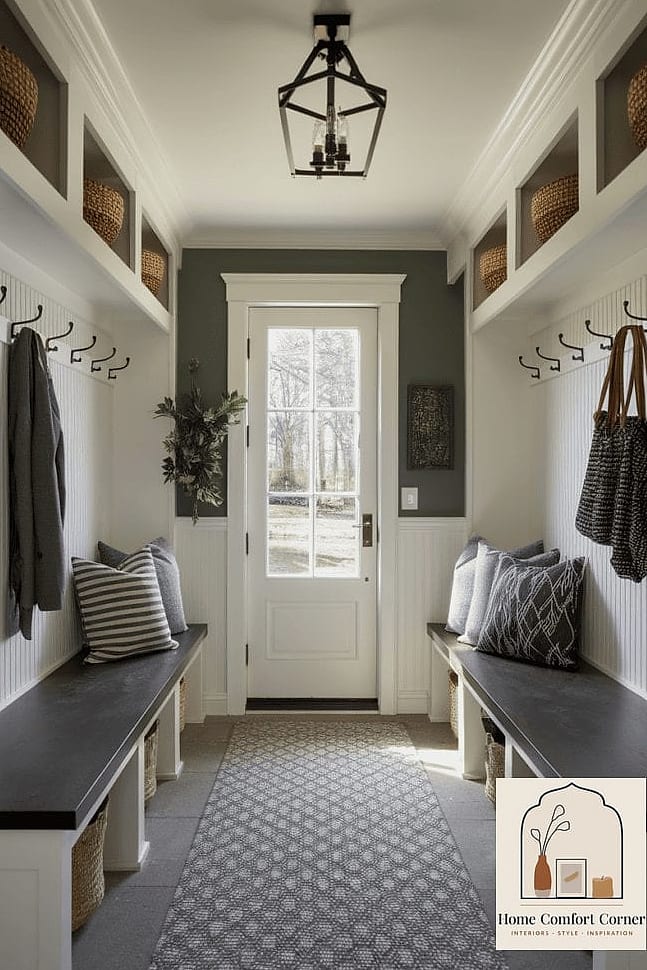
An existing coat closet often gets wasted with just a single rod. Adding a second lower rod for kids’ coats, a shoe rack on the floor, and small bins on a shelf up top turns dead space into a fully functional mini mudroom. This is one of the more affordable upgrades since you’re just reorganizing rather than adding new furniture.
Multi-Purpose Console with Baskets
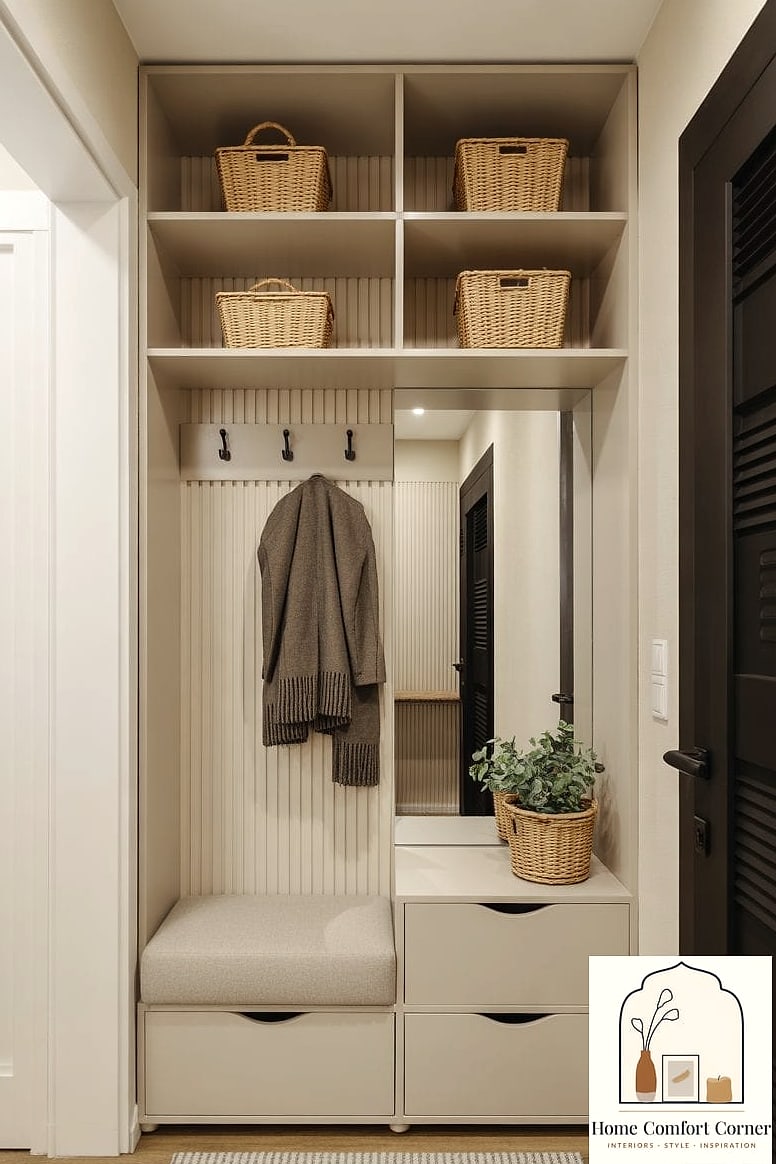
A console table with open cubbies underneath, filled with matching baskets, gives you flexible storage that can shift as your needs change. One basket for shoes, one for outdoor gear, one for umbrellas. It’s a clean, put-together look that still handles daily chaos, and it works whether your entry is a full room or just a few feet of hallway.
Final thoughts: you really don’t need a mudroom the size of a laundry room to keep your entry organized. Most of these ideas work in just a few square feet, and mixing two or three together, say a bench with hooks plus a boot tray, is usually enough to keep the daily mess under control. Start with whatever bugs you most about your current setup and build from there.