10 Stunning Dark Home Decor Ideas for Every Budget
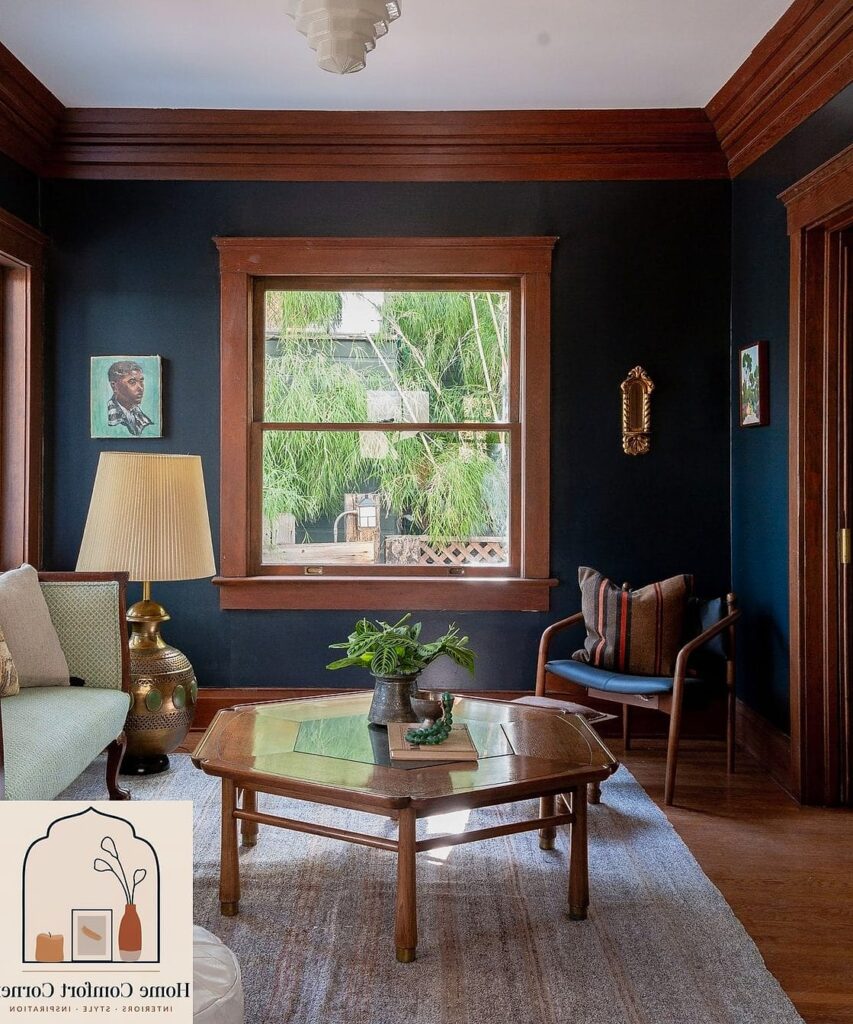
- Charcoal or Black Accent Wall
- Black Kitchen Cabinets
- Moody Bathroom with Dark Tile
- Dark Wood Furniture Mixed with Light Walls
- Black Window Frames and Trim
- Dark Accent Furniture Pieces
- Matte Black Hardware Throughout the Home
- Dark Ceiling or "Fifth Wall"
- Black Stone or Soapstone Countertops
- Layered Textiles in Deep Tones
10 Stunning Dark Home Decor Ideas for Every Budget
There’s a reason dark home decor keeps showing up on design boards and in real homes, not just staged ones. It’s moody, it’s confident, and honestly, it hides way more scuffs and fingerprints than white walls ever will. If you’ve been hesitant to go dark because you’re worried about a cave-like effect, I get it. But done right, dark decor makes a space feel intentional and layered instead of gloomy.
I’ve pulled together ten ways to bring dark tones into your home, ranging from a five-dollar paint sample to a full room overhaul. Pick what fits your budget and your comfort level with commitment.
Charcoal or Black Accent Wall
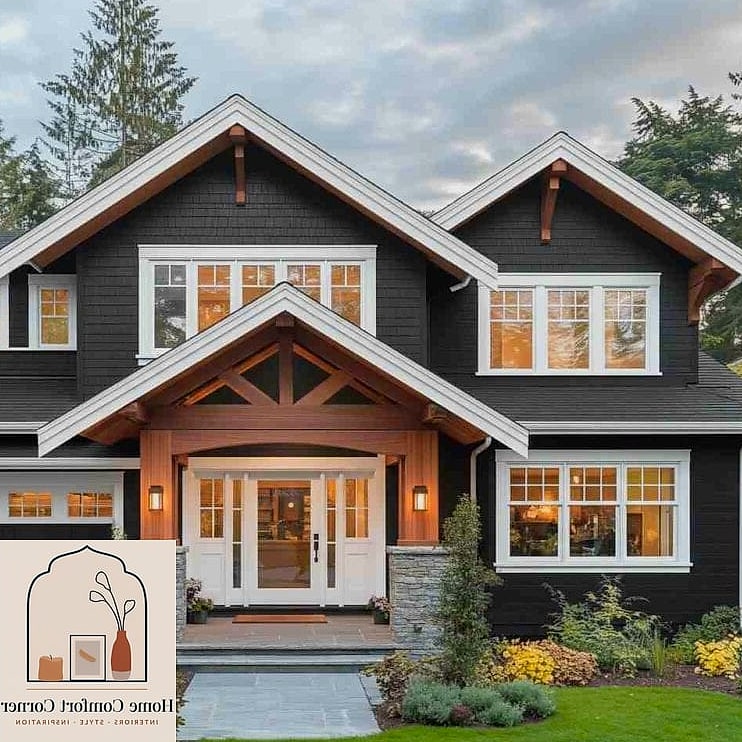
This is the easiest entry point if you’re testing the waters. Pick one wall, ideally one without much natural light competing against it, and paint it a deep charcoal, black, or near-black green.
It works especially well in bedrooms behind the headboard or in a home office where you want a backdrop that photographs well on video calls. The trick is contrast. Keep your furniture, bedding, or trim lighter so the wall reads as intentional rather than heavy.
Budget-wise, a gallon of quality paint runs $40 to $70, and you can knock this out in an afternoon. If you’re renting, some peel-and-stick wallpaper options now mimic matte black paint convincingly enough that nobody will guess it’s removable.
Black Kitchen Cabinets
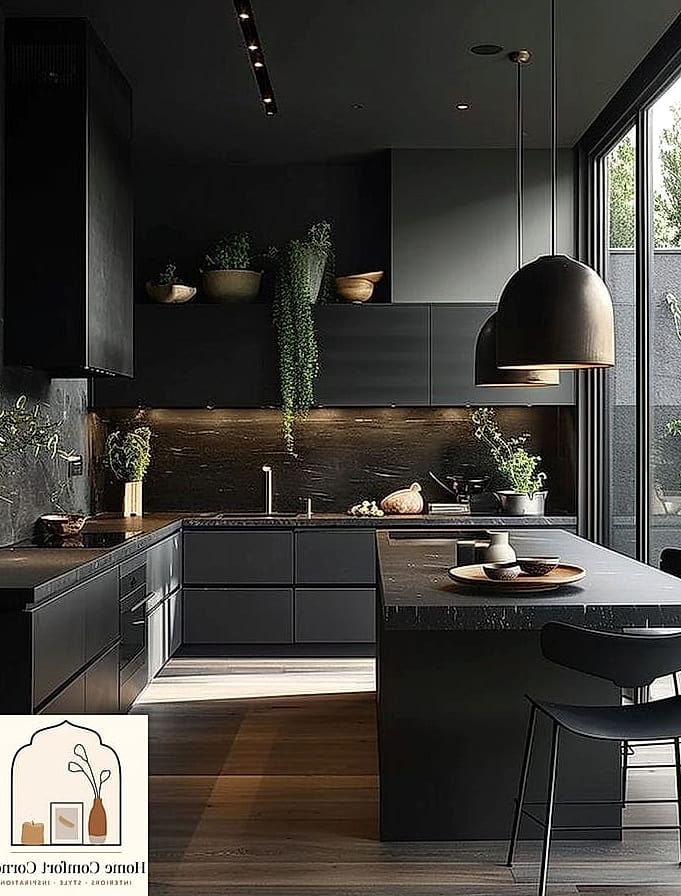
I know this one sounds intense, but matte black cabinetry has become one of the most requested kitchen updates I hear about from readers. It pairs beautifully with brushed brass or unlacquered brass hardware, which warms things up so the kitchen doesn’t feel cold.
Full cabinet replacement is obviously the higher-budget route, but painting existing cabinets with a cabinet-grade enamel is a realistic weekend project if you’re comfortable with sanding and priming. Just know that black shows dust and water spots more than lighter finishes, so a quick daily wipe-down becomes part of the routine.
For a lower-commitment version, try just the lower cabinets in black while keeping uppers white or wood-toned. It gives you that grounded look without darkening the whole room.
Moody Bathroom with Dark Tile
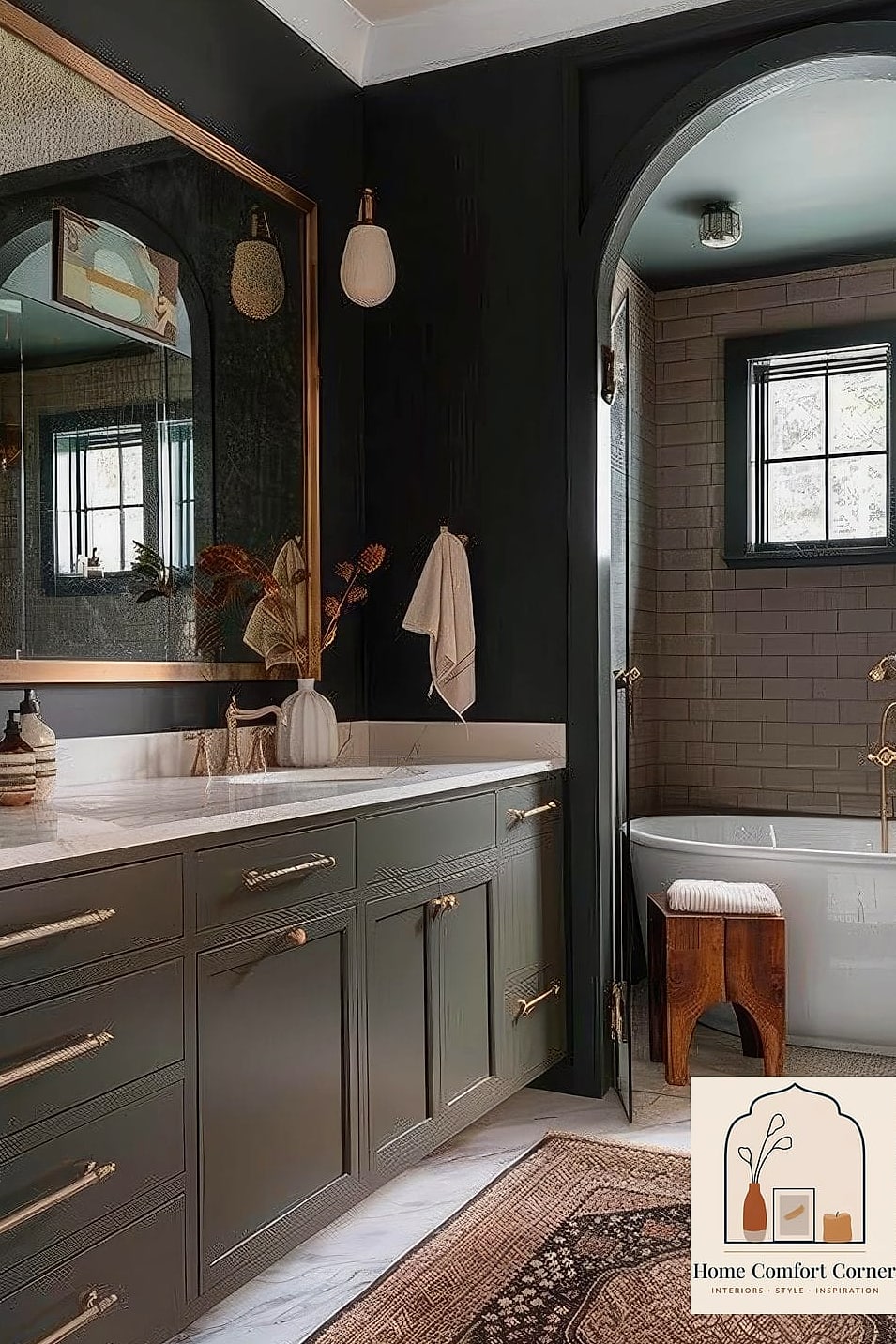
Bathrooms are a great place to go bold because they’re smaller spaces, meaning less material and lower cost. Consider a dark zellige tile or a deep charcoal ceramic tile on a shower wall, paired with matte black fixtures and a simple white vanity to keep things balanced.
Vertical installation or a herringbone pattern adds visual interest without needing extra colors. Natural stone accents, like a honed marble threshold, elevate the look if your budget allows.
Maintenance-wise, dark grout is actually a practical choice here since it hides soap scum and mildew stains better than white grout does. Just make sure your bathroom has decent ventilation so the dark tones don’t feel stuffy.
Dark Wood Furniture Mixed with Light Walls
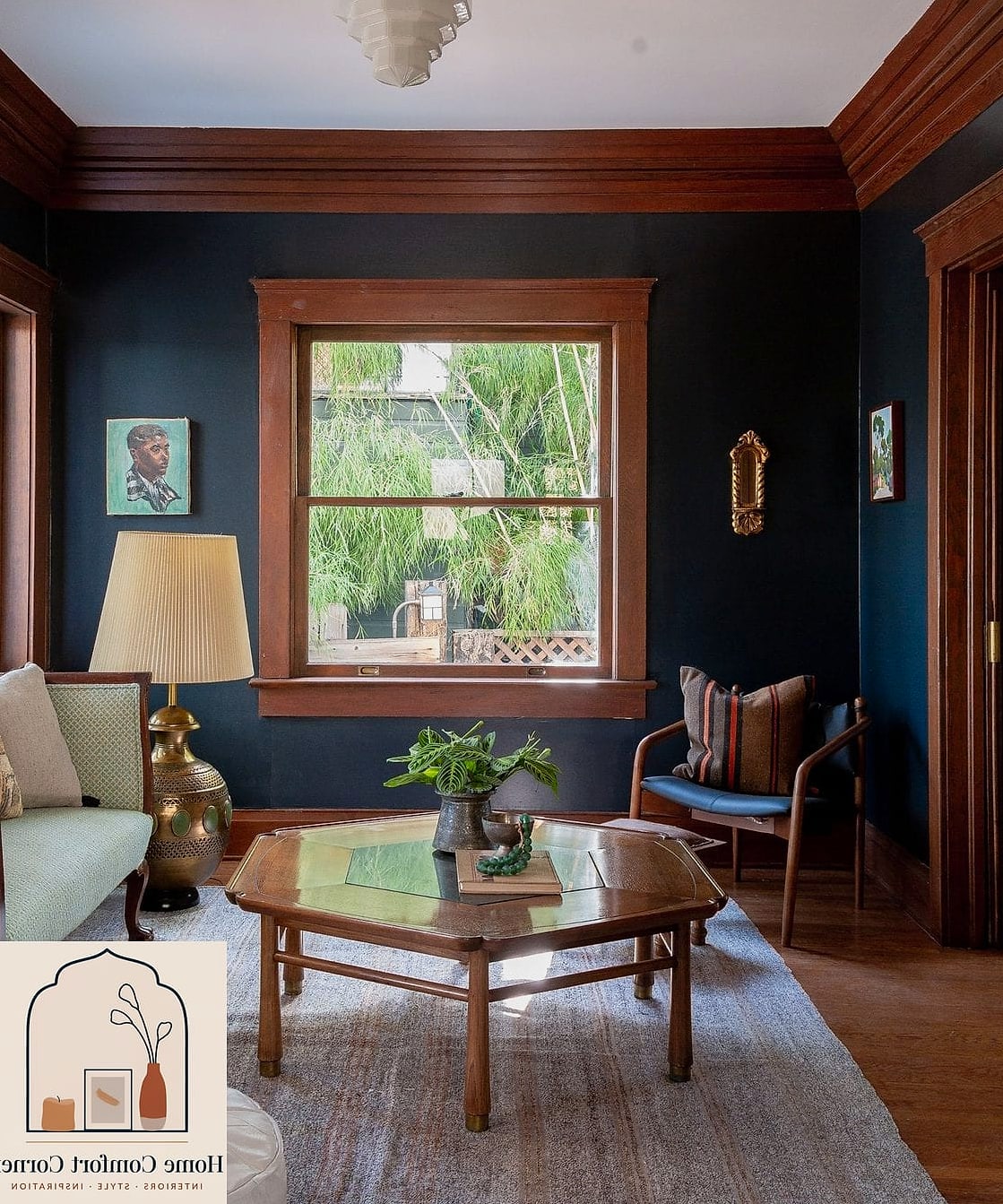
If painting walls feels like too much, let your furniture do the talking. Espresso or walnut-toned wood pieces, think a dark dining table, a media console, or a bed frame, create depth against white or warm beige walls.
This approach is great for renters or anyone who moves often, since furniture travels with you. Look for pieces with warm undertones rather than cool black-brown finishes, which can feel a little flat under artificial light.
Secondhand and vintage shops are goldmines here. Older solid wood furniture often comes in these deep tones already, and a light sanding plus a fresh coat of tung oil can revive a thrifted find for under $50.
Black Window Frames and Trim
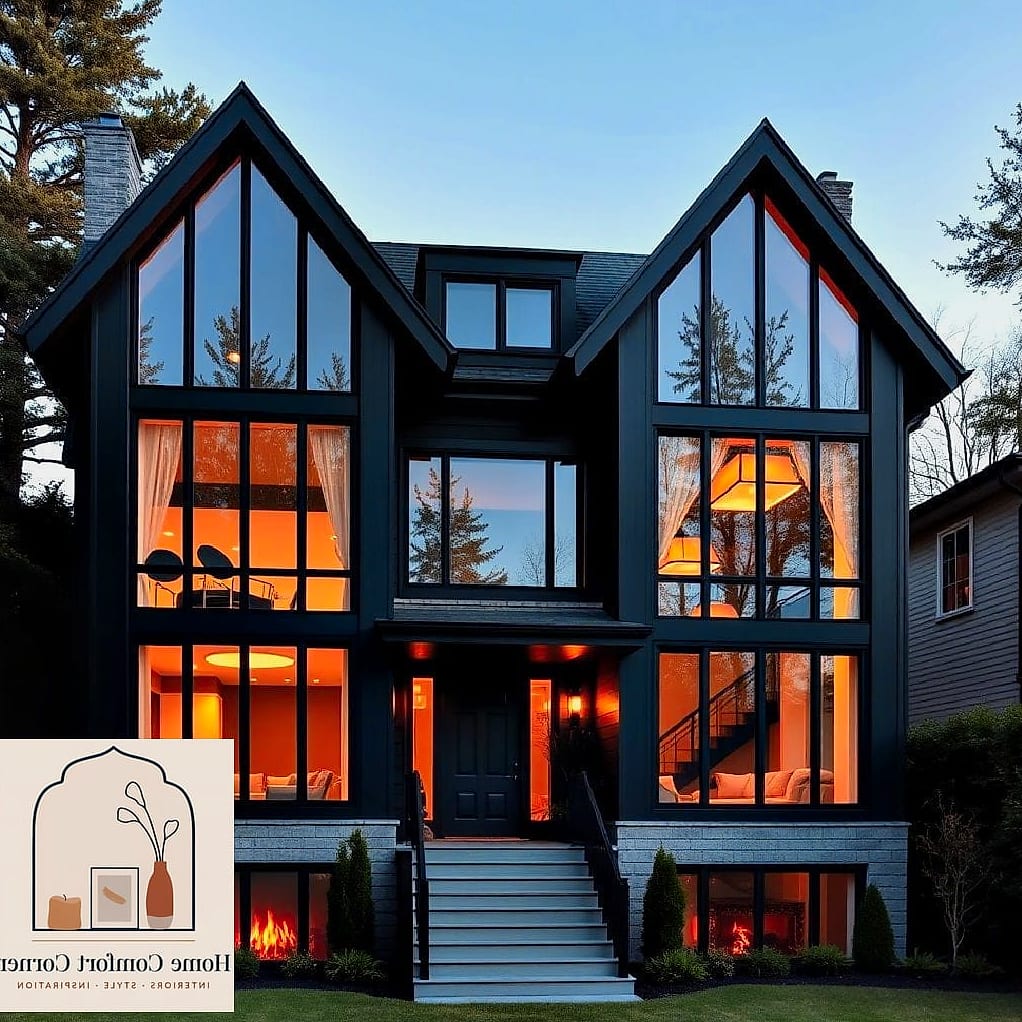
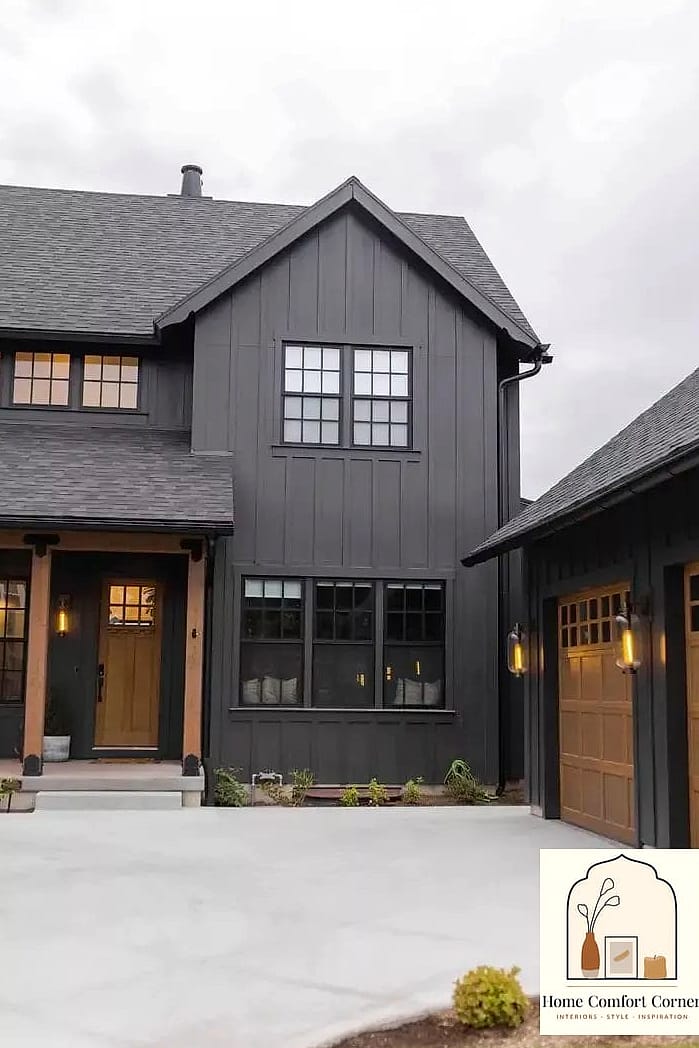
This is a smaller detail that makes a bigger impact than people expect. Swapping white window trim, door frames, or even interior doors for black creates crisp architectural lines throughout a home.
It works particularly well in farmhouse and modern homes alike, which says a lot about how versatile it is. If replacing trim isn’t in the budget, painter’s tape and a can of black trim paint can transform existing white trim in a weekend.
Just be thoughtful about how much black trim you add relative to your wall color. Too much in a small room can feel like you’re boxing the space in, so I’d recommend starting with one focal window or your front door before committing to the whole house.
Dark Accent Furniture Pieces
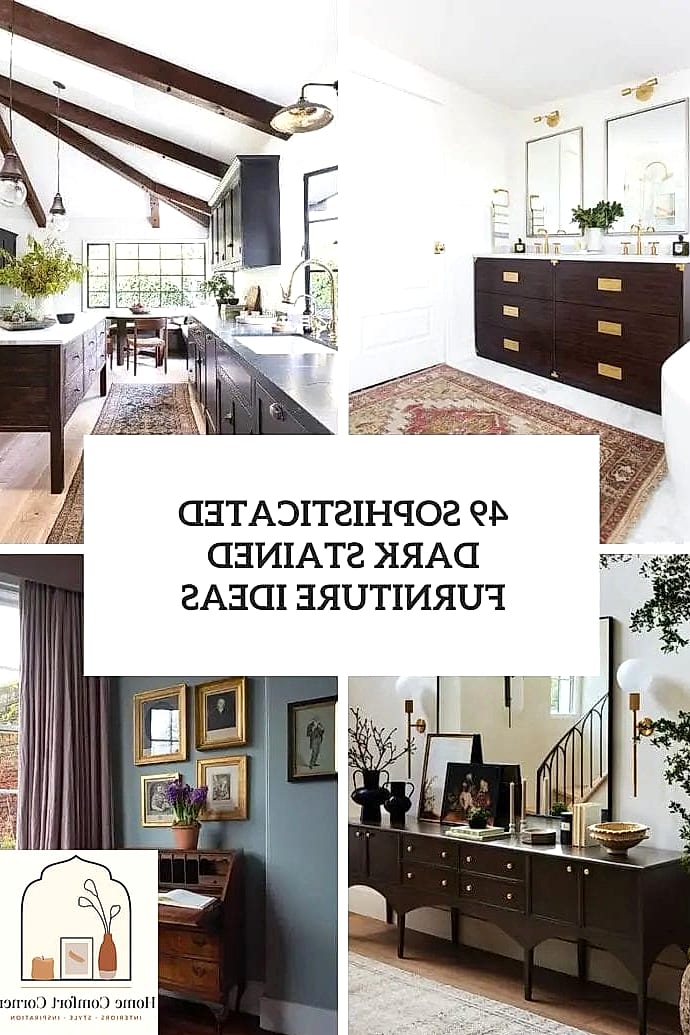
Not ready for a wall or cabinets? Start smaller with a single statement piece; a black leather armchair, a dark green velvet sofa, or an ink-colored bookshelf.
This is the most budget-flexible idea on this list because you can find something in nearly any price range, from a $150 secondhand chair to a custom upholstered piece. It also gives you an easy way to test whether you actually like living with dark tones before painting an entire room.
Pair the piece with lighter textiles, like a cream throw blanket or woven jute rug, so it doesn’t visually swallow the room. Layered lighting nearby, like a warm-toned floor lamp, keeps the area from feeling like a shadowy corner.
Matte Black Hardware Throughout the Home
Sometimes the smallest changes tie a whole design together. Swapping out cabinet knobs, drawer pulls, light switch covers, and door handles for matte black versions is one of the most affordable dark decor upgrades you can make.
A full set of cabinet hardware for a kitchen typically costs $60 to $150 depending on quantity, and it’s a genuinely doable DIY project with just a screwdriver and maybe a drill for new holes. Black fixtures also tend to hide fingerprints better than polished chrome or brushed nickel, which matters if you’ve got kids or a busy household.
For an even more budget-friendly route, some hardware can be spray-painted with a matte black finish rated for metal. It’s not quite as durable as factory-finished pieces, but it’s a nice stopgap if you’re not ready to buy new.
Dark Ceiling or “Fifth Wall”
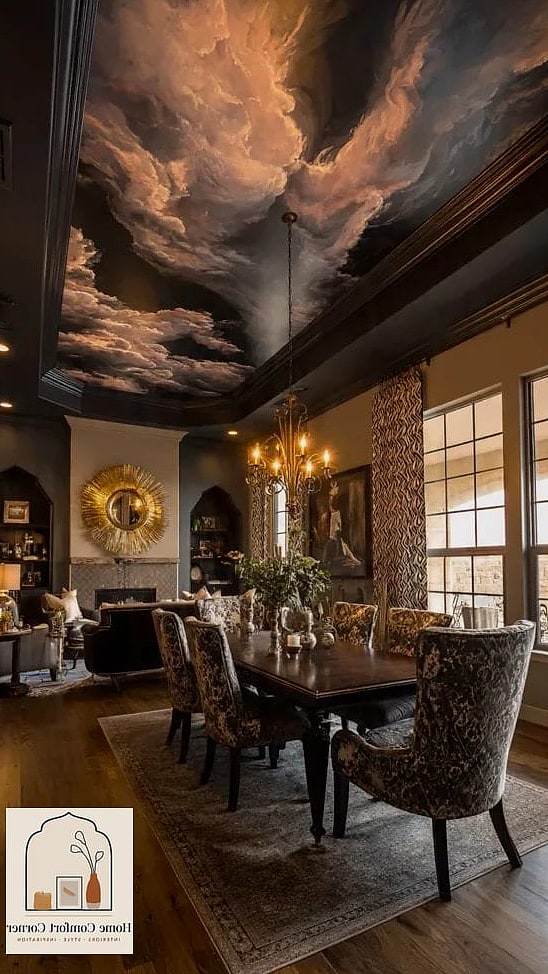
Painting a ceiling dark sounds counterintuitive, but it’s a favorite trick among designers for making a room feel cozier and more intimate, especially dining rooms and primary bedrooms with lower ceilings.
The key is using a flat or matte finish rather than glossy, since sheen on a ceiling can highlight imperfections. Deep navy, forest green, or soft black all work well and tend to make the walls almost disappear, drawing your eye instead to furniture and lighting.
This is a lower-cost project since you’re only painting one surface, but it does require some neck strain and a good ladder. If you’re nervous about committing, try it in a smaller room like a powder room or entryway first.
Black Stone or Soapstone Countertops
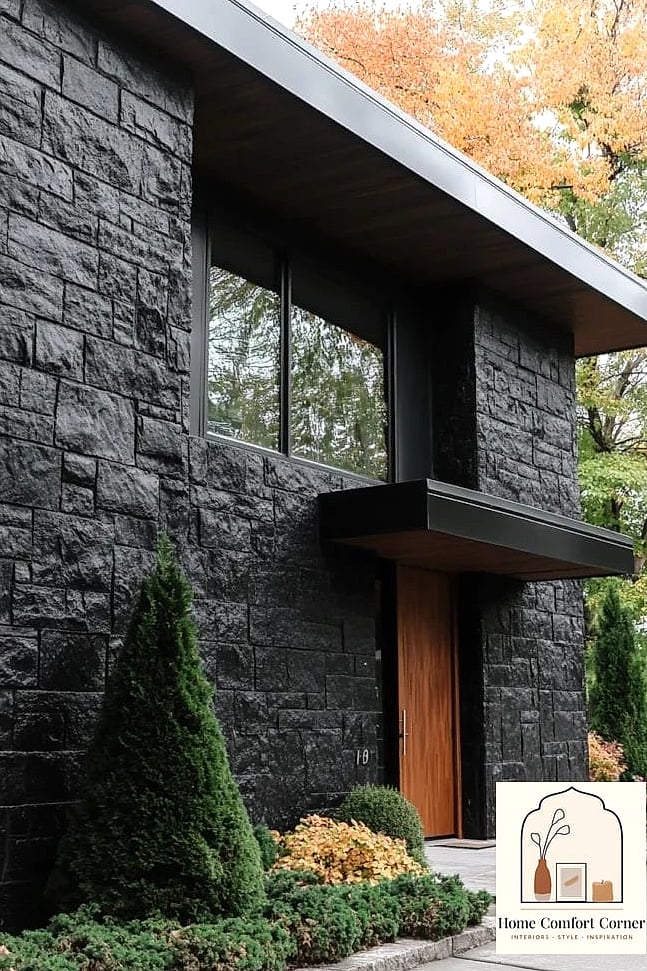
For kitchens or bathrooms, dark countertops in soapstone, honed granite, or engineered quartz with a black finish bring a serious visual anchor to the space. They pair naturally with wood cabinetry, brass fixtures, or even white subway tile backsplashes for contrast.
Soapstone in particular develops a natural patina over time, which some homeowners love for its lived-in character and others find high-maintenance since it needs periodic mineral oil treatments. Engineered quartz, on the other hand, is scratch-resistant and requires basically zero upkeep, making it more family-friendly.
Full countertop replacement is a bigger investment, generally starting around $50 to $100 per square foot installed depending on material, but it’s often the single change that makes a kitchen feel completely redesigned.
Layered Textiles in Deep Tones
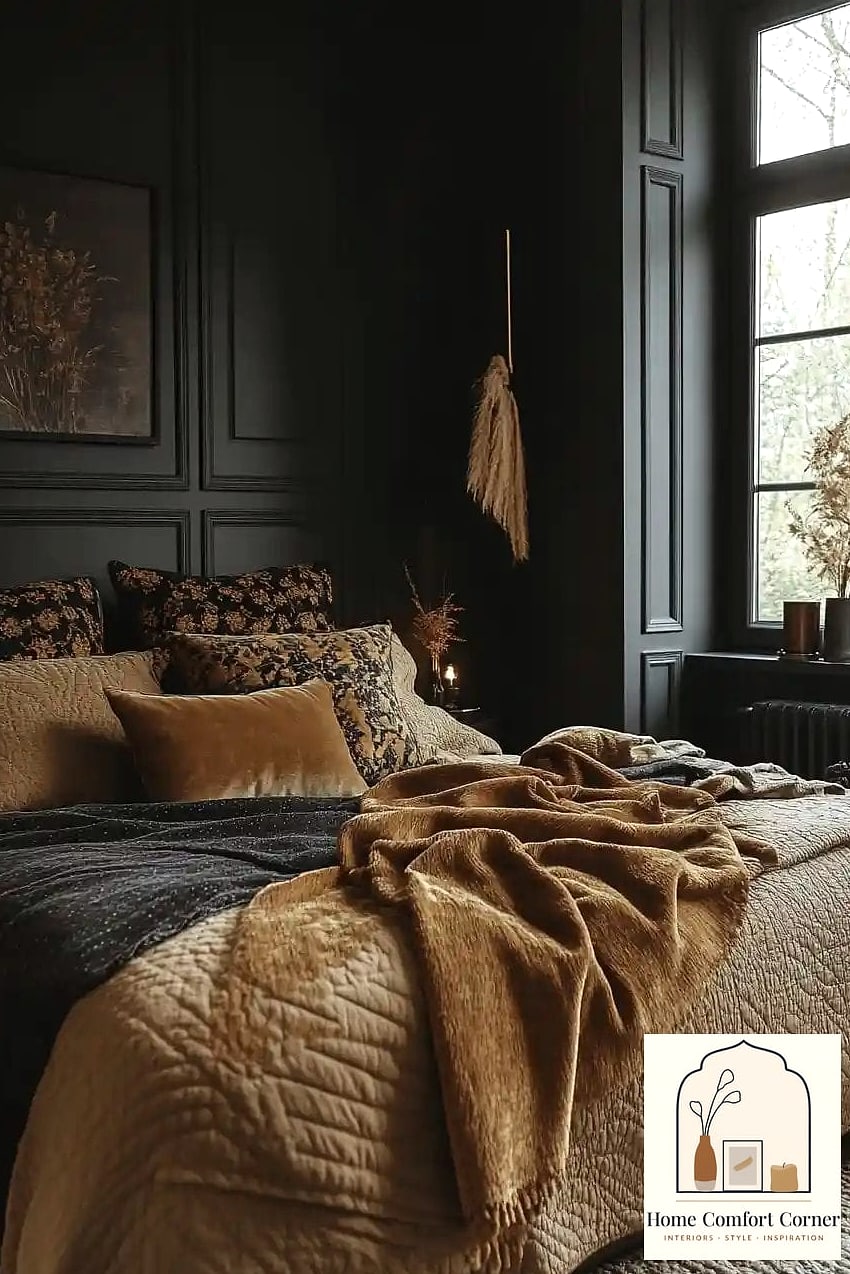
If none of the above feel doable right now, start with textiles. Dark throw pillows, a charcoal area rug, or heavy black-out curtains in a rich color like espresso or deep plum can shift the whole mood of a room without any construction involved.
This is the most renter-friendly and budget-friendly idea here, since most pieces cost under $50 and require zero tools. Layer two or three different dark tones together, like a navy rug with black and burgundy pillows, rather than matching everything exactly, which keeps the space from feeling flat.
Textiles are also the easiest to swap out seasonally if you decide you want to lighten things up in summer and go moodier in fall and winter. It’s a low-commitment way to live with dark home decor before making any bigger changes.
Going dark doesn’t mean going all in everywhere at once. Some of my favorite reader transformations started with one accent wall or a hardware swap, then grew from there once they saw how much richer the space felt. Whatever your budget looks like this year, there’s a version of this trend that fits, and honestly, it’s one of the more forgiving design choices you can make since dark tones hide daily wear so well.